

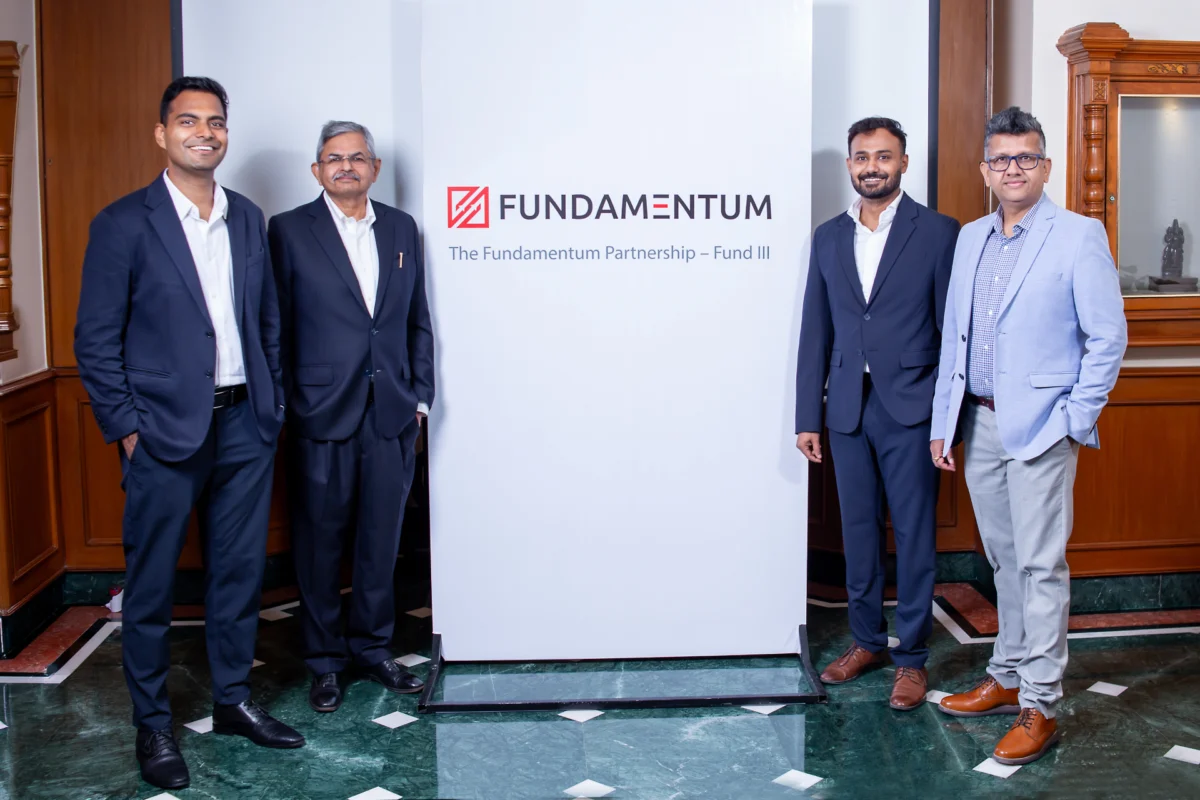
The landscape of Indian venture capital is witnessing a significant leadership transition as Nandan Nilekani, the billionaire co-founder of Infosys and a pivotal architect of India’s digital identity infrastructure, prepares to step back from his role as a general partner at Fundamentum Partnership. This move coincides with the firm’s announcement of its third investment vehicle, Fund III, which aims to raise approximately $200 million to back the next generation of Indian scale-ups. While Nilekani will no longer hold the title of General Partner, a role he has maintained since co-founding the firm nearly a decade ago, his influence on the organization is expected to remain profound. He will transition into the role of the fund’s anchor investor and will continue to serve as a strategic advisor and mentor to the founders within the firm’s portfolio.
Sanjeev Aggarwal, Nilekani’s long-time partner and co-founder of Fundamentum, characterized the shift as a natural evolution rather than a departure. According to Aggarwal, the change is primarily administrative, ensuring that Nilekani can focus on the aspects of venture capital he finds most rewarding—mentoring and strategic guidance—without the day-to-day fiduciary responsibilities associated with a General Partner designation. As the firm embarks on this new chapter, Nilekani is slated to make his largest-ever financial commitment to a venture fund, signaling his continued confidence in the Indian startup ecosystem and Fundamentum’s specific investment thesis.
A Legacy of Digital Transformation
To understand the weight of Nilekani’s transition, one must look at his broader impact on the Indian economy. At 71, Nilekani remains a titan of industry whose work has bridged the gap between private enterprise and public utility. After co-founding Infosys in 1981 and helping transform it into a global IT services powerhouse, he moved into the public sphere to lead the Unique Identification Authority of India (UIDAI). There, he oversaw the creation of Aadhaar, the world’s largest biometric ID system, which now serves as the foundation for India’s "digital stack."
His advocacy for Digital Public Infrastructure (DPI) has been instrumental in the proliferation of the Unified Payments Interface (UPI), which has revolutionized real-time payments for hundreds of millions of citizens. More recently, he has been a vocal proponent of the Open Network for Digital Commerce (ONDC), an initiative designed to democratize e-commerce by breaking the monopolies of large platform aggregators. This background in building massive, scalable systems has been the hallmark of his approach to venture capital, where he has consistently looked for "foundational" companies that can leverage India’s unique digital architecture.
The Genesis and Evolution of Fundamentum
Fundamentum Partnership was established in 2017 by Nilekani and Sanjeev Aggarwal, a veteran of the Indian VC space who previously co-founded Helion Venture Partners. The firm was born out of a perceived gap in the Indian market: the "Series B and C" crunch. While early-stage capital was abundant, many Indian startups struggled to find institutional support during their mid-growth phases. Fundamentum set out to fill this void, focusing on companies that had already found product-market fit and were looking to scale operations.
Since its inception, the firm has been disciplined in its deployment, making 17 investments across its first two funds. Its portfolio includes some of India’s most recognizable mid-to-late-stage startups. Among them is Spinny, a used-car marketplace that reached unicorn status; PharmEasy, a leading digital pharmacy platform; and Kuku FM, an audio content platform that has tapped into the growing demand for vernacular storytelling. The firm also recently backed AppsForBharat, the parent company of the Sri Mandir app, highlighting a growing interest in "digital devotion" and the monetization of cultural practices in India.
Aggarwal noted that Fundamentum has already returned approximately half of the capital from its first fund to its Limited Partners (LPs), a notable achievement in a market where exits can often be elusive. The second fund is currently in its follow-on phase, supporting existing winners as they prepare for potential public listings or secondary sales.
Leadership and Strategy for Fund III
The launch of Fund III marks a broadening of the firm’s internal leadership. While Nilekani steps into an advisory role, the general partnership is expanding to include seasoned professionals who have been instrumental to the firm’s growth. Alongside Sanjeev Aggarwal, the third fund will be steered by Prateek Jain, who has been with the firm since its 2017 launch; Mayank Kachhwaha, a fintech specialist who joined during the Fund II cycle; and Sanjay Chaturvedi, the firm’s Chief Financial Officer and a decade-long collaborator.

Fund III has a clear mandate: to invest in eight to ten early-growth stage startups. The firm intends to issue initial checks of approximately ₹100 crore (roughly $10.5 million) each. The sectoral focus remains consistent with the firm’s expertise, targeting consumer technology, financial services, and artificial intelligence. While a formal "first close" has not yet been announced, Aggarwal confirmed that the firm has already begun deploying capital from the new vehicle and expects to conclude the full fundraising process within the next 12 to 18 months.
The Shift Toward Domestic Capital
One of the most significant trends highlighted by Fundamentum’s new fund is the changing profile of the Indian venture capital LP (Limited Partner). Historically, Indian venture firms were almost entirely dependent on capital from the United States, Europe, and Japan. When Aggarwal launched Helion in the mid-2000s, domestic institutional capital for venture assets was virtually non-existent.
However, Fund III expects to raise roughly 50% of its $200 million target from domestic sources, including Indian institutions, family offices, successful founders, and the firm’s own partners. The remaining half will come from international investors. This shift reflects the maturation of the Indian wealth management space and a growing appetite among local high-net-worth individuals to participate in the country’s technology-driven growth. Aggarwal emphasized that the ability to build a venture firm primarily on domestic capital is a relatively new phenomenon in India, marking a milestone in the country’s financial sovereignty.
Navigating the AI Frontier: The Application Thesis
As artificial intelligence becomes the primary driver of global venture investment, Fundamentum is taking a distinctively "India-centric" stance. Unlike the Silicon Valley model, where billions of dollars are poured into developing frontier Large Language Models (LLMs) such as GPT-4 or Claude, Fundamentum is betting on the "application layer."
Aggarwal and his team believe that India’s greatest AI opportunity lies in utilizing existing global models to build specific solutions for the Indian market. This includes fintech tools for credit scoring in data-poor environments, AI-driven content creation for India’s diverse linguistic landscape, and vernacular consumer applications. This pragmatic approach acknowledges the high capital intensity and hardware requirements of building foundational models, focusing instead on where Indian engineers excel: creating high-utility software that solves complex problems for a massive user base.
Organizational Changes and Market Context
The leadership reshuffle at Fundamentum also follows the departure of former general partner Ashish Kumar. Kumar recently launched a separate entity, Fundamentum Frontier Advisors (F2A), an AI-focused fund with a reported corpus of ₹3,000 crore. While Nilekani is also an anchor investor in F2A, Aggarwal clarified that the two firms are operationally distinct and have no formal connection. Kumar will not be involved in the management or decision-making processes of Fundamentum’s Fund III.
The fundraising for Fund III comes at a time of cautious optimism in the Indian startup ecosystem. After the "funding winter" of 2022 and 2023, where valuations were slashed and capital became scarce, the market is seeing a flight to quality. Investors are increasingly prioritizing sustainable unit economics and clear paths to profitability over raw user growth. Fundamentum’s strategy of entering at the Series B stage allows it to avoid the high mortality rate of seed-stage startups while still participating in the significant value creation that occurs as a company scales toward an IPO.
Implications for the Future
Nandan Nilekani’s transition marks the end of an era for Fundamentum’s founding structure but begins a new chapter where his role as a mentor may be even more impactful. For the Indian startup ecosystem, the launch of a $200 million fund led by a seasoned team is a sign of resilience. It suggests that despite global macroeconomic headwinds, there is a sustained belief in the "India growth story," particularly in sectors like fintech and AI applications where the country has a structural advantage.
As Fundamentum begins to identify the eight to ten companies that will define its third portfolio, the industry will be watching closely. The firm’s ability to leverage Nilekani’s strategic vision while empowering a new generation of General Partners will likely serve as a blueprint for other founder-led VC firms in the region. In a market that is rapidly maturing, the transition from "founder-led" to "institution-led" is a necessary step, and Fundamentum appears to be navigating this change with the same deliberate precision that has defined Nilekani’s career in both the private and public sectors.
