

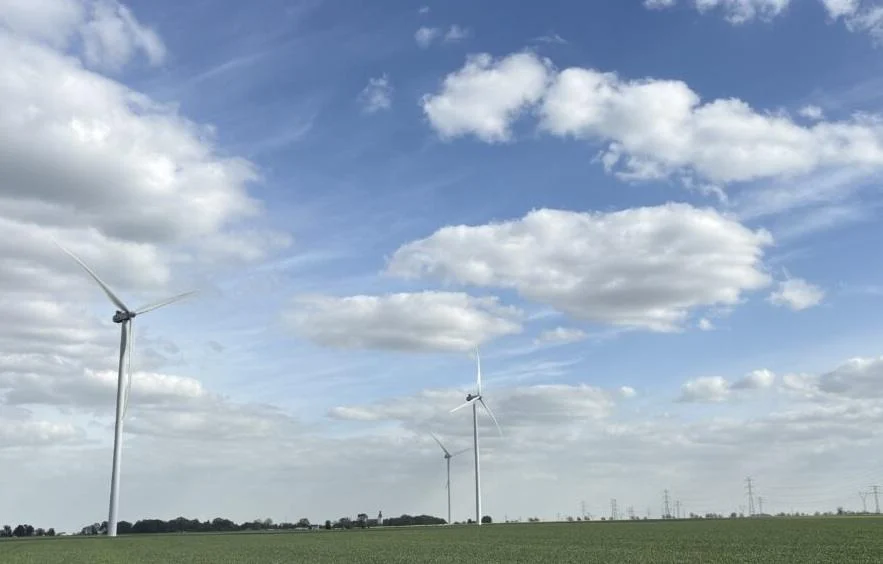
Sustainable infrastructure investor Actis has officially completed the acquisition of Klara Renewables, a 171 MW operating onshore wind portfolio in Poland, from CVC DIF, the infrastructure arm of global private markets manager CVC. This landmark transaction signifies Actis’s inaugural entry into the Polish energy market and serves as the cornerstone for a newly launched renewable energy platform. The ambitious new venture aims to develop and manage up to 1.5 GW of capacity, spanning onshore wind, solar photovoltaics (PV), and battery energy storage systems (BESS) across the country.
The acquisition comes at a pivotal moment for the Central and Eastern European (CEE) energy landscape. As Poland aggressively pursues a transition away from its historical reliance on coal, the entry of major institutional investors like Actis underscores the growing attractiveness of the Polish renewables sector. The deal includes six fully operational onshore wind farms that currently generate approximately 500 GWh of clean electricity annually—enough to power roughly 250,000 Polish households while significantly reducing carbon emissions.
Strategic Expansion into the Polish Market
For Actis, which was acquired by the global growth equity firm General Atlantic in 2024, the purchase of Klara Renewables is a strategic move to capitalize on the high-growth potential of the Polish energy transition. The firm has a long-standing reputation for investing in infrastructure assets across emerging and growth markets, including Asia, Latin America, and Africa. By entering Poland, Actis is extending its footprint in the CEE region, complementing its existing platform, Rezolv Energy, which currently operates significant renewable assets in Romania and Bulgaria.
The Klara Renewables portfolio is not merely a collection of operational assets; it represents a scalable foundation. While the current 171 MW capacity is significant, Actis has identified approximately 275 MW of hybridization potential. This involves co-locating solar PV and battery storage projects at the existing wind farm sites. This "hybrid" approach is becoming increasingly popular in Poland due to recent legislative changes, such as "cable pooling" regulations, which allow different renewable technologies to share the same grid connection point, thereby maximizing efficiency and reducing connection costs.
Jaroslava Korpanec, Head of Central & Eastern Europe at Actis, emphasized the strategic importance of the move, noting that energy security and independence are currently the highest priorities for regional governments. By building and operating critical infrastructure, Actis intends to bolster Poland’s industrial competitiveness and long-term economic resilience.
The Evolution of Klara Renewables under CVC DIF
The portfolio’s journey to full operation was managed by CVC DIF, which initially acquired the assets through its DIF VI fund during 2020 and 2021. At the time of the initial investment, the projects were at the "ready-to-build" stage. Over the subsequent three to four years, CVC DIF oversaw the complex processes of procurement, project financing, construction, and final commissioning.
The successful divestment to Actis represents a full-cycle investment for CVC DIF, demonstrating the value of hands-on asset management in the infrastructure space. Andrew Freeman, Partner and Head of Divestments at CVC DIF, stated that the transaction illustrates how active management can deliver attractive returns for investors while simultaneously advancing the decarbonization goals of the CEE region. The transition of ownership from a developer-focused infrastructure fund to a long-term operator like Actis is a common lifecycle pattern in the renewable energy sector, ensuring that assets are maintained and expanded by specialized managers.
Poland’s Energy Landscape: A Shift Away from Coal
Poland has historically been one of Europe’s most coal-dependent nations, with the fossil fuel accounting for the vast majority of its electricity generation for decades. However, the Polish government has committed to a radical transformation of its energy mix. Under the "Energy Policy of Poland until 2040" (PEP2040), the country aims to have at least 50% of its electricity generated from renewable sources by 2030.
The International Energy Agency (IEA) has frequently cited Poland as one of the fastest-growing solar markets in the European Union. Furthermore, the country is emerging as a major player in the offshore wind sector in the Baltic Sea. However, onshore wind remains a critical and cost-effective component of the mix. The acquisition of Klara Renewables directly supports these national targets as Poland seeks to retire its aging coal-fired power plants to meet EU climate mandates and avoid the rising costs associated with the EU Emissions Trading System (ETS).
The demand for clean energy in Poland is also being driven by the private sector. As global corporations establish data centers and manufacturing hubs in the country, the need for stable, green power has surged. Digitalization and the expansion of heavy industry require massive amounts of electricity, and companies are increasingly seeking Power Purchase Agreements (PPAs) with renewable energy providers to meet their own corporate sustainability goals.
Actis’s Long-Life Infrastructure Strategy
The acquisition of Klara Renewables fits perfectly within Actis’s "long-life infrastructure strategy." This specific investment approach focuses on brownfield infrastructure assets—projects that are already operational or in the late stages of development. The goal is to implement operational enhancements that improve the efficiency of existing facilities rather than deploying massive amounts of capital for entirely new "greenfield" construction.

By focusing on operational excellence and technological upgrades (such as the aforementioned hybridization with solar and BESS), Actis aims to provide its investors with predictable, long-term income streams. This strategy typically involves moderate leverage and lower risk profiles compared to early-stage development, making it an attractive option for institutional investors looking for stable yields in an inflationary environment.
The integration of Klara Renewables into the Actis portfolio will involve leveraging the firm’s global expertise in energy management. Actis has a track record of managing over 16 GW of renewable energy capacity globally. This experience will be vital in navigating the technical challenges of adding battery storage to the Polish grid, which is currently undergoing modernization to handle the intermittent nature of wind and solar power.
Chronology of the Deal and Market Context
The timeline of this acquisition reflects the broader trends in the global energy market:
- 2020–2021: CVC DIF (via DIF VI) acquires the six wind farm projects at the ready-to-build stage, identifying Poland as a key growth market despite regulatory hurdles at the time.
- 2022–2023: Construction and commissioning phases. During this period, Poland experiences a surge in energy prices following geopolitical shifts in Eastern Europe, highlighting the need for domestic renewable generation.
- Early 2024: General Atlantic completes its acquisition of Actis, providing the infrastructure firm with additional backing and a mandate for global expansion.
- July 2026: Actis officially announces the acquisition of Klara Renewables, marking its entry into Poland and the launch of its 1.5 GW platform.
The market context for this deal is also shaped by the European Union’s REPowerEU plan, which seeks to end dependence on Russian fossil fuels and fast-forward the green transition. Poland, being on the front lines of this geopolitical shift, has accelerated its permitting processes and grid investment plans, creating a more favorable environment for international capital.
Technical Analysis of Portfolio Potential
The 171 MW Klara Renewables portfolio consists of modern turbines distributed across six strategic locations. The annual output of 500 GWh is a high-yield figure for onshore wind in the region, suggesting that the sites chosen by CVC DIF have superior wind profiles.
The most significant growth lever for Actis, however, lies in the 275 MW hybridization potential. By adding solar panels to the land surrounding the wind turbines, the platform can generate power during daylight hours when wind speeds might be lower, creating a more consistent generation profile. The addition of Battery Energy Storage Systems (BESS) is the final piece of the puzzle. BESS allows the operator to store excess energy during periods of low demand and discharge it when prices are high or when the grid requires stabilization. This is particularly important in Poland, where the grid infrastructure requires flexibility to manage the phase-out of baseload coal power.

Broader Implications for the CEE Region
The entry of Actis into Poland is likely to trigger further interest from other global infrastructure funds. The CEE region has often been overlooked in favor of Western European markets like Germany or Spain. However, with those markets becoming increasingly saturated and offering lower returns, the "growth market" profile of Poland, Romania, and Bulgaria is becoming hard to ignore.
This transaction also signals a maturation of the Polish renewable market. It shows that the "de-risking" of projects—taking them from the planning stage through to full operation—is being successfully handled by international managers, who then hand over to long-term institutional owners. This cycle is essential for attracting the billions of euros in capital required to meet 2030 and 2040 climate targets.
Furthermore, the deal has positive implications for local employment and the domestic supply chain. The operation and maintenance of 171 MW of wind power, combined with the planned expansion into solar and storage, will require a skilled local workforce. It also provides a signal to Polish grid operators that large-scale private investment is ready to support the necessary technical upgrades to the national transmission system.
In conclusion, the acquisition of Klara Renewables by Actis is more than a simple change of ownership. It is a strategic deployment of capital that aligns with national policy, technological advancement, and global investment trends. As Actis begins the work of expanding this 171 MW portfolio toward its 1.5 GW target, it will play a central role in redefining Poland’s energy future, moving the nation closer to a sustainable, secure, and decarbonized power grid.
