

PRINCETON – Conventional wisdom often posits that an autocratic ethnonationalist backlash against global capitalism and liberal democracy is the dominant force driving 21st-century politics. However, recent developments in Central and Eastern Europe suggest a more nuanced reality, where political mobilizations, while sometimes labeled populist and nationalist, diverge significantly from the aggressive ethnonationalism exemplified by movements like MAGA. These shifts, occurring in countries such as Hungary and Albania, and echoing across the region, may indeed be charting a new course for political discourse and action, offering a potential model for navigating the complexities of our era.
The underlying sentiment driving these movements is a palpable reaction to the profound transformations of the late 20th and early 21st centuries. Decades of rapid technological advancement, economic globalization, and the perceived erosion of traditional social structures have left many citizens feeling adrift and dispossessed. In such times of flux, there is an inherent human tendency to seek solace and identity in the past. This impulse, however, is not monolithic; it can manifest as a regressive embrace of exclusionary ethnonationalism, or paradoxically, as a catalyst for resisting autocratic tendencies and advocating for alternative visions of societal organization.
The Shifting Political Landscape of Central and Eastern Europe
The political currents in Central and Eastern Europe are particularly illuminating in this regard. While the specter of populism and nationalism has undeniably gained traction, a closer examination reveals distinct characteristics that set these movements apart from more aggressive, identity-based ethnonationalism.
In Hungary, for instance, Viktor Orbán’s Fidesz party has long championed a narrative of national sovereignty and cultural preservation. While often critical of the European Union and advocating for policies that prioritize Hungarian identity, its rhetoric, while nationalistic, has generally stopped short of overtly advocating for ethnic exclusion on the scale seen in some other populist movements globally. The emphasis has often been on preserving a perceived "Christian Europe" and resisting what is described as "Brussels bureaucracy." This approach, while controversial, has resonated with a significant portion of the Hungarian electorate who feel their national interests and cultural values are under threat from external forces and liberal ideologies.
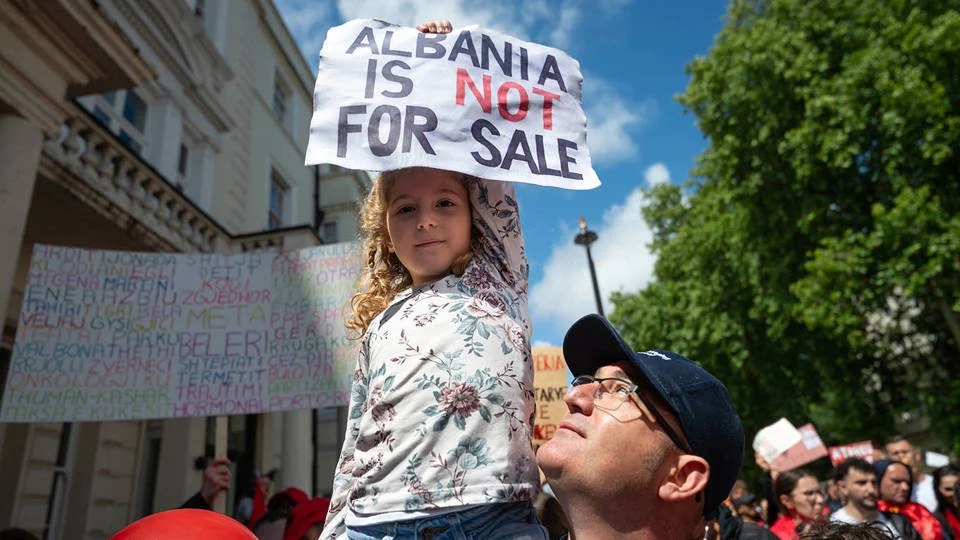
Albania, too, has witnessed shifts in its political landscape. While grappling with its own set of internal challenges, including economic development and corruption, political discourse has often centered on national pride and a desire for greater self-determination. The emergence of new political actors and the re-evaluation of existing ones reflect a broader regional trend of questioning established political norms and seeking governance that is more attuned to perceived national interests.
These developments are not isolated incidents but rather part of a broader regional phenomenon. Across countries like Poland, the Czech Republic, and Slovakia, similar sentiments have been expressed regarding national identity, sovereignty, and the impact of globalizing forces on local cultures and economies. The shared historical experience of transitioning from communism to democracy, coupled with the subsequent integration into the European Union and NATO, has created a unique context for these political evolutions.
Distinguishing from Aggressive Ethnonationalism
The crucial distinction lies in the nature of the appeals and the underlying ideologies. Aggressive ethnonationalism, as exemplified by the "Make America Great Again" (MAGA) movement in the United States, often relies on a stark us-versus-them dichotomy, frequently targeting minority groups, immigrants, and perceived "elites" with vitriolic rhetoric. It tends to promote a vision of national purity and superiority, often drawing on historical grievances and exclusionary narratives.
In contrast, while nationalistic sentiments are evident in Central and Eastern Europe, they often manifest in a more defensive posture. The focus is frequently on preserving national sovereignty against what are perceived as overreaching international bodies or global economic pressures. The rhetoric, while strong in asserting national interests, is not always characterized by the same level of explicit animosity towards specific ethnic or minority groups within the nation itself, or towards neighboring countries, as seen in more extreme forms of ethnonationalism.
For example, while Hungary has been critical of immigration and has implemented strict border controls, the primary justification has often been framed in terms of national security, cultural preservation, and the strain on social services, rather than a direct call for ethnic cleansing or overt racial supremacy. Similarly, in Albania, political discourse often revolves around economic prosperity and national development, with less emphasis on the aggressive exclusion of internal minorities, though challenges in minority rights and integration persist.
A Model for a New Form of Politics?
The question then arises: could these Central and Eastern European mobilizations represent a viable model for a new form of politics in the 21st century, one that acknowledges legitimate concerns about globalization and national identity without succumbing to the pitfalls of aggressive ethnonationalism?
One key element of this potential model is its emphasis on sovereignty and self-determination. In an era where supranational bodies and global corporations wield significant influence, many citizens feel a loss of control over their own destinies. Movements that champion the restoration of national agency, within a framework of democratic accountability, can tap into this widespread sentiment.
Another aspect is the focus on cultural preservation and identity. For many, rapid societal changes can feel like an erasure of their heritage. A political discourse that respects and seeks to safeguard distinct cultural traditions, while remaining open to reasoned dialogue and integration, can offer a sense of continuity and belonging. This is distinct from the exclusionary and often fabricated historical narratives used by aggressive ethnonationalists.
Furthermore, these movements often articulate a critique of liberal democracy’s perceived failures. While not necessarily advocating for autocracy, they question the effectiveness of current democratic institutions in addressing the economic anxieties and social dislocations experienced by ordinary citizens. This critique, when constructive, can lead to calls for reforms that make democratic systems more responsive and equitable.
However, it is crucial to acknowledge the inherent risks and complexities. The line between assertive national interest and exclusionary nationalism can be thin and easily blurred. The historical context of Central and Eastern Europe, marked by periods of both national aspiration and inter-ethnic conflict, makes vigilance all the more necessary.
Supporting Data and Contextual Analysis
The rise of these political currents is not occurring in a vacuum. Several interconnected factors contribute to their momentum:
- Economic Disparities: Despite economic integration, significant disparities in wealth and opportunity persist within and between countries in the region. Globalization has created winners and losers, and those who feel left behind are often receptive to populist appeals that promise to restore economic security and fairness. For instance, data from Eurostat consistently shows income inequality figures that, while varying by country, indicate persistent challenges in equitable distribution of economic gains.
- Technological Disruption: The rapid pace of technological change, including automation and digitalization, has disrupted labor markets and altered traditional social structures. This can lead to a sense of job insecurity and a feeling of being overwhelmed by forces beyond individual control.
- Demographic Shifts: In some parts of the region, declining birth rates and emigration have led to demographic challenges, which can be exploited by nationalist narratives that emphasize demographic decline and the need for population growth or national rejuvenation.
- Erosion of Trust in Institutions: Decades of perceived corruption, ineffective governance, and the perceived detachment of political elites from the concerns of ordinary citizens have eroded trust in established institutions, both national and international.
Chronology of Key Developments
While a precise timeline is difficult to construct due to the fluid nature of political movements, several key periods and events have shaped the current landscape:
- Post-1989 Transition: The initial years following the fall of communism saw a wave of optimism and integration into Western structures. However, the economic and social dislocations of this transition also sowed seeds of discontent that would later be harvested by populist movements.
- Early 2000s onwards: The increasing influence of the European Union, while bringing benefits, also led to debates about sovereignty and national identity. Countries like Hungary began to see the rise of parties that emphasized national interests and cultural preservation more strongly.
- 2010s and beyond: This decade witnessed a more pronounced surge in populist and nationalist sentiment across the region, often coinciding with the global rise of similar movements. The refugee crisis of 2015-2016 became a significant catalyst, amplifying concerns about borders, national identity, and security in many Central and Eastern European nations. Viktor Orbán’s re-election in Hungary in 2010 marked a significant turning point, establishing a playbook for a nationalist-conservative governance model that resonated with many. Albania has seen similar, though perhaps less pronounced, shifts in its political discourse and electoral outcomes reflecting a desire for change and national self-assertion.
Broader Impact and Implications
The political developments in Central and Eastern Europe have significant implications, both regionally and globally:
- Challenge to European Unity: The rise of nationalistic sentiments within the EU can create friction and challenge the bloc’s cohesion. Divergent views on issues like migration, fiscal policy, and the rule of law can strain relations between member states.
- Rethinking Globalization: These movements prompt a broader re-evaluation of the benefits and drawbacks of globalization. They highlight the need for more inclusive economic models that address the concerns of those who feel marginalized by global economic forces.
- Democratic Resilience: The long-term impact on democratic resilience remains to be seen. While some movements may strengthen democratic accountability by addressing citizen grievances, others risk eroding democratic norms and institutions if they veer towards authoritarianism or intolerance.
- Potential for New Political Frameworks: If these movements can successfully navigate the path between national assertion and exclusionary ideology, they could indeed offer a template for a more responsive and relevant form of politics in the 21st century. This would involve a commitment to democratic principles, respect for minority rights, and a constructive engagement with international cooperation, even while prioritizing national interests.
In conclusion, while the populist and nationalist currents in Central and Eastern Europe warrant careful observation, they are not necessarily a monolithic threat to liberal democracy. By understanding their roots in legitimate concerns about economic insecurity, cultural identity, and national sovereignty, and by differentiating them from more aggressive forms of ethnonationalism, it is possible to discern the outlines of a potentially new political paradigm. This paradigm, if developed with a commitment to democratic values and inclusivity, could offer a more nuanced and effective way of navigating the complexities of our rapidly changing world. The challenge lies in ensuring that the pursuit of national interest does not devolve into the exclusion of others, and that the search for identity does not lead to the abandonment of universal human rights.
