

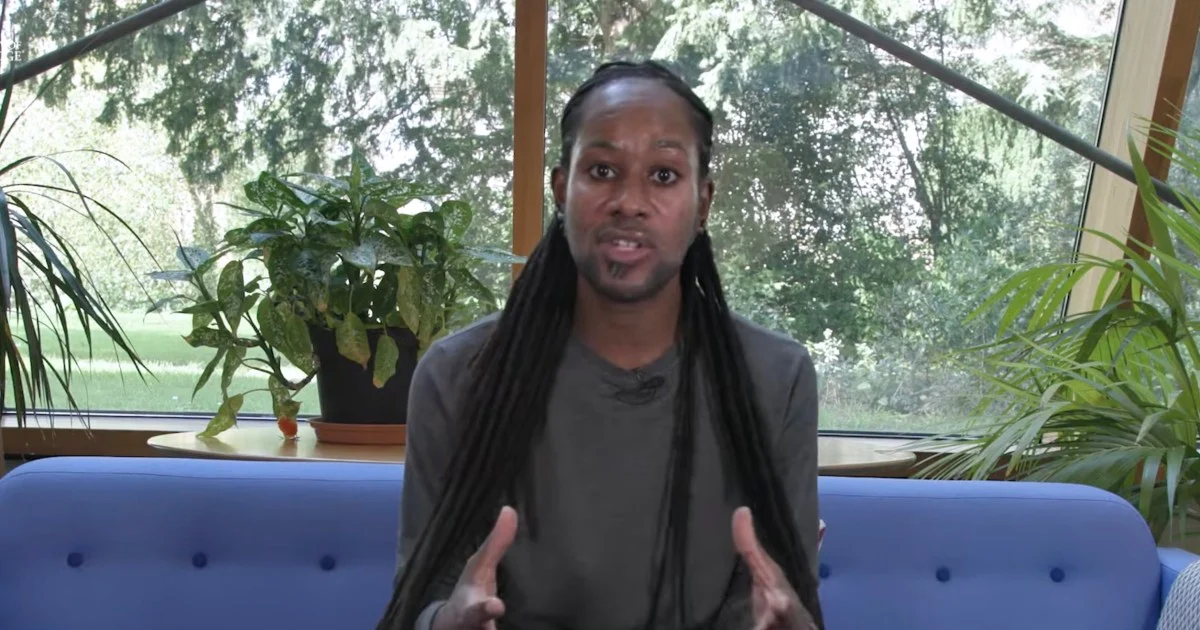
The academic community and the wider British public were struck by a profound tragedy on August 14, 2024, when Jason Arday, the youngest Black scholar ever appointed to a professorship at the University of Cambridge, was found unresponsive in his London home. At 41 years old, Arday’s death followed a tumultuous period marked by his resignation from one of the world’s most prestigious academic institutions. His departure was the culmination of a weeks-long, highly publicized campaign that targeted his professional integrity, his personal history, and his scholarly contributions. This event has sparked a nationwide debate regarding the treatment of minority scholars, the weaponization of plagiarism allegations, and the resurgence of "race science" within the halls of higher education.
Jason Arday’s rise to prominence was frequently cited as a modern miracle of perseverance. Diagnosed with global development delay and autism in his youth, Arday did not speak until the age of 11 and did not learn to read or write until he was 18. Despite these significant challenges, he pursued a career in academia with singular focus, eventually earning a PhD and becoming a Professor of Sociology of Education at Cambridge in 2023. His work primarily focused on race, class, and the structural inequalities within the education system. However, the very system he sought to analyze and improve became the site of a relentless campaign against him in the final months of his life.
A Timeline of the Controversy and Resignation
The scrutiny surrounding Arday intensified in July 2024, just three weeks before his death. The campaign against him was multifaceted, involving traditional media outlets, social media "clip economies," and individual commentators. The allegations centered on purported plagiarism within his doctoral thesis and other published works. While academic institutions have established internal processes for investigating such claims, the campaign against Arday bypassed traditional peer review and administrative channels, opting instead for public "exposure."
In late July, after weeks of mounting pressure, Arday resigned from his position at Cambridge. The resignation did not quiet the storm; instead, it emboldened critics who viewed his departure as a confession of guilt. By the time of his death on August 14, Arday had been subjected to a level of public dissection rarely seen in the academic world. His manner of speaking, his athletic achievements, and the veracity of his neurodivergence were all called into question.
The timeline of the campaign suggests a coordinated effort to link Arday’s alleged professional failings to broader criticisms of Equality, Diversity, and Inclusion (EDI) initiatives. Critics argued that Arday was a "product of diversity hires" rather than merit, using the plagiarism allegations as a cudgel to delegitimize the push for greater representation in UK universities.
The Nature of the Allegations and the Investigation Results
Central to the controversy were claims that Arday had plagiarized portions of his scholarship. In the digital age, these claims were amplified through "isolated paragraph" comparisons circulated on platforms like X (formerly Twitter). These comparisons often lacked the context of academic citation standards or the specific disciplinary norms of sociology.
Crucially, an internal investigation into Arday’s work had already cleared him of plagiarism in one instance, while a second investigation was still ongoing at the time of his death. Despite the lack of a formal verdict from his institution, the "court of public opinion" had already moved toward a consensus of guilt.
The attacks were not limited to right-wing publications like The Spectator and The Telegraph, which ran numerous articles questioning Arday’s credentials. The criticism also crossed ideological lines. Aaron Bastani, co-founder of the left-wing outlet Novara Media, publicly characterized Arday as a "conman" on social media, claiming that a 40-minute lecture by the professor contained "nothing" of substance. This cross-spectrum pile-on underscored a growing hostility toward identity-based scholarship, where "merit" is used as a neutral-sounding proxy for traditionalist academic gatekeeping.
The Role of Nathan Cofnas and "Race Realism"
The primary instigator of the campaign against Arday was Nathan Cofnas, a scholar associated with "race realism"—a modern iteration of eugenics and race science. Cofnas had previously been dismissed from the University of Cambridge in early 2024 following the publication of a blog post in which he argued that Harvard University would have no Black professors if hiring were based solely on merit.
Cofnas’s involvement reveals a deeper ideological motive behind the targeting of Arday. In a video interview posted the day Arday died, Cofnas admitted that the focus on Arday was less about the technicalities of plagiarism—which he noted is relatively common and often handled quietly in academia—and more about Arday’s "exalted position" as a high-profile Black academic.
Cofnas has long been a figurehead for the "free speech" movement in British academia. When Cambridge students previously called for an investigation into his views, a group of senior scholars defended him, citing the importance of intellectual freedom. The irony, noted by many of Arday’s supporters, is that the same "free speech" protections were not extended to protect Arday from what many described as a "lynch mob" atmosphere.
Statistical Context: Black Representation in UK Higher Education
To understand the impact of the campaign against Arday, one must look at the statistical reality of the environment in which he worked. According to data from the Higher Education Statistics Agency (HESA), the representation of Black staff in senior academic roles in the United Kingdom remains strikingly low.
As of the 2022-2023 academic year:
- Out of more than 23,000 professors in the UK, fewer than 200 are Black.
- Black women make up less than 0.2% of the total professoriate.
- While Black students make up a significant portion of the undergraduate population, there is a "leaky pipeline" that prevents them from reaching senior faculty positions.
Arday was not merely a professor; he was a statistical anomaly. His presence at Cambridge was a symbol of progress for many, but for others, it represented a threat to the traditional hierarchy. The intensity of the scrutiny he faced is often cited by sociologists as "hyper-visibility," where a minority individual’s mistakes are magnified and used to judge their entire demographic group.
Comparative Analysis of Academic Misconduct
The public shaming of Jason Arday stands in stark contrast to how other forms of academic and professional misconduct are handled within the British university system. For example, the case of Peter Hutchinson, a former lecturer at Cambridge, provides a telling comparison.
In 2015, Hutchinson was accused of sexual harassment by ten different students. Despite breaching sanctions imposed after an initial investigation, he was eventually allowed to return to certain college affairs. His case, involving multiple allegations of interpersonal harm, did not trigger a nationwide media campaign or a public dissection of his "merit."
The disparity in treatment suggests that allegations of plagiarism, when leveled against a high-profile Black scholar, are treated with more public vitriol than allegations of sexual misconduct against white faculty members. This suggests that the "interest in academic ethics" cited by Arday’s critics may have been a secondary concern to the political goal of dismantling diversity initiatives.
The Concept of "Institutional Murder"
In the wake of Arday’s death, many scholars have invoked the framework of "institutional murder." This term was popularized by Dalit scholars in India following the 2016 death of Rohith Vemula, a PhD student who took his own life after facing systemic persecution by his university.
Institutional murder refers to a death that is the result of a "narrowing of the conditions of liveability" caused by entrenched systemic violence, discrimination, and harassment. By using this term, supporters of Arday argue that his death should not be viewed as an individual tragedy or a private health crisis, but as the predictable outcome of a system that subjects Black scholars to unsustainable levels of stress and public hostility.
This framework challenges the "meritocracy" narrative by suggesting that the barriers to success for minority scholars are not just intellectual or professional, but existential. In the South Asian context, as noted by Harvard scholar Ajantha Subramanian, "merit" is often used to secularize caste-based exclusion. In the British context, a similar logic is applied to race, where "objective" measures are weaponized to maintain traditional power structures.
Broader Implications for British Higher Education
The death of Jason Arday has left a void in the field of sociology and has sent a chilling message to minority scholars across the United Kingdom. The implications of this event are manifold:
- The Chilling Effect: Younger Black and minority ethnic (BME) scholars may now view high-profile success as a liability, fearing that reaching the top of their field will make them targets for coordinated character assassination.
- The Legitimation of Race Science: The success of figures like Nathan Cofnas in instigating national media campaigns suggests that eugenics-adjacent ideas are gaining a foothold in mainstream discourse, often under the guise of "questioning EDI."
- The Failure of Institutional Protection: The University of Cambridge and other academic bodies face criticism for failing to protect their staff from external harassment. The reliance on slow-moving internal processes is often insufficient when faced with the speed and scale of social media "pile-ons."
- The Ethics of Media Reporting: The role of the media in Arday’s death raises urgent questions about the responsibility of journalists to investigate the motives of their sources, especially when those sources have a documented history of racial animus.
As the academic community mourns the loss of a scholar who overcame immense odds to reach the pinnacle of his profession, the conversation has shifted toward the urgent need for a systemic overhaul. The tragedy of Jason Arday serves as a stark reminder that in the pursuit of "truth" and "academic standards," the human cost of targeted harassment can be absolute. The debate over his legacy will likely continue to shape the future of British academia for years to come.
