

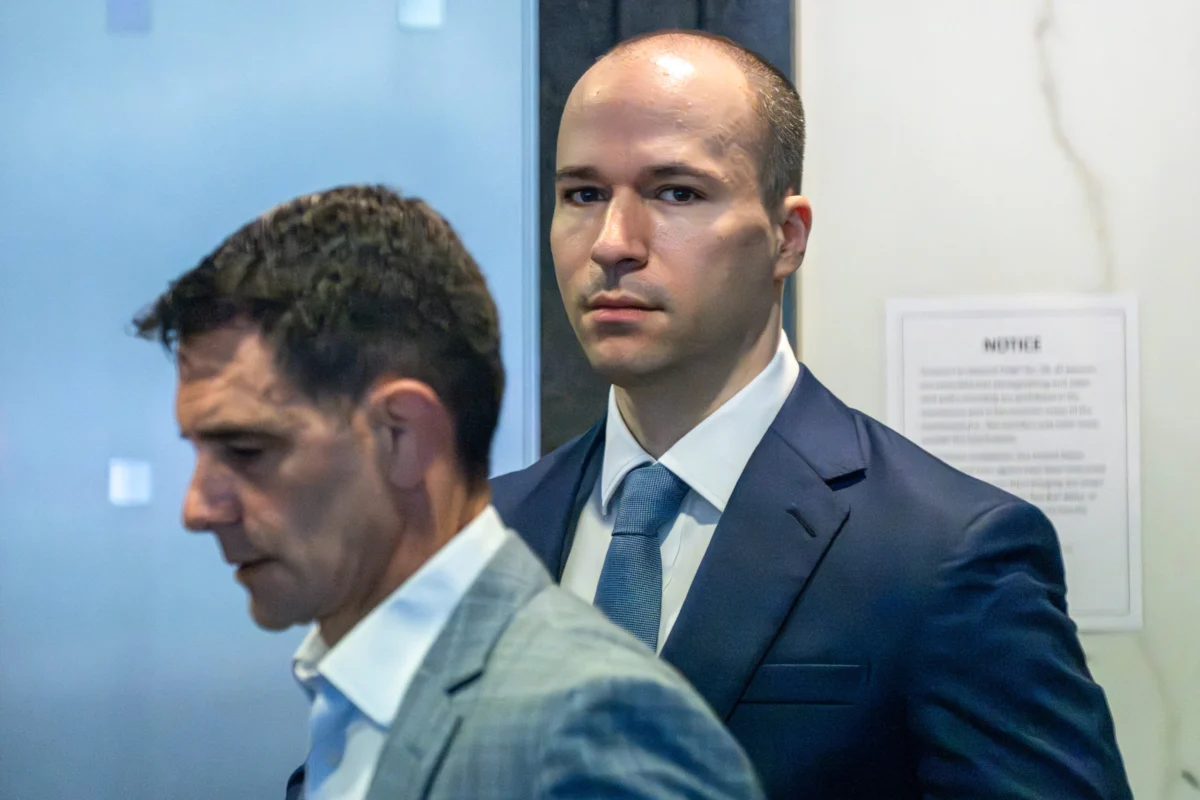
In an exclusive interview with CNBC’s Squawk Box on Monday, OpenAI President and co-founder Greg Brockman addressed the recent wave of high-profile departures from the artificial intelligence powerhouse, characterizing the turnover as a natural byproduct of the company’s intense growth and unprecedented public visibility. Speaking from the sidelines of a federal court appearance in Oakland, California, Brockman argued that the exits, while frequent, do not indicate internal instability but rather reflect the evolving eras of a company transitioning from a research laboratory into a global commercial juggernaut.
The comments come at a critical juncture for OpenAI as it navigates a complex legal landscape and prepares for a highly anticipated initial public offering (IPO). Brockman’s defense of the company’s culture and leadership stability aims to reassure investors and partners who have grown wary of a "revolving door" at the C-suite level. Over the past several months, OpenAI has seen the departure of several founding members and key executives, sparking a narrative of internal friction regarding the company’s direction, particularly the balance between commercial profitability and AI safety.
The Recent Executive Shakeup
The immediate catalyst for the current scrutiny was the sudden departure of Denise Dresser, OpenAI’s revenue chief, who left her post last week after only eight months. Dresser, a veteran executive previously with Salesforce and Slack, had been recruited to aggressively scale OpenAI’s enterprise division. Her role was pivotal in the company’s strategy to monetize its Large Language Models (LLMs) by securing multi-million dollar contracts with Fortune 500 companies—a sector where OpenAI faces stiff competition from Anthropic and Google.
Dresser’s exit followed closely on the heels of Brad Lightcap’s announcement that he was stepping down after an eight-year tenure. Lightcap, who served as Chief Operating Officer, was instrumental in navigating OpenAI through its most transformative years, including the launch of ChatGPT and the subsequent surge in enterprise adoption. While Lightcap officially moved into a role focused on "special projects" in April 2024, his final departure marks the end of an era for the original leadership team that stabilized the company following the brief but chaotic firing and rehiring of CEO Sam Altman in late 2023.
To fill the vacuum left by these departures, OpenAI has appointed Dali Rajic as its new Chief Revenue Officer. Rajic joins OpenAI from the cybersecurity firm Wiz, which recently made headlines following a $32 billion acquisition attempt by Google. Brockman expressed high confidence in Rajic’s ability to lead the next phase of revenue growth, emphasizing that the company requires different skill sets as it matures.
A History of Leadership Evolution and Turnover
To understand Brockman’s assertion that the turnover is "not atypical," it is necessary to examine the broader timeline of OpenAI’s leadership changes since its inception in 2015. The company has historically functioned as a research-centric non-profit, but its shift toward a "capped-profit" model in 2019 and the explosive success of generative AI have fundamentally altered its organizational needs.
The timeline of major departures highlights a recurring theme of ideological and strategic shifts:
- 2021: A group of early employees, including Dario Amodei, left to found Anthropic, citing concerns over the commercialization of AI and a perceived lack of focus on safety protocols.
- Early 2024: Andrej Karpathy, a founding member and a leading figure in computer vision, departed to pursue independent projects, marking a loss of significant technical heritage.
- May 2024: Ilya Sutskever, OpenAI’s co-founder and Chief Scientist, officially left the company. Sutskever had been a central figure in the 2023 board dispute and his departure was seen as the final severance of the old guard’s influence on safety governance.
- August 2024: John Schulman, another co-founder, joined rival Anthropic, while Jan Leike, a leader in "superalignment," also resigned, stating that safety culture and processes had taken a backseat to "shiny products."
Brockman’s perspective is that these departures are magnified by the "spotlight" on OpenAI. He noted that in any other Silicon Valley unicorn reaching a valuation north of $100 billion, such transitions would be viewed as standard professionalization. "There have been different eras where we have different sets of leaders in place," Brockman told CNBC. "I’m a constant, Sam [Altman] is a constant, and I think that we are stronger because of that resilience and diversity."
Supporting Data: The Financial Stakes of Stability
Despite the executive churn, OpenAI’s financial trajectory remains steep. According to internal data and investor briefings, the company’s enterprise unit has become a larger revenue driver than its consumer-facing ChatGPT Plus subscriptions. This shift explains why the roles previously held by Dresser and Lightcap are so scrutinized.
As of mid-2026, OpenAI’s annualized revenue is estimated to have surpassed $5 billion, a staggering increase from the $1.6 billion reported in late 2023. The company’s "ChatGPT Enterprise" and "ChatGPT Team" offerings now boast over 1.5 million paying business users. However, the cost of maintaining this lead is immense. Industry analysts estimate that OpenAI’s compute costs—primarily paid to Microsoft for Azure cloud services—could exceed $6 billion annually as the company trains its next-generation models, internally referred to as "GPT-5" or "Strawberry."
The pressure to maintain this growth while preparing for an IPO necessitates a leadership team with deep experience in enterprise sales and corporate governance. Dali Rajic’s background at Wiz and AppDynamics suggests a pivot toward a more traditional, high-performance sales culture. This transition often alienates research-minded veterans who joined the company when its primary goal was AGI (Artificial General Intelligence) research rather than quarterly revenue targets.
Official Responses and Internal Sentiment
During a meeting with investors on Friday, Brockman and CFO Sarah Friar—who joined from Nextdoor earlier this year—sought to project a unified front. Friar reportedly told investors that the "fundamentals of the business have never been stronger" and that the enterprise market represents a "multi-decadal opportunity" that far outweighs the short-term noise of personnel changes.
In his CNBC interview, Brockman emphasized the "resilience" of the remaining team. He suggested that the core vision of the company remains intact, even as the individuals executing that vision change. This sentiment, however, is met with skepticism by some industry observers. Critics argue that the loss of original founders like Sutskever and Schulman represents a "brain drain" of the very talent that made OpenAI a pioneer.
Related parties, including Microsoft, have remained publicly supportive. Sources close to the Redmond-based tech giant indicate that Microsoft views the professionalization of OpenAI’s management as a positive step toward a successful IPO. For Microsoft, a stable, commercially-focused OpenAI is essential for protecting its multi-billion dollar investment and ensuring a steady pipeline of AI integration for its Office 365 and Bing ecosystems.
Analysis of Implications: The Road to IPO
The executive turnover at OpenAI carries significant implications for the broader AI industry and the company’s eventual public listing.
First, the transition from a founder-led research lab to a manager-led enterprise suggests that OpenAI is maturing. In the lifecycle of a technology company, the skills required to invent a breakthrough technology are rarely the same skills required to sell it at scale. By hiring executives like Rajic and Friar, OpenAI is signaling to Wall Street that it is ready for the rigors of being a public company, which includes meeting earnings expectations and navigating regulatory hurdles.
Second, the departures have fueled the growth of competitors. The "OpenAI Diaspora" has populated rivals like Anthropic, xAI, and various startups with elite talent. This has effectively democratized some of the expertise that was once concentrated within OpenAI, accelerating the pace of competition. Anthropic’s "Claude" models, in particular, are now seen as direct equals to OpenAI’s GPT-4o in terms of reasoning and safety, largely due to the contributions of former OpenAI researchers.
Third, there is the question of "Safety vs. Speed." The departure of leaders like Jan Leike and Ilya Sutskever has left a void in the company’s safety-focused departments. While OpenAI has established a new Safety and Security Committee, skeptics worry that the commercial pressure of an IPO will lead the company to cut corners. Brockman’s assertion that he and Altman are the "constants" is meant to provide assurance that the original mission of "safe AGI" is still the North Star, but the burden of proof will remain on the company’s future product releases.
Conclusion and Looking Ahead
As OpenAI moves closer to its projected 2026 or 2027 IPO, the scrutiny on its leadership will only intensify. Greg Brockman’s dismissal of turnover concerns as "atypical" scrutiny serves as a defensive maneuver to maintain the company’s premium valuation. By framing the exits as part of a natural "evolutionary era," OpenAI is attempting to rewrite the narrative from one of internal strife to one of strategic maturation.
The arrival of Dali Rajic marks the beginning of what may be called the "Revenue Era" for OpenAI. Whether this new leadership can maintain the company’s innovative edge while satisfying the demands of the enterprise market remains the most critical question for the AI industry. For now, Brockman and Altman remain at the helm, banking on the idea that as long as the technology continues to lead the market, the names on the office doors are secondary to the capabilities of the models themselves.
With the federal court proceedings in California highlighting the legal challenges surrounding data usage and competition, OpenAI’s ability to project stability is more than just a PR exercise—it is a financial necessity. The "spotlight" Brockman mentioned is unlikely to dim anytime soon, and the world will be watching to see if the "constants" can steer the company through its most turbulent and profitable chapter yet.
