

Once again, the International Monetary Fund (IMF) finds itself in a familiar predicament, appealing for urgent resources to bolster its support for impoverished nations grappling with severe public health emergencies. This recurring challenge, while persistent, is amenable to a remarkably straightforward and sustainable solution.
The Persistent Flaw in Global Health Emergency Response
The international financial architecture has consistently revealed a critical vulnerability during major global health crises: a fundamental reliance on ad-hoc fundraising for relief efforts. When disaster strikes, the very institutions designed to provide succour to affected countries are compelled to embark on a resource-intensive scramble to secure necessary funds. This reactive approach, while sometimes yielding results, often leads to delays and inefficiencies that can exacerbate the human toll of a crisis.
A stark illustration of this systemic weakness emerged twelve years ago, during the devastating Ebola epidemic that ravaged Guinea, Liberia, and Sierra Leone. At that juncture, the international community discovered that the IMF, often described as the global economy’s firefighter, lacked a specific instrument to provide debt relief during a public health catastrophe. While the IMF did possess a mechanism for crisis response—the Post-Catastrophe Debt Relief (PCDR) Trust Fund, established in the aftermath of Haiti’s catastrophic 2010 earthquake to address debt relief for countries impacted by natural disasters—a rapidly evolving epidemic presented a different, more complex challenge. The PCDR Trust’s mandate did not encompass such health-related emergencies.
A Swift, Yet Temporary, Adaptation: The Birth of the CCRT
In response to the Ebola crisis, the international community demonstrated an unusual capacity for rapid adaptation. In November 2014, then-U.S. Treasury Secretary Jack Lew urged the IMF to cancel approximately $100 million in debt owed by the three Ebola-stricken nations. Concurrently, then-Managing Director Christine Lagarde proposed an additional financing package to the G20 heads of state. Within a mere three months, a significant transformation occurred within the IMF’s framework. A new public health window was integrated into the PCDR Trust’s mandate. Existing resources were consolidated with residual funds from the earlier Multilateral Debt Relief Initiative, leading to the establishment of the Catastrophe Containment and Relief Trust (CCRT). This dedicated mechanism was specifically designed to empower the poorest countries to reallocate fiscal resources away from debt repayment and towards the critical task of protecting lives during crises.
The COVID-19 Pandemic and the Strain on the CCRT
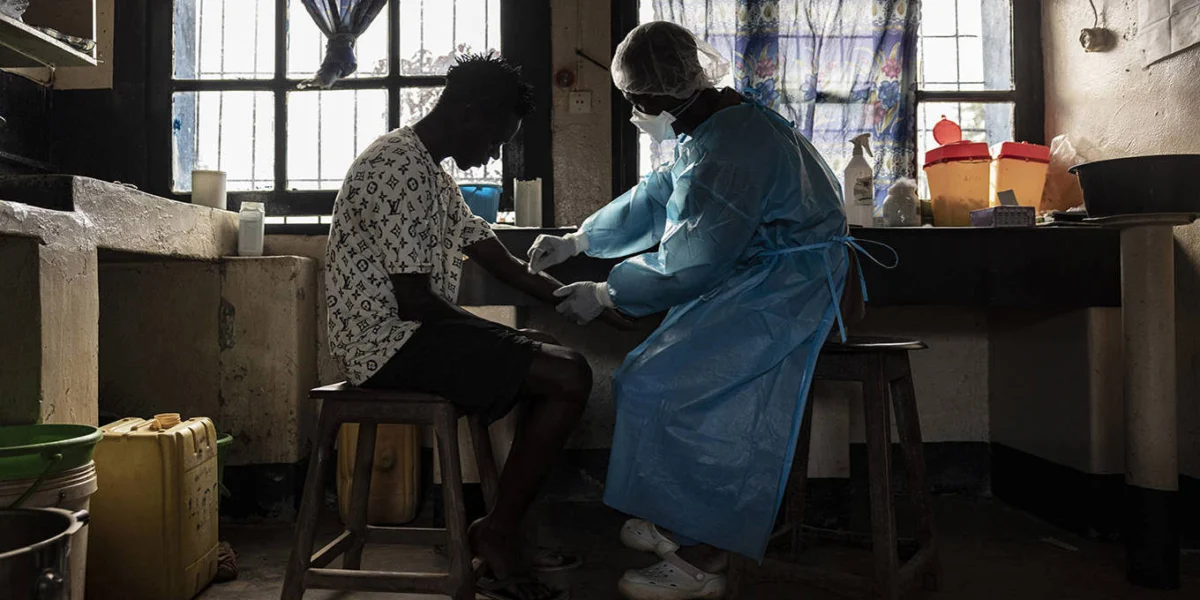
However, the profound global fiscal strain imposed by the COVID-19 pandemic nearly depleted the CCRT’s resources. This depletion occurred precisely as another Ebola crisis has erupted, leaving the trust running perilously low. As of the current reporting period, over 2,000 deaths have been confirmed in the Democratic Republic of Congo (DRC), a nation already battling significant economic and social challenges. Beyond the tragic loss of life, the United Nations Development Programme (UNDP) estimates that the ongoing outbreak could push nearly one million additional people into poverty, highlighting the far-reaching socio-economic consequences of such health emergencies.
The DRC itself was among the nations that borrowed heavily from the IMF during the COVID-19 pandemic to shore up its economy. The country currently carries more than $3 billion in outstanding IMF debt. While its borrowing capacity at the Fund is not yet fully exhausted, it is highly probable that the DRC will require additional financing. This need arises from a confluence of factors, including volatile oil prices, decelerating economic growth, and the escalating Ebola crisis. The nation will not only require immediate liquidity but also relief from its existing financial obligations to effectively manage these compounding challenges.
The Insufficiency of Current Resources
The CCRT was precisely created to address such dire circumstances. However, its available resources currently stand at a mere $120 million. In stark contrast, the DRC alone is slated to pay the IMF almost $300 million in debt service in the year 2027. This disparity underscores a critical shortfall: the IMF’s primary instrument for disaster relief possesses insufficient funds to adequately assist even a single country facing a major crisis, let alone the estimated 30 other nations that could potentially seek assistance from the CCRT.
Historically, donor countries have demonstrated a willingness to contribute to debt relief efforts. During the COVID-19 pandemic, the IMF received approximately $800 million in contributions. Notably, the United Kingdom pledged $185 million, and Japan committed $100 million within days of the pandemic’s declaration. While these pledges are commendable and vital, they represent a piecemeal approach that addresses symptoms rather than the root cause of the problem. Each time a significant health crisis emerges, the IMF is compelled to solicit its shareholders to replenish an instrument specifically designed to respond to recurrent shocks. This process inevitably introduces political delays, hindering the prompt delivery of aid that should function as an automatic and rapid stabilizer.
A Sustainable Solution: Leveraging IMF Gold Reserves
A more effective and sustainable approach is readily available. The IMF holds approximately 90.5 million troy ounces of gold, a valuable legacy from the Bretton Woods era when member countries settled their quotas in bullion. This gold is currently recorded on the IMF’s books at a historical cost of $45 per ounce. At the current market price of around $4,000 per ounce, this represents an unrealized profit of roughly $357.9 billion.
In its current state, the IMF’s substantial gold holdings generate no income. However, if a small fraction of this gold were to be strategically sold—incrementally, to avoid disrupting global markets—the proceeds could establish a permanent endowment fund. Such a fund would be capable of indefinitely supporting the IMF’s subsidy accounts.
The Gold Endowment Proposal in Detail
The proposal is elegantly simple: sell a modest portion of the IMF’s gold reserves, perhaps 10%, and allocate the resulting proceeds to a permanent endowment account. Assuming a conservative annual return of 3%, consistent with the yield assumptions underpinning other IMF financial instruments, an endowment of $35.8 billion would generate over $1 billion annually in perpetuity. This substantial annual income would be more than sufficient to fully fund the CCRT. Furthermore, it would provide a permanent revenue stream to subsidize the IMF’s entire concessional lending architecture, encompassing the Poverty Reduction and Growth Trust, the Resilience and Sustainability Trust, and any future successor instruments. Crucially, this would eliminate the need for the institution to solicit donor contributions for these vital programs ever again.
Historical Precedent and Broad Support
The concept of selling gold to finance concessional lending is not novel. The IMF has previously engaged in gold sales: 12.94 million ounces were sold in 1999, and another 12.97 million ounces were sold in 2009, collectively amounting to nearly three times the volume proposed today. In the past year alone, calls for another gold sale have emanated from a diverse array of organizations, including the Vulnerable 20 Group (V20), the G-24, the Jubilee Commission, and over 165 civil-society organizations.
The rationale behind this proposal is compelling. A gold sale would incur no cost to taxpayers and would not result in any financial loss for the IMF. It represents a strategic conversion of an idle, illiquid, and non-interest-bearing asset into one that generates a perpetual income stream for the world’s most vulnerable nations. Given that gold prices are currently hovering near historic highs, the timing for such a conversion appears exceptionally opportune.
Addressing Criticisms and the Role of U.S. Leadership
Critics may point to the IMF’s Articles of Agreement, which stipulate an 85% supermajority for gold sales, necessitating U.S. congressional support, which can be uncertain. However, this requirement presents a crucial opportunity for the United States to demonstrate global leadership. The ongoing Ebola crisis is no longer confined to African nations; it poses a global health threat. Recent actions by the U.S. government to address the Ebola outbreak underscore policymakers’ recognition of this universal threat. A more robust response in the DRC, for instance, would ultimately enhance global security and well-being.
To facilitate such a response, the DRC should receive immediate relief from upcoming IMF payment obligations. This would grant the nation the necessary fiscal space to concentrate its resources on combating the epidemic and expanding its social safety net. Simultaneously, an immediate donor-replenishment campaign for the CCRT should be initiated. In parallel, serious negotiations regarding a gold endowment fund should commence, with the ultimate goal of rendering the question of CCRT funding permanently obsolete.
The establishment of the CCRT in 2014 was a testament to decisive U.S. leadership, driven by the conviction that the machinery of international finance should not remain inert in the face of humanitarian catastrophes. That principle was sound then, and it should serve as an inspiration for decisive action once more in 2026. By leveraging its considerable gold reserves, the IMF can transition from a reactive crisis manager to a proactive provider of sustained financial stability for its most vulnerable member states, ensuring that future public health emergencies do not find the global financial system wanting. This strategic move would not only address immediate needs but also reinforce the IMF’s role as a cornerstone of global economic resilience.
