

Four years after the Calf Canyon/Hermits Peak Fire decimated 341,471 acres in northern New Mexico, the landscape remains a haunting testament to the most destructive blaze in the state’s recorded history. Vast stretches of the Sangre de Cristo Mountains, once lush with coniferous forests, are now dominated by charred "ghost forests"—skeletal remains of trees that provide no shade and offer little hope of natural regeneration. This specific disaster is part of a much larger, statewide crisis; data from the New Mexico Energy, Minerals and Natural Resources Department (EMNRD) indicates that wildland fires have consumed more than 5.45 million acres across the state over the last two decades.
In response to this unprecedented ecological loss, a coalition of state agencies and academic institutions has launched a multi-faceted "reforestation pipeline." This interagency initiative aims to move beyond simple tree planting toward a sophisticated, climate-resilient strategy for forest restoration. Central to this effort is the New Mexico Reforestation Center, which officially broke ground on April 27, 2026, in Mora County. The center represents a paradigm shift in how the American Southwest approaches land management in an era of aridification and extreme weather.
The Scale of the Reforestation Challenge
The magnitude of the task facing New Mexico officials is difficult to overstate. Traditional reforestation methods often see survival rates as low as 25 percent in the harsh, post-fire environments of the Southwest. The challenges are twofold: the sheer volume of seedlings required to cover millions of scorched acres and the increasingly hostile conditions of the planting sites themselves.

On a typical burn scar, surface temperatures can soar to 150 degrees Fahrenheit. Without the canopy of mature trees, the dark, charred soil absorbs massive amounts of solar radiation. Furthermore, New Mexico continues to grapple with a decades-long megadrought. As of mid-May 2024, approximately 94 percent of the state was experiencing drought conditions. Drier winters have reduced the snowpack that historically insulated young trees and provided a slow-release water source through the spring.
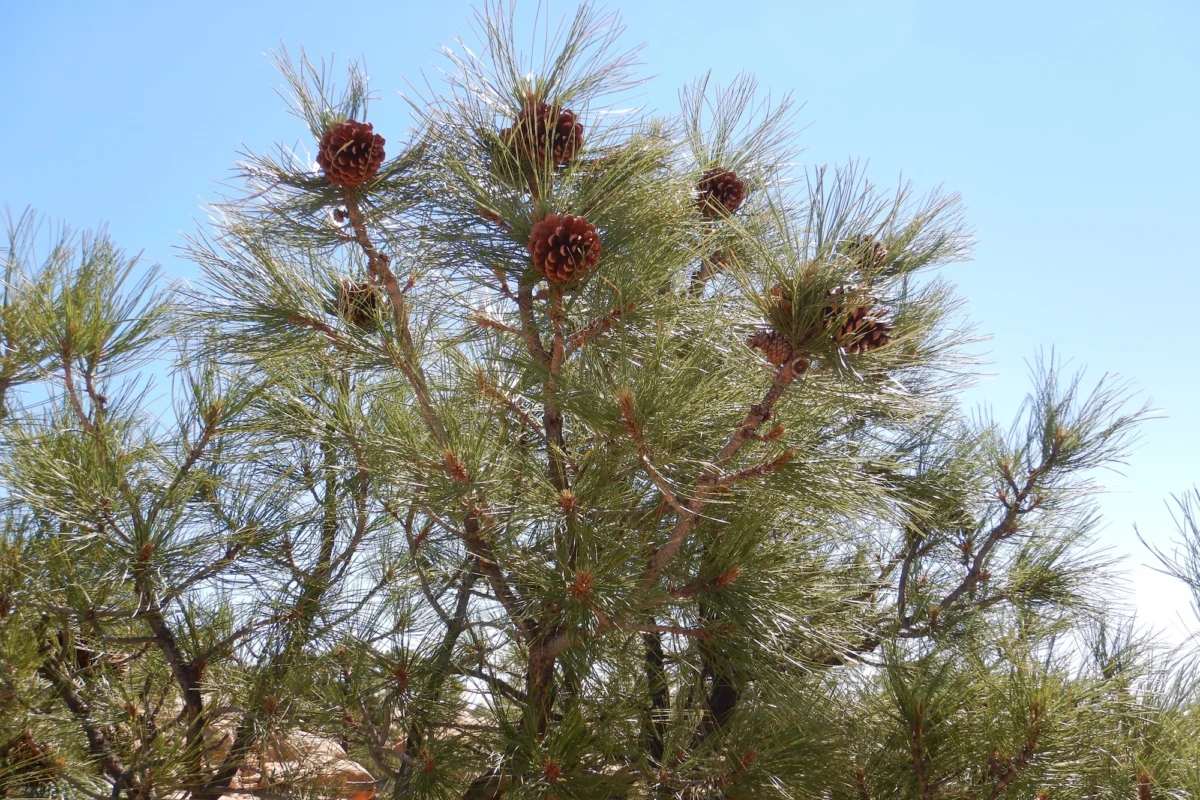
To combat these odds, the new Reforestation Center is designed to eventually produce 5 million seedlings annually, focusing on key native species such as ponderosa pine and Douglas fir. However, as Jenn Auchter, director of the New Mexico Reforestation Center, notes, the goal is not merely to plant trees but to ensure they survive long enough to become a self-sustaining forest.
The Reforestation Pipeline: From Seed to Stand
The "reforestation pipeline" is an integrated model involving EMNRD, New Mexico Highlands University (NMHU), New Mexico State University (NMSU), and the University of New Mexico (UNM). This collaborative approach breaks the restoration process into several critical stages, each informed by the latest climate science.
1. Genetic Prospecting: Finding the Best of the Worst
The process begins with researchers from New Mexico Highlands University who scout forests across the state for mature cones. Their strategy is to find what they term the "best trees on the worst sites." By harvesting seeds from trees that have already survived extreme drought, previous wildfires, or temperature spikes, they hope to capture genetic traits that confer natural resilience. In 2024, this effort resulted in the collection of 12 million seeds. These seeds undergo rigorous germination testing and are certified by the U.S. Forest Service National Seed Laboratory to ensure genetic identity and physical quality.

2. The "Nursery Boot Camp"
Once seeds reach the John T. Harrington Forestry Research Center at NMSU, they are not pampered. Andrei Toca, a research scientist at the center, employs a method of "stress-conditioning" the seedlings. Unlike commercial nurseries that grow lush, green plants under optimal conditions, Toca exposes the young trees to controlled drought and elevated temperatures.
This "toughening up" process encourages the seedlings to develop larger root systems relative to their needles. A higher root-to-shoot ratio allows the tree to tap into deeper soil moisture while minimizing water loss through transpiration. By the time these seedlings are moved to a burn scar, they have already been physiologically "trained" for the heat and aridity they will encounter.
3. Predictive Modeling and Site Selection
The final stage of the pipeline involves sophisticated spatial analysis led by Matt Hurteau, a professor at the University of New Mexico and director of the Center for Fire Resilient Ecosystems and Society. Hurteau’s team has developed a predictive model with a 63 percent accuracy rate for determining seedling survival based on topography and solar radiation.
The model analyzes factors such as slope steepness, orientation (aspect), and position. For example, Hurteau’s research indicates that ponderosa pines fare poorly on south- and west-facing slopes, which receive the most intense afternoon sun. By identifying "micro-refugia"—pockets of the landscape such as gullies or north-facing slopes where moisture lingers and temperatures are lower—land managers can deploy their limited resources where they are most likely to succeed.

A Chronology of Crisis and Innovation
The development of the New Mexico Reforestation Center is the culmination of years of escalating fire activity and subsequent learning:
- 2011: The Las Conchas Fire burns 156,000 acres in the Jemez Mountains. Research begins here on why natural regeneration is failing in high-intensity burn patches.
- 2016: Professor Matt Hurteau begins planting experimental plots in the Las Conchas footprint to study the impact of solar radiation on seedling survival.
- 2020: The Luna Fire burns north of Mora, providing further data on high-elevation forest loss.
- 2022: The Calf Canyon/Hermits Peak Fire, ignited by two prescribed burns that escaped control, becomes the largest fire in state history. The resulting devastation accelerates political and financial support for a state-run reforestation center.
- 2024: Seed collection efforts reach a record 12 million seeds, establishing a diverse genetic bank for future planting.
- April 2026: Groundbreaking for the New Mexico Reforestation Center in Mora County.
- Fall 2028: The center is projected to produce its first 1 million seedlings for large-scale deployment, with a goal of 5 million annually thereafter.
Broader Implications: Water Security and Assisted Migration
The stakes of the reforestation pipeline extend far beyond ecological aesthetics. The loss of forest cover has direct, dire consequences for human infrastructure. Steve Bassett, director of conservation programs for The Nature Conservancy in New Mexico, highlights the "terrible effect" on local communities when forests disappear.
In the aftermath of the 2022 fires, the city of Las Vegas, New Mexico, faced a total water shutdown. Without trees to stabilize the soil, monsoon rains washed ash, sediment, and debris into the Gallinas River, the city’s primary water source. This phenomenon—where burn scars lead to flash flooding and the "choking" of reservoirs—threatens the long-term viability of many Southwestern towns.
Furthermore, the scale of climate change is forcing scientists to consider "assisted migration." This controversial but increasingly necessary strategy involves planting species that are currently native to warmer, more southern regions into northern landscapes. Professor Hurteau suggests that the Chihuahuan pine, typically found in southern Arizona and New Mexico, may be a better candidate for the future climate of northern New Mexico than the species that grew there a century ago.

Analysis of the Long-Term Outlook
The creation of the New Mexico Reforestation Center is a significant step, but it faces a daunting "backlog." With over 7 million acres of forest land in need of some form of restoration and new fires occurring every season, the demand for seedlings will likely outstrip supply for decades.
However, the "pipeline" model offers a blueprint for other Western states. By integrating genetic selection, physiological conditioning, and predictive mapping, New Mexico is moving away from the "spray and pray" method of reforestation—where seeds or seedlings are distributed widely with little regard for micro-climates—toward a precision-forestry approach.
The success of this initiative will be measured not by how many trees are planted in 2028, but by how many of those trees are still standing in 2050. As the climate continues to shift, the work being done in the nurseries of Mora and the laboratories of Albuquerque represents a critical race against time to preserve the high-desert ecosystems that define the American Southwest. The clock, as Bassett noted, is indeed ticking; every year without a proactive strategy is a year where the window for successful reforestation narrows.
