

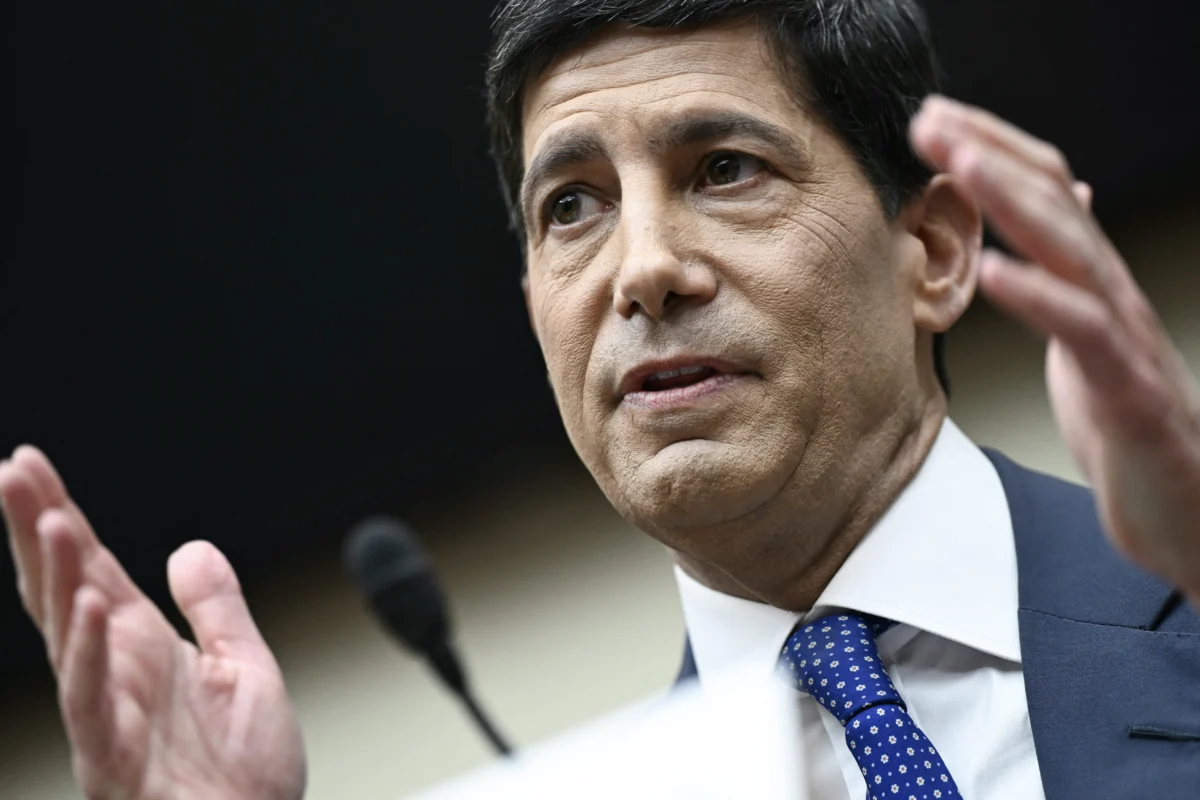
New Federal Reserve Chair Kevin Warsh, while not quite reaching the enigmatic levels of his predecessor Alan Greenspan, has cultivated a distinctive communication style characterized by a recurring lexicon of phrases that are notable for their frequency and their deliberate ambiguity. In a series of public engagements since his nomination hearing in April, encompassing his inaugural press conference, a roundtable in Portugal, and two congressional testimonies, Warsh has repeatedly employed specific expressions that are now under intense scrutiny by economists, policymakers, and market participants alike. The phrase "family fight" has been uttered 13 times, "first principles" has been invoked 11 times, and the assertion that "inflation is a choice" for the Fed has been stated six times.
The challenge lies not in quantifying the usage of these terms, but in deciphering their precise meaning and their potential ramifications for the future direction of U.S. monetary policy. In an era where the Federal Reserve is increasingly expected to provide clear forward guidance, a chairman who opts for a more parsimonious approach to public pronouncements places a premium on understanding the nuances of the words he does choose to employ. To shed light on this nascent communication strategy, CNBC solicited insights from five prominent Federal Reserve watchers, individuals deeply immersed in the intricate workings of monetary policy, to interpret the significance of these recurring phrases. Their collective analysis offers a window into the potential ideological underpinnings and strategic intentions behind Warsh’s chosen vocabulary.
Decoding "A Good Family Fight": Fostering Debate or Masking Disagreement?
The concept of a "family fight" as articulated by Chairman Warsh has elicited a spectrum of interpretations among Fed observers, ranging from a positive embrace of robust internal debate to a more critical view of its potential to obscure genuine policy rifts.
Dan Greenhaus, chief strategist at Solus Alternative Asset Management, views Warsh’s emphasis on "family fight" as a potential catalyst for enhanced policymaking. He suggests that if the Chairman fosters a more open and challenging environment within the Federal Open Market Committee (FOMC) meetings, where prevailing assumptions can be rigorously examined rather than passively accepted, the ultimate outcome will be improved decision-making. "The benefit is less about changing the outcome of any individual meeting and more about improving the quality of the decision-making process over time," Greenhaus posits, emphasizing a long-term enhancement of the Fed’s analytical rigor.
Loretta Mester, former President of the Cleveland Fed, echoes this sentiment, framing "family fight" as a commitment to an inclusive deliberative process. She notes that the atmosphere she experienced during her tenure on the FOMC already allowed for diverse views to be heard and that she never felt constrained in expressing her policy arguments. However, Mester prudently points out the practical challenges of ensuring all voices are heard within a 19-member committee. Without proper structure, the risk emerges that "it is only the loudest voice in the room that gets heard and you will actually have fewer views expressed since it will be hard to jump in." This highlights the delicate balance between encouraging open debate and maintaining an orderly decision-making framework.
Claudia Sahm, chief economist at New Century Advisors, offers a more pragmatic perspective, suggesting that Warsh’s desire for a "livelier back-and-forth" stems from his personal preference for a more dynamic discussion style. Sahm contends that while Warsh might be seeking a more interactive format, the inherent structure of FOMC meetings, often characterized by prepared remarks and limited spontaneous dialogue, is unlikely to be fundamentally altered. Furthermore, she raises concerns about the feasibility of a truly open-ended discussion with 19 participants, implying that the format itself might constrain the depth of a "free-for-all conversation."
Mark Spindel, a noted Fed author and chief investment officer at Potomac River Capital, provides a more pointed analysis. He interprets "family fight" as Warsh’s aphorism for the inherent disagreements within the FOMC and the Board of Governors. Spindel believes the phrase implies that these disagreements, while natural, are best contained within the "family" and not excessively exposed to public scrutiny. This is where Spindel sees a potential disconnect, noting that "members of the committee are clearly willing to disagree in public, or at least state their opinions much more openly (than Chairman Warsh)." He also suggests that this framing could serve as a mechanism for Warsh to deflect external pressures from political figures and market participants by emphasizing internal consensus-building.
Michael Feroli, chief U.S. economist at JPMorgan, offers a concise interpretation, viewing "family fight" as an attempt by Warsh to adopt a more accessible, "folksy" tone. However, Feroli asserts that this phrase does not represent a departure from the tradition established under former Chairman Ben Bernanke, who also publicly encouraged dissenting opinions. This suggests that while the language may be new, the underlying principle of valuing diverse viewpoints might be an extension of existing Fed practices.
"First Principles": A Call for Fundamental Reassessment or a Return to Simplicity?
The invocation of "first principles" by Chairman Warsh has generated considerable discussion regarding its potential to signal a fundamental re-evaluation of the Federal Reserve’s operational framework and its core economic tenets.
Mark Spindel sees "first principles" as a sufficiently broad concept to allow Warsh considerable latitude in defining its meaning. However, in context, Spindel believes it signals a basis for decision-making and structural reform. He recalls Warsh’s remarks in Sintra, where he noted a "willingness to go back to first principles" among central banking leadership, questioning the very process of monetary policy formulation. Spindel links this to Warsh’s reintroduction of monetary aggregates and his observation that "monetary policy should have something to do with money," suggesting a desire to reconnect with foundational economic concepts. He critically notes that even established economic theories, such as the Phillips Curve, and the practice of economic forecasting, appear to be downplayed in Warsh’s "principled approach." Spindel points to Warsh’s direct criticism of his predecessors for perceived failures in inflation control and their perceived reluctance to tighten policy sooner, suggesting that these actions, along with policies like FAIT (Flexible Average Inflation Targeting), represent a departure from these "first principles."
Claudia Sahm interprets "first principles" as a coded directive to "question everything." She aligns this with Warsh’s repeated calls for "regime change" at the Fed, suggesting that challenging the foundational assumptions of monetary policy is central to his agenda. However, Sahm expresses skepticism about Warsh’s ability to fundamentally rewrite these principles, arguing that simply identifying flaws in existing assumptions is insufficient without proposing viable alternatives. She anticipates that even with task forces, Warsh may fall short of enacting a true "regime change," instead achieving only incremental improvements.
Loretta Mester elaborates on the implications of "first principles" for the Fed’s dual mandate of price stability and maximum employment. She suggests it signifies a need to rethink the Fed’s approach without preconceived notions or biases against methods that deviate from current practices. This involves prioritizing the identification of the best strategies for communication, inflation and labor market assessment, balance sheet management, operating frameworks, and data utilization. Mester acknowledges that the FOMC has historically been reluctant to implement major policy shifts, often making only minor adjustments to its statements. Therefore, a "rethinking from first principles" could liberate the committee to consider novel approaches, necessitating careful consideration of the transition process.

Michael Feroli connects the "first principles" phrase to Warsh’s earlier remarks questioning the influence of academics from elite institutions on monetary policy. Both statements, in Feroli’s view, suggest that the Fed has allowed academically driven theories to distract it from focusing on fundamental economic principles. He contrasts this with former Chair Ben Bernanke, who, despite not holding a Ph.D., appeared less defensive about the institution’s intellectual underpinnings.
Dan Greenhaus posits that a return to "first principles" could have significant consequences for policymaking. He inquires about the Fed’s core mandate and the most effective means of fulfilling it. Greenhaus suggests that Warsh’s approach, which he characterizes as more "originalist," implies a more circumscribed role for the Fed beyond monetary policy, including a greater skepticism towards its involvement in regulatory policy and climate-related issues. Broadly, this suggests a willingness to reassess the expansion of the Fed’s role since the Global Financial Crisis and whether that expansion has been excessive.
"Inflation is a Choice": A Return to Monetarist Roots or a Shift in Accountability?
Chairman Warsh’s assertion that "inflation is a choice, and the Fed must take responsibility for it" has drawn significant attention, evoking echoes of Milton Friedman and raising questions about the Fed’s accountability for price stability.
Loretta Mester directly links Warsh’s statement to Milton Friedman’s seminal observation that "Inflation is always and everywhere a monetary phenomenon." Mester elaborates that, in the long run, achieving price stability requires the Fed to ensure that aggregate demand does not outpace aggregate supply, as this imbalance will inevitably lead to price pressures and sustained inflation. She differentiates this from short-term supply disruptions, which the Fed might choose to "look through" due to the long and variable lags of monetary policy. However, Mester emphasizes that when supply disruptions are prolonged or numerous, as seen in the post-pandemic period, the Fed must implement sufficiently restrictive monetary policy to align demand with supply, thereby preventing sustained inflation.
Claudia Sahm also identifies the Milton Friedman connection, specifically referencing his assertion that "inflation is always and everywhere a monetary phenomenon." Sahm notes that the Fed’s existing framework already incorporates a similar tenet: "the inflation rate over the longer run is primarily determined by monetary policy." She argues that Warsh is restating a long-held Fed principle but omits the crucial temporal element—the timeframe. Sahm contends that in the short run, supply shocks, such as energy disruptions or tariffs, can influence inflation irrespective of the Fed’s actions. While Warsh’s phrasing may not alter other Fed officials’ perspectives, Sahm believes it could lead to public confusion about the Fed’s actual capabilities.
Dan Greenhaus interprets Warsh’s statement as an indication that the Fed will be less inclined to attribute prolonged inflation overshoots primarily to exogenous factors like tariffs, fiscal stimulus, or supply shocks. He views Warsh’s message as a clear signal that "the buck stops with us." Consequently, Greenhaus anticipates that Chairman Warsh will exhibit less tolerance for explanations of persistently elevated inflation that do not acknowledge the Federal Reserve’s own role. In his view, while the Fed may not be responsible for every inflationary shock, it bears ultimate responsibility for preventing those shocks from evolving into persistent inflation.
Michael Feroli highlights a potential tension between Warsh’s statement on inflation and his assertion that "I don’t believe that we have a cruel choice." Feroli acknowledges the widely accepted principle in modern monetary economics that inflation is, in the long run, controllable by the central bank. However, he questions the implication of having no short-run trade-off between economic growth and inflation. Feroli argues that the very rationale for central bank independence rests on the premise that a politically motivated central bank might exploit such a short-run trade-off to stimulate the economy at the expense of long-term price stability.
Mark Spindel views the "inflation is a choice" phrase as another flexible statement that Warsh can shape to his narrative. He finds it consistent with the restatement of the inflation mandate in the first FOMC statement under Warsh’s leadership: "the committee will deliver price stability." Spindel recounts Warsh’s difficulty in definitively answering Senator John Kennedy’s aggressive questioning on the matter, ultimately suggesting that higher interest rates might be necessary. Warsh’s criticism of predecessors for allegedly accepting higher inflation rates is noted. Spindel agrees with Warsh that "the Fed taking responsibility for it" is appropriate, arguing that the Fed, by setting the price of money, must act when that price is too low, leading to inflation.
Broader Implications for Federal Reserve Policy and Communication
The consistent use of these particular phrases by Chairman Warsh signals a deliberate attempt to shape the narrative surrounding monetary policy and the Federal Reserve’s role. The emphasis on "family fights" suggests a desire to foster a more robust internal debate, potentially leading to more thoroughly vetted policy decisions. However, the interpretation of this phrase is bifurcated, with some seeing it as a positive move towards intellectual rigor and others as a potential veil for underlying policy disagreements or a tool to deflect external scrutiny.
The invocation of "first principles" appears to be a more radical departure, signaling a potential re-examination of the very foundations of monetary policy. This could lead to a reassessment of established economic models, a renewed focus on monetary aggregates, and a potential narrowing of the Fed’s expanded post-crisis responsibilities. The implications for regulatory policy and engagement with non-traditional issues like climate change remain to be seen but suggest a more constrained future role.
Finally, the assertion that "inflation is a choice" firmly places the onus of price stability squarely on the Federal Reserve’s shoulders. This echoes a monetarist perspective and suggests a lower tolerance for inflation overshoots, regardless of their initial cause. It implies a commitment to decisive action to anchor inflation expectations and maintain price stability, potentially leading to a more hawkish stance when inflationary pressures emerge.
The coming months and years will reveal the true import of Chairman Warsh’s carefully chosen words. The market and the public will be watching closely to see if these phrases translate into concrete policy shifts, a more transparent or a more opaque communication strategy, and ultimately, a more effective Federal Reserve. The deciphering of the "Kevin Warsh code" is not merely an academic exercise; it is a crucial endeavor for understanding the future trajectory of U.S. economic policy.
