

The transition toward zero-emission road transport in Australia has reached a critical inflection point as the nation’s heavy-duty freight sector begins a systematic shift from diesel-dependency to electrification. While passenger electric vehicle (EV) adoption has dominated headlines, the decarbonization of heavy freight represents a more complex but ultimately more impactful challenge for Australia’s climate goals. Recent developments, spearheaded by the Australian Renewable Energy Agency (ARENA) and a cohort of innovative infrastructure providers, are addressing the primary barriers to adoption: high upfront costs and the lack of specialized charging networks. With heavy vehicles accounting for a disproportionate share of transport emissions despite making up a small fraction of the total vehicle fleet, the deployment of high-capacity charging hubs is being viewed as a national priority.
The Federal Catalyst: ARENA and the Newvolt Partnership
A cornerstone of this transition is a significant investment by the federal government through ARENA. Recognizing that the heavy freight sector is among the most difficult to decarbonize due to the energy density requirements of long-haul transport, ARENA has committed AU$25.3 million toward a landmark project led by Newvolt. This funding contributes to a total project value of AU$61.82 million, aimed at establishing a network of shared-use electric truck charging depots in Melbourne, Victoria.
The project is designed to provide a blueprint for national infrastructure. The first site, located in Melbourne’s industrial west, is scheduled to open by the end of 2024. This facility will feature 12 dedicated bays equipped with 400 kW ultra-fast chargers, capable of replenishing a heavy truck’s battery during standard driver rest periods. Following this, two additional sites in Melbourne’s north and southeast are expected to become operational by mid-2025. These locations have been strategically selected to align with the city’s primary freight corridors, ensuring that electric trucks can operate without deviating significantly from established logistics routes.
Crucially, these hubs will be powered by 100% renewable energy, ensuring that the transition provides genuine "well-to-wheel" emission reductions. By creating a shared-use model, Newvolt and ARENA aim to lower the barrier to entry for smaller fleet operators who may not have the capital to invest in private charging infrastructure.
Overcoming Infrastructure and Economic Barriers
The transition to electric heavy-duty vehicles (HDVs) has historically been hindered by two primary concerns: "range anxiety" and the "infrastructure gap." Newvolt’s networked approach is specifically designed to dismantle these hurdles. By providing high-speed, reliable charging at predictable intervals, the project aims to foster confidence among fleet managers.
Data suggests that the "hub and spoke" model of logistics, common in Australian metropolitan areas, is perfectly suited for electrification. Most heavy vehicles in Australia operate on defined, relatively short routes. Statistics indicate that the average Australian articulated vehicle travels approximately 250 kilometers per day. Current battery technology can comfortably accommodate these distances, provided that charging is available at the depot or during loading and unloading intervals.
Beyond the logistical benefits, the economic argument for electrification is becoming increasingly persuasive. Industry analysis from providers like HubZero suggests that an electric prime mover can save an operator between AU$50 and AU$200 per day in fuel and maintenance costs. When extrapolated across a fleet over several years, these savings can offset the higher initial purchase price of electric trucks. Furthermore, the volatility of global diesel prices—exacerbated by geopolitical instability—has made the stability of renewable electricity costs even more attractive to CFOs in the logistics sector.
Technological Innovation: Battery-Integrated Charging Solutions
One of the most significant technical challenges in electrifying heavy transport is the strain that ultra-fast chargers place on the local electrical grid. A single 400 kW charger draws as much power as a small residential block; a depot with a dozen such chargers can require massive, expensive upgrades to local substations. To bypass these delays and costs, companies like eLumina and HubZero are deploying battery-integrated charging systems.
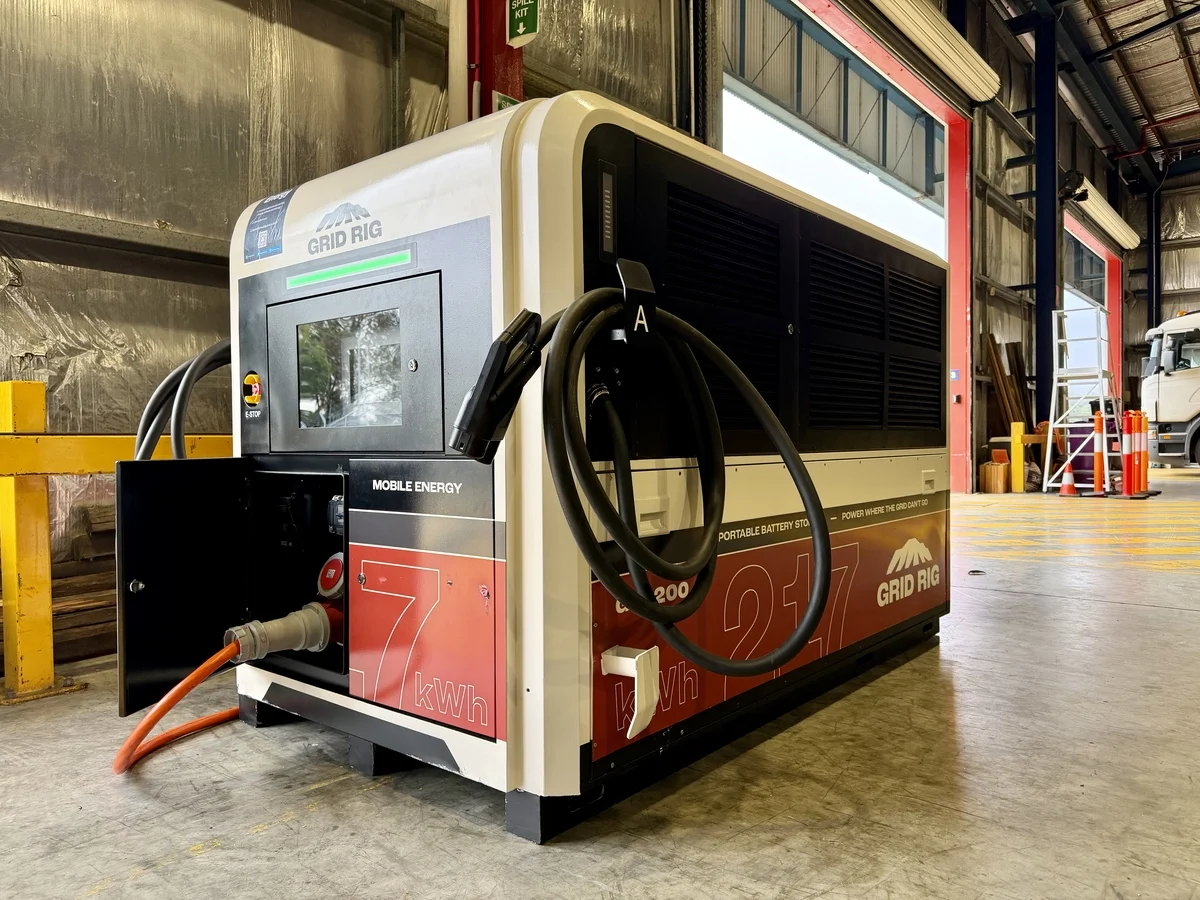
eLumina is currently establishing a "New Energy Transport Hub" near Sydney that utilizes skid-mounted DS400 chargers. These units feature integrated battery storage, allowing them to "trickle charge" from the grid during periods of low demand and then discharge at high speeds when a truck plugs in. This "buffer" system prevents spikes in grid demand and allows for the rapid deployment of high-speed charging in areas where the existing grid infrastructure is constrained.

The use of skid-mounted, modular hardware also provides flexibility. These units can be installed on gravel hardstands without the need for extensive permanent civil works, meaning sites can be reconfigured or even relocated as freight patterns evolve. This agility is essential in the early stages of a market transition where long-term demand patterns are still being established.
The Ausgrid Trial and the Rise of Electric Prime Movers
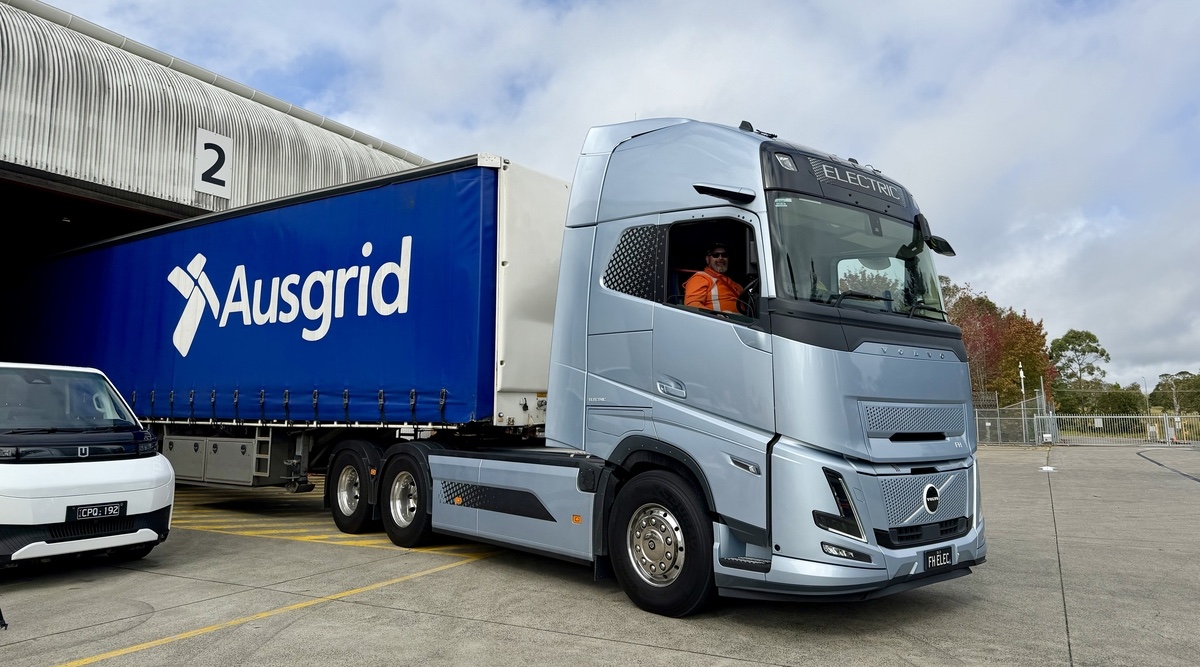
The shift toward heavy electrification is also gaining momentum through high-profile trials involving major utilities and equipment manufacturers. Ausgrid, one of Australia’s largest electricity distributors, has recently partnered with HubZero to trial a Volvo FH Aero Electric prime mover. This vehicle is a heavyweight in the industry, designed to haul loads exceeding 30 tonnes.
The trial involves transporting equipment and materials from the Upper Hunter region to Southern Sydney, a route that tests the vehicle’s performance across varying terrains and load weights. To support this, HubZero supplied its "Grid Rig" battery-assisted charger. This technology was originally developed for the extreme conditions of off-grid mine sites—where high duty cycles and mission-critical uptime are mandatory—and is now being adapted for urban logistics.
The Ausgrid trial serves a dual purpose: it proves the mechanical capability of electric prime movers in real-world Australian conditions and demonstrates how rapid-deployment charging can be integrated into existing utility operations. Ausgrid has already transitioned more than 150 of its passenger vehicles to electric and is now focusing on the more difficult task of converting its fleet of medium and heavy trucks.
Environmental and Social Impacts
The move toward electric trucks is not solely an economic or technical endeavor; it is a public health and environmental necessity. Heavy trucks are a major source of nitrogen oxides (NOx) and particulate matter (PM2.5), which are linked to respiratory and cardiovascular diseases. By eliminating tailpipe emissions, particularly in high-density urban areas and along major freight corridors, the transition to BEVs (Battery Electric Vehicles) will lead to significantly cleaner air for surrounding communities.

Noise pollution is another factor often overlooked in the discussion of freight. Diesel trucks are a primary source of noise in urban environments, often leading to restrictions on nighttime deliveries. Electric trucks operate almost silently at low speeds and are significantly quieter at highway speeds. This reduction in noise could allow for more flexible delivery schedules, potentially easing daytime traffic congestion by shifting more freight movements to the evening and night hours without disturbing residents.
Timeline and Future Projections
The trajectory for Australian electric freight is set to accelerate over the next decade. Following the completion of the Melbourne hubs in 2025, Newvolt and its partners plan to replicate the model across state borders. The logical next steps involve the "Golden Triangle" of Australian freight: the Hume, Pacific, and Newell Highways connecting Melbourne, Sydney, and Brisbane.
By establishing high-speed charging hubs at intervals along these major arteries, the industry can move beyond metropolitan "back-to-base" operations and into true long-haul electrification. The data gathered from the current Melbourne and Sydney projects—concerning grid integration, charging behavior, and operator economics—will be shared publicly to lower the barriers for future infrastructure developers.
Newvolt projects that its initial hubs alone will facilitate the addition of at least 54 heavy- and medium-duty electric trucks to the national fleet in the short term. While this number may seem modest, it represents the vanguard of a much larger shift. As the total cost of ownership continues to drop and charging availability increases, the industry expects a "S-curve" adoption rate similar to that seen in the passenger EV market.
Conclusion: A Collaborative Path to Net Zero
The electrification of Australia’s heavy-duty trucking sector is a complex puzzle that requires the alignment of government policy, technological innovation, and private capital. The collaboration between ARENA, Newvolt, eLumina, HubZero, and major manufacturers like Volvo indicates that this alignment is finally occurring.

By focusing on "power where the grid can’t go" and utilizing battery-integrated storage to bypass infrastructure bottlenecks, Australia is developing a unique and resilient charging network. The success of these initial hubs in Melbourne and the trials in Sydney will be the litmus test for the industry. If these projects prove that electric trucks can maintain the rigorous "mission-critical" schedules of the logistics industry while delivering substantial cost savings, the roar of the diesel engine on Australian highways may soon be replaced by the quiet hum of electric power. This transition is not merely about changing the fuel source; it is about reimagining the efficiency and sustainability of the nation’s economic backbone.
