

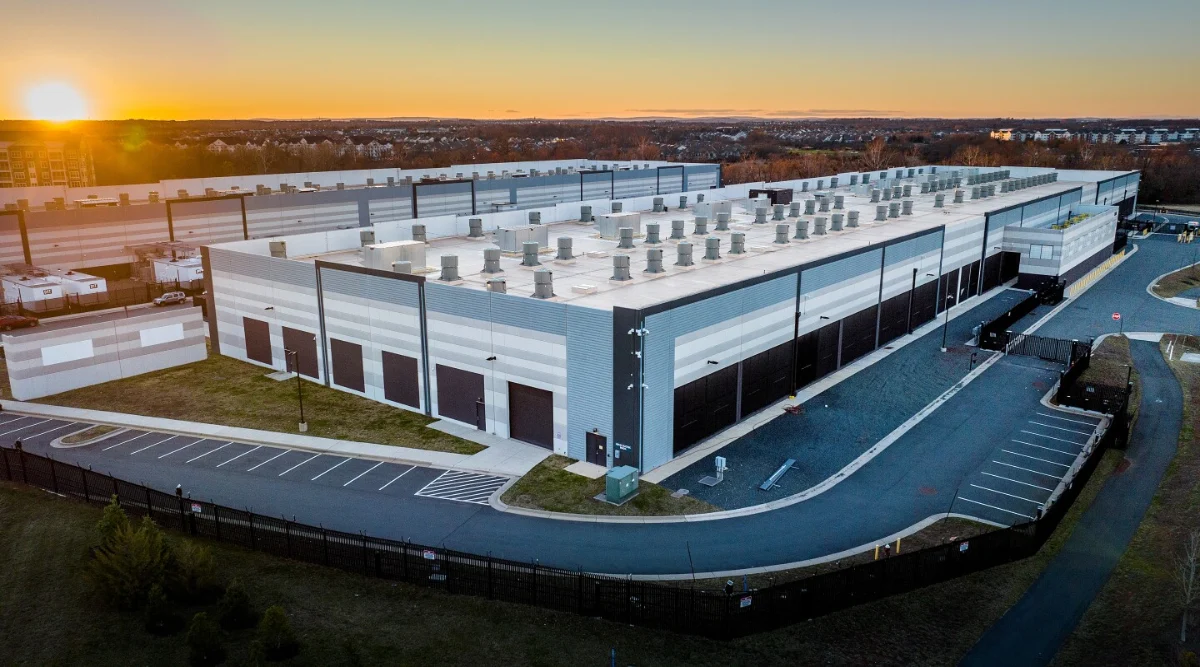
Amazon, through its subsidiary Amazon Web Services (AWS), has finalized plans to develop a massive data center complex in Pecos County, Texas, signaling a significant shift in the company’s energy procurement strategy. The facility, which is designed to support the burgeoning demand for artificial intelligence (AI) and cloud computing services, will operate independently of the local utility grid by utilizing an immense on-site natural gas power plant. While the company maintains that this approach protects local residents from rising electricity costs, the project has drawn intense scrutiny from environmental advocates due to its projected carbon footprint.
According to permit applications filed with state regulators, the Pecos County facility will be powered by 35 natural gas turbines with a combined generating capacity of 7.65 gigawatts (GW). To put this scale into perspective, 7.65 GW is sufficient to power approximately 5.7 million average American homes, making it one of the largest private power installations in the world. However, the environmental cost of this energy independence is substantial. If operated at full capacity, the facility is permitted to emit up to 33 million tons of carbon dioxide annually—a figure that would make it the single largest point source of carbon emissions in the United States, surpassing even the most carbon-intensive coal-fired power plants currently in operation.
The Strategic Shift Toward Off-Grid Power
The decision to build a massive, off-grid gas-powered facility represents a departure from the traditional data center model, which typically relies on the local electrical grid supplemented by renewable energy credits. Several factors have driven this strategic pivot. First is the volatility and capacity constraints of the Texas power grid, managed by the Electric Reliability Council of Texas (ERCOT). With the rapid expansion of data centers and industrial electrification, the grid has faced increasing strain, leading to concerns about reliability and price surges.
By generating its own power on-site, Amazon bypasses the need for costly grid upgrades and avoids the public relations challenge of being blamed for driving up utility bills for Texas families. Amazon spokesperson Margaret Callahan stated that the world has changed since the company co-founded The Climate Pledge in 2019, suggesting that the current "AI gold rush" requires a more immediate and robust power solution than the current grid can provide.
Furthermore, the speed of deployment is a critical factor. The global race to dominate the AI sector has created an urgent need for data processing capacity. While combined-cycle natural gas plants are more efficient, the specialized turbines required for those systems currently face multi-year backlogs. In contrast, simple-cycle turbines—similar to those recently acquired by Elon Musk’s interests through the purchase of mobile gas generation firm APR Energy—are available for more rapid installation. This "speed-to-market" priority appears to have outweighed the company’s long-term decarbonization goals for this specific project.
Comparative Analysis of Emissions and Infrastructure
The scale of the Pecos County project’s permitted emissions is unprecedented for a private technology facility. For comparison, the James H. Miller Jr. Power Plant in Alabama, currently cited as the most polluting coal plant in the U.S., emits approximately 16 million tons of carbon dioxide per year. Amazon’s planned 33 million tons would double that output.

While natural gas is often marketed as a "bridge fuel" because it burns cleaner than coal per unit of energy, the sheer volume of generation at the Pecos site negates those relative gains. A standard modern 1-GW combined-cycle plant typically emits fewer than 2 million tons of CO2 annually. Amazon’s 7.65-GW installation, however, utilizes simple-cycle turbines which are less efficient, resulting in the disproportionately high emission permit of 33 million tons.
The location of the plant in West Texas adds a layer of irony to the environmental debate. Pecos County is situated in one of the most productive regions for wind and solar energy in the United States. The region’s vast wind farms provide carbon-free electricity to the ERCOT grid, yet Amazon has opted for methane-fired turbines to ensure "always-on" baseload power that renewable sources, without massive battery storage, cannot currently guarantee at this scale.
The Regulatory and Political Landscape
The development of the Pecos County data center comes amid a supportive regulatory environment at both the state and federal levels. In 2023, an executive order was issued to streamline the permitting process for data centers, citing them as critical infrastructure for national security and economic competitiveness. Following this, federal agencies have introduced policies intended to fast-track the construction of fossil-fuel-burning generating stations specifically for high-demand tech hubs.
In Texas, state officials have long championed "energy dominance," encouraging the expansion of fossil fuel infrastructure alongside renewables. The state’s lack of a centralized capacity market allows large industrial players like Amazon to build private generation with relatively few bureaucratic hurdles compared to other states. This "off-grid" trend is expected to grow. Michael Thomas, founder of the energy research group Cleanview, noted that the Pecos County project is likely a "foreshadowing" of a broader explosion in off-grid gas projects as tech giants prioritize reliability and speed over their publicized climate targets.
Responses from Stakeholders and Environmental Groups
The announcement has triggered a wave of criticism from environmental watchdog groups and public health advocates. Kathryn Guerra, a campaign director at Public Citizen, highlighted the potential for significant local and global impacts. "This is not just about global climate change; it is about local air quality in West Texas," Guerra said. "The nitrogen oxides and particulate matter from 35 turbines will have a tangible impact on public health in the surrounding communities."
Amazon has attempted to mitigate these concerns by emphasizing that the 33-million-ton figure is a maximum permitted limit and that actual emissions may be lower depending on operational needs. The company also noted it is "exploring" the integration of solar power and battery storage at the site in the future. However, critics argue that "exploring" renewables is a vague commitment compared to the concrete plans for gas infrastructure.
The discrepancy between Amazon’s "Climate Pledge"—which aims for net-zero carbon emissions across its operations by 2040—and its current trajectory has become a focal point for investors and climate activists. While Amazon remains the world’s largest corporate buyer of renewable energy, its total carbon footprint has continued to rise in recent years, driven largely by the expansion of its logistics network and the massive power requirements of AWS.

Broader Implications for the Tech Industry
Amazon is not alone in this dilemma. Other "Big Tech" firms, including Google and Microsoft, are facing similar challenges as they integrate AI into their core products. Data centers currently account for approximately 1% to 1.5% of global electricity consumption, a figure that is expected to rise sharply by 2030.
The move toward on-site fossil fuel generation represents a potential "decoupling" of the tech industry from the green energy transition. If the industry’s most capitalized players choose the path of least resistance—natural gas—to power the AI revolution, the global effort to limit warming to 1.5 degrees Celsius may face an insurmountable setback.
Furthermore, the Pecos County project raises questions about the future of utility regulation. If large corporations begin to build their own "islands" of power, the traditional model of socialized grid costs may collapse, leaving residential consumers to shoulder the burden of maintaining the aging public infrastructure while tech giants operate their own private, high-emission grids.
Conclusion and Future Outlook
The Pecos County data center stands as a monument to the current tensions between technological progress and environmental sustainability. As the facility moves toward construction, it will serve as a test case for how much carbon the public and regulators are willing to tolerate in exchange for the benefits of advanced artificial intelligence.
For Amazon, the project is a calculated risk: a bid to secure the infrastructure necessary for the next era of computing at the cost of its environmental reputation. For the residents of Texas and the global climate, the 33 million tons of permitted emissions represent a significant new challenge in the race to decarbonize the global economy. As the November elections approach and climate policy remains a central theme of national discourse, the "off-grid" gas-powered data center may become a primary example of the difficult choices facing the modern energy landscape.
