

Amid a dramatic resurgence of hostilities and conflicting claims over the world’s most vital oil transit chokepoint, Iran on Saturday declared the Strait of Hormuz closed and issued a stark warning for all vessels to steer clear of the strategic waterway. This assertive move, coming just days after Tehran and Washington had brokered a fragile interim agreement to de-escalate regional tensions, was swiftly and unequivocally refuted by the United States, which maintained the strait remained open and its forces were actively monitoring the situation to ensure unimpeded passage. The immediate fallout saw U.S. Vice President JD Vance depart Washington late Saturday for Switzerland, where he is slated to engage in urgent negotiations with Iranian officials on Sunday, underscoring the precariousness of the diplomatic path ahead.
The sudden escalation plunged the delicate peace framework into jeopardy, echoing decades of fraught relations between the two regional adversaries. Iran’s joint military command and its elite Islamic Revolutionary Guard Corps (IRGC) announced the closure, citing continued Israeli military operations in Lebanon and what Tehran described as U.S. "bad faith" and a failure to honor commitments stipulated in the recently established truce. This declaration arrived as Iranian negotiators were already en route to Switzerland for technical-level discussions with U.S. counterparts, signaling a deliberate increase in leverage or a profound breakdown of trust just hours before crucial talks. Iranian state television outlets further reported that "subsequent steps have been planned" should the perceived aggression persist, indicating a readiness for further countermeasures.
The Strait of Hormuz: A Global Economic Lifeline Under Threat
The Strait of Hormuz is not merely a geographical feature; it is a critical artery of global commerce, connecting the oil-rich Persian Gulf to the open ocean. Approximately one-fifth of the world’s total petroleum liquids consumption, or about 21 million barrels per day, transited through the Strait in recent years, according to data from the U.S. Energy Information Administration (EIA). This includes the vast majority of crude oil and liquefied natural gas (LNG) exports from Saudi Arabia, Iran, the UAE, Kuwait, Qatar, and Iraq. Any disruption, perceived or actual, sends immediate shockwaves through international energy markets, impacting oil prices, shipping costs, and global economic stability.
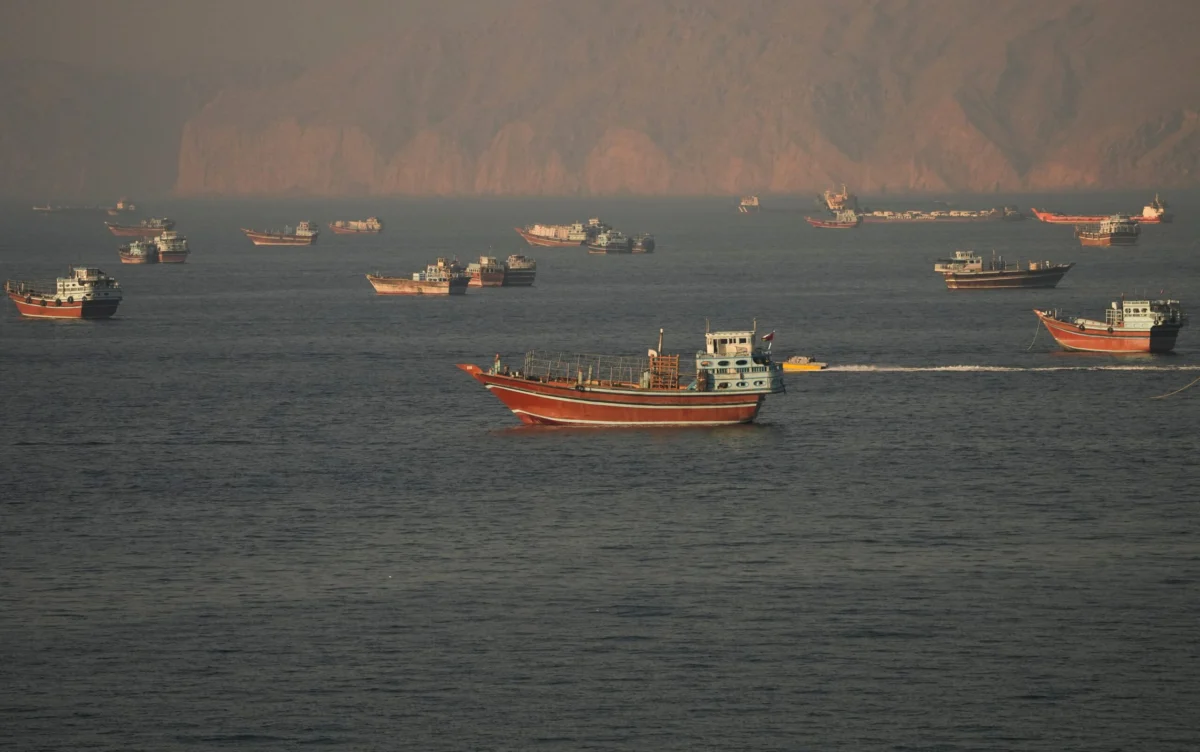
Historically, the Strait has been a flashpoint for geopolitical tensions. Iran, situated along its northern coast, has repeatedly threatened to close or disrupt traffic through the Strait in response to sanctions or military provocations, viewing it as a strategic asset in its defense doctrine. Past incidents, including tanker attacks, mine placements, and naval confrontations, underscore the sensitivity and inherent risks associated with this narrow passage. The current Iranian declaration, therefore, is not an isolated event but rather a resurgence of a long-standing tactic designed to exert pressure and demonstrate resolve on the international stage. The photograph of vessels off Musandam, Oman, dated June 15, 2026, serves as a stark reminder of the continuous flow of critical resources through this very passage, now under renewed threat.
A Chronology of De-escalation and Renewed Hostilities
The current crisis unfolds against a backdrop of intense diplomatic efforts and a recent, albeit fragile, breakthrough.
- Months of Conflict (Pre-June 2026): The region had been embroiled in nearly four months of escalating conflict, the specifics of which are not detailed in the original report but implied to involve hostilities between Iran, its proxies, and regional adversaries, potentially including Israel and the United States. These conflicts severely impacted regional stability and global energy markets.
- The Interim Agreement (Wednesday, June 17, 2026): After protracted negotiations, U.S. President Donald Trump and Iranian President Masoud Pezeshkian reached an interim agreement, formalized in a memorandum of understanding (MoU). This landmark deal aimed to halt hostilities and establish a framework for a more comprehensive resolution. Key provisions of the MoU included:
- An immediate end to military actions by Israel in Lebanon.
- The full reopening of the Strait of Hormuz without tolls imposed by Iran for at least 60 days. This clause directly contradicts Iran’s Saturday declaration.
- The agreement was seen as a significant step towards de-escalation, offering a glimmer of hope for a lasting peace.
- Saturday, June 20, 2026 – The Escalation:
- Israeli Strikes in Lebanon: Earlier on Saturday, Israeli military operations in southern Lebanon resulted in significant casualties. Lebanese authorities and the state-run National News Agency (NNA) reported that at least 16 people, including two children, were killed in strikes. Seven individuals were also reported trapped under rubble in Nabatiyeh and nearby villages, indicating the severity of the attacks. These strikes appear to have been the immediate catalyst for Iran’s response.
- Iran’s Declaration: In reaction to the Israeli actions and perceived U.S. non-compliance with the truce, Iran’s military and IRGC declared the Strait of Hormuz closed. They accused the U.S. of "bad faith" and a failure to uphold its commitments under the interim agreement framework, suggesting the U.S. either sanctioned or failed to prevent Israeli military actions that violated the truce.
- U.S. Denial and Monitoring: The U.S. military, through U.S. Central Command (CENTCOM) spokesperson Navy Captain Tim Hawkins, immediately refuted Iran’s claim. Captain Hawkins asserted that "Iran does not control the Strait of Hormuz," confirming that "traffic continues to flow, and U.S. forces are monitoring the situation to ensure this remains the case." This firm denial aimed to reassure international shipping and prevent panic in global markets.
- President Trump’s Intervention: Late Saturday, President Donald Trump further underscored the U.S. position in a post on Truth Social. He reiterated that the administration considered the Strait open for traffic and, crucially, introduced a new element of leverage: the potential imposition of U.S. tolls. Trump stated there would be "NO TOLLS in the Hormuz Strait for 60 days during the Cease Fire Period, and there will be NO TOLLS after the 60 day period has expired, unless they are imposed by and for the United States of America, should the deal not be completed." He claimed such a charge would be for "services rendered," suggesting a novel approach to securing passage and funding potential U.S. naval operations in the region.
- Sunday, June 21, 2026 – Talks in Switzerland: As the diplomatic crisis deepened, Vice President JD Vance departed for Switzerland to resume negotiations with the Iranian delegation. The Swiss Federal Department of Foreign Affairs confirmed the Iranian delegation’s arrival via a post on X (formerly Twitter), setting the stage for high-stakes talks amidst renewed regional instability.
Official Responses and Conflicting Narratives
The events of Saturday laid bare the deep chasm of distrust and conflicting interpretations of the recent truce.
- Iran’s Justification: Tehran’s rationale for the Strait closure was multi-faceted. Primarily, it was presented as a direct response to Israeli military aggression in southern Lebanon, which Iran views as a violation of the interim agreement’s stipulation for an "immediate end to military actions by Israel in Lebanon." By connecting the Israeli actions to the Strait, Iran effectively broadens the scope of regional conflict and places the burden of compliance squarely on the U.S., implying that Washington has failed to rein in its ally. The accusation of U.S. "bad faith" suggests that Iran believes the U.S. either deliberately allowed or failed to prevent Israel from undermining the truce, thereby invalidating a core tenet of the agreement from Tehran’s perspective.
- U.S. Counter-Narrative: The U.S. response was characterized by firm denial and a commitment to freedom of navigation. CENTCOM’s assertion that Iran "does not control the Strait" is a direct challenge to Tehran’s sovereignty claims over the international waterway. The continuous monitoring by U.S. forces is intended to project strength and deter any actual attempt by Iran to impede shipping. President Trump’s statement reinforced this stance, emphasizing that the interim agreement explicitly called for the Strait’s full reopening "without tolls imposed by Iran for at least 60 days." His novel proposal for potential U.S.-imposed tolls, justified as payment for "services rendered," could be interpreted as a pre-emptive measure to assert U.S. authority over the Strait’s security and commercial framework, should diplomacy fail. This move could also be a strategic negotiation tactic, signaling that the U.S. is prepared to fundamentally alter the economic dynamics of the Strait if Iran does not adhere to agreements.
- Lebanese Authorities: The Lebanese government and its National News Agency played a crucial role in documenting the human cost of the Israeli strikes, providing factual accounts of casualties and ongoing search and rescue operations. Their reports underscored the immediate humanitarian impact of the renewed hostilities, which served as Iran’s primary justification for its retaliatory measures.
The Switzerland Talks: A Fragile Path Forward
The upcoming negotiations in Switzerland represent a critical juncture for regional stability and the future of the interim agreement. Vice President Vance’s swift deployment highlights the urgency and the high stakes involved.
- Delegations and Mediators: The talks will involve high-level U.S. and Iranian delegations, with key figures like Vance, Jared Kushner (Trump’s son-in-law and special envoy), and Steve Witkoff from the U.S. side. The presence of mediators from Pakistan and Qatar underscores the international effort to bridge the deep diplomatic divide. These nations often play crucial roles in facilitating communication and building trust between Washington and Tehran, leveraging their diplomatic ties with both sides.
- Agenda and Objectives: Vance outlined a dual focus for the talks: making "progress on the nuclear issue" and addressing "the Lebanon ceasefire issue." The nuclear dimension remains a long-standing point of contention, with the U.S. aiming to secure Iran’s enriched uranium stockpile to make it "effectively impossible" for Tehran to rebuild its nuclear weapons program. The Lebanon ceasefire issue has now been dramatically re-prioritized due to Saturday’s events, requiring immediate attention to de-escalate hostilities and ensure compliance with the interim agreement. The broader objective is to convert the interim MoU into a comprehensive, final deal within the stipulated 60-day timeframe.
- Vance’s Optimism Amidst Turmoil: Despite the alarming headlines, Vance struck an optimistic tone, suggesting that "things are actually getting better there (in Lebanon), and things are slowing down a little bit." He emphasized the need for continuous management to ensure the safety and security of both Israel and Lebanon. This public optimism could be a strategic move to maintain a constructive atmosphere for negotiations and prevent further panic. He also highlighted that Kushner and Witkoff were already in Switzerland, diligently working through the technical details of the agreement, indicating that significant preparatory work had been done.
- Economic Leverage and Oil Flow: Vance also provided crucial economic data, stating, "We actually got 16 million barrels of oil out of the Strait of Hormuz yesterday. That is a record going back to even before the conflict started." This statistic is a powerful counter-narrative to Iran’s closure declaration, demonstrating that, despite threats, the vital flow of oil continued unimpeded. It also underscores the immense economic benefits of the interim agreement’s initial success in ensuring freedom of navigation, and implicitly, the severe economic leverage the U.S. holds should Iran genuinely attempt to disrupt this flow. Vance explicitly mentioned that the United States retained "significant economic leverage" if Iran failed to comply with the agreement, signaling that sanctions relief or re-imposition would remain a powerful tool in Washington’s diplomatic arsenal.
Broader Regional and Geopolitical Implications
The renewed tensions around the Strait of Hormuz carry profound implications for regional stability and global geopolitics.
- Impact on Negotiations: Iran’s declaration dramatically raises the stakes for the Swiss talks. It presents a direct challenge to the credibility and enforceability of the interim agreement, placing immense pressure on negotiators to salvage the deal and prevent a full-blown return to conflict. The U.S. and its mediators must now not only address the core issues of nuclear proliferation and regional security but also navigate the immediate crisis of trust and compliance regarding the Strait.
- Regional Instability: The cycle of Israeli strikes in Lebanon and Iran’s retaliatory threats underscores the persistent volatility of the Middle East. The fragile ceasefire between Israel and Lebanon, a key component of the interim agreement, proved short-lived, highlighting the complex web of proxy conflicts and national security interests that constantly threaten to unravel any peace efforts. A prolonged closure or active disruption of the Strait would inevitably draw in other regional and international naval forces, significantly increasing the risk of miscalculation and direct military confrontation.
- Global Economic Repercussions: Even a credible threat to the Strait of Hormuz can send global oil prices soaring, impacting consumers and industries worldwide. Should the Strait truly be closed or subjected to punitive tolls, the economic consequences would be severe, potentially triggering a global recession. Energy security would be severely compromised, prompting nations to seek alternative supply routes and diversify their energy sources, a long-term shift that could have lasting geopolitical consequences. President Trump’s suggestion of U.S.-imposed tolls, while a negotiation tactic, also introduces a new layer of potential economic disruption, albeit one controlled by the U.S.
- Credibility of Agreements: The rapid breakdown of elements of the interim agreement poses a significant challenge to the future of diplomacy in the region. It raises questions about the ability of international actors to secure lasting peace and ensure adherence to agreements, especially when dealing with deeply entrenched animosities and multiple state and non-state actors. The role of mediators like Pakistan and Qatar becomes even more critical in rebuilding trust and ensuring channels of communication remain open.
As Vice President Vance and his delegation engage in the arduous process of negotiation in Switzerland, the world watches with bated breath. The conflicting claims over the Strait of Hormuz, coupled with renewed violence in Lebanon, serve as a potent reminder of the fragility of peace and the immense challenges inherent in forging a lasting resolution between deeply adversarial powers. The success or failure of these talks will not only determine the future of the interim agreement but could also dictate the trajectory of Middle Eastern stability and global energy security for years to come.
