

Geneva, Switzerland – Diplomatic efforts between the United States and Iran have commenced in high-stakes, high-security talks in Switzerland, unfolding against a backdrop of severe regional escalation, including Tehran’s closure of the strategic Strait of Hormuz and a devastating Israeli strike in southern Lebanon that killed 16 people on Saturday. The confluence of these events has underscored the precarious state of Middle Eastern security and the urgent need for de-escalation, even as immediate progress in bilateral discussions remains uncertain.
The Swiss-hosted negotiations, facilitated by neutral intermediaries, represent a critical, albeit fragile, channel for communication between Washington and Tehran, two adversaries locked in a decades-long struggle for influence. While the precise agenda of the talks remains tightly guarded, sources close to the diplomatic circles suggest discussions are focused on preventing further regional destabilization, managing existing flashpoints, and potentially exploring avenues for renewed engagement on broader security concerns. The presence of senior, albeit unconfirmed, delegations from both nations in a discreet Geneva location signals the gravity with which both sides are approaching this moment, despite profound mutual distrust.
A Decades-Long Tussle: The US-Iran Conundrum
The relationship between the United States and Iran has been characterized by deep antagonism since the 1979 Islamic Revolution, marked by periods of overt hostility, proxy conflicts, and intermittent, often indirect, diplomatic overtures. The early 2010s saw a brief thaw with the negotiation of the Joint Comprehensive Plan of Action (JCPOA), the landmark nuclear deal, which provided Iran with sanctions relief in exchange for verifiable curbs on its nuclear program. However, the US withdrawal from the JCPOA in 2018 under the Trump administration, followed by the re-imposition of crippling sanctions, plunged relations back into a "maximum pressure" cycle. This period witnessed a surge in tensions, including attacks on oil tankers, drone incidents, and retaliatory strikes, pushing the region repeatedly to the brink of wider conflict.
Key areas of friction include Iran’s ballistic missile program, its regional proxy network (including Hezbollah in Lebanon, Houthi rebels in Yemen, and various militias in Iraq and Syria), human rights concerns, and its nuclear ambitions. For its part, Iran views US military presence in the Gulf and its unwavering support for Israel and Saudi Arabia as direct threats to its national security and sovereignty. The current talks in Switzerland are thus not merely about immediate crises but are implicitly burdened by this complex, historical baggage, making any meaningful breakthroughs exceedingly challenging.
The Strait of Hormuz: A Choke Point on the Brink
Adding immense pressure to the diplomatic table, Iran’s Revolutionary Guard Corps (IRGC) announced on Friday, June 20, 2026, the closure of the Strait of Hormuz, a critical maritime choke point connecting the Persian Gulf to the open ocean. This move, a highly provocative escalation, immediately sent shockwaves through global energy markets and international shipping. The Strait, a narrow waterway between Iran and Oman, is arguably the world’s most important oil transit route, through which approximately 20% of the world’s total petroleum liquids consumption, or about 21 million barrels per day, passes. It is also a vital conduit for liquefied natural gas (LNG) from Qatar and other Gulf states.
Iran’s justification for the closure was cited as a response to unspecified "provocations and threats to national security" and "foreign interference" in its sovereign waters, though many analysts interpret it as a direct leverage play in the context of the ongoing Geneva talks and broader US sanctions. The economic implications are immediate and severe. Global oil prices surged by over 10% within hours of the announcement, reflecting fears of supply disruptions and increased shipping costs due to heightened insurance premiums and rerouting efforts. Major shipping companies have begun diverting vessels where possible, though alternatives for many are limited or non-existent for Gulf-bound traffic.
International reactions were swift and largely condemnatory. The United Nations Secretary-General called for immediate de-escalation and respect for international maritime law, specifically the freedom of navigation. Major world powers, including the European Union, China, and Russia, expressed grave concern, urging Iran to reopen the strait to ensure global energy security. The US Navy’s Fifth Fleet, based in Bahrain, issued a statement reaffirming its commitment to freedom of navigation in international waters and warning against any impediments to commercial shipping, raising fears of potential naval confrontations in the highly sensitive waterway. This move by Tehran, while not unprecedented as a threat, marks a significant materialization of a long-standing strategic lever, raising the stakes dramatically for all parties involved.
Lebanon’s Continuing Agony: Israeli Strikes and Regional Instability
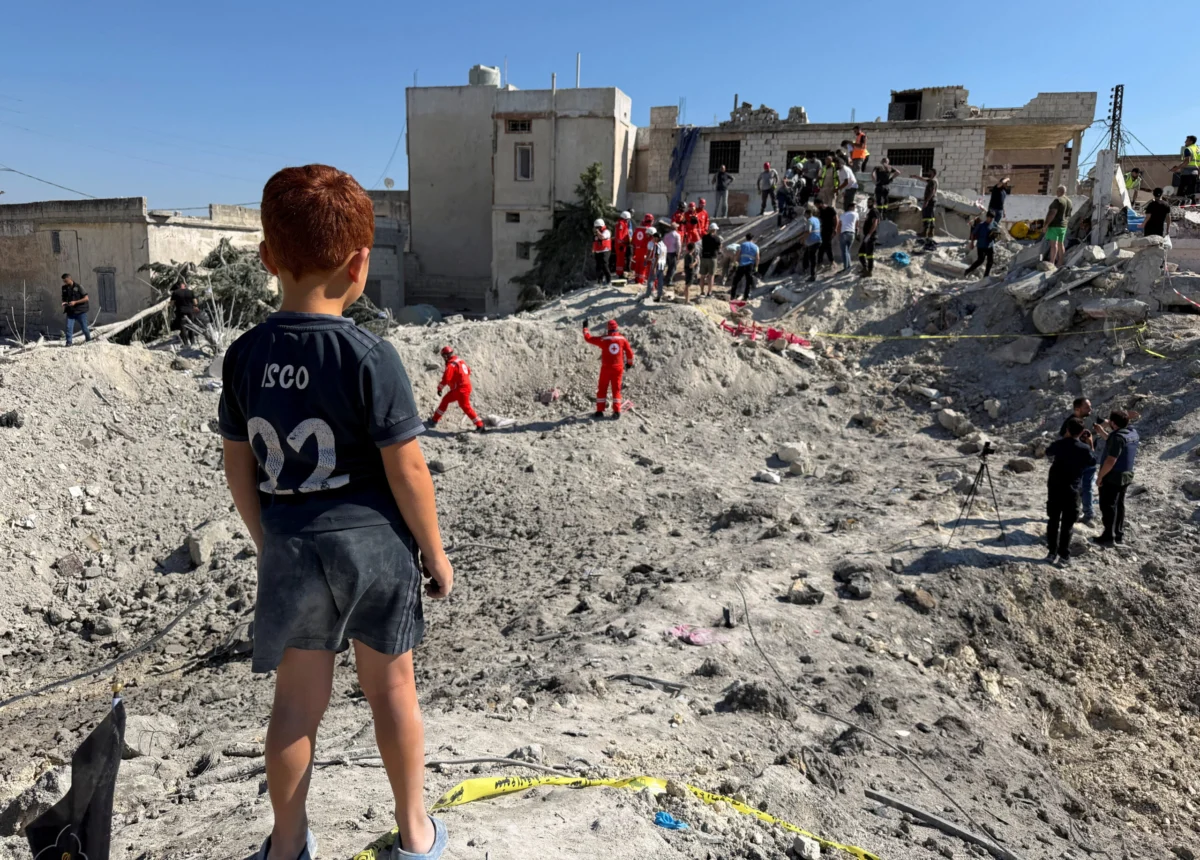
Compounding the regional instability, an Israeli air strike on Saturday, June 20, 2026, resulted in the deaths of 16 individuals in Qennarit, a village in southern Lebanon. The strike targeted what Israel described as a "Hezbollah operational compound," but Lebanese officials and local aid organizations reported that the casualties included civilians, among them women and children. An image from the scene depicts a child standing beside the rubble of a damaged building, underscoring the humanitarian cost of the escalating conflict.
This incident is the latest in a series of intensifying exchanges across the Israel-Lebanon border, which has seen near-daily skirmishes since the onset of the broader regional conflict in late 2023. Hezbollah, a powerful Lebanese Shia political party and militant group heavily backed by Iran, has been engaged in cross-border rocket and drone attacks against northern Israel, while Israel has responded with precision strikes against Hezbollah targets deep within Lebanese territory. The conflict has led to significant displacement on both sides of the border, with tens of thousands of Lebanese and Israeli civilians forced to evacuate their homes.
The strike in Qennarit has drawn strong condemnation from Beirut, with the Lebanese government calling it a "barbaric act of aggression" and a violation of international law. Humanitarian agencies have reiterated calls for a ceasefire and protection of civilians, warning of a looming humanitarian crisis in southern Lebanon where infrastructure has been severely damaged and access to essential services disrupted. The incident further complicates regional diplomacy, as any potential US-Iran de-escalation framework would almost certainly need to address the precarious situation along the Israel-Lebanon frontier, a direct proxy battleground between the two powers.
The Swiss Talks: A Glimmer Amidst the Gloom?
The discreet talks in Switzerland, reportedly taking place over several days, are viewed by some as a last-ditch effort to prevent the current regional tensions from spiraling into an all-out war. While official statements are scarce, diplomatic sources indicate that the primary objective for the US is to secure a commitment from Iran to de-escalate regional activities, particularly concerning the Strait of Hormuz, and to rein in its proxies. For Iran, the talks offer an opportunity to push for sanctions relief and assurances against perceived external aggression.
Mediators, likely Swiss diplomats, are playing a crucial role in shuttling proposals and counter-proposals between the two delegations, who are reportedly not meeting face-to-face. This "proximity talks" format has been used in previous delicate negotiations between the two nations, highlighting the deep animosity that still precludes direct engagement. The focus is believed to be on practical, immediate steps rather than grand bargains, such as establishing a de-escalation mechanism for maritime security, ensuring humanitarian access in conflict zones, and potentially discussing parameters for a mutual freeze on certain provocative actions.
However, the challenges are immense. The timing of the Strait of Hormuz closure and the Lebanese strike, occurring just as talks commence, could be interpreted as deliberate attempts by respective parties to strengthen their bargaining positions, but also risks torpedoing the delicate diplomatic process. Trust is virtually non-existent, and domestic political pressures in both Washington and Tehran further constrain the flexibility of their negotiators. Hardliners in both capitals are likely to view any concessions as weakness, making the pursuit of compromise an arduous task.
International Repercussions and Future Outlook
The unfolding events carry profound implications for global security and economic stability. The closure of the Strait of Hormuz alone poses a severe threat to the global economy, potentially leading to sustained higher energy prices, inflationary pressures, and disruptions across various industries reliant on global trade. Beyond economics, the heightened military presence and rhetoric in the Gulf region significantly increase the risk of accidental confrontation, which could quickly escalate beyond control.
For Lebanon, the continued cross-border conflict threatens to plunge an already economically devastated nation into a deeper crisis. The humanitarian toll is mounting, and the prospect of a wider war with Israel looms large, potentially drawing in other regional actors. The international community’s ability to exert influence and foster de-escalation will be severely tested.
The US-Iran talks in Switzerland, while offering a slim hope for dialogue, face an uphill battle against deeply entrenched geopolitical realities and escalating regional violence. The success of these talks will not only hinge on the diplomatic acumen of the negotiators but also on the willingness of both Washington and Tehran to make difficult choices that prioritize regional stability over maximalist demands. As the world watches, the outcome of these discussions could determine whether the Middle East veers further towards conflict or finds a path, however narrow, towards a fragile de-escalation in the coming weeks and months. The complex interplay of the Strait’s closure, the humanitarian crisis in Lebanon, and the discreet diplomatic efforts in Geneva paints a vivid picture of a region teetering on the precipice.
