

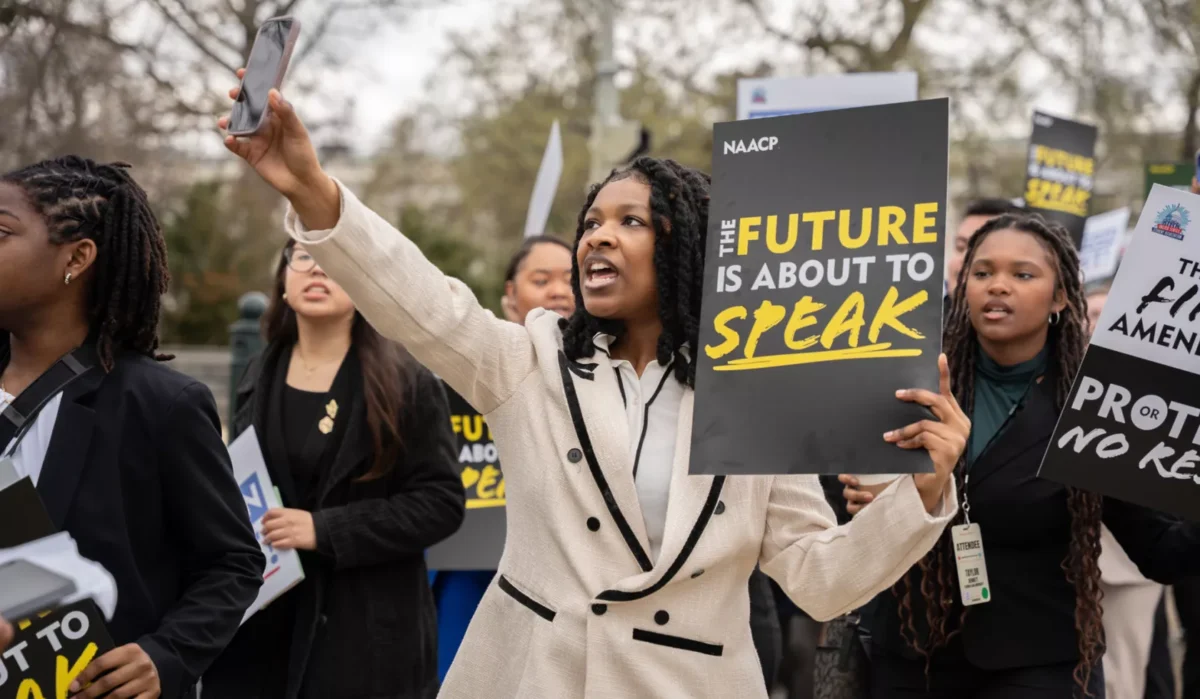
The National Association for the Advancement of Colored People (NAACP) has officially launched a strategic initiative titled "Out of Bounds," a campaign designed to leverage the immense economic and cultural influence of Black student-athletes to combat voter suppression. This movement specifically targets public universities in states that have recently implemented restrictive voting laws or engaged in racially motivated redistricting. By urging high-profile recruits to consider Historically Black Colleges and Universities (HBCUs) or institutions in states with more equitable voting protections, the NAACP aims to hit the coffers of athletic programs that generate hundreds of millions of dollars in revenue while their state governments simultaneously erode the political power of Black communities.
This campaign emerges at a critical juncture in American jurisprudence and collegiate athletics. As the U.S. Supreme Court continues to issue rulings that many civil rights advocates argue weaken the Voting Rights Act of 1965, the NAACP is turning to one of the most powerful economic engines in the Southern United States: college sports. The "Out of Bounds" initiative is not merely a call for a symbolic protest but a direct appeal to the labor and talent that sustains the multi-billion dollar collegiate sports industry.
The Legal Catalyst: Louisiana v. Callais and the Redistricting Wars
The immediate impetus for the "Out of Bounds" campaign was the April 29 decision by the U.S. Supreme Court in the case of Louisiana v. Callais. In a ruling that sent shockwaves through the civil rights community, the Court’s majority provided a legal pathway for Republican lawmakers in Louisiana to implement Congressional maps that critics argue dilute Black voting strength. This decision followed a similar legal battle in Texas, where gerrymandering efforts were upheld, effectively signaling to state legislatures that racially conscious redistricting would face less federal scrutiny than in previous decades.
According to NAACP President and CEO Derrick Johnson, these legislative actions represent more than just a policy disagreement; they are a "sprint to erase Black political power." The NAACP notes that in many of these states, the speed at which new, restrictive maps were drawn—sometimes within hours of a court ruling—indicates a coordinated effort to marginalize minority voters before the upcoming election cycles.
The historical context of this struggle dates back to the 1965 Voting Rights Act, which was designed to prevent the discriminatory voting practices that had disenfranchised Black citizens since the Reconstruction era. However, the landmark 2013 decision in Shelby County v. Holder removed the "preclearance" requirement, which previously forced states with a history of discrimination to seek federal approval before changing voting laws. The recent Louisiana v. Callais decision is viewed by the NAACP as the latest in a series of judicial blows that have rendered the original Act nearly unrecognizable.
The Economic Leverage of the Southeastern Conference (SEC)
The "Out of Bounds" campaign focuses its attention on eight states that are home to some of the most profitable athletic programs in the country: Tennessee, Louisiana, Alabama, Florida, Mississippi, South Carolina, Texas, and Georgia. These states represent a significant portion of the Southeastern Conference (SEC), a collegiate athletic league that recently reported a record-setting $1.1 billion in total revenue for the 2023-2024 fiscal year.

The NAACP estimates that the athletic departments of public universities in these eight targeted states alone generate more than $100 million in annual revenue each, largely driven by football and basketball programs. A disproportionate amount of the on-field talent in these programs is provided by Black athletes. The "Out of Bounds" messaging highlights the irony of a system where state governors and legislators celebrate the athletic achievements of Black students on Saturdays while passing laws that restrict those same students’ families from participating in the democratic process on Tuesdays.
Tylik McMillan, the NAACP’s national director for the youth and college division, emphasized this disconnect in a public statement: "The state that is working to erase your grandmother’s congressional district is the same state whose governor will stand on the field and celebrate your touchdown or game-winning shot."
A Multi-Pronged Strategy: Recruits, Current Athletes, and Fans
The NAACP’s campaign is structured around three primary calls to action, each targeting a different segment of the sports ecosystem:
- Prospective Student-Athletes: The organization urges the nation’s top Black high school recruits to consider committing to HBCUs. By doing so, the NAACP argues, these athletes can help build the prestige and financial stability of institutions that were founded to serve the Black community, rather than lending their talents to states that are actively undermining their civil rights.
- Current Student-Athletes: For those already enrolled in major programs within the targeted states, the NAACP suggests leveraging their status to demand legislative change. This includes using their platforms on social media, participating in organized demonstrations, or, in extreme cases, entering the transfer portal to move to schools in states with more robust voting protections.
- The General Public and Alumni: The campaign calls for a consumer boycott of team merchandise, licensed apparel, and ticket sales for programs in the eight targeted states. Supporters are encouraged to redirect their spending toward HBCU athletic programs and academic funds.
While consumer boycotts are often difficult to sustain, the NAACP points to the "power of the purse" as a historically effective tool in the civil rights movement. The Montgomery Bus Boycott of 1955-1956 is the most prominent example of how economic withdrawal can force political concessions. In the modern era, the "Out of Bounds" campaign seeks to replicate this pressure by targeting the brand equity of major university athletic departments.
Historical Precedents and the Evolution of Athlete Activism
The link between sports and social justice has a long and storied history in the United States. The NAACP’s current strategy draws inspiration from several key moments:
- The 1960s: Athletes like Muhammad Ali, Bill Russell, and Kareem Abdul-Jabbar used their global platforms to speak out against the Vietnam War and racial inequality.
- The 1968 Olympics: Tommie Smith and John Carlos’s "Black Power" salute on the podium in Mexico City remains one of the most iconic images of athlete-led protest.
- Colin Kaepernick (2016): The former NFL quarterback’s decision to kneel during the national anthem to protest police brutality sparked a national conversation—and a backlash—that fundamentally changed how professional leagues engage with social issues.
- The 2020 George Floyd Protests: Following the murder of George Floyd, college and professional athletes across the country led marches and secured commitments from leagues to invest in social justice initiatives.
However, as journalist Howard Bryant noted in a recent analysis for The Guardian, the momentum of 2020 has faced significant headwinds. The "Out of Bounds" campaign arrives at a time when some segments of the public have expressed "activism fatigue," and some athletes may fear the professional consequences of taking a stand, as seen in the case of Kaepernick.
Despite these challenges, Bryant argues that the NAACP’s action is a vital reminder that Black athletes hold unique power. "They are, like it or not, inextricably linked to the future of Black America because of the economic profits they generate in areas friendly and hostile, and the cultural cachet they hold," Bryant wrote.
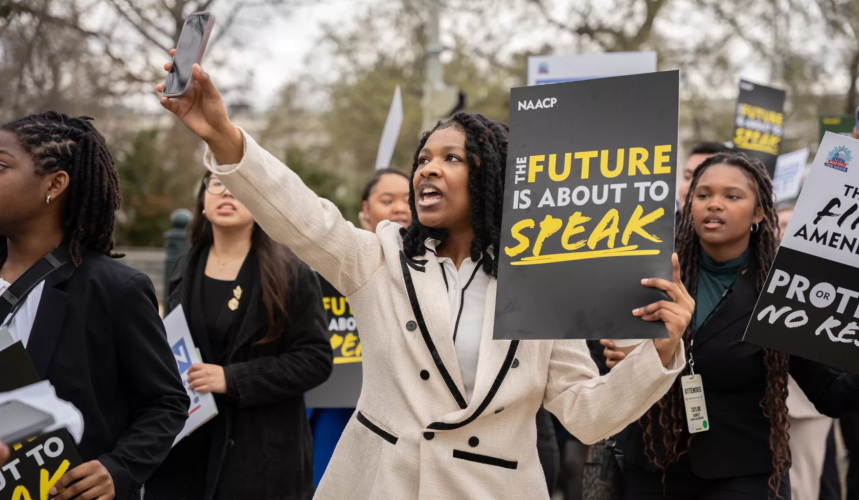
Political Reactions and Regional Impact
The reaction to the "Out of Bounds" campaign has been polarized along predictable political lines. Supporters of the restrictive voting laws argue that the measures are necessary to ensure "election integrity" and prevent fraud, despite a lack of evidence of widespread irregularities. Lawmakers in states like Georgia and Florida have dismissed the NAACP’s characterization of their laws as "voter suppression," instead framing them as common-sense administrative updates.
Conversely, Democratic leaders and voting rights advocates have praised the NAACP for its innovative approach. Representative James Clyburn of South Carolina, a veteran of the civil rights movement, has noted that anger over redistricting is already driving record-breaking voter turnout in his state. Clyburn suggested that when citizens feel their voices are being silenced by legislative maps, they become more motivated to engage in both electoral politics and economic protests.
The impact of the campaign could be further amplified by the new "Name, Image, and Likeness" (NIL) rules in college sports. For the first time, student-athletes have the legal right to profit from their personal brands. If major sponsors begin to view schools in vote-restricting states as "brand risks" due to NAACP-led boycotts, the financial pressure on university administrations could become untenable.
Broader Implications for American Democracy
The "Out of Bounds" campaign is more than a localized effort to influence college football recruiting; it is a reflection of a broader struggle over the direction of American democracy. Voter suppression in the South has national consequences, as it influences the composition of the U.S. House of Representatives, the outcome of the Electoral College, and the eventual makeup of the federal judiciary.
By targeting the intersection of sports and politics, the NAACP is highlighting a fundamental contradiction in the American experience: the celebration of Black excellence in the arena of entertainment versus the systematic marginalization of Black voices in the halls of power.
As the 2024 election cycle approaches, the success of "Out of Bounds" will likely be measured not just by the number of recruits who choose HBCUs, but by the level of national discourse it generates. If the campaign can successfully link the multi-billion dollar sports industry to the protection of constitutional rights, it may provide a new blueprint for civil rights advocacy in the 21st century.
Ultimately, the NAACP’s message is a call for consistency. The organization asserts that a society cannot claim to value the contributions of Black citizens on the playing field while simultaneously working to diminish their influence at the ballot box. Whether this strategy will lead to legislative reform remains to be seen, but it has already succeeded in placing the economic engine of college sports at the center of the fight for voting rights.
