

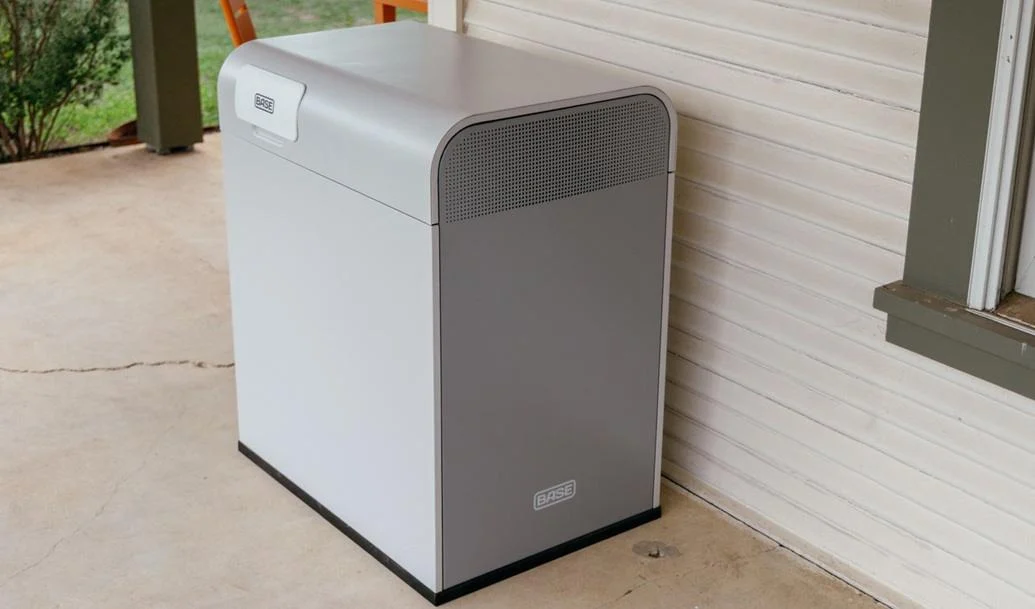
In a move that signals a massive shift in the venture capital landscape and the urgency of the American energy transition, Texas-based startup Base Power has announced the successful closing of a $1 billion Series D funding round. This latest injection of capital brings the company’s post-money valuation to a staggering $13 billion, firmly establishing it as a "decacorn" and a dominant force in the rapidly evolving residential energy storage sector. The announcement coincides with the official launch of "Base Core," a high-capacity home battery system designed not only to provide backup power for individual households but also to function as a critical stabilizing component for the overextended United States electric grid.
The funding round reflects a significant vote of confidence from a broad coalition of elite institutional investors. Led by Ribbit, Addition, Valor Equity Partners, and JPMorganChase’s Strategic Investment Group—operating under the firm’s Security and Resiliency Initiative—the round also saw participation from Altimeter, D1 Capital Partners, Sands Capital, Coatue, Layer Global, and Energy Impact Partners. Furthermore, the round was bolstered by follow-on investments from existing backers, including Thrive Capital, Andreessen Horowitz (a16z), Lightspeed, Trust Ventures, and CapitalG, Google’s independent growth fund.
The Genesis of Base Power and the Texas Energy Crisis
Founded in 2023 by Justin Lopas and Zach Dell, Base Power was born out of the necessity created by a mounting energy crisis in the United States, particularly within its home state of Texas. Lopas, a former engineer with experience in high-scale manufacturing, and Dell, a venture capitalist with a keen eye for infrastructure, recognized that the traditional centralized power model was failing to keep pace with modern demand.
The backdrop of this innovation is a series of grid failures and price spikes that have plagued the American South over the last five years. Most notably, the 2021 Winter Storm Uri left millions of Texans without power for days, leading to hundreds of deaths and billions of dollars in economic damage. Since then, the Texas grid (ERCOT) has faced repeated "tightness" alerts during summer heatwaves, as the surge in air conditioning usage collides with aging thermal power plants and the intermittent nature of renewable energy.
Base Power entered the market with a "battery-as-a-service" philosophy, aiming to lower the barrier to entry for homeowners while providing a scalable solution for grid operators. By integrating hardware with sophisticated software, the company allows homeowners to benefit from lower electricity costs and reliable backup while simultaneously allowing the utility to "tap into" these distributed batteries to balance the grid during peak demand periods.
Base Core: A Technical Leap in Residential Storage
The centerpiece of today’s announcement is the launch of Base Core, a residential battery system that significantly outclasses existing market competitors in terms of raw capacity and ease of installation. While industry standard batteries typically offer between 10 kWh and 13.5 kWh of storage, Base Core is designed for high-demand scenarios, offering configurations of 39.2 kWh and 78.4 kWh.
This capacity leap is essential for the modern American home, which is increasingly reliant on electricity for heating, cooling, and transportation. A 78.4 kWh system is capable of powering an average American household for several days during a total grid outage, a feat that smaller units struggle to achieve without significant load shedding.
Beyond its storage capacity, the Base Core is engineered for rapid deployment. One of the primary bottlenecks in the residential solar and battery industry has been the complexity of installation, which often requires days of electrical work and invasive home modifications. Base Power claims that the Core system can be installed in under an hour. This speed is achieved through a proprietary "plug-and-play" architecture that simplifies the connection between the battery, the home’s main breaker panel, and the utility meter.
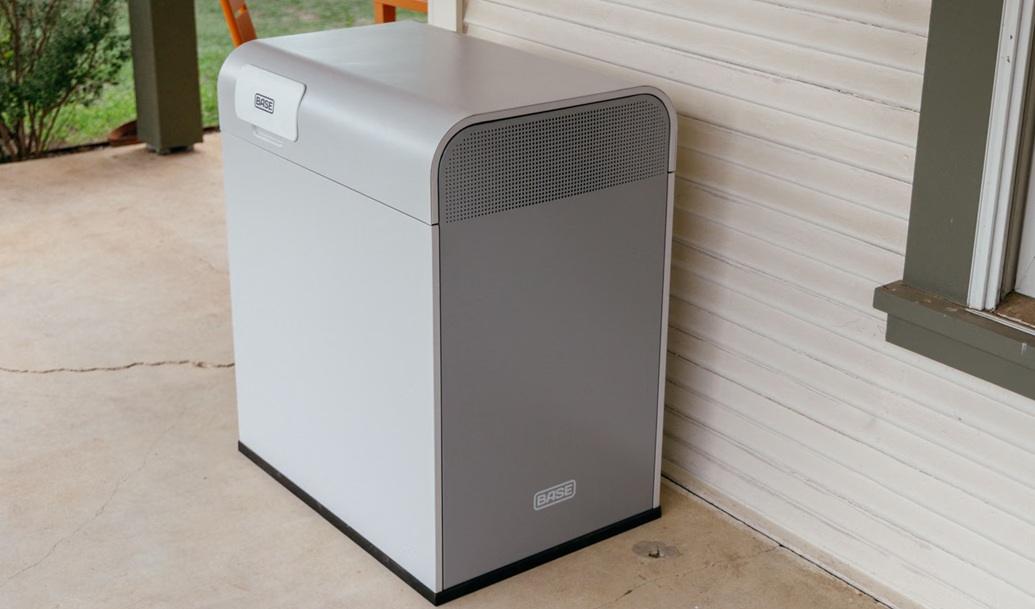
"We brought together the best hardware and software engineers in the world to build Core—a battery designed to protect American homes while supporting the grid," said Zach Dell, CEO and Co-Founder of Base Power. "It installs in under an hour, switches over seamlessly, is built to handle extreme weather, and delivers extended outage protection at a price Americans can afford."
Addressing the National Shift in Energy Demand
The $1 billion investment comes at a time when the U.S. is undergoing a foundational shift in how energy is consumed and generated. Three primary factors are driving this transition:
- The Electrification of Everything: The rapid adoption of Electric Vehicles (EVs) and the transition from gas furnaces to electric heat pumps have significantly increased the baseline load on residential electrical systems.
- The Rise of AI and Data Centers: The explosion of generative artificial intelligence has led to a massive expansion of data centers, which consume vast amounts of electricity. This industrial demand often competes with residential needs, leading to higher prices and potential shortages.
- Climate Volatility: Increasing frequency of extreme weather events—from hurricanes on the East Coast to wildfires in the West—has made the traditional centralized grid more vulnerable than ever.
Traditional power generation, such as coal and natural gas plants, cannot scale fast enough or with enough flexibility to meet these fluctuating demands. Furthermore, the regulatory environment for building new high-voltage transmission lines is notoriously slow, often taking a decade or more to move from proposal to completion.
Base Power’s solution bypasses these "midstream" bottlenecks by placing the solution at the "edge" of the grid. By creating a decentralized network of batteries, Base Power creates what energy experts call a "Virtual Power Plant" (VPP). When the grid is stressed, thousands of Base Core units can discharge energy back into the system, effectively acting as a massive, distributed power plant that can be activated in milliseconds.
Strategic Implications and the Role of JPMorganChase
The involvement of JPMorganChase’s Strategic Investment Group is particularly noteworthy. As the largest bank in the United States, JPMorgan’s interest in "security and resiliency" highlights the fact that energy stability is now viewed as a matter of national security and economic stability.
Todd Combs, Head of the Strategic Investment Group for JPMorganChase’s Security and Resiliency Initiative, emphasized the broader impact of the technology: "JPMorganChase is proud to support Base Power as it modernizes the grid through distributed energy solutions that enhance reliability, expand capacity and help build a more resilient and secure power system for the future."
The "Security and Resiliency" angle suggests that financial institutions are beginning to price in the risks of grid instability. For a bank, a customer whose home or business is powered by a reliable backup system is a lower credit risk than one who may face business interruption or property damage due to power failures.
Manufacturing and Workforce Expansion
A key component of Base Power’s strategy is its commitment to domestic production. The Base Core is designed and built in the United States, allowing the company to take full advantage of the manufacturing tax credits provided by the Inflation Reduction Act (IRA). This domestic focus also helps the company avoid the supply chain disruptions and geopolitical risks associated with importing battery components from overseas.
The new capital will be used to significantly expand the company’s manufacturing footprint. Currently, Base Power operates primarily in Texas, but the $1 billion round is earmarked for national expansion. The company plans to enter high-demand markets such as California, Florida, and the Northeast within the next 18 to 24 months.

To support this growth, Base Power expects to grow its workforce by several hundred employees. This includes hiring additional hardware engineers, software developers to manage the VPP orchestration, and a large-scale fleet of certified installers.
Analysis of Market Impact
The $13 billion valuation places Base Power in a unique position. It is now valued higher than many long-standing traditional utility companies and established solar firms. This valuation is based not just on the hardware sales of the Base Core, but on the recurring revenue potential of the electricity services and grid-balancing contracts.
By acting as a Retail Electric Provider (REP) in deregulated markets, Base Power can capture the "spread" between wholesale and retail electricity prices. When prices are low, the company charges its network of batteries; when prices spike, it uses that stored energy to power homes or sells it back to the grid at a premium.
This business model represents a direct threat to the traditional utility monopoly. If a significant percentage of households adopt high-capacity storage like the Base Core, the traditional utility becomes less of a "provider" and more of a "platform" for moving energy between distributed nodes.
Future Outlook
As Base Power moves toward national expansion, it faces several challenges. Regulatory hurdles vary significantly from state to state, and the company will need to navigate the complex "interconnection" rules of various regional grid operators. Furthermore, while the Base Core is designed for rapid installation, the sheer volume of units required to make a meaningful impact on the national grid is immense.
However, the scale of this funding round suggests that the private sector is ready to lead where the public sector has struggled. With $1 billion in the bank and the backing of the world’s most powerful financial institutions, Base Power is no longer just a startup—it is a critical infrastructure player.
The launch of Base Core and the massive Series D round mark a turning point in the American energy narrative. It is a transition from a centralized, fragile system to a decentralized, resilient one where the individual homeowner is no longer just a consumer, but an active participant in the stability of the national power supply. As extreme weather becomes the new normal, the demand for the security provided by Base Power is likely only to grow, potentially justifying its multi-billion dollar valuation in the years to come.
