

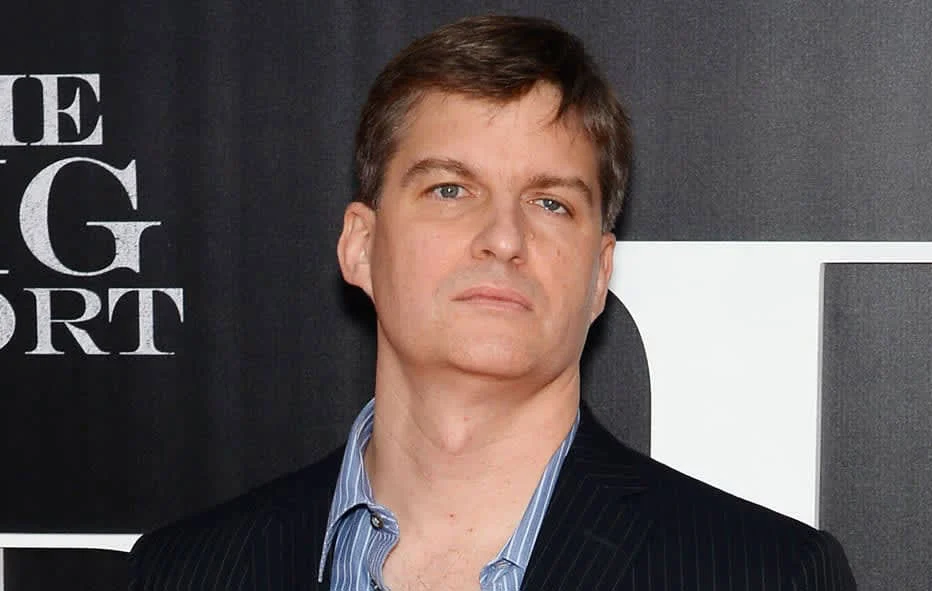
Michael Burry, the renowned investor immortalized in "The Big Short" for his prescient wager against the 2008 subprime mortgage market, continues to uphold his bearish market outlook, even as the S&P 500 index ascends to unprecedented record highs. Burry’s latest pronouncement, delivered via a Tuesday Substack post, serves as a stark warning: the current market rally could culminate in a precipitous sell-off eerily reminiscent of the infamous 1987 stock-market crash, widely known as Black Monday. His persistent skepticism stands in stark contrast to the prevailing market euphoria, fueled by robust corporate earnings and burgeoning optimism surrounding technological advancements.
"I continue to believe it is possible we are near a major top, and possible a 1987-type fall, but the S&P 500 making new highs likely will bring new money into the market," Burry articulated in his recent commentary, highlighting the paradoxical nature of market psychology where rising prices often attract further investment, potentially inflating asset values beyond sustainable levels. This observation underscores a critical aspect of market dynamics, where fear of missing out (FOMO) can override fundamental analysis, particularly during periods of sustained upward momentum.
The Current Market Landscape: Record Highs and Underlying Currents
The financial markets have been on an impressive trajectory, defying earlier predictions of a more subdued performance. The S&P 500, a bellwether for the broader U.S. economy, surged by 1.9% on Tuesday, marking its first record close since June and signifying a renewed wave of investor confidence. This climb was significantly bolstered by a series of stronger-than-expected corporate earnings reports, particularly from the technology sector, which have consistently outperformed analyst expectations. Concurrently, a drop in global oil prices, coupled with renewed hopes for the unhindered reopening of the Strait of Hormuz to maritime traffic, further alleviated economic concerns, contributing to the market’s upward momentum. The tech-heavy Nasdaq Composite mirrored this enthusiasm, soaring by 2.7% on the same day, extending its remarkable gain to nearly 5% within just the first two trading days of the week. This vigorous rally has prompted some analysts to declare a new bull market, with indices breaking through psychological resistance levels and demonstrating significant breadth.
The S&P 500’s journey to new highs has been characterized by several key factors throughout the past year. Following a challenging 2022 marked by aggressive interest rate hikes by the Federal Reserve to combat inflation, 2023 saw a gradual recovery, with market participants increasingly betting on a "soft landing" for the economy. This sentiment gained traction as inflation showed signs of cooling, and the labor market remained surprisingly resilient. The "Magnificent Seven" — a group of mega-cap technology companies including Apple, Microsoft, Alphabet, Amazon, Nvidia, Tesla, and Meta Platforms — played an outsized role in driving the S&P 500’s gains, often accounting for a significant portion of the index’s overall performance. Their robust earnings, driven by innovation, market dominance, and, crucially, the burgeoning excitement around artificial intelligence, became a primary engine of growth.
The Oracle of "The Big Short": Who is Michael Burry?
Michael Burry’s name became synonymous with contrarian investing following his accurate prediction and profitable bet against the U.S. housing market bubble in the mid-2000s. Chronicled in Michael Lewis’s book "The Big Short" and its subsequent film adaptation, Burry’s meticulous research and conviction allowed him to foresee the impending collapse of the subprime mortgage-backed securities market, an event that triggered the 2008 global financial crisis. His firm, Scion Asset Management, executed complex credit default swaps that generated immense profits for his investors, solidifying his reputation as a shrewd, albeit often solitary, analyst capable of identifying systemic risks overlooked by mainstream Wall Street.
A History of Contrarian Calls
Burry’s career is dotted with numerous high-profile, often controversial, market calls. While his most famous success was the 2008 crisis, he has frequently taken positions that diverge sharply from consensus. He has previously warned of "passive investing bubbles," arguing that the sheer volume of money flowing into index funds could distort market prices and lead to inefficient capital allocation. In recent years, Burry has also signaled caution on various occasions, including during the meme stock frenzy of 2021 and at points during the post-pandemic market rally. His market predictions are not always immediately accurate, and he has at times closed positions prematurely or adjusted his stance. However, his willingness to challenge conventional wisdom and delve into the underlying mechanics of financial systems has earned him a dedicated following and continues to make his pronouncements noteworthy.
The Looming Shadow of 1987: A Historical Parallel
Burry’s comparison of the current market climate to 1987 evokes one of the most dramatic single-day declines in stock market history. On October 19, 1987, a day forever etched in financial memory as "Black Monday," the Dow Jones Industrial Average plummeted by an astounding 22.6% in a single trading session. This unprecedented drop wiped out approximately $500 billion in market capitalization (equivalent to over $1 trillion in today’s dollars) and sent shockwaves across global financial markets.
Black Monday Revisited: Causes and Consequences
The causes of the 1987 crash were complex and multifaceted, involving a confluence of factors that created a perfect storm. Key among them were:
- Program Trading and Portfolio Insurance: These nascent computer-driven trading strategies were designed to automatically sell stocks as prices fell, ostensibly to protect portfolios. However, in a rapidly declining market, these programs exacerbated the sell-off by creating a feedback loop of selling pressure, overwhelming market liquidity.
- Market Overvaluation: Leading up to Black Monday, the market had experienced a significant bull run. The Dow had climbed by over 40% in the first nine months of 1987, leading to concerns about overvaluation.
- Rising Interest Rates and Trade Deficits: The U.S. Federal Reserve had been raising interest rates to combat inflation, and concerns about a widening U.S. trade deficit contributed to investor unease.
- Lack of Market Safeguards: Unlike today, there were no "circuit breakers" in place to temporarily halt trading during extreme volatility, allowing the rapid decline to unfold unchecked.
- Market Psychology: Panic selling, fueled by widespread fear and uncertainty, played a significant role in accelerating the crash.
The consequences of Black Monday were profound. While the economy did not immediately plunge into a recession, the event led to a fundamental rethinking of market structure and regulation. Regulators swiftly implemented measures such as circuit breakers, which automatically pause trading when indices fall by certain percentages, to prevent a repeat of such a rapid, uncontrolled descent. The crash also highlighted the interconnectedness of global financial markets and the potential for technological advancements in trading to amplify market movements.
Burry’s Core Thesis: AI Boom and Market Mechanics
At the heart of Burry’s current bearish stance is his profound skepticism regarding the artificial intelligence (AI) boom, which he views as a primary driver of the market’s frothiness. He contends that the demand for AI infrastructure, including advanced semiconductors and data centers, is being fueled by financing arrangements that may prove unsustainable in the long run. This implies a potential over-leveraging or speculative capital allocation into the sector, creating an asset bubble.
The Perils of "Unsustainable Financing"
Burry’s concern about "unsustainable financing" likely refers to several aspects of the current AI investment landscape. This could include:
- Venture Capital Funding: Rapid and often highly valued private funding rounds for AI startups, sometimes based more on potential than proven profitability.
- Corporate Debt: Companies borrowing heavily to invest in AI infrastructure, potentially stretching their balance sheets.
- Equity Valuations: Publicly traded AI-related companies, particularly chipmakers like Nvidia, trading at extremely high price-to-earnings ratios, reflecting immense future growth expectations that might be difficult to meet consistently.
- Momentum-Driven Investing: Investors pouring money into AI stocks simply because they are going up, without thoroughly assessing underlying fundamentals.
Should the promised returns from AI investments not materialize as quickly or as robustly as expected, or if interest rates remain elevated, the cost of this financing could become a significant burden, potentially leading to a sharp reassessment of valuations.
Volatility and Leverage: A Self-Reinforcing Cycle
Beyond the specifics of AI financing, Burry also points to a more systemic issue: the market’s advance is creating a self-reinforcing cycle driven by declining volatility. "Remember, the market going up on falling volatility forces vol-targeting funds to leverage up, and brings leverage from other momentum strategies into play," he wrote.
This mechanism is critical to understanding Burry’s warning. Volatility-targeting funds, which include many institutional investors and hedge funds, adjust their exposure to the market based on its perceived riskiness. When market volatility (often measured by indices like the VIX) is low and declining, these funds interpret it as a signal of lower risk, prompting them to increase their leverage or exposure to assets to meet their target risk levels. Similarly, momentum strategies, which buy assets that have been performing well, are also encouraged by stable upward trends. This influx of leveraged capital, while contributing to the rally, also makes the market more fragile. Should volatility suddenly spike—perhaps due to an unexpected economic shock or a shift in sentiment—these highly leveraged positions would be forced to unwind rapidly, triggering a cascade of selling that could accelerate a downturn, much like the program trading did in 1987. The current VIX index, which has largely remained subdued despite geopolitical tensions, could be seen by Burry as a deceptive indicator of underlying risk.
Burry’s Bearish Portfolio: Specific Short Positions
In light of his persistent concerns, Burry disclosed that he continues to maintain significant short positions against a range of prominent companies and exchange-traded funds (ETFs) that he believes are vulnerable to a market correction. Short selling involves borrowing shares and selling them, hoping to buy them back later at a lower price to profit from the difference.
His disclosed short positions include:
- iShares Semiconductor ETF (SOXX): An ETF tracking the performance of the U.S. semiconductor industry. This is a direct bet against the foundational technology sector driving much of the AI boom.
- Micron (MU): A major manufacturer of memory and data storage solutions, crucial for AI hardware.
- Nvidia (NVDA): The undisputed leader in graphics processing units (GPUs), essential for AI computing. Nvidia’s stock has seen a meteoric rise, making it a prime target for bears.
- Caterpillar (CAT): A global manufacturer of construction and mining equipment, often seen as a bellwether for global industrial activity and economic health. A short here suggests a pessimistic outlook on broader economic growth.
- Palantir (PLTR): A data analytics and software company known for its work with government agencies and large corporations, often associated with AI and big data trends.
- Tesla (TSLA): The electric vehicle and clean energy company, a prominent "growth stock" and a key component of the "Magnificent Seven."
- Applied Materials (AMAT): A leading supplier of equipment, services, and software to the semiconductor industry.
Analyzing the Bets: Tech, Semiconductors, and Industrials
Burry’s portfolio clearly reflects his skepticism towards the tech and semiconductor sectors, which have been the primary beneficiaries of the AI narrative. Shorting SOXX, Micron, Nvidia, and Applied Materials represents a concentrated bet against the continued hyper-growth and high valuations within the AI supply chain. His inclusion of Tesla and Palantir further underscores his belief that highly speculative growth stocks, which often command premium valuations based on future potential rather than current profitability, are particularly susceptible to a downturn. The short on Caterpillar, an industrial giant, suggests a broader concern about the global economy and industrial demand, indicating that Burry’s bearish outlook extends beyond just the tech bubble.
Interestingly, Burry noted that while most of his short positions remain profitable, his bet against Nvidia is currently in the red. This highlights the immense strength and momentum of Nvidia’s stock, which has consistently defied bearish predictions due to its dominant position in the rapidly expanding AI market. Despite this, Burry reiterated his confidence in his long-term outlook for these positions, though he added a caveat that he would cut his losses if the trades moved decisively against him, demonstrating a pragmatic approach to risk management. His concluding remark, "Again, shorting is not for everyone. I must short. Most should not," serves as a crucial disclaimer, acknowledging the inherent risks and specialized nature of short selling, a strategy typically reserved for experienced investors.
Market Reactions and Counterarguments
While Burry’s warnings grab headlines, the broader market has largely continued its upward trajectory, suggesting that many investors and analysts remain optimistic. Bullish arguments often center on several points:
- Strong Corporate Fundamentals: Many companies, especially in the tech sector, are reporting robust earnings and revenue growth, validating their valuations to some extent.
- Innovation and Productivity Gains: Proponents argue that AI represents a genuine technological revolution that will drive significant productivity gains and economic growth for decades, justifying current investments.
- Resilient Economy: Despite inflation and higher interest rates, the U.S. economy has shown remarkable resilience, with strong employment data and consumer spending.
- Federal Reserve Policy: Expectations of eventual interest rate cuts by the Federal Reserve, once inflation is firmly under control, provide a supportive backdrop for equity markets.
The Federal Reserve’s Role
The Federal Reserve’s monetary policy remains a pivotal factor influencing market sentiment. After a series of aggressive rate hikes, the Fed has adopted a more cautious stance, signaling that future policy decisions will be data-dependent. While higher interest rates generally make equities less attractive compared to fixed-income investments, the market has largely priced in the current rate environment. Any indication of a pivot towards rate cuts could provide further impetus for the rally, while unexpected hawkishness could trigger a correction. Fed officials, including Chairman Jerome Powell, have consistently emphasized their commitment to bringing inflation down to their 2% target, a goal that could still necessitate tighter financial conditions if inflationary pressures re-emerge.
Implications for Investors and Market Stability
Burry’s warnings, while not necessarily predictive of immediate market action, serve as a vital reminder for investors to maintain vigilance and critically assess market conditions. For retail investors, his advice that "most should not" short is particularly pertinent, as short selling carries unlimited risk and is highly complex. Instead, a focus on diversification, long-term investment horizons, and understanding personal risk tolerance remains paramount.
For institutional investors and policymakers, the echoes of 1987 prompt a re-evaluation of current market safeguards. While circuit breakers and improved regulatory oversight have been implemented since Black Monday, the rapid evolution of algorithmic trading, high-frequency trading, and the interconnectedness of global financial systems present new challenges. The potential for a "flash crash" or a rapid unwinding of leveraged positions due to unforeseen events remains a concern, even with enhanced regulations.
Lessons from History and Future Safeguards
The history of financial markets is replete with cycles of boom and bust, often fueled by technological innovation and speculative fervor. From the Dutch Tulip Mania to the Dot-Com Bubble, periods of irrational exuberance have invariably been followed by painful corrections. Burry’s strength lies in his ability to identify potential discrepancies between market narratives and underlying economic realities. His reference to 1987 is not merely a historical anecdote but a cautionary tale about systemic risks, the amplifying effects of leverage, and the power of collective market psychology.
As the S&P 500 continues its ascent, Burry’s dissenting voice acts as a crucial counterpoint, urging a deeper examination of the forces driving the rally. Whether his current bearish wager will prove as prescient as his "Big Short" remains to be seen, but his analysis undoubtedly provides a valuable perspective for navigating an increasingly complex and interconnected global financial landscape. The market will ultimately decide if the current optimism is built on solid fundamentals or if, as Burry suggests, it is teetering on the precipice of a significant correction.
