


The United States Department of the Interior has finalized a landmark agreement with Chicago-based energy developer Invenergy to terminate four major offshore wind leases in exchange for a $765 million settlement. Under the terms of the deal, the federal government will reclaim development rights for massive tracts of the Atlantic and Pacific outer continental shelf, while Invenergy has committed to redirecting that capital into domestic natural gas-fired power plants and geothermal energy projects. This move marks a significant escalation in the Trump administration’s broader strategy to dismantle the burgeoning U.S. offshore wind industry in favor of "baseload" energy sources that the administration characterizes as more reliable and cost-effective for the American taxpayer.
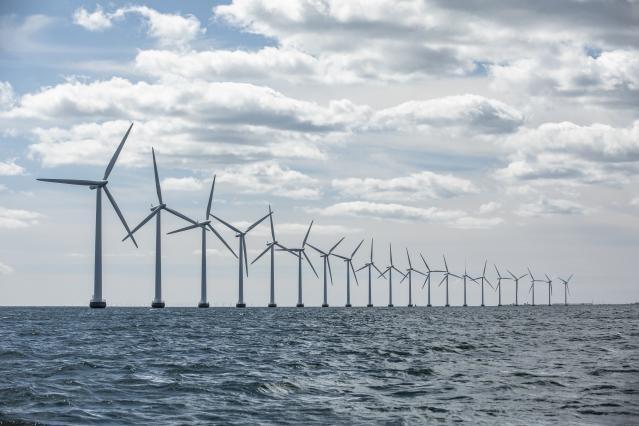
The deal involves the voluntary termination of leases held by Invenergy affiliates in three high-priority maritime regions: the New York Bight, the Central Coast of California, and the Gulf of Maine. Two of these projects were among the most ambitious in the U.S. renewable energy pipeline. The New York Bight project was projected to deliver approximately 2.4 gigawatts (GW) of capacity, enough to power nearly one million homes, while the California project was expected to provide 1.5 GW. By ending these contracts, the administration effectively removes nearly 4 GW of potential renewable energy from the national grid, signaling a decisive shift in federal energy priorities.
A New Strategy for Energy Realignment
This $765 million agreement is the second major "buy-out" orchestrated by the Department of the Interior in 2026. It follows a similar $1 billion deal struck in March with the French energy giant TotalEnergies, which saw the termination of several other offshore wind projects. These maneuvers represent a shift in tactics for the Trump administration. After facing initial setbacks in federal courts regarding outright bans on wind energy, the executive branch has moved toward negotiated terminations. By offering financial settlements and steering developers toward alternative energy sectors, the administration is attempting to bypass lengthy litigation while achieving its goal of halting offshore wind expansion.
The strategy is rooted in a Presidential Memorandum signed by President Trump on his first day in office, which placed an indefinite moratorium on federal approvals for new wind energy projects. Subsequent orders paused active leases for five major projects currently under construction along the East Coast, citing national security concerns and potential interference with naval operations and radar systems. While some developers have fought these orders in court, Invenergy’s decision to accept a settlement suggests that some industry players are opting for regulatory certainty and immediate capital reallocation rather than enduring years of legal and political volatility.
Chronology of the Offshore Wind Rollback
The path to the Invenergy deal has been marked by a series of aggressive policy shifts and legal confrontations:
- January 20, 2025: President Trump signs a Day One memorandum halting all new federal wind energy permits and directing the Department of the Interior to review existing leases for national security and economic impacts.
- February 2025: The administration issues a "lease pause" for five large-scale offshore wind projects already in the construction phase, including Vineyard Wind and South Fork Wind, citing the need for a comprehensive "National Security Impact Assessment."
- March 2025: A federal court strikes down the initial blanket ban on wind approvals, ruling it "arbitrary and capricious." However, the administration continues to stall individual project permits through the Bureau of Ocean Energy Management (BOEM).
- March 2026: The administration announces its first major settlement, a $1 billion agreement with TotalEnergies to exit the U.S. offshore wind market.
- May 2026: A coalition of seven state Attorneys General, led by New York and Massachusetts, files a federal lawsuit against the Department of the Interior, alleging that the TotalEnergies deal constitutes an illegal expenditure of taxpayer funds and violates the Outer Continental Shelf Lands Act.
- June 18, 2026: The Department of the Interior announces the $765 million deal with Invenergy, further solidifying the administration’s "swap" policy.
Redirecting Investment to Gas and Geothermal
The funds reclaimed from the Invenergy leases are slated for immediate reinvestment into the domestic energy sector, specifically targeting the Midwest and the Western United States. According to the Department of the Interior, the capital will support the development of high-efficiency natural gas-fired power plants in Indiana, Wisconsin, Iowa, Kansas, and Missouri. These states are critical components of the U.S. manufacturing belt, and the administration argues that natural gas provides the "firm" power necessary to support industrial growth and stabilize utility costs.
In addition to natural gas, a portion of the redirected investment will focus on geothermal power generation in the Western U.S. Geothermal energy, which taps into the heat of the earth’s crust to produce electricity, is viewed by the administration as a superior alternative to wind because it provides 24/7 baseload power without the intermittency issues associated with weather-dependent renewables.

U.S. Secretary of the Interior Doug Burgum defended the move, stating that the previous administration’s push for offshore wind was built on "false assumptions." Burgum argued that the high costs of offshore infrastructure and the necessity of massive federal subsidies made the projects unsustainable. "Under President Trump, we are returning to a policy of energy realism," Burgum said. "By shifting investment back toward dependable, secure energy infrastructure, we are ensuring that the American economy remains competitive while lowering the energy burden on hardworking families."
Industry Response and Economic Implications
From the perspective of Invenergy, the deal provides a pragmatic exit from a sector that has become increasingly fraught with risk. Daniel Runyan, Invenergy’s Senior Vice President for Development, noted that the current market conditions and regulatory environment necessitated a shift in focus. Runyan emphasized that the company remains committed to meeting "unprecedented energy demand" but must do so through projects that can be delivered on a "commercially reasonable timeline."
However, the deal has drawn sharp criticism from environmental advocates and leaders in the renewable energy sector. Critics argue that the $765 million payout is essentially "hush money" designed to kill competition for the fossil fuel industry. They point out that the New York Bight and California projects would have created thousands of high-paying maritime and construction jobs while significantly reducing carbon emissions.
Market analysts suggest that the administration’s actions are creating a "chilling effect" on international investment in the U.S. energy transition. The uncertainty surrounding federal leases has led several European firms to reconsider their U.S. portfolios, potentially ceding leadership in green technology to other nations. Conversely, proponents of the administration’s policy argue that the U.S. is merely correcting a market distortion caused by excessive subsidies, and that the pivot to natural gas will secure energy independence for decades to come.

Legal Challenges and Future Outlook
The legality of these "swap" deals remains a point of intense contention. The lawsuit filed by the coalition of state Attorneys General argues that the Department of the Interior does not have the unilateral authority to pay private companies to stop legal development projects. The plaintiffs contend that these agreements are a "sham" designed to circumvent the will of Congress, which has authorized and funded offshore wind development through various legislative acts.
The outcome of these legal battles will likely determine the fate of the remaining offshore wind leases in federal waters. If the courts uphold the administration’s right to negotiate lease terminations, it could lead to a total exodus of offshore wind developers from the U.S. market. If the courts rule against the administration, the federal government could be forced to reinstate the leases, leading to a complex legal quagmire regarding the $1.76 billion already committed to TotalEnergies and Invenergy.
For now, the focus shifts to the Midwest and the West, where the new gas and geothermal projects are expected to break ground. As the administration doubles down on its "America First" energy policy, the landscape of the U.S. power grid is being fundamentally reshaped, moving away from the offshore horizons of the Atlantic and Pacific and back toward the traditional energy heartlands of the interior. The Invenergy deal is a clear signal that the Trump administration intends to use every tool at its disposal—financial, regulatory, and political—to ensure that the future of American energy is built on foundations of gas and steam rather than wind.
