

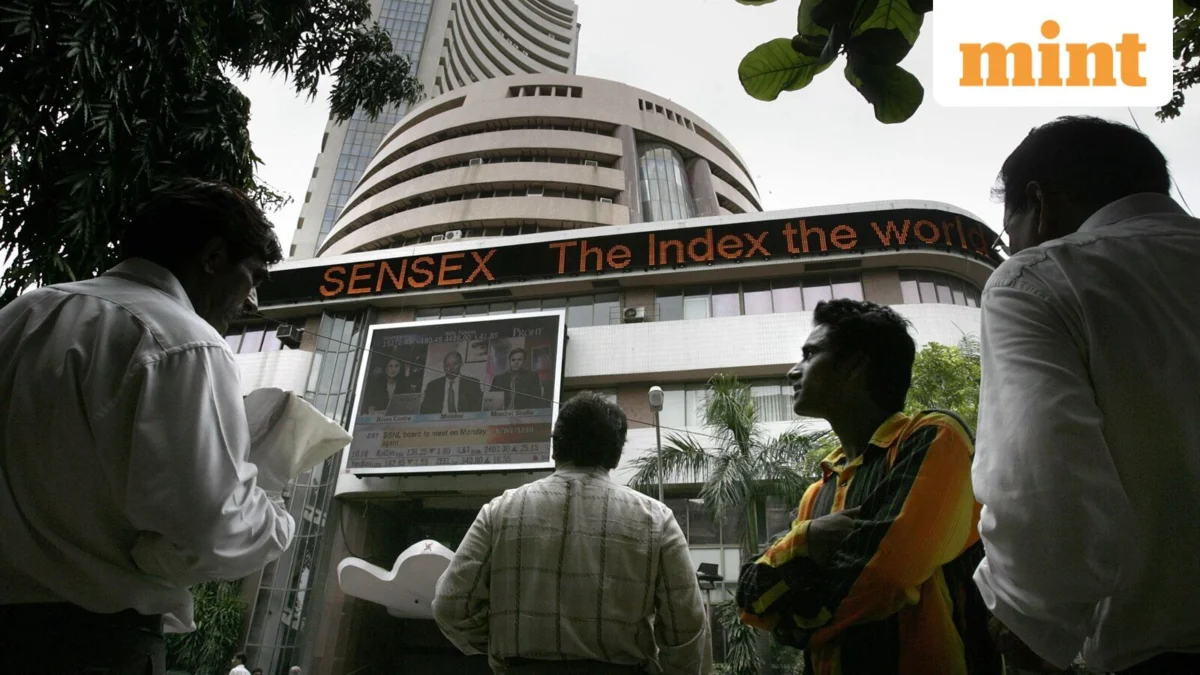
BSE Index Services Pvt. Ltd., a wholly owned subsidiary of the BSE (formerly the Bombay Stock Exchange), has officially announced the launch of the BSE Saatvik 100 Index, marking a significant milestone as India’s first dedicated benchmark for ethical and value-based investing. Designed to cater to a growing demographic of investors who seek to align their financial goals with their moral and philosophical convictions, the BSE Saatvik 100 is derived from the broader BSE 500 Index. This new thematic index filters companies based on "Saatvik" principles—a concept rooted in Indian philosophy that emphasizes purity, responsibility, and ethical conduct.
The introduction of the BSE Saatvik 100 Index comes at a critical juncture for the Indian capital markets. As domestic and institutional participation reaches record highs, there is a discernible shift in investor behavior. While traditional financial metrics like Price-to-Earnings (P/E) ratios and Return on Equity (ROE) remain fundamental, a new layer of scrutiny involving Environmental, Social, and Governance (ESG) factors and ethical alignment is becoming increasingly prevalent. The BSE Saatvik 100 aims to provide a structured, transparent, and credible framework for this specific segment of the market.
The Philosophy of Saatvik Investing
The term "Saatvik" is derived from the Sanskrit word "Sattva," which denotes qualities of goodness, harmony, and purity. In the context of the financial markets, Saatvik investing refers to a selection process that prioritizes companies demonstrating high standards of corporate governance, social responsibility, and ethical business practices. This often involves the exclusion of industries traditionally deemed "non-Saatvik," such as those involved in alcohol, tobacco, gambling, or weapons, although the specific proprietary methodology used by BSE Index Services focuses on a holistic assessment of ethical conduct.
Ashutosh Singh, Managing Director and Chief Executive Officer of BSE Index Services, emphasized the strategic importance of this launch. "The launch of the BSE Saatvik 100 Index marks an important step in broadening the range of thematic indices available to investors seeking alignment between their investment decisions and value-based principles," Singh stated. He further noted that as capital markets continue to evolve, investor preferences are increasingly extending beyond traditional financial metrics to include ethical, cultural, and philosophy-driven considerations.
Index Composition and Sectoral Weightage
The BSE Saatvik 100 is not merely a moral statement but a robust financial instrument. According to the exchange, the index is heavily weighted toward sectors that demonstrate systemic stability and strong governance frameworks. The financial services sector holds the highest weight in the index at 37.55%, making it the single-largest contributor. This heavy weighting suggests that India’s leading financial institutions are perceived to meet the rigorous ethical and governance standards required for inclusion in a "Saatvik" framework.
Following financial services, the next most significant sectors are consumer discretionary and energy. The inclusion of the energy sector, often scrutinized in traditional ESG frameworks, indicates that the Saatvik methodology likely rewards companies within the sector that are transitioning toward cleaner practices or demonstrating exceptional corporate responsibility. Other key sectors represented in the index include:
- Commodities and Industrials: These sectors provide the industrial backbone of the index, representing companies involved in manufacturing and raw material processing that adhere to ethical labor and environmental standards.
- Utilities and Telecommunication: These sectors offer defensive stability to the index, featuring large-cap players with regulated business models.
- Services, FMCG, and Healthcare: The remaining exposure is spread across these sectors, ensuring that the index captures a diversified slice of the Indian economy.
Top Constituents and Market Leaders
The individual stock composition of the BSE Saatvik 100 reflects the "creme de la creme" of the Indian corporate world. The index is dominated by large-cap entities that possess the resources to maintain high standards of ethical reporting and governance.
Among the individual stocks, HDFC Bank holds the largest weight, followed closely by ICICI Bank and Reliance Industries. The presence of these three giants as the top constituents anchors the index in liquidity and market capitalization. Other major constituents include:
- Infosys: A perennial favorite for ESG and ethical funds due to its transparent governance and social initiatives.
- State Bank of India (SBI): Representing the public sector’s commitment to value-based growth.
- Axis Bank and Kotak Mahindra Bank: Further solidifying the dominance of the private banking sector in the ethical space.
- Mahindra & Mahindra: Recognized for its corporate social responsibility (CSR) initiatives and focus on sustainable mobility.
The composition indicates a strong tilt toward large-cap financial and diversified businesses, providing a "safe haven" feel for investors who want to avoid the volatility often associated with mid-cap or small-cap thematic indices.
Strategic Applications for Investors and Fund Managers
The BSE Saatvik 100 is designed to be more than just a tracking tool; it is intended to be the foundation for a new ecosystem of financial products. BSE Index Services has indicated that the index is ideally suited for passive investment strategies.

- Exchange-Traded Funds (ETFs) and Index Funds: Asset Management Companies (AMCs) can use the BSE Saatvik 100 to launch ETFs, allowing retail investors to gain exposure to a basket of ethical companies with a single transaction. This reduces the cost of entry for value-based investing.
- Benchmark for Active Management: Portfolio Management Services (PMS) and mutual fund schemes that claim to follow ethical or "Saatvik" mandates now have a credible, third-party benchmark against which they can measure their performance.
- Structured Products: Institutional investors can use the index to create structured products or derivatives that cater to specific risk-reward profiles within the ethical investing space.
By providing a "credible foundation," as Ashutosh Singh described it, the BSE is enabling the development of passive and structured investment products that were previously difficult to standardize in the Indian market.
Contextualizing the Rise of Ethical Investing in India
The launch of the BSE Saatvik 100 does not happen in a vacuum. It is part of a broader global and domestic trend toward sustainable finance. In India, the Securities and Exchange Board of India (SEBI) has been progressively tightening the norms for Business Responsibility and Sustainability Reporting (BRSR). Since the 2022-23 fiscal year, the top 1,000 listed companies by market capitalization have been mandated to file BRSR reports, providing a wealth of data on their non-financial performance.
This data-rich environment has made it possible for index providers like BSE Index Services (formerly Asia Index, a joint venture that became a wholly-owned subsidiary) to create sophisticated filters. While India has previously seen Shariah-compliant indices and general ESG indices, the "Saatvik" branding specifically taps into the cultural and philosophical nuances of the Indian investor. It bridges the gap between traditional "Socially Responsible Investing" (SRI) and modern ESG metrics.
Historical Timeline and Evolution of BSE Indices
The BSE has a long history of pioneering indices in the Indian market. The journey from the launch of the S&P BSE SENSEX in 1986 to the BSE Saatvik 100 in 2026 shows a clear trajectory of sophistication:
- 1986: Launch of SENSEX, the first real-time index in India.
- 1990s-2000s: Introduction of sectoral indices (BSE Bankex, BSE Teck) and broader market indices (BSE 100, BSE 200, BSE 500).
- 2010s: Launch of the S&P BSE Carbonex and S&P BSE Greenex, marking the first foray into environmental indexing.
- 2020s: The shift toward thematic and factor-based indexing, culminating in the launch of the BSE Saatvik 100.
This evolution reflects the maturing of the Indian investor, who is no longer satisfied with just "market returns" but is increasingly looking for "meaningful returns."
Implications for Corporate India
The launch of such an index sends a powerful signal to corporate boardrooms across India. To be included in the BSE Saatvik 100, companies must not only be profitable but must also maintain a clean ethical record. This creates a "virtuous cycle" where companies strive for better governance and ethical transparency to attract the capital that will inevitably flow into Saatvik-themed funds.
As passive investing gains traction—with billions of rupees flowing into index funds every month—being "indexed" is a significant advantage. Companies excluded from the Saatvik index due to ethical lapses or involvement in "non-Saatvik" industries may find themselves facing a higher cost of capital as a segment of the investor pool becomes inaccessible to them.
Conclusion and Future Outlook
The BSE Saatvik 100 Index is a landmark development that codifies value-based investing for the Indian market. By leveraging the broad-based BSE 500 as its universe, it ensures that the index remains liquid and representative of the economy, while its specific ethical filters provide the moral alignment many investors seek.
As Ashutosh Singh noted, the index represents a "distinctive addition" to the landscape. Looking forward, the success of the BSE Saatvik 100 will likely pave the way for more specialized sub-indices, perhaps focusing on specific aspects of Saatvik principles or targeting mid-cap companies that exhibit high ethical standards. For now, it provides a robust entry point for domestic and global investors to participate in India’s growth story without compromising on their ethical values.
The financial services dominance within the index suggests that for the foreseeable future, the path to ethical wealth in India is paved by well-governed, large-scale financial institutions. However, as more sectors align with these value-based principles, the diversity of the BSE Saatvik 100 will likely expand, reflecting a broader commitment to "Sattva" across the Indian corporate landscape.
