

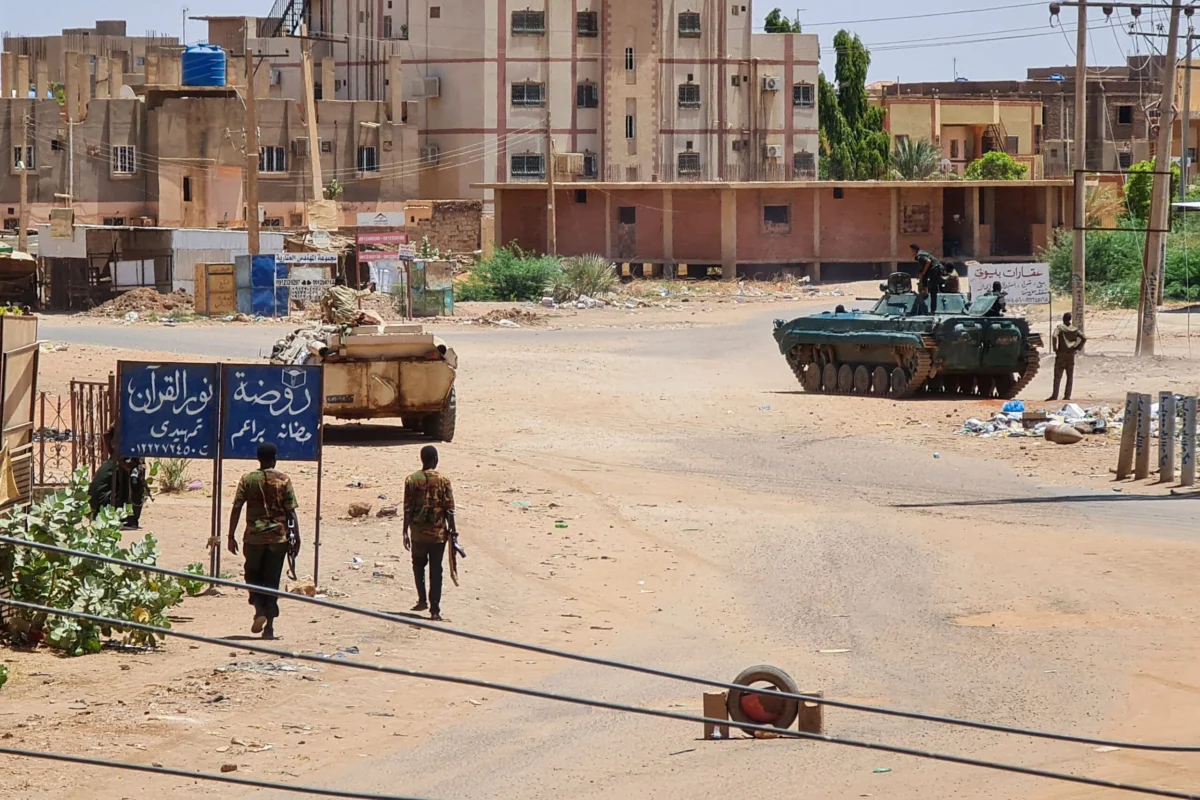
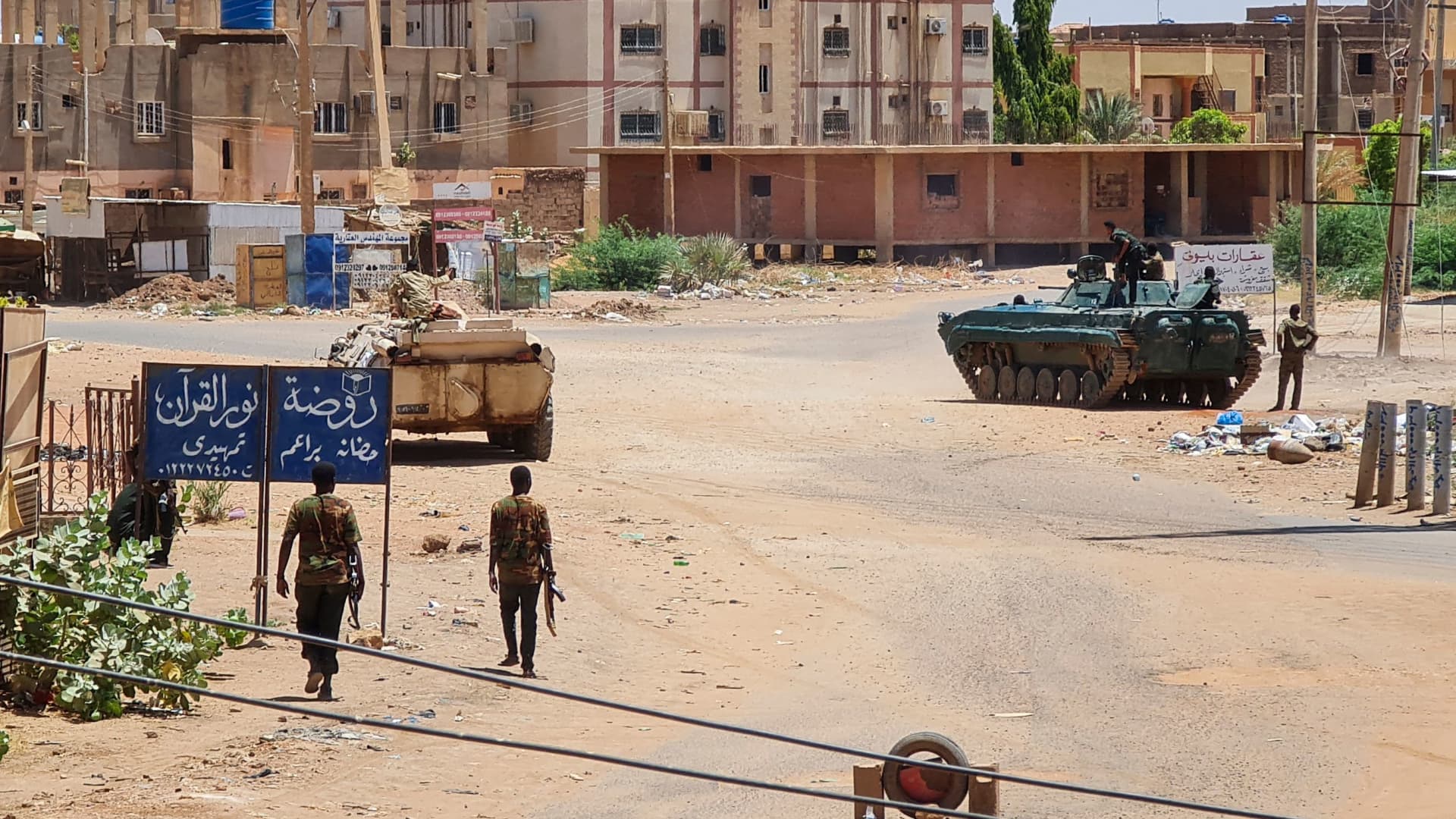
One month after the initial eruption of heavy gunfire and explosions in the capital of Khartoum, the conflict between Sudan’s two primary military factions has entered a deadlock that threatens to destabilize the Horn of Africa. Despite high-level diplomatic interventions in Jeddah, Saudi Arabia, the Sudanese Armed Forces (SAF) and the paramilitary Rapid Support Forces (RSF) show no signs of a permanent ceasefire. The violence, which began on April 15, 2023, has transformed the densely populated streets of Khartoum into a theater of urban warfare, characterized by indiscriminate airstrikes, heavy artillery shelling, and a total breakdown of essential services.
International mediators from the United States, the United Nations, and Saudi Arabia have struggled to convert tentative humanitarian commitments into a durable peace. While both sides recently signed a "Declaration of Commitment to Protect Civilians" in Jeddah, the agreement lacked a formal ceasefire mechanism. Consequently, the fighting has not only persisted in the capital but has also reignited ethnic and tribal tensions in the long-embattled Darfur region to the west. The International Rescue Committee (IRC) reported on Monday that the official death toll has surpassed 600, with more than 5,000 injured. However, medical professionals on the ground and humanitarian agencies warn that these figures are likely a significant undercount, as many casualties remain unrecorded due to the inability of emergency services to reach active combat zones.
A Growing Humanitarian Catastrophe
The scale of the displacement triggered by the month-long conflict is staggering. According to the latest figures from the International Organization for Migration (IOM) and the UN Refugee Agency (UNHCR), nearly one million people have been forced to flee their homes. This includes over 700,000 internally displaced persons (IDPs) and approximately 200,000 who have crossed the borders into neighboring Chad, Egypt, South Sudan, and Ethiopia. Many of these neighboring countries were already grappling with their own internal economic and security crises, raising fears of a "secondary humanitarian crisis" as regional resources are stretched to the breaking point.
For the millions who remain trapped in Khartoum and the twin city of Omdurman, daily life has become a struggle for survival. Despite the warring generals’ public pledges to restore access to electricity and water, infrastructure damage remains widespread. The Sudanese healthcare system is on the verge of total collapse; the World Health Organization (WHO) estimates that more than 70% of hospitals in conflict areas are out of service. Those that remain open are facing critical shortages of oxygen, blood supplies, and basic medications. Furthermore, the local economy has been paralyzed. The price of fuel and basic food staples has tripled in some regions, exacerbating an already dire malnutrition crisis that affected one-third of the population even before the conflict began.
Chronology of the Crisis: From Transition to Civil War
The current conflict is the culmination of a power struggle that has been brewing since the 2019 popular uprising that ended the 30-year dictatorship of Omar al-Bashir. To understand the current impasse, it is necessary to examine the timeline of Sudan’s volatile political landscape over the last four years:
- April 2019: Following months of mass protests, the military ousts Omar al-Bashir. A fragile power-sharing agreement is established between the military and civilian leaders (the Sovereign Council).
- October 2021: General Abdel Fattah al-Burhan (head of the SAF) and General Mohamed Hamdan Dagalo, known as Hemedti (head of the RSF), collaborate in a military coup to dissolve the civilian-led government of Prime Minister Abdalla Hamdok. International aid is frozen as the world demands a return to democratic transition.
- December 2022: Under immense domestic and international pressure, the military signs a "Framework Agreement" promising to hand over power to a civilian government and integrate the RSF into the regular army.
- Early April 2023: Tensions escalate over the timeline for the RSF’s integration. Hemedti advocates for a ten-year window, while Burhan insists on a two-year transition. Both sides begin mobilizing troops and heavy equipment toward Khartoum.
- April 15, 2023: Full-scale fighting breaks out in the capital, with both sides accusing the other of starting the hostilities.
- May 2023: Peace talks begin in Jeddah. While a declaration on humanitarian corridors is signed, the fighting in Khartoum and Darfur continues unabated.
The Rivalry of the Generals
At the heart of the conflict are two men who were once tactical allies but are now bitter rivals for the future of Sudan. General Abdel Fattah al-Burhan, as the leader of the Sudanese Armed Forces, represents the traditional military establishment that has dominated Sudanese politics for decades. He views the SAF as the only legitimate guardian of the state and seeks to maintain the military’s vast economic interests.
In contrast, Mohamed Hamdan Dagalo, or Hemedti, rose to prominence as a commander of the Janjaweed militias during the Darfur conflict in the early 2000s. His RSF has since evolved into a powerful, well-funded paramilitary force with its own sources of revenue, primarily from gold mining and providing mercenary services in regional conflicts. Hemedti has attempted to rebrand himself as a champion of democracy and the marginalized peripheries of Sudan, a claim that many civilian activists view with extreme skepticism given the RSF’s history of human rights abuses.
The struggle is not merely over military hierarchy but over the control of Sudan’s immense natural resources and its 46 million inhabitants. As long as both generals believe they can achieve a total military victory, the incentive to negotiate in good faith remains low.
International Responses and the "Cycle of Impunity"
The international community’s response has been a mix of diplomatic urgency and perceived inadequacy. While the U.S. and Saudi Arabia have been lauded for facilitating the Jeddah talks, critics argue that the exclusion of civilian voices has weakened the legitimacy of the process. Andrew Mitchell, the U.K. Minister for International Development and Africa, recently told the UN Human Rights Council that the international community must send a "united message of horror" and work to break the "cycle of impunity" that has characterized Sudanese politics for decades.
Many Sudanese activists and political analysts believe that the current peace talks are flawed because they treat the two warring generals as the only stakeholders. Yassmin Abdel-Magied, a Sudanese-Australian writer and activist, noted that by engaging solely with the SAF and RSF, global leaders have inadvertently rewarded "belligerence" and granted political legitimacy to those who derailed the democratic transition in 2021.
Furthermore, the conflict is complicated by the interests of regional powers. The SAF has historically enjoyed support from Egypt, while the RSF is reported to have close ties with the United Arab Emirates and has collaborated with the Russian Wagner Group in the past. These external relationships provide both sides with the financial and logistical stamina to continue fighting, making a swift resolution even more difficult to achieve.
The Role of Grassroots Resistance Committees
Amidst the failure of formal diplomacy and the collapse of state services, the "Resistance Committees"—informal neighborhood networks that led the pro-democracy movement against al-Bashir—have emerged as a vital lifeline. These grassroots groups have transformed from political organizers into humanitarian coordinators. They are currently managing the evacuation of civilians, operating soup kitchens, and coordinating the delivery of medical supplies to looted and damaged hospitals.
Abdel-Magied and other civil society advocates argue that these committees should have a seat at the negotiating table. "The framework for civilian representation is already there," she stated, suggesting that a delegation of delegates from these grassroots networks could represent the collective interests of the Sudanese people. By centering the talks on civilian needs rather than military concessions, mediators might find a more sustainable path toward peace.
Implications for the Future: The Risk of State Failure
As the conflict enters its second month, the specter of state failure looms large. Sudan was already one of the world’s poorest nations, struggling with triple-digit inflation and a massive external debt. The destruction of the central bank, the looting of commercial hubs, and the suspension of international aid have pushed the economy to the brink of total collapse.
If the fighting is not halted soon, experts fear Sudan could become a fragmented state, with different regions controlled by competing warlords and militias. This would not only be a disaster for the Sudanese people but would also create a security vacuum in a volatile region, potentially spilling over into neighboring countries like Chad and Libya.
The path forward requires more than just a temporary ceasefire; it requires a fundamental restructuring of Sudan’s political and military architecture. Accountability for past atrocities and the removal of the military from the economy are essential prerequisites for a stable, civilian-led government. As the people of Sudan continue to endure the "immense and immediate" needs described by the IRC, the international community faces a critical choice: either exert meaningful, targeted pressure on the warring factions and their foreign backers or witness the complete unraveling of one of Africa’s largest nations.
