

Ukrainian President Volodymyr Zelensky has issued a direct and time-bound ultimatum to Belarusian leader Alexander Lukashenko, demanding the immediate removal or deactivation of Russian military hardware currently stationed on Belarusian soil. Speaking at a high-profile news conference in Kyiv on Friday, the Ukrainian head of state asserted that a period of one week provides sufficient time for the Minsk administration to dismantle signal relay stations and other electronic warfare equipment used by the Russian Federation to facilitate precision strikes against Ukrainian targets. This development marks a significant escalation in the diplomatic and security friction between Kyiv and Minsk, as Zelensky explicitly warned of direct Ukrainian intervention should the equipment remain operational beyond the specified timeframe.
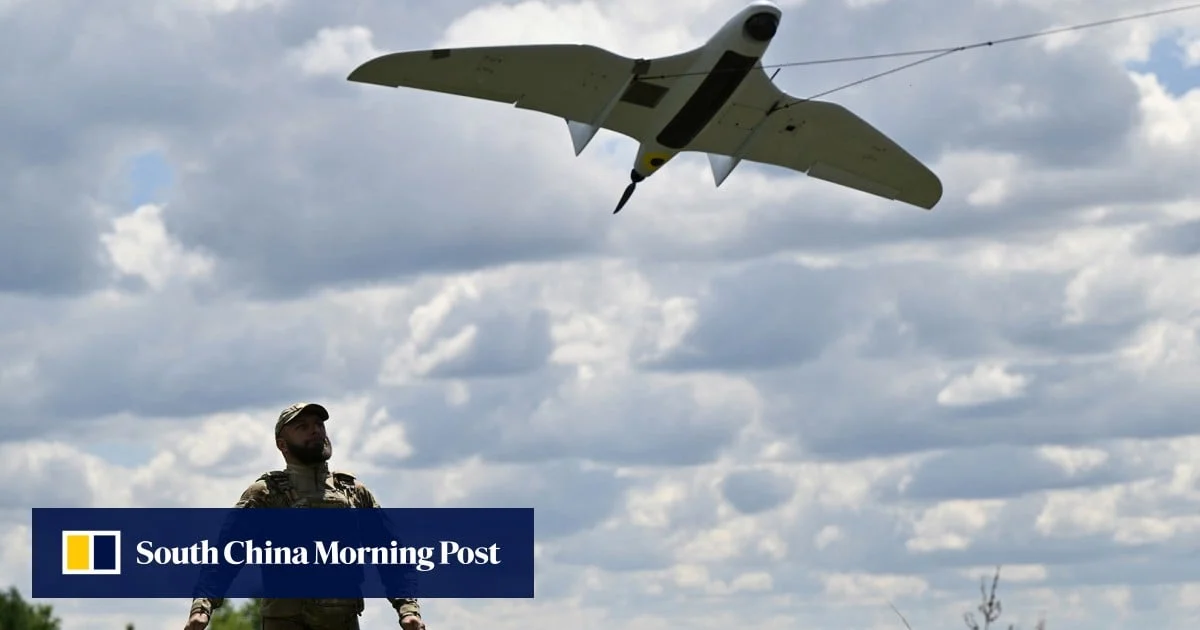
The equipment in question, according to President Zelensky, consists primarily of signal relay stations located within two strategic Belarusian regions that share a border with Ukraine. These facilities are allegedly being utilized by Russian forces to enhance the guidance and steering capabilities of missiles and unmanned aerial vehicles (UAVs) targeting Ukrainian civilian infrastructure. While Reuters and other independent international observers have noted that these specific claims could not be immediately verified through third-party military intelligence, the Ukrainian government maintains that it possesses actionable data regarding the coordinates and functions of these installations.
“What’s the point of saying he [Lukashenko] doesn’t want to be in the war? Let him remove this equipment, let him switch it off. I think a week will be enough for him to do that,” Zelensky told the gathered press. He further underscored the gravity of the demand with a cryptic but stern warning: “If he doesn’t do it, we’ll do it.” Although the President did not elaborate on the specific nature of the proposed Ukrainian action—whether it would involve long-range drone strikes, sabotage operations, or cyber warfare—the rhetoric signals a shift in Ukraine’s willingness to target military assets within the sovereign territory of Belarus if those assets are deemed active participants in the Russian invasion.
The Strategic Role of Belarus in the Russian-Ukrainian Conflict
Since the onset of the full-scale invasion in February 2022, Belarus has occupied a controversial and pivotal role in the regional security architecture. Although Alexander Lukashenko has refrained from committing the Belarusian Armed Forces to direct combat operations on Ukrainian soil, he has consistently provided the Russian military with extensive logistical support, territory for staging attacks, and medical facilities for wounded Russian personnel.
In the opening stages of the war, Russian forces utilized the Belarusian border as a primary launchpad for the failed assault on Kyiv. The proximity of the Belarusian border to the Ukrainian capital—roughly 150 kilometers—made it an ideal staging ground for Russian paratroopers and mechanized columns. Throughout 2022, Ukrainian officials documented numerous instances of Russian Tu-22M3 bombers and other aircraft launching cruise missiles from Belarusian airspace, a tactic designed to bypass Ukrainian air defenses oriented toward the east and south.
In recent months, the nature of Belarusian involvement has shifted from overt troop movements to more clandestine technological support. The signal relay stations mentioned by Zelensky represent a critical component of modern electronic warfare. These stations act as "force multipliers," extending the range of radio-frequency signals required to control loitering munitions, such as the Shahed-series drones, and providing mid-course corrections for cruise missiles. By hosting this equipment in regions like Gomel and Brest, Belarus allows Russia to maintain high-precision control over assets deep within Ukrainian territory while keeping the controlling infrastructure behind an international border, theoretically shielding it from retaliation.
Chronology of Belarus-Ukraine Tensions
The current ultimatum is the culmination of a deteriorating relationship that has spanned more than two years. To understand the gravity of Zelensky’s latest statement, it is necessary to examine the timeline of key events involving the two nations:
- February 2022: Belarus hosts "Allied Resolve" joint military exercises with Russia. These exercises serve as a cover for the accumulation of Russian troops who eventually cross the border into Ukraine on February 24, targeting Kyiv and Chernihiv.
- March–May 2022: Ukraine successfully repels the northern invasion. Russian forces retreat back into Belarus. Lukashenko maintains that his country is not a "co-belligerent," despite the clear evidence of territorial usage.
- October 2022: Lukashenko and Russian President Vladimir Putin announce the formation of a "Regional Grouping of Forces," involving the deployment of thousands of Russian troops to Belarus to "defend the Union State."
- May 2023: Russia begins the deployment of tactical nuclear weapons to Belarusian territory. This move is widely condemned by NATO and Kyiv as a nuclear provocation aimed at deterring Western support for Ukraine.
- June 2023: Following the short-lived mutiny by the Wagner Group in Russia, Lukashenko brokers a deal to host Yevgeny Prigozhin and his mercenaries. This leads to the construction of field camps in Belarus, raising fears in Kyiv and Warsaw of cross-border provocations.
- Early 2024: Ukraine begins an extensive program of fortifying its northern border, constructing deep trenches, minefields, and dragon’s teeth to prevent a second invasion from the north.
- Last Month: Lukashenko publicly dismisses claims that Minsk will be dragged further into the war. He asserts that while Belarus will not initiate hostilities, it will respond with "all available means," in coordination with Russia, if its sovereignty is violated.
Technical Analysis of Signal Relay Stations and Guidance Systems
The specific hardware targeted by Zelensky’s ultimatum—signal relay stations—is essential for the "steering" of modern munitions. In the context of the war in Ukraine, Russia has increasingly relied on electronic warfare (EW) to counter Ukrainian successes. Signal relays in the Gomel and Brest regions likely serve two purposes.
First, they facilitate the operation of unmanned aerial vehicles (UAVs). Many drones require a line-of-sight or a robust satellite link for real-time control. By placing relay towers near the border, Russian operators can maintain control of drones much further into Ukrainian territory than would be possible from Russian soil alone. This is particularly relevant for the "last mile" of a drone strike, where precision is required to hit specific buildings or energy infrastructure.
Second, these stations can be used for GLONASS (Russia’s version of GPS) correction. Ground-based stations can provide differential corrections to satellite signals, significantly increasing the accuracy of guided missiles. If these stations are indeed being used to target civilian areas, as Zelensky claims, they constitute a direct threat to the lives of non-combatants in cities like Zhytomyr, Rivne, and Kyiv.
Official Responses and Geopolitical Implications
The Kremlin has historically maintained that its military presence in Belarus is entirely legal under the framework of the "Union State," a supra-national entity that integrates the economies and militaries of Russia and Belarus. Russian spokesperson Dmitry Peskov has previously stated that the deployment of Russian assets in Belarus is a response to the "aggressive posture" of NATO on the Union State’s western borders.
In Minsk, the response to Zelensky’s ultimatum has been one of characteristic defiance tempered by a desire to avoid total kinetic involvement. Lukashenko has often walked a fine line, providing Putin with everything he asks for except for Belarusian "boots on the ground." For Lukashenko, the entry of the Belarusian army into the war could be politically fatal, given the widespread domestic opposition to the invasion among the Belarusian populace and the military leadership.
However, Zelensky’s threat to "do it" himself places Lukashenko in a precarious position. If Ukraine carries out a strike on Belarusian territory, Lukashenko would be under immense pressure from Moscow to declare war. Conversely, if he complies with Zelensky’s demand and removes the Russian equipment, he risks the wrath of Putin, upon whom he is entirely dependent for economic and political survival.
International reactions have been cautious. NATO members, particularly Poland and the Baltic states, have long viewed Belarus as a de facto extension of the Russian military district. While these nations support Ukraine’s right to defend itself, there is a palpable concern that Ukrainian strikes inside Belarus could provide the pretext for a wider regional conflagration.
Broader Impact on the Conflict Landscape
Zelensky’s ultimatum serves several strategic purposes for Kyiv. By bringing the issue of Belarusian-hosted Russian assets to the forefront, Ukraine is forcing the international community to acknowledge that the "Northern Front" remains an active threat. This prevents the war from being viewed solely through the lens of the Donbas and southern fronts.
Furthermore, the ultimatum puts pressure on the Belarusian military. By identifying specific regions and equipment, Ukraine is signaling that it has high-quality intelligence and the capability to strike. This may encourage Belarusian commanders to distance themselves from Russian operations to avoid becoming targets themselves.
From a military perspective, if Ukraine were to successfully neutralize these relay stations, it would likely see a measurable decrease in the accuracy of Russian drone and missile strikes in the northern and western parts of the country. This would alleviate some of the pressure on Ukraine’s overstretched air defense systems, allowing them to be redeployed to the more active front lines in the east.
Conclusion: A High-Stakes Gamble
The one-week deadline set by President Zelensky creates a ticking clock in an already volatile region. As the days progress, the international community will be watching closely to see if there is any movement of Russian equipment away from the Gomel and Brest regions.
If Lukashenko ignores the demand, the world may witness the first intentional and acknowledged Ukrainian kinetic operations on Belarusian soil. Such an event would redefine the boundaries of the conflict and test the limits of the Russia-Belarus mutual defense pact. For now, the ball remains in Minsk’s court, with the shadow of a wider northern escalation looming over the European continent. The coming week will determine whether the Belarusian border remains a tense but static line, or whether it becomes the next active theater of the largest conflict in Europe since World War II.
