

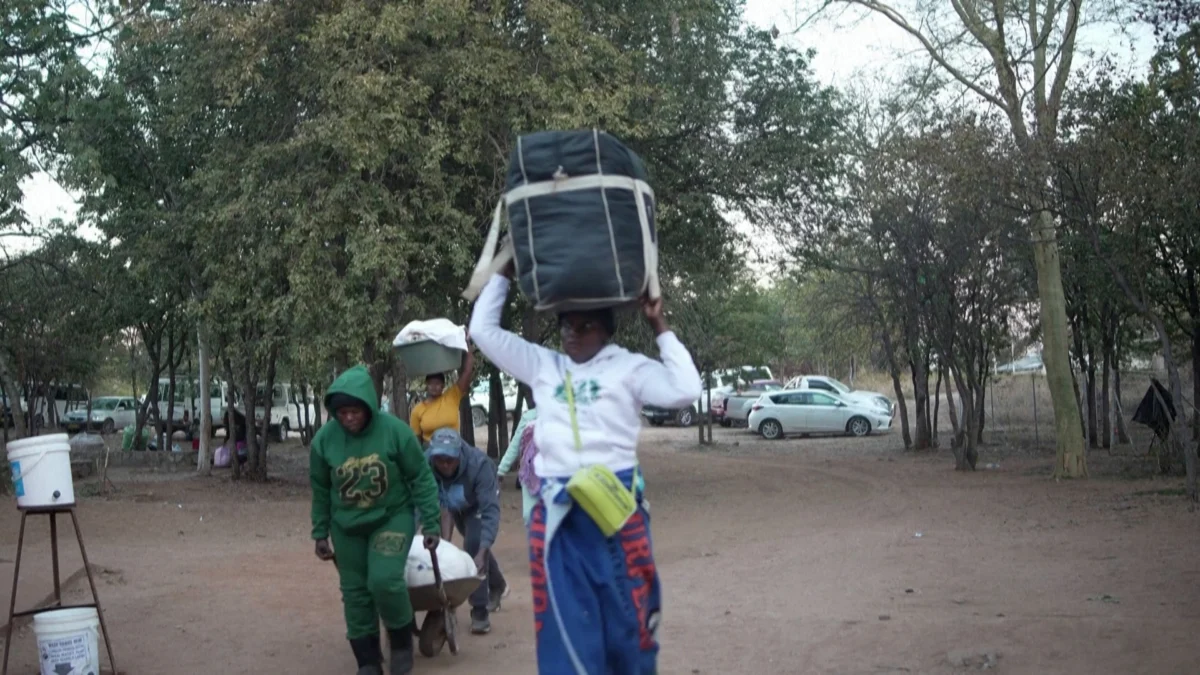
The mass migration of Zimbabwean nationals from South Africa has reached a critical tipping point as thousands flee a surge of targeted xenophobic violence, marking one of the most significant voluntary and forced repatriations in the region’s recent history. Over the past five weeks, the Zimbabwean government has officially repatriated approximately 21,300 citizens, while an additional 56,800 individuals have opted for self-repatriation, crossing the Beitbridge Border Post in a desperate bid to escape escalating hostility. This exodus comes in the wake of a series of coordinated attacks by anti-migrant groups, which have left foreign nationals facing physical beatings, systematic robberies, and persistent threats of lethal force.
The scale of the movement underscores a deepening humanitarian crisis within the Southern African Development Community (SADC). For decades, South Africa has served as a primary destination for Zimbabweans seeking economic stability amidst hyperinflation and political instability in their home country. However, the current atmosphere of intolerance has transformed the economic refuge into a zone of peril. Those returning describe a harrowing environment where vigilante groups conduct door-to-door "inspections," demanding identification and often resorting to violence regardless of the legal status of the residents.
A Chronology of Escalation: May to July 2026
The current wave of unrest did not emerge in a vacuum but followed months of simmering tensions related to labor competition and service delivery protests. In late May 2026, localized skirmishes broke out in the townships surrounding Johannesburg and Pretoria. By early June, these incidents evolved into organized "cleanup operations" led by populist movements targeting informal settlements and high-density suburbs known for large migrant populations.
By mid-June, the violence had spread to the KwaZulu-Natal and Limpopo provinces. Reports began to emerge of roadblocks where commuters were forced to produce South African identity documents. Those unable to do so were often subjected to physical assault or had their belongings confiscated. On June 20, the Zimbabwean Embassy in Pretoria issued its first emergency advisory, urging citizens to exercise extreme caution and avoid known hotspots.
The final week of June saw a sharp spike in incidents, prompting the Zimbabwean government to initiate a formal repatriation program. Between June 25 and July 10, a fleet of state-subsidized buses and trucks was mobilized to transport those who had lost their homes and livelihoods. The surge peaked in the first week of July, with the Beitbridge border crossing processing record numbers of returnees daily, many arriving with nothing more than the clothes on their backs.
Statistical Breakdown of the Repatriation Effort
The data provided by border authorities and the Zimbabwean Ministry of Public Service, Labour and Social Welfare paints a stark picture of the crisis. The 21,300 individuals repatriated via government assistance consist largely of vulnerable groups, including families with young children, the elderly, and those who were hospitalized following attacks. These individuals were processed through temporary reception centers established in Musina and Beitbridge, where they received basic medical care and emergency rations.
The 56,800 self-repatriated individuals represent a different demographic, largely consisting of documented and undocumented workers who utilized private transport, including "cross-border" taxis and haulage trucks. Many in this group chose to leave preemptively, liquidating what assets they could before the violence reached their specific neighborhoods. This brings the total number of returnees to over 78,000 in just over a month, a figure that international observers believe may actually be higher due to undocumented crossings along the Limpopo River.
Testimonies from the Ground
The human cost of the violence is reflected in the testimonies of those arriving at the border. "We were woken up at two in the morning by men with hammers and sticks," said one returnee, a 34-year-old construction worker who had lived in Johannesburg for eight years. "They didn’t ask if I had a permit. They just said, ‘You are taking our jobs, leave now or you will burn.’ They took my phone, my tools, and the money I had saved for my daughter’s school fees."
Others reported a total breakdown in community trust. In many instances, victims claimed that their neighbors, with whom they had lived peacefully for years, were the ones pointing out their houses to the mob. The psychological impact of this betrayal has been cited by many as the primary reason for their decision to leave South Africa permanently, despite the uncertain economic prospects awaiting them in Zimbabwe.
Official Responses and Political Friction
The crisis has placed a significant strain on diplomatic relations between Harare and Pretoria. The Zimbabwean government, while facilitating the return of its citizens, has called on the South African authorities to do more to protect foreign nationals and uphold international human rights standards. Zimbabwean officials have characterized the violence as a violation of the SADC Protocol on the Free Movement of Persons, though that protocol has long been a point of contention in the region.
In South Africa, the government’s response has been criticized by human rights organizations as being "too little, too late." While the South African Police Service (SAPS) has made several hundred arrests related to the looting and violence, critics argue that the political rhetoric from certain factions within the country has emboldened the anti-migrant groups. Official statements from Pretoria have frequently balanced a condemnation of violence with an acknowledgement of the "legitimate concerns" of South African citizens regarding unemployment and illegal immigration, a stance that many believe inadvertently validates the grievances of the vigilante groups.
The United Nations High Commissioner for Refugees (UNHCR) and the International Organization for Migration (IOM) have both expressed "grave concern" over the situation. In a joint statement, the organizations called for an immediate cessation of hostilities and urged the South African government to ensure that those responsible for the violence are prosecuted.
Economic and Social Implications for the Region
The mass return of nearly 80,000 people in such a short period presents a dual economic crisis. For South Africa, the sudden loss of a significant portion of its labor force in sectors such as agriculture, domestic service, and hospitality may lead to immediate operational disruptions. Economists have noted that Zimbabwean migrants often fill roles that are essential to the informal and semi-formal economies.
For Zimbabwe, the challenge is one of absorption. The country is already grappling with high unemployment and a fragile infrastructure. The influx of tens of thousands of returnees places an immense burden on social services. Many returnees are heading to rural areas where they have extended family, but without land or capital, their integration into the local economy will be difficult. Furthermore, the loss of remittances—a vital lifeline for many Zimbabwean households—is expected to lead to increased poverty levels in the coming months.
Analysis: A Recurring Pattern of Instability
The events of 2026 are part of a distressing historical pattern. South Africa experienced major outbreaks of xenophobic violence in 2008, 2015, and 2019. Each wave has followed a similar trajectory: economic downturns leading to increased competition for resources, followed by the scapegoating of foreign nationals, and ending in a mass exodus.
The failure to address the root causes of this cycle—namely the deep-seated inequality in South Africa and the economic stagnation in neighboring countries—means that such crises are likely to recur. Analysts suggest that until there is a coordinated regional approach to migration management and economic development, the Beitbridge border will continue to be a barometer of regional instability.
As the government-led repatriation continues, the immediate focus remains on the humanitarian needs of the returnees. Zimbabwean authorities have announced plans to provide "reintegration packages," including grain and small-scale farming inputs, but the long-term sustainability of these measures remains to be seen. For now, the thousands of Zimbabweans crossing the border are focused on one thing: safety. The dream of a prosperous life in the "Rainbow Nation" has, for many, been replaced by the stark reality of survival.
