

The Republic of the Sudan is teetering on the edge of a total humanitarian collapse as the conflict between the Sudanese Armed Forces (SAF) and the paramilitary Rapid Support Forces (RSF) enters its third week with no sign of de-escalation. Despite repeated international pressure and the nominal agreement to a 72-hour ceasefire extension on April 30, 2023, the capital city of Khartoum remains a theater of intense urban warfare. The United Nations has issued a stark warning that the nation is reaching a "breaking point," as the infrastructure of the state dissolves under the pressure of airstrikes, heavy artillery, and systemic looting.
As of early May, the official death toll provided by the Sudanese Health Ministry stands at 528, with over 4,500 wounded. However, United Nations officials and medical professionals on the ground caution that these figures are likely a significant underestimate. Many victims of the fighting are unable to reach hospitals, and many who die in their homes are buried in makeshift graves without being recorded by central authorities. The violence, which erupted on April 15, 2023, has transformed the once-bustling metropolis of Khartoum into a ghost city characterized by charred vehicles, hollowed-out buildings, and the persistent sound of anti-aircraft fire.
The Genesis of a Deadly Rivalry
To understand the current crisis, one must look back to the fragile power-sharing agreement that followed the 2019 ousting of longtime autocrat Omar al-Bashir. For a brief period, a transitional government composed of civilian and military leaders attempted to steer Sudan toward democracy. However, this experiment was derailed in October 2021, when General Abdel Fattah al-Burhan, head of the SAF, and General Mohamed Hamdan Dagalo, better known as Hemedti, leader of the RSF, orchestrated a joint military coup.
While the two generals were united in their desire to sideline civilian leaders, their partnership was built on a foundation of mutual suspicion. The primary catalyst for the current outbreak of violence was a disagreement over the timeline and methodology for integrating the RSF into the regular army. Burhan pushed for a rapid two-year integration process, while Hemedti sought a ten-year window that would allow him to maintain his independent power base. These technical disagreements over security sector reform eventually escalated into a full-scale struggle for total control of the Sudanese state.
A City Transformed: Life Under Siege in Khartoum
For the residents of Khartoum, the political nuances of the conflict are secondary to the immediate struggle for survival. The city’s geography has become its curse; the RSF has fanned out across residential neighborhoods, utilizing homes and schools as defensive positions. In response, the SAF has utilized its superior air power, launching strikes that frequently impact civilian infrastructure.
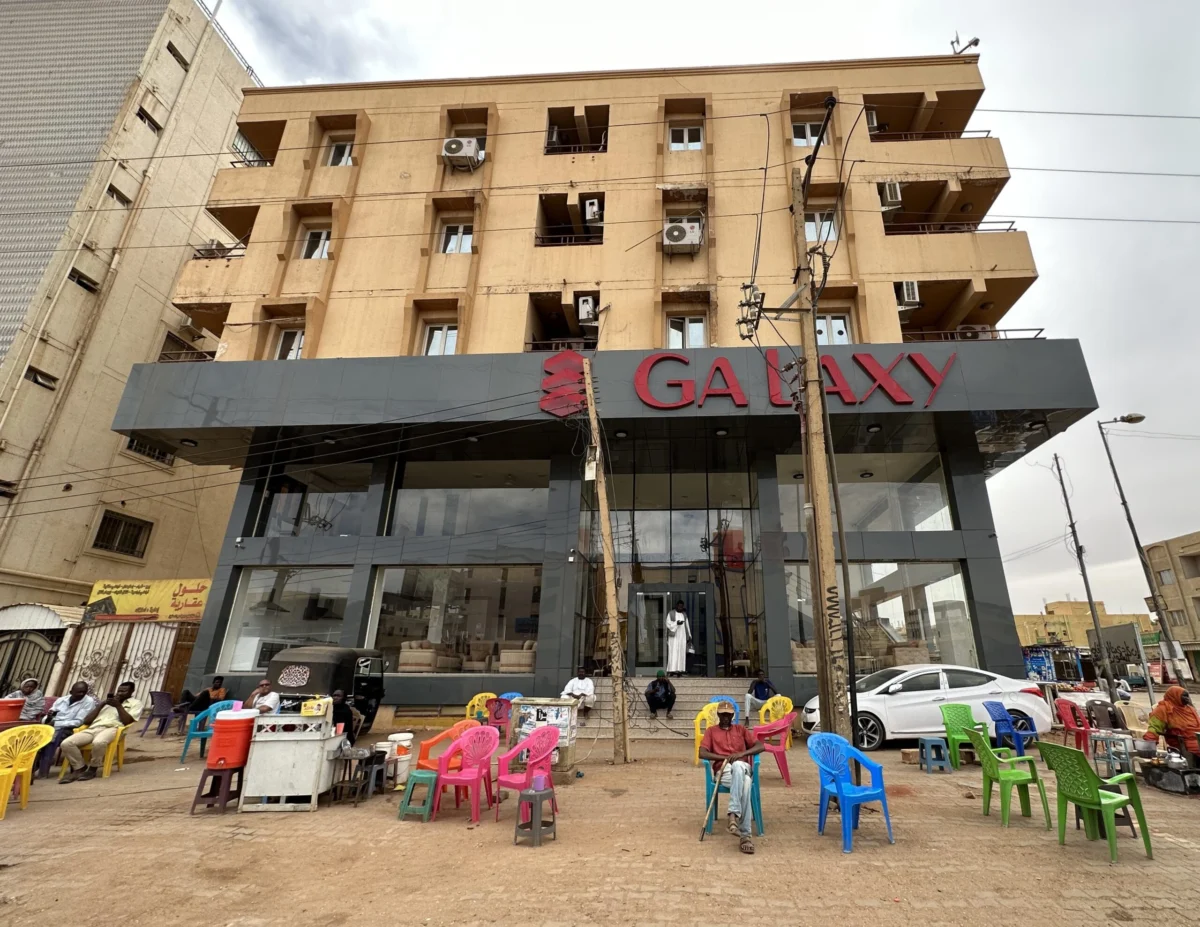
The result is a city where the basic tenets of modern life have vanished. Power and water supplies are intermittent at best, and in many sectors, they have been cut off entirely for over a week. Residents who venture out in search of food describe scenes of absolute lawlessness. Mohamed Ezzeldin, a resident who briefly fled before being forced back by the high cost of living in safer provinces, reported seeing industrial zones completely emptied by looters. "We saw people carrying TVs on their backs and big sacks looted from factories," he noted, highlighting the total breakdown of civil order.
The economic impact is equally devastating. Small business owners, like Abdelbagi, a barber in the capital, face an impossible choice between safety and starvation. "I show up to work for two or three hours then I close up because it’s not safe," he said, noting that the skyrocketing price of basic goods makes even a few hours of labor essential. For many, like the street tea seller Victoria, the priority is simply keeping children fed. "Sitting useless doesn’t help and being scared doesn’t help," she remarked, embodying the desperate resilience of the Sudanese people.
The Humanitarian Crisis and the Flight of the Vulnerable
The United Nations High Commissioner for Refugees (UNHCR) reports that more than 50,000 people have already fled Sudan, seeking sanctuary in neighboring countries such as Chad, Egypt, South Sudan, and Ethiopia. Many of these nations are themselves grappling with internal instability and food insecurity, raising fears of a regional "domino effect."
Inside Sudan, the situation is even more dire. Approximately one-third of the population—roughly 15 million people—required humanitarian assistance even before the fighting began. Now, that number has surged. The World Food Programme (WFP), which temporarily suspended operations after three of its staff members were killed in the early days of the war, announced a partial resumption of services on May 1. However, WFP Executive Director Cindy McCain emphasized that operations are currently restricted to areas largely unaffected by the heaviest fighting, as the security situation remains "highly precarious."
The medical sector is in a state of near-total collapse. According to the World Health Organization (WHO), only a fraction of Khartoum’s hospitals remain functional. Many have been occupied by military forces, while others have run out of oxygen, blood bags, and essential medicines. The lack of safe corridors prevents the Red Cross and other NGOs from delivering life-saving supplies to the areas that need them most.
Chronology of the Conflict: April 15 – April 30
April 15, 2023: Heavy fighting erupts in Khartoum and other cities. The RSF claims to have seized the presidential palace and Khartoum International Airport. The SAF denies these claims and begins launching airstrikes on RSF positions.
April 18-20, 2023: Multiple attempts at 24-hour ceasefires fail within hours. The international community, led by the UN, the US, and the African Union, begins urgent mediation efforts.
April 22-25, 2023: Foreign governments begin "Operation Golden Fleece" style evacuations. Special forces from various nations land in Khartoum or Port Sudan to extract diplomats and citizens. The US, UK, France, and Germany lead the effort.
April 27, 2023: The SAF and RSF agree to a 72-hour ceasefire brokered by the United States and Saudi Arabia. While fighting slows, it does not stop, particularly in the Darfur region and Khartoum North.
April 30, 2023: As the initial ceasefire expires, both sides agree to a further 72-hour extension. However, heavy shelling and airstrikes are reported immediately following the announcement. Foreign evacuation flights begin to wind down, leaving millions of Sudanese civilians to face the escalating violence alone.
International Response and Geopolitical Implications
The global response has transitioned from a focus on evacuation to a focus on containment. The "Quad" group—comprising the United States, United Kingdom, Saudi Arabia, and the United Arab Emirates—has been at the forefront of diplomatic efforts to secure a permanent cessation of hostilities. However, the influence of these external actors is limited by the zero-sum mentality of the two warring generals.
General al-Burhan has publicly stated that he will never sit down for talks with Hemedti, labeling the RSF a "rebel militia." Conversely, Hemedti has conditioned any dialogue on the cessation of SAF airstrikes. This intransigence suggests that both leaders believe a total military victory is still possible, despite the mounting civilian toll.
The conflict also risks drawing in regional powers. Sudan’s neighbors have varying interests; Egypt has traditionally supported the SAF, while Hemedti has cultivated ties with various regional actors and private military contractors, including the Russian Wagner Group. If the conflict persists, it could become a proxy war, further destabilizing the Horn of Africa and the Sahel.
Analysis: The Road Ahead
The tragedy unfolding in Sudan is not merely a military conflict; it is the destruction of a state’s social fabric. The "breaking point" mentioned by Martin Griffiths, the UN Under-Secretary-General for Humanitarian Affairs, refers to the moment when the state can no longer provide even the most basic protections for its citizens.
The immediate priority for the international community is the establishment of "humanitarian corridors." Without guaranteed safe passage for aid workers and supplies, the death toll from disease, hunger, and lack of medical care will soon eclipse the number of those killed by bullets and bombs. Furthermore, the resumption of the transition to civilian rule seems more distant than ever. Any future political settlement will now have to account for the deep-seated animosity and the blood spilled over the last 16 days.
As the last of the foreign evacuation flights depart, the Sudanese people are left in a landscape where the sound of fighting is "in their ears all day," as Jamila, a resident of Khartoum, described. The world’s attention may be shifting, but for the millions trapped between two warring generals, the nightmare is only beginning. The international community must now pivot from extraction to sustained diplomatic and humanitarian pressure to prevent Sudan from becoming a permanent failed state in one of the world’s most volatile regions.
