

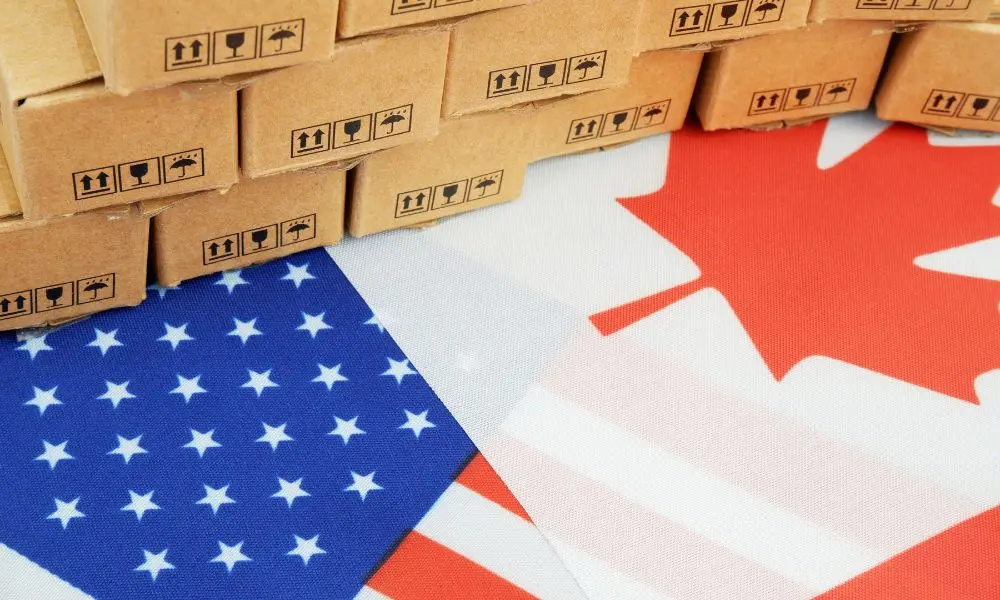
The United States is reportedly preparing to remove approximately 50 percent of tariffs imposed on a range of Canadian products, a move widely seen as a strategic maneuver to bolster Republican Senator Susan Collins of Maine ahead of her closely contested re-election bid. While the specific details remain fluid, sources familiar with the plan suggest the exemptions could primarily target goods vital to the agricultural sector, though any potential reduction in tariff revenue might be offset by increased levies on other Canadian imports. The announcement could be imminent, with a presidential proclamation potentially issued as early as Friday, although the scope and precise timing are subject to change.
A White House official, speaking on condition of anonymity, indicated that any official tariff announcements would originate directly from the administration, characterizing preliminary reports as mere speculation. The U.S. Trade Representative’s office declined to comment on the unfolding situation, and the White House did not immediately respond to inquiries from major news organizations. This development comes amidst a broader, protracted trade dispute between the two North American neighbors, with high-level negotiations remaining at a standstill since late August.
Targeted Exemptions Aim to Bolster Key Industries
Senator Collins, a key Republican incumbent facing a formidable challenge in Maine, has been a vocal advocate for easing the trade restrictions. She confirmed that nine categories of products are slated for exemption. These include essential industrial and consumer goods such as corrugated paper and boxes, certain plastic packaging materials, refrigeration and freezing equipment, machinery used for agricultural cleaning, sorting, and grading, specific packaging machinery, and notably, seaweed and algae food products.
In a statement released on Friday, Senator Collins emphasized the direct benefit these exemptions would provide to Maine’s signature industries, including its significant blueberry, potato, apple, and seaweed sectors. Her office indicated that she had actively lobbied U.S. Trade Representative Jamieson Greer and Commerce Secretary Howard Lutnick to secure these tariff reliefs. Senator Collins reiterated her commitment to pursuing further concessions and a comprehensive trade agreement with Canada, a nation she described as "our neighbor, ally, and largest trading partner."
This potential adjustment marks the second significant alteration to the tariff regime. Previously, in September, President Donald Trump had exempted road salt and cement from the tariffs following a direct appeal from Senator Collins. However, this concession was reportedly balanced by the imposition of 50 percent tariffs on other Canadian goods, effectively maintaining the total value of affected trade at approximately $20 billion. It remains unclear at this juncture which, if any, Canadian products might face new or increased tariffs as part of this latest adjustment.
A Stalemate in High-Stakes Trade Negotiations
The original 50 percent tariffs were enacted in late August, impacting roughly $20 billion worth of Canadian goods, representing about five percent of Canada’s total exports to the United States. This escalation occurred after last-minute trade negotiations collapsed, leading to a retaliatory response from Canada. Canadian counter-tariffs on a range of American goods took effect on September 8, 2026, further complicating the economic landscape for businesses on both sides of the border.
Reports from The Wall Street Journal suggest that President Trump has since implemented bans on certain Canadian imports and has threatened to double tariffs on Canadian vehicles in January if a comprehensive agreement is not reached. Despite these pronouncements, substantive trade discussions have not resumed since the August breakdown, though President Trump has publicly stated that Canada is actively engaged in efforts to secure a trade deal.
The tariffs were initially imposed under Section 338 of the Tariff Act of 1930, a trade provision, commonly referred to as Smoot-Hawley, that had not been utilized in decades. This legal basis for the tariffs has drawn scrutiny, with a New Jersey-based food importer initiating a legal challenge this week, arguing that the administration has exceeded its statutory authority. The outcome of this legal challenge could have significant implications for the future of U.S. trade policy.
Electoral Calculus in Border States
The political stakes surrounding these trade disputes are particularly high in key border states where the economic well-being of communities is closely tied to cross-border commerce. Senator Susan Collins is considered one of the most vulnerable Republican incumbents seeking re-election. Her race against Democratic challenger Troy Jackson is currently neck-and-neck in opinion polls ahead of the November 3rd election. Jackson has strategically made the trade war a central theme of his campaign, notably stating during a recent debate that "Maine voters can’t eat road salt," directly referencing one of the previously exempted items.
Beyond Maine, Republican candidates in other states with substantial trade ties to Canada have also voiced criticism of the tariffs. In Michigan, Republican nominee and former Representative Mike Rogers has launched advertising campaigns urging President Trump to de-escalate the trade conflict. Similarly, in New Hampshire, former Senator John Sununu has publicly criticized the tariffs in his race against Democratic opponent Chris Pappas.
The economic uncertainty generated by the tariffs has also permeated the Canadian business community. A survey conducted by Fidelity Investments Canada revealed that nearly half of Canadian financial advisors are fielding questions from their clients regarding the impact of these trade disputes. This indicates a broad level of concern among investors and businesses about the ongoing trade tensions and their potential consequences for economic stability and growth.
Background and Chronology of the Trade Dispute
The imposition of tariffs by the United States on Canadian goods marks a significant escalation in bilateral trade relations, which had largely been characterized by a stable and mutually beneficial exchange for decades. The North American Free Trade Agreement (NAFTA), replaced by the United States-Mexico-Canada Agreement (USMCA) in 2020, had fostered deep economic integration between the two countries. However, the Trump administration’s "America First" policy, coupled with a desire to renegotiate trade terms perceived as unfavorable, led to a more protectionist approach.
Key Milestones in the Trade Dispute:
- Late August [Year]: The United States imposes 50 percent tariffs on approximately $20 billion worth of Canadian goods, citing national security and trade imbalance concerns. Negotiations break down abruptly.
- September 8, 2026: Canada enacts retaliatory tariffs on a range of American products in response to the U.S. measures.
- September [Year]: Following a request from Senator Susan Collins, President Trump exempts road salt and cement from U.S. tariffs. This concession is reportedly balanced by increased tariffs on other Canadian goods, maintaining the overall trade value affected.
- October [Year]: Reports emerge of potential tariff exemptions for specific Canadian products, including paper, plastic, machinery, and seaweed, driven by electoral considerations in key U.S. states.
- November 3 [Year]: General Election in the United States, with the outcome of key Senate races in border states potentially influenced by trade policy.
Broader Implications and Economic Analysis
The ongoing trade friction between the United States and Canada, two of the world’s largest trading partners, has significant implications beyond the immediate economic impact on specific industries. The uncertainty surrounding trade policy can deter investment, disrupt supply chains, and create a climate of apprehension for businesses reliant on cross-border trade.
The imposition of tariffs, while intended to protect domestic industries, can lead to higher costs for consumers and businesses that rely on imported goods. Retaliatory tariffs from trading partners can also harm domestic industries that export their products. Economists often debate the net effect of tariffs, with some arguing they can stimulate domestic production, while others contend they ultimately reduce economic efficiency and consumer welfare.
The strategic use of tariff policy for electoral gain, as suggested by the potential exemptions for Senator Collins, highlights the complex interplay between trade policy and domestic politics. This approach can create a patchwork of trade regulations that may not align with broader economic interests and can undermine the predictability and stability necessary for robust international trade.
The legal challenge to the tariffs based on the Tariff Act of 1930 introduces another layer of complexity. The Smoot-Hawley Tariff Act of 1930 is widely regarded as having exacerbated the Great Depression by leading to widespread retaliatory tariffs and a sharp decline in international trade. Its invocation in modern trade disputes raises questions about the administration’s interpretation and application of existing trade law.
As the situation evolves, businesses and policymakers on both sides of the border will be closely monitoring developments. The long-term implications for the North American economic relationship, the effectiveness of tariff-based trade strategies, and the potential for a more stable and predictable trade environment will depend on the resolution of these ongoing disputes. The upcoming elections in the United States, particularly in states with significant trade ties to Canada, could play a pivotal role in shaping the future trajectory of this crucial bilateral relationship.
