

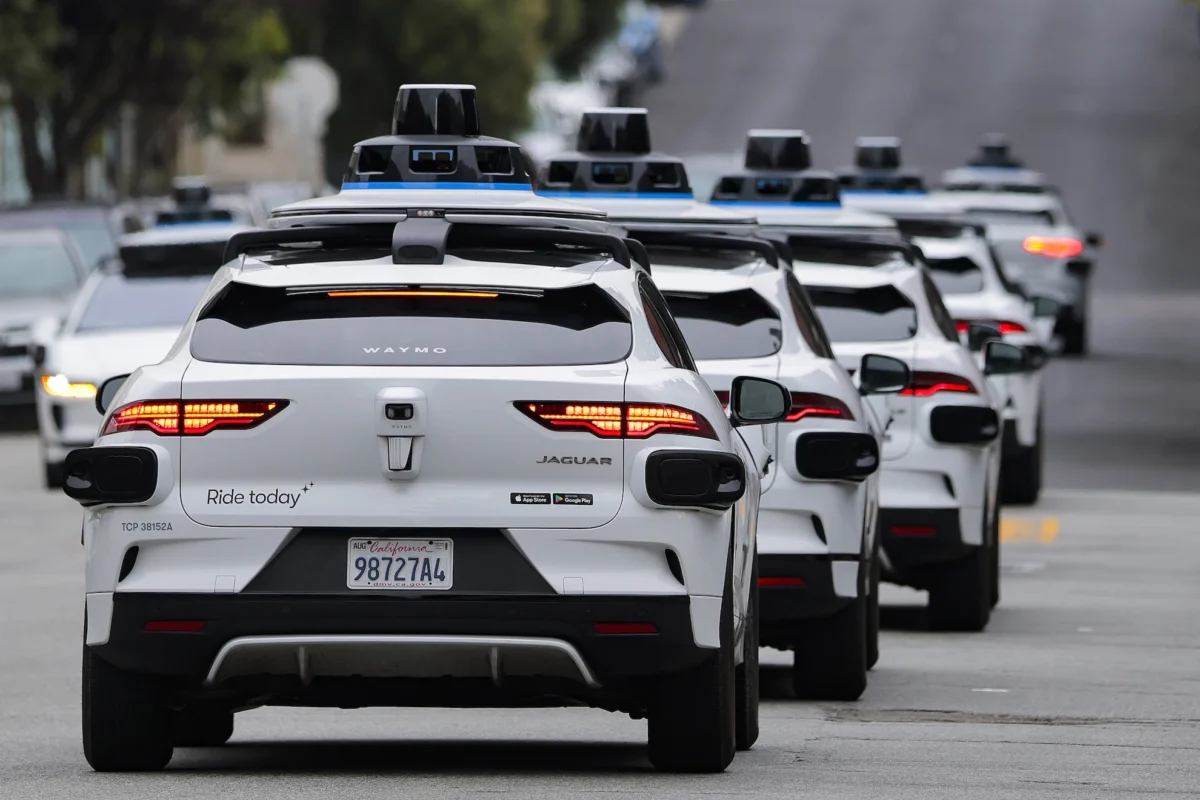
Waymo, the autonomous driving subsidiary of Alphabet Inc., has officially resumed its robotaxi operations in San Francisco after a temporary service suspension triggered by a localized power outage on July 18, 2026. The disruption, which affected approximately 7,000 Pacific Gas and Electric (PG&E) customers, prompted the company to pause its fleet for roughly one hour to assess safety conditions and coordinate with municipal authorities. While the majority of the service has returned to normal, Waymo indicated that "temporary adjustments" remain in place, including the continued unavailability of certain freeway routes as the company monitors the stability of local infrastructure.
The incident began in the midday hours when a significant portion of San Francisco’s electrical grid experienced a failure, leading to darkened traffic signals and disrupted communication networks in several high-traffic neighborhoods. According to PG&E, the outage was concentrated in areas that serve as primary corridors for both human-driven and autonomous vehicle traffic. As the lights went out, Waymo’s fleet management system triggered a precautionary alert, notifying riders via the mobile application that service was "temporarily paused" and that active trips might be subject to rerouting or termination.
Chronology of the July 18 Service Disruption
The timeline of the disruption reflects the rapid response protocols Waymo has developed following previous infrastructure-related challenges in the city. At approximately 11:45 AM PDT, PG&E reported the first signs of a grid failure affecting the northeastern quadrants of San Francisco. By 12:10 PM, social media reports began to surface from Waymo users who received notifications stating that the service was unavailable. A screenshot shared on X (formerly Twitter) by a user in the Mission District showed a message from the Waymo app stating: "Service is temporarily paused. Freeway routes are currently unavailable as we monitor local conditions."
At 12:30 PM, Waymo issued an initial statement acknowledging the adjustments, emphasizing that rider safety was the primary catalyst for the pause. During this window, the company’s operations center conducted a comprehensive assessment of the fleet’s "Minimal Risk Condition" (MRC) performance. This protocol ensures that if a vehicle encounters an environment it cannot navigate—such as an intersection with non-functioning traffic lights—it safely pulls over to the curb or navigates to a stop without obstructing emergency vehicles.
By 1:30 PM, a Waymo spokesperson confirmed that the service had been restored for the majority of the city. The spokesperson added that the one-hour suspension was a deliberate choice to "assess the scale of the power outage" and to ensure that the autonomous "Driver" could handle the increased chaos of unmanaged intersections. The company remained in close contact with San Francisco’s Department of Emergency Management throughout the duration of the event.
Technical Challenges of Infrastructure Failure on Autonomous Systems
The reliance of autonomous vehicles (AVs) on stable urban infrastructure remains one of the most significant hurdles for the industry. While Waymo’s 5th and 6th-generation hardware suites—equipped with Lidar, Radar, and high-resolution cameras—are designed to perceive the world independently of external signals, the absence of functional traffic lights creates a complex behavioral environment. Under California law, a dark traffic signal must be treated as a four-way stop. While Waymo’s AI is programmed to recognize and adhere to this rule, the unpredictable behavior of human drivers during outages often creates "deadlock" scenarios that can paralyze autonomous fleets.
Furthermore, power outages can impact the localized cellular networks that Waymo vehicles use to communicate with remote assistance operators. Although the vehicles navigate using onboard processing, they occasionally require human "guidance" or confirmation when encountering ambiguous situations. If the LTE or 5G nodes in a specific neighborhood lose power, the "tele-assistance" link may be degraded, prompting the vehicle to default to a conservative safety posture, which often involves stopping in place.
Industry analysts point out that the decision to disable freeway routes during the outage likely stems from a desire to reduce the complexity of high-speed maneuvers while the fleet’s backend monitoring systems are focused on managing the urban surface-street recovery. Freeways require high-confidence data for merging and exiting, and any latency in data transmission during a regional power event could theoretically introduce unnecessary risk.
A Pattern of Urban Vulnerability
This latest suspension is not an isolated incident for Waymo or the city of San Francisco. The company has faced a series of challenges related to large-scale urban disruptions over the past year. In December 2025, a similar blackout led to a widely publicized incident where multiple Waymo vehicles stalled on city streets, unable to navigate through a dense fog compounded by darkened signals. That event led to significant traffic congestion and drew the ire of local transit advocates.
More recently, on July 4, 2026, Waymo’s service was paralyzed during a fireworks display near the Golden Gate Bridge. The combination of massive crowds, illegal street closures, and heavy traffic caused the autonomous vehicles to reach their operational limits, leading to several vehicles "bricking" in the middle of thoroughfares. These recurring incidents have fueled a growing debate between the tech sector and municipal leaders regarding the readiness of AVs to handle "edge cases"—rare, high-stress events that deviate from standard driving conditions.

Political and Regulatory Reactions
The July 18 outage has provided fresh ammunition for San Francisco officials who are advocating for more local control over autonomous vehicle deployment. Currently, the California Public Utilities Commission (CPUC) and the Department of Motor Vehicles (DMV) hold the primary authority over AV permits, often overriding the concerns of city-level officials.
San Francisco Mayor Daniel Lurie, who has been vocal about the need for stricter oversight, responded to the outage by reiterating his call for tougher state regulations. "We cannot have a situation where a routine power outage—something our city experiences several times a year—results in the paralysis of a major transportation provider," Mayor Lurie stated. "We are pushing for regulations that adequately address how autonomous vehicles operate during major incidents, planned or not. The safety of our residents and the accessibility of our streets must come before the rapid expansion of unproven logistical systems."
Mayor Lurie’s administration is currently lobbying for the passage of state-level legislation that would grant cities the power to set caps on fleet sizes and establish "geofenced" zones where AVs would be restricted during emergencies or high-traffic public events. The mayor’s office argued that if a power outage can disable a fleet, the fleet is not yet resilient enough to be considered a primary pillar of public transit.
Supporting Data: The Scale of Waymo in San Francisco
Despite these operational hiccups, Waymo continues to dominate the San Francisco ride-hailing market. Data from the first quarter of 2026 indicates that Waymo’s fleet has grown to over 800 vehicles in the city, providing tens of thousands of rides weekly. The company has maintained a safety record that it claims is significantly better than that of human drivers, citing a 75% reduction in injury-causing crashes compared to human-driven benchmarks in the same geographic areas.
However, the "stalling" metric remains a point of contention. While Waymo vehicles are rarely involved in high-speed collisions, their tendency to "freeze" during technical or environmental uncertainty has led to a high volume of non-collision traffic obstructions. According to San Francisco Fire Department logs, there have been over 150 documented cases of AVs interfering with emergency responders in the first half of 2026 alone.
Broader Implications for the Autonomous Industry
The brief suspension in San Francisco serves as a case study for the broader autonomous vehicle industry, including competitors like Zoox and the recently restructured Cruise. As these companies move toward "Level 4" autonomy—where no human driver is present—the resilience of the underlying urban infrastructure becomes as critical as the software itself.
The incident highlights the necessity for "Smart City" integration, where traffic lights and grid sensors communicate directly with vehicle fleets via V2X (Vehicle-to-Everything) technology. If Waymo’s fleet had been directly integrated into the city’s emergency management dashboard, the "one-hour assessment" might have been reduced to minutes, as the vehicles would have received real-time data on exactly which intersections were compromised.
Furthermore, this event underscores the economic risks for Alphabet. Waymo is currently in a phase of aggressive scaling, seeking to prove that robotaxis can be a profitable and reliable alternative to traditional ride-sharing services like Uber and Lyft. Frequent service pauses due to weather, power, or crowds threaten the "reliability" metric that is essential for consumer adoption. If riders cannot depend on a Waymo to get them to an appointment during a minor power outage, they may revert to human-driven services that can navigate through the chaos with more flexibility.
Future Outlook and Recovery
As of the evening of July 18, PG&E confirmed that power had been restored to 95% of the affected customers. Waymo has indicated that it will conduct a full internal review of the hour-long pause to refine its response for future grid failures. The company’s ability to resume service quickly suggests that its remote assistance and fleet management protocols are becoming more efficient, even if they are not yet immune to the complexities of urban life.
For now, San Francisco remains the primary laboratory for the future of mobility. The tension between innovative technology and the realities of aging city infrastructure continues to play out on the streets of the Sunset District, SoMa, and the Richmond. As Waymo returns to full operation, the eyes of regulators, competitors, and the public remain fixed on how these "Drivers" handle the next inevitable disruption in the city by the bay.
