

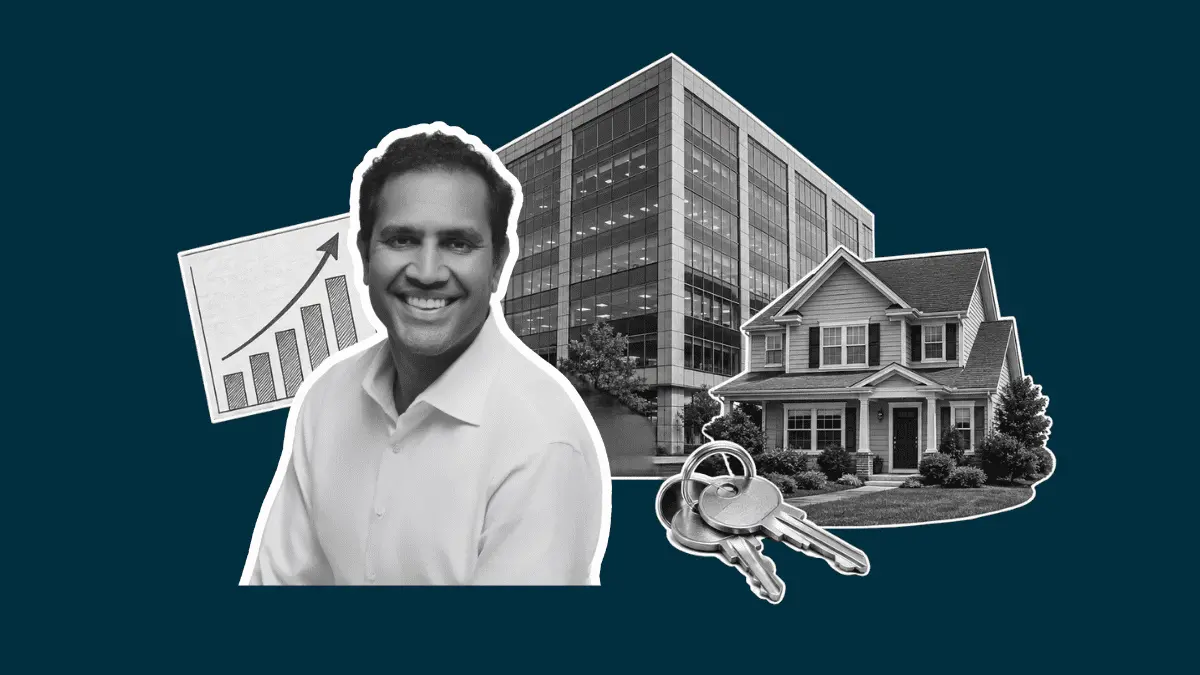
Vishal Garg, the embattled founder of Better.com, has successfully reclaimed his position at the helm of the digital mortgage lender following a high-stakes proxy battle that saw the removal of the company’s previous board of directors. Speaking on the PowerHouse podcast with HousingWire President Diego Sanchez, Garg detailed his unconventional return to power, a strategic pivot away from direct-to-consumer (DTC) advertising, and a vision to transform the company’s proprietary Tinman AI platform into the foundational infrastructure for the broader mortgage industry. Garg’s return marks a pivotal moment for the company, which has struggled with significant financial losses and leadership instability since its highly publicized and controversial workforce reductions in late 2021.
The successful proxy fight represents a rare occurrence in corporate governance. Garg noted during the interview that historical data suggests founder-CEOs successfully removing an entire board happens in only about 1.7% of cases. Despite the 60-to-one odds against him, Garg managed to secure enough shareholder support to oust the interim leadership and regain control. Shareholders reportedly backed Garg’s return due to a continued belief in Better’s core mission—to make homeownership more affordable and efficient—and the promising early performance of the Tinman AI engine. Garg had been removed from his post in early August 2024 and replaced by interim CEO Daniel Lewis before launching his campaign to retake the company.
The Evolution of Better.com: A Strategic Chronology
To understand the current trajectory of Better.com, it is necessary to examine the company’s volatile history over the past several years. Founded in 2016, Better was initially positioned as a disruptive force in the mortgage industry, leveraging technology to eliminate commissions and streamline the application process. During the refinancing boom fueled by historically low interest rates between 2020 and 2021, the company saw its revenue peak at approximately $1.5 billion.
However, the transition from a low-rate environment to a high-rate environment proved catastrophic for Better’s initial business model. In late 2021, Garg faced intense public scrutiny after laying off 900 employees over a Zoom call, an event that triggered a series of PR crises and internal departures. By 2023, as the mortgage market cooled, Better’s annual revenue plummeted to roughly $75 million. The company eventually went public via a merger with Aurora Acquisition Corp, a special purpose acquisition company (SPAC), but its stock price suffered significantly post-listing, reflecting investor skepticism regarding its path to profitability.
Garg’s return signals a departure from the aggressive, ad-driven growth strategies of the past. He admitted that during his short hiatus, he reflected on the company’s failures, specifically noting that he did not push the implementation of artificial intelligence aggressively enough. He observed that younger startups were disrupting industries by allowing AI agents to operate with more autonomy, while Better remained tethered to perfecting human-led processes.
Tinman AI and the Shift to "Outcome as a Service"
At the heart of Garg’s new strategy is Tinman AI, a mortgage manufacturing engine that Better has spent nearly $2 billion to develop. Originally designed between 2016 and 2022 to codify complex agency and investor rules, the system is now being positioned as a "shared infrastructure" for the entire mortgage ecosystem, including independent mortgage banks (IMBs), brokers, and fintech partners. Garg described this shift as moving from a direct-to-consumer model to being "interaction surface agnostic."
According to Garg, Tinman AI currently powers approximately 60% of Better’s activity. The system boasts a "six basis point critical defect rate," which Garg claims is the lowest in the industry. By overlaying large language models (LLMs) onto the existing rules-based engine, the company has been able to accelerate the underwriting process and remove human friction. The goal is no longer to compete directly with every lender for the consumer’s attention, but rather to provide the back-end technology that powers those interactions, whether they occur on a fintech app like Credit Karma or a broker’s tablet at an open house.
This "Uberization" of the mortgage industry, as Garg calls it, involves local operators and brokers plugging into a central, highly efficient platform. He cited the company’s partnership with NEO Home Loans as a proof of concept. In this arrangement, NEO’s loan officers utilized Tinman AI to increase their productivity from an average of 2.5 loans per month to five loans per month. The platform’s ability to scan 65 different investors before rejecting a loan helps reduce fallout and increases the likelihood of finding a viable product for the borrower.
Financial Performance and the Path to Profitability
The financial reality for Better remains challenging, but Garg pointed to signs of a turnaround. The company is currently operating at a revenue run rate exceeding $220 million, a significant recovery from the lows of 2023. However, Garg acknowledged that the current cost structure is unsustainable. Better’s quarterly operating costs have been in the mid-$60 million range, and the company has set a target to reduce those costs to the $40 million range.
To date, Better has identified or executed approximately $24 million in savings out of a planned $60 million reduction. Garg emphasized that achieving monthly profitability is essential for the company to be viewed as a reliable partner for the industry—a "mortgage AWS" (Amazon Web Services). He argued that while Better has lost more money than many of its peers, the investment was necessary to reshape a $4.5 trillion industry, comparing the company’s "long burn" phase to those of Uber and Airbnb.
Garg also highlighted the valuation gap between Better and other mortgage fintechs. Currently trading at approximately 1.5 times revenue, Better sits at a steep discount compared to private-market competitors that often command valuations of 10 to 50 times revenue. Garg believes that reaching profitability on a contribution margin basis within the next year is the most effective way to close this valuation gap and restore shareholder value.
The Decline of Ad-Driven Customer Acquisition
One of the most significant shifts in Garg’s outlook is his bearish stance on traditional digital marketing. For years, digital lenders relied on heavy spending on Google and Facebook ads to drive lead generation. Garg revealed that Better has already cut its DTC marketing budget, questioning the logic of spending $2.5 million a month on "buying clicks" when AI-driven tools can facilitate customer engagement at a fraction of the cost.
"I am short ad-driven D2C," Garg stated, predicting a "fast and rapid death" for the model in an era dominated by AI agents. He argued that as AI tools become more sophisticated, they will act as intermediaries for consumers, making rate and fee comparisons transparent and instantaneous. In such an environment, the high cost of acquisition through digital ads becomes a liability. Garg contrasted this with competitors who have invested heavily in mortgage servicing rights (MSRs) and large workforces, suggesting that those models are effectively betting on "consumer friction" that AI will eventually eliminate.
Instead of fighting for clicks, Better is leaning into its "Better Cover" umbrella, which includes title, homeowners, auto, and life insurance entities. While these products struggled to achieve strong unit economics when sold by a human salesforce, Garg believes they will be highly profitable when distributed through brokers and retail partners who already possess established trust with the consumer.
Leadership Transition and the Search for a New CEO
Despite his successful return to power, Garg has committed to hiring a new CEO to lead the company’s next phase. He described the ideal candidate as someone who is "AI pilled"—possessing a deep, fundamental belief in the transformative power of artificial intelligence—and who has experience building B2B "outcome as a service" platforms.
Garg acknowledged his own historical struggles with "people skills" and indicated that the next leader should have a complementary skill set to manage the company’s complex human and corporate relationships. Furthermore, given the cyclical nature of the mortgage industry, which Garg noted tends to "blow itself up every 10, 20 years," the new CEO must have a sophisticated understanding of credit risk and product standards to navigate future market volatility.
Broader Implications for the Mortgage Industry
The pivot of Better.com reflects a broader trend in the financial services sector where traditional business-to-consumer (B2C) companies are transitioning into business-to-business (B2B) service providers. By opening up its Tinman AI platform, Better is attempting to move away from being a direct competitor to mortgage brokers and instead becoming their primary technology vendor.
This strategy carries significant implications for the competitive landscape. If Better can successfully provide a low-cost, high-efficiency underwriting engine to small and mid-sized lenders, it could level the playing field against industry giants like Rocket Mortgage and United Wholesale Mortgage (UWM), who have built their own proprietary tech stacks. However, the success of this transition depends on Better’s ability to convince its former rivals to trust its platform and on its ability to maintain technological superiority as AI continues to evolve.
The mortgage industry is currently at a crossroads, facing a transition from a legacy system defined by human-intensive paperwork to an automated future. Garg’s return and the "re-founding" of Better.com serve as a high-profile experiment in whether a tech-first approach can finally overcome the structural inefficiencies of home lending. Whether Better can achieve its goal of becoming the "AWS of Mortgage" will depend on its execution of cost-cutting measures, the adoption rate of Tinman AI by external partners, and the company’s ability to maintain stability under new leadership.
