

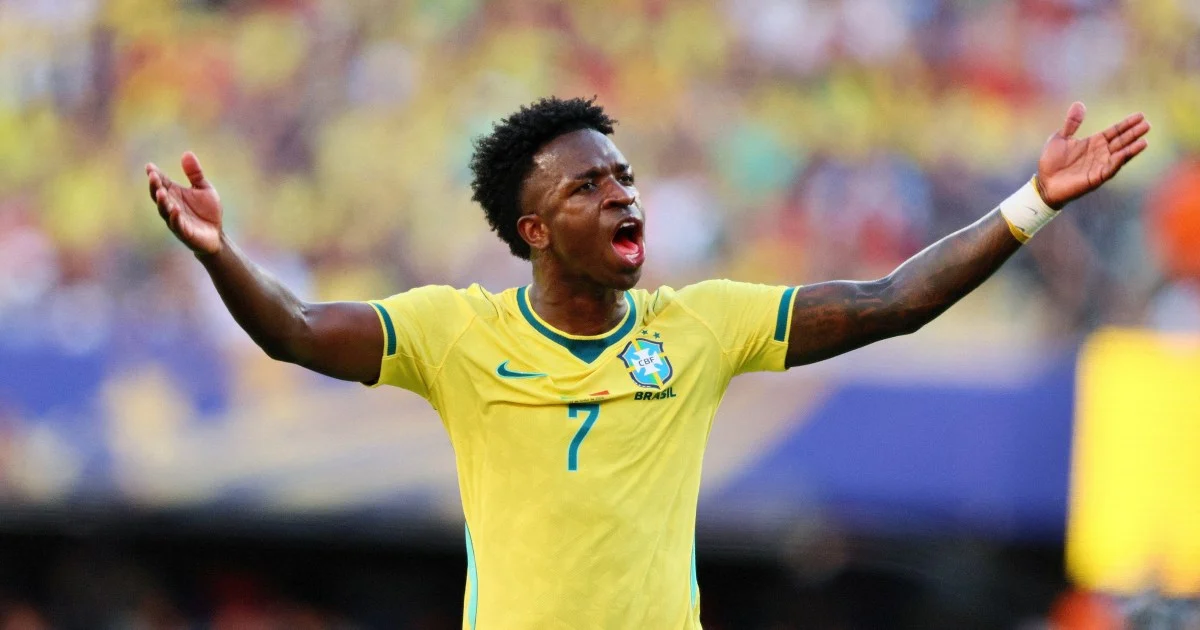
The 2026 FIFA World Cup ignited in New Jersey on Saturday as Brazil and Morocco played out a high-intensity 1-1 draw at the New York New Jersey Stadium. While the five-time world champions entered the tournament as perennial favorites, they were forced to rely on a moment of individual brilliance from Vinicius Junior to cancel out an early strike from Morocco’s Ismael Saibari. The result leaves Group C in an unexpected state of flux, with Scotland currently occupying the top spot following their victory over Haiti earlier in the day. For Brazil, the performance raised significant questions about their tactical cohesion under manager Carlo Ancelotti, while Morocco reinforced their status as a legitimate global powerhouse, continuing the momentum that saw them reach the semifinals in Qatar four years ago.
The atmosphere in East Rutherford was electric, with a sell-out crowd of over 80,000 spectators witnessing a clash that many had circled as the highlight of the opening round. Morocco, buoyed by their recent triumph in the Africa Cup of Nations (AFCON)—a title awarded following a contentious legal battle regarding their final against Senegal—started the match with a level of confidence that clearly rattled the Brazilian defense. From the opening whistle, the Atlas Lions employed a high-pressing system that exploited a sluggish Brazilian midfield, leading to a deserved opening goal in the 21st minute.
Tactical Breakdown: Morocco’s Dominant Start and Saibari’s Opener
Morocco’s tactical approach under their established leadership focused on quick transitions and exploiting the spaces behind Brazil’s marauding full-backs. The breakthrough came when Ismael Saibari, the 25-year-old midfielder who has become a linchpin for both his club and country, found a pocket of space between Brazil’s central defenders. Receiving a crisp vertical pass that bypassed Casemiro, Saibari drove toward the box. As goalkeeper Alisson Becker hesitated, Saibari produced a sophisticated "scoop" finish, lifting the ball over the advancing keeper to send the Moroccan contingent into raptures.

The goal was a byproduct of Morocco’s superior organization. Throughout the first half, the North African side controlled the tempo, with Achraf Hakimi and Sofyan Amrabat orchestrating play from the right flank and the center of the park, respectively. Brazil’s midfield, anchored by the veteran Casemiro, appeared unable to match the physical intensity and sprinting distance of their opponents. The high humidity in New Jersey seemed to take a toll on the Seleção, who looked a shadow of the team that dominated South American football for decades.
Vinicius Junior and the Weight of Expectation
As the first half drew toward a close, it appeared Brazil might head into the interval trailing. However, Vinicius Junior, who has evolved into Brazil’s most potent offensive weapon in the absence of a fully fit Neymar, took matters into his own hands. In the 44th minute, Bruno Guimarães recovered a loose ball in the midfield and quickly fed Vinicius on the left wing.
The Real Madrid star, coming off a season where he netted 21 goals in major competitions, showcased why he is considered a frontrunner for the Ballon d’Or. He bypassed two Moroccan defenders with a signature burst of speed, cut inside onto his favored right foot, and unleashed a curling effort that beat Yassine Bounou at the far post. It was a goal of the highest caliber, a solo effort that effectively "dug Brazil out of trouble," as noted by several analysts on-site. Despite the goal, the half-time statistics told a worrying story for Ancelotti: Brazil had managed only two shots on target compared to Morocco’s five, and had conceded 54% of possession.
The Ancelotti Era: Growing Pains and Midfield Struggles
The appointment of Carlo Ancelotti was intended to bring European tactical discipline to Brazil’s flair-heavy squad. However, the transition has been far from seamless. Brazil’s fifth-place finish in the CONMEBOL qualifying standings was their worst in the modern era, and the lack of a cohesive identity was evident on Saturday.

The decision to substitute Casemiro at half-time was perhaps the most telling moment of Ancelotti’s frustration. The Manchester United midfielder, a stalwart of the national team for a decade, struggled with the pace of the game and was frequently caught out of position by Saibari and Ziyech. His replacement signaled a shift toward a more mobile, youthful midfield, but Brazil still lacked the creative spark required to break down a disciplined Moroccan low block in the second half.
Defensively, Brazil looked vulnerable to the counter-attack. Marquinhos and Gabriel Magalhães were forced into several last-ditch clearances as Morocco continued to threaten through the pace of their wingers. The absence of a settled starting XI continues to plague the Seleção, with Ancelotti still experimenting with his defensive pairings just as the tournament begins.
Morocco’s Ascendancy: From Qatar to New Jersey
Morocco’s performance was no fluke. Since their historic run in 2022, the Royal Moroccan Football Federation has invested heavily in infrastructure and scouting, resulting in a squad that is both technically gifted and tactically savvy. Their "promotion" to AFCON champions following the controversy involving Senegal has only added to their aura of invincibility on the continent.
In New Jersey, they proved they could go toe-to-toe with the world’s elite. Yassine Bounou remains one of the premier goalkeepers in world football, making a crucial save against Rodrygo late in the second half to preserve the draw. The synergy between the experienced veterans like Hakimi and the emerging talents like Saibari suggests that Morocco is not merely looking to repeat their 2022 success, but to surpass it. They finished the match with a higher expected goals (xG) rating than Brazil (1.42 to 1.15), a statistic that underscores their efficiency in the final third.

The Neymar Narrative: A Distraction or a Necessity?
Hovering over the entire match was the figure of Neymar Jr. The 34-year-old, Brazil’s all-time leading scorer, watched from the VIP boxes as he continues his recovery from a persistent calf injury. Neymar’s career has been increasingly defined by these absences; he has not played a competitive match for the national team since late 2023.
His inclusion in the squad was a subject of intense debate in the Brazilian media. While his talent is undeniable, critics argue that the "Neymar soap opera" creates a vacuum of leadership and a tactical imbalance. Ancelotti’s reluctance to integrate Neymar into his primary tactical plans during the build-up to the tournament suggests a manager trying to move the team toward a post-Neymar era. Yet, as Brazil struggled to find a winning goal in the final twenty minutes, the cameras repeatedly panned to the stands, highlighting the perceived lack of a "clutch" playmaker on the pitch. Whether Neymar can return to fitness in time for the knockout stages remains the biggest storyline surrounding the Brazilian camp.
Group C Outlook: Scotland’s Surprising Lead
The 1-1 draw between the group’s heavyweights has provided a golden opportunity for Scotland. Following their 1-0 win over Haiti in Boston, the Scots sit at the top of Group C with three points. This sets up a fascinating dynamic for the second round of fixtures. Brazil will face Haiti in a match they must win convincingly to restore confidence, while Morocco will take on Scotland in a battle that could decide who secures early qualification for the Round of 32.
The expanded 48-team format means that even a third-place finish could potentially see a team through to the knockouts, but neither Brazil nor Morocco will want to leave their fate to the mathematics of goal difference. For Scotland, the draw in New Jersey is the ideal result, as it keeps both giants within reach while they maintain their slender lead.

Broad Implications for the Tournament
This opening match in Group C serves as a microcosm of the modern international game: the narrowing gap between traditional powerhouses and the rest of the world. Brazil’s reliance on individual brilliance from stars like Vinicius Junior may get them through the group stages, but as Morocco demonstrated, organized, high-intensity teams are no longer intimidated by the yellow jersey.
As the tournament progresses, Brazil must find a way to balance their offensive talent with defensive stability. For Morocco, the challenge will be maintaining this level of physical output throughout a grueling tournament schedule. The New York New Jersey Stadium witnessed a tactical chess match that ended in a stalemate, but the implications of this draw will resonate throughout the coming weeks. The road to the final in July is long, and for the five-time champions, it has started with a significant wake-up call.
