

Mortgage rates have recently ascended to their highest point since August 2025, triggering a noticeable contraction in homebuyer demand for new loans, according to the latest data. This upward trajectory in borrowing costs has led to a 2.7% overall drop in total mortgage application volume last week compared with the preceding period, as reported by the Mortgage Bankers Association’s (MBA) seasonally adjusted index. Conversely, refinance activity defied expectations, showing a surprising increase, suggesting a nuanced response from different segments of the housing market to the evolving financial landscape.
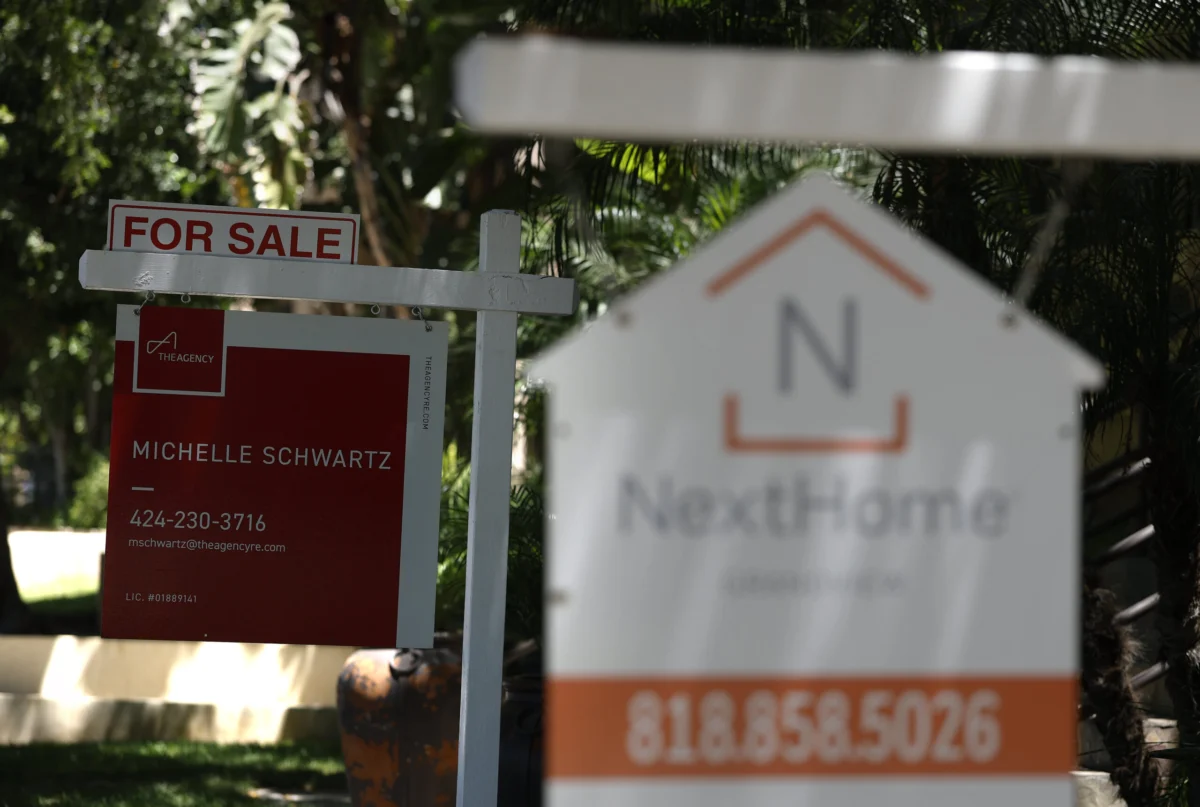
The average contract interest rate for 30-year fixed-rate mortgages with conforming loan balances, currently capped at $832,750 or less, climbed to 6.65% from 6.58% the week prior. This increase was accompanied by a rise in points, which moved to 0.67 from 0.64, including the origination fee, for loans requiring a 20% down payment. This movement underscores a tightening in lending conditions, directly impacting the cost of homeownership for prospective buyers across the nation. The sight of "for sale" signs posted in front of condominiums, such as those observed in Los Angeles, California, on July 9, 2026, by photographer Justin Sullivan for Getty Images, visually encapsulates the ongoing churn within the property market.
Divergent Trends in Homebuyer and Refinance Demand
The recent data from the MBA paints a picture of a housing market grappling with significant headwinds, particularly for those looking to purchase a home. Applications for a mortgage to purchase a home experienced a substantial weekly decline of 7%. This retreat in purchase demand is not an isolated event; it also stands 2% lower than the corresponding week one year ago, indicating a sustained period of reduced buyer enthusiasm and activity. Prospective homebuyers continue to contend with the formidable combination of persistently high home prices and a critically lean supply of affordable homes for sale. This dual challenge significantly erodes purchasing power, especially when coupled with rising interest rates, effectively pushing some potential buyers out of the market or compelling them to delay their homeownership aspirations.
In stark contrast to the slowdown in purchase applications, the refinance segment of the mortgage market exhibited an unexpected surge. Applications to refinance an existing home loan increased 4% for the week and were 7% higher than the same week one year ago. This uptick is particularly noteworthy given that last year, rates were only 17 basis points higher, a relatively small differential that typically offers limited incentive for widespread refinancing purely for rate reduction. Joel Kan, vice president and deputy chief economist at the MBA, highlighted the specifics of this trend, stating in a release, "Despite higher mortgage rates, refinance applications increased, led by FHA and VA refinance applications rising 9 and 10 percent, respectively."
This specific growth in government-backed loan programs suggests that while the overall pool of eligible borrowers benefiting from substantial rate reductions may be small, a significant portion of the current refinance activity is driven by unique circumstances. Many homeowners, especially those who purchased during periods of rapid home appreciation, have accumulated significant equity. Cash-out refinances, where borrowers take out a new, larger mortgage to tap into this equity, can be attractive even at higher rates to fund home improvements, consolidate high-interest debt, or address other financial needs. For FHA and VA borrowers, specific program features or more flexible underwriting standards might also contribute to higher activity despite the broader rate environment. The refinance share of total mortgage activity consequently increased to 43.2% from 40.6% the previous week, further underscoring this shift in market dynamics.
The Economic Underpinnings of Rate Volatility
The trajectory of mortgage rates is intrinsically linked to broader economic indicators, with inflation and energy prices playing a particularly crucial role in recent movements. According to a separate survey from Mortgage News Daily, mortgage rates experienced a notable jump higher to start the week, intensifying the pressure on borrowers. Matthew Graham, chief operating officer at Mortgage News Daily, provided insight into these dynamics, explaining, "The key contributor to the recent spike has been the uptick in fuel prices in July combined with the fact that rates never made it any lower than 6.52% over the past 2 months." He elaborated, "In other words, we were already in a high range and the uptick in fuel prices simply gave rates a push." This analysis underscores how even seemingly peripheral economic factors, like energy costs, can have a direct and immediate impact on the bond market, which in turn dictates the direction of long-term interest rates, including mortgages. Elevated fuel prices can contribute to inflationary pressures, prompting investors to demand higher yields on bonds to compensate for the erosion of purchasing power, which directly translates to higher mortgage rates.
However, the market’s response is rarely monolithic or sustained in one direction for long. Rates subsequently recovered somewhat on Tuesday after a key inflation reading came in much lower than expected. This immediate reaction highlights the sensitivity of financial markets to economic data releases. Lower-than-anticipated inflation figures can signal to investors that the Federal Reserve might be less inclined to aggressively pursue tighter monetary policies or might even consider rate cuts sooner than previously anticipated. This perception can lead to a softening of bond yields and, consequently, a slight easing of mortgage rates. This recent volatility exemplifies the dynamic interplay between economic reports, market sentiment, and the ultimate cost of borrowing for consumers, making accurate forecasting a continuous challenge.
A Deeper Dive into the Housing Market’s Current State
The current housing market is characterized by a complex interplay of factors that extend beyond just interest rates. While rates are a significant driver of affordability, the persistent issue of limited housing inventory continues to plague both buyers and sellers. Many existing homeowners, having secured historically low interest rates during the pandemic-era boom (when rates often dipped below 3%), are reluctant to sell and move. Doing so would mean trading their favorable, often sub-4% rates, for significantly higher ones, potentially increasing their monthly housing costs by hundreds or even thousands of dollars on a new mortgage, even for a similarly priced home. This "lock-in" effect further constrains the supply of available homes, particularly in the mid-to-lower price ranges where demand often outstrips supply most acutely, exacerbating the inventory crunch.
The elevated home prices, a legacy of robust demand and constrained supply over several years, compound the challenge. Even with a modest reduction in prices in some localized markets, the combination of high principal amounts and higher interest rates means that monthly mortgage payments remain substantial. For first-time homebuyers, particularly those without significant accumulated equity or parental assistance, the barrier to entry has become increasingly formidable. This environment fosters a sense of hesitation and caution among prospective buyers, leading to the observed pullback in purchase applications. Many are choosing to rent longer, save more, or simply wait for more favorable market conditions.
Furthermore, the demographic shifts and evolving work-from-home trends that influenced housing demand post-pandemic are still shaping the market. While some initial frenzies have subsided, the underlying demand for housing, driven by population growth and household formation, remains strong. The disconnect lies in the ability of that demand to translate into actual purchases given the current affordability constraints. New construction, while picking up in some areas, has struggled to keep pace with demand, further contributing to the supply imbalance.
Historical Context and Future Outlook
To fully appreciate the current situation, it’s essential to place the 6.65% mortgage rate in a broader historical context. While it represents the highest level since August 2025, it is still below the peaks observed in late 2023, which neared or even surpassed 8% for a brief period. However, it is significantly higher than the ultra-low rates seen during the pandemic, when 30-year fixed mortgages dipped below 3%. For instance, in early 2021, rates hovered around 2.7-3.0%, making the current 6.65% more than double that cost. This stark comparison illustrates the substantial increase in the cost of borrowing over the past few years, fundamentally altering the calculus for homeowners and aspiring buyers alike. It represents a return to pre-pandemic norms, albeit with higher home prices than before.
Looking ahead, the trajectory of mortgage rates will largely hinge on the ongoing battle against inflation and the Federal Reserve’s monetary policy decisions. Should inflation continue its downward trend, as suggested by the recent lower-than-expected data, there might be room for rates to stabilize or even see modest declines as the market anticipates a more dovish stance from the Fed. Conversely, any resurgence in inflationary pressures, perhaps fueled by renewed spikes in energy prices, unexpected geopolitical events, or stronger-than-anticipated economic growth, could push rates higher once more. The market remains acutely sensitive to the Fed’s signals regarding future interest rate hikes or cuts, as these directly influence the yields on U.S. Treasury bonds, which serve as a benchmark for mortgage rates. The Fed’s rhetoric and actions, particularly concerning the federal funds rate and its balance sheet reduction efforts, will continue to be closely scrutinized.
The robust refinance activity, particularly in FHA and VA loans, indicates that certain segments of the market are still finding opportunities despite the higher rate environment. This could be due to specific government programs offering more flexible terms or allowing for cash-out options that enable homeowners to tap into their accumulated equity for home improvements, debt consolidation, or other financial needs. The significant appreciation in home values over the past few years has created a substantial pool of equity for many homeowners, making cash-out refinances an attractive option even at higher rates, as they may still be lower than other forms of borrowing like personal loans or credit cards.
Implications for the Broader Economy
The housing sector is a critical component of the broader economy, and its performance has wide-ranging implications. A sustained slowdown in home sales can impact ancillary industries such as construction, real estate services, home furnishings, and lending. Reduced construction activity, for instance, can lead to job losses in the building sector and a further exacerbation of the housing supply shortage in the long run. Moreover, the "wealth effect" associated with rising home values can diminish if the market cools significantly, potentially impacting consumer spending in other areas of the economy.
The shift in mortgage activity, with purchase demand contracting and refinance demand showing selective strength, reflects an economy in transition. Consumers are adapting to a new interest rate environment, making more strategic financial decisions regarding their housing. While some are pulling back from new home purchases due to affordability concerns, others are actively managing their existing home equity or taking advantage of specific refinance opportunities tailored to their financial situations. This adaptability, while challenging for some, also highlights the resilience of certain market segments.
The ongoing focus on inflation by central banks worldwide, including the Federal Reserve, will continue to be the dominant narrative influencing financial markets. As the Fed navigates its dual mandate of maximum employment and price stability, its decisions will inevitably ripple through the mortgage market, shaping the financial landscape for millions of Americans. Investors, policymakers, and consumers alike will be closely watching upcoming economic reports, particularly those related to consumer prices, employment, and energy costs, for clues about the future direction of interest rates and the broader housing market. The dynamic nature of these factors ensures that the housing market will remain a key area of focus for economic analysts and news outlets in the coming months, as the balance between affordability, supply, and demand continues to evolve.
