

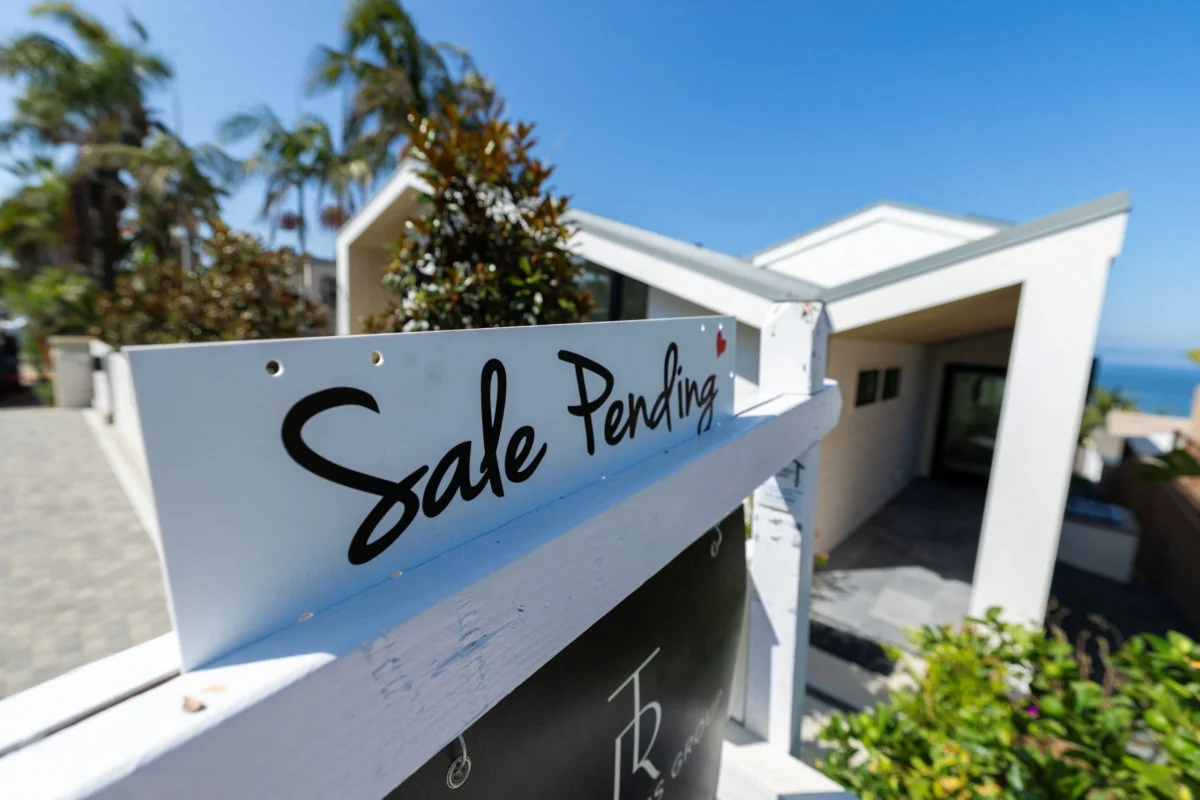
The American housing market is experiencing a profound and worsening affordability crisis, characterized by a sharp decline in pending home sales and a persistent slump in builder sentiment, according to new reports released on Thursday. This dual challenge underscores a critical problem: housing is becoming prohibitively expensive for both prospective homeowners and those tasked with building new residences. The confluence of elevated mortgage rates, record-high national median home prices, soaring construction costs, and chronic labor shortages has created a formidable barrier to entry for buyers and a significant impediment for developers, signaling a protracted period of stagnation for a sector crucial to the nation’s economic health.
Pending Home Sales Plunge Amidst Soaring Mortgage Rates
A key indicator of future housing activity, pending home sales in June, which track signed contracts on existing homes, registered a significant decline of 5.4% from May, according to data from the National Association of Realtors (NAR). This figure starkly missed analysts’ expectations and marked a 0.3% decrease from June 2025 (likely a typo, intended as the previous year), highlighting a clear deceleration in buyer activity. As the most timely measure reflecting decisions made by shoppers in the preceding month, the data paints a vivid picture of a market under severe strain.
Lawrence Yun, NAR’s Chief Economist, articulated the severity of the situation in a recent release: "The highest mortgage rates in nearly a year and the record-high national median home price together are contributing to a tepid housing market that is especially difficult for first-time homebuyers." His statement encapsulates the primary headwinds facing potential purchasers, particularly those without substantial equity from a previous home sale.
Mortgage rates, a critical determinant of housing affordability, exhibited a narrow but persistently high range throughout June. The average rate for the popular 30-year fixed mortgage commenced the month at 6.6% and concluded at precisely the same elevated level, as reported by Mortgage News Daily. This rate stands in stark contrast to the 5.99% low observed at the end of February, a period that predated a significant geopolitical event—referred to as the "Iran war" in the original source—which likely introduced volatility and upward pressure on financial markets, including bond yields that influence mortgage rates. This upward trajectory in borrowing costs has substantially eroded purchasing power, pushing monthly mortgage payments to levels unseen in decades relative to median incomes. For instance, a rise from 5.99% to 6.6% on a $400,000 loan translates to an increase of over $150 in the monthly payment, a substantial sum for many households already grappling with broader inflationary pressures.
The weakening demand from homebuyers is not merely anecdotal; it is substantiated by mortgage application data. In the past month, applications for mortgages to purchase a home were 2% lower than during the same week the previous year, despite mortgage rates being slightly higher at that time. This year-over-year decline underscores a deeper reluctance or inability among potential buyers to enter the market, even when faced with comparable, or even marginally lower, interest rates than a year prior. This suggests that the cumulative effect of high prices and rates, coupled with broader economic uncertainties, is increasingly deterring prospective homeowners.
Builder Sentiment Plunges: A Reflection of Construction Headwinds
The challenges plaguing the housing market are not confined to the demand side; they equally afflict the supply side, as evidenced by a separate report released Thursday from the National Association of Home Builders (NAHB). Sentiment among the nation’s single-family builders fell in July, dropping to 34 from an upwardly revised reading of 36 in June. This marks the 15th consecutive month that sentiment has remained below 40, representing the longest such stretch since 2012, a period when the housing market was still reeling from the aftermath of the 2008 financial crisis. Anything below 50 on the NAHB/Wells Fargo Housing Market Index is considered negative sentiment, indicating that more builders view market conditions as poor than good.
Robert Dietz, NAHB’s chief economist, echoed the concerns from the buyer’s perspective, emphasizing the multifaceted affordability challenges confronting the construction industry. "Affordability remains the home building industry’s primary challenge, as elevated mortgage rates, costly land, rising material prices, and persistent skilled labor shortages continue to affect the market," Dietz stated in a release. This comprehensive list of hurdles highlights the systemic issues preventing builders from increasing housing supply efficiently and affordably.
The cost of construction materials has been a persistent concern since the pandemic-induced supply chain disruptions. While some material prices, such as lumber, have moderated from their peak highs, others, like concrete, drywall, and various finishes, continue to exert upward pressure on construction costs. Furthermore, the scarcity of developable land, particularly in desirable urban and suburban areas, drives up acquisition costs, which are then passed on to the buyer. Zoning regulations, environmental reviews, and extensive permitting processes at local levels further exacerbate land costs and prolong project timelines, adding to overall expenses.
Perhaps one of the most intractable issues facing builders is the persistent shortage of skilled labor. An aging workforce, a decline in vocational training programs, and a perception of construction jobs as less desirable have contributed to a significant deficit of carpenters, electricians, plumbers, and other tradespeople. This shortage not only drives up labor costs but also delays construction schedules, limiting the pace at which new homes can be brought to market. The lack of available labor has become a bottleneck for increasing housing inventory, irrespective of demand.
In response to these challenging conditions, a growing share of builders has resorted to price adjustments and incentives to stimulate sales. In July, 37% of builders reported cutting prices, an increase from 35% in June and 32% in May. The use of sales incentives, such as mortgage rate buydowns, contributions to closing costs, or upgraded features, was even more prevalent, with 63% of builders employing such tactics in July. This figure is up slightly from 62% in June and marks the 16th consecutive month that this share has reached 60% or higher, according to the NAHB. These actions, while beneficial for some buyers, also reflect the intense competitive pressure and the need for builders to move inventory in a sluggish market. They also suggest that even with these concessions, demand is not robust enough to clear the market quickly.
Broader Economic Implications and Policy Responses

The struggles of the housing market have significant ramifications for the broader U.S. economy. Housing, encompassing residential investment, housing services, and related consumer spending, typically contributes between 15% and 18% to the nation’s Gross Domestic Product (GDP). As such, a sustained downturn in this sector acts as a considerable drag on overall economic growth. Peter Boockvar, chief investment officer of OnePoint BFG Wealth, concisely summarized this impact: "Bottom line, housing remains the downer in the US economy and according to the NAHB makes up about 15-18% of the US economy all in."
The ripple effects extend across numerous industries. Reduced new home construction impacts manufacturers of building materials, appliances, and home furnishings. A slowdown in existing home sales diminishes activity for real estate agents, mortgage lenders, title companies, and moving services. The wealth effect, where homeowners feel more confident to spend when their home equity rises, also reverses, potentially dampening consumer spending. Furthermore, a depressed housing market can impact local government revenues derived from property taxes and transaction fees.
Recognizing the systemic nature of the housing crisis, policymakers have begun to respond. Dietz highlighted a newly enacted housing legislation from Congress, which aims to cut red tape and assist localities in expediting permitting processes for housing developments. He described this as "a positive step that will help expand housing supply and lower overall housing costs, although more policy change is needed at the state and local level." This legislation seeks to address one of the long-standing bottlenecks in housing production: the often cumbersome and time-consuming local regulatory environment that can add years and significant costs to development projects.
However, the effectiveness of federal legislation often depends on its implementation at the state and local levels, where zoning laws, land use policies, and permitting procedures are primarily determined. Advocates for increased housing supply argue that more radical reforms are needed, including loosening single-family zoning restrictions, encouraging denser development, and streamlining environmental review processes, many of which are controlled by local municipalities.
Despite the weakening demand and builder concessions, prices for existing homes continue to rise, with the national median hitting a new record in June, according to the NAR. This seemingly counterintuitive trend is primarily attributable to a severe lack of housing supply. The "lock-in effect" plays a significant role here: many existing homeowners secured historically low mortgage rates during the pandemic and are reluctant to sell, as doing so would mean taking on a new mortgage at significantly higher rates. This dynamic keeps existing home inventory exceptionally tight, maintaining upward pressure on prices even as transaction volumes fall. While some local pockets of weakness or price moderation may emerge, the overarching national picture remains one of insufficient inventory against a backdrop of fundamental demographic demand.
Chronology of a Crisis: From Boom to Bust
The current housing predicament is the culmination of several years of evolving market dynamics. Prior to the COVID-19 pandemic, the U.S. already faced a structural housing shortage, a legacy of underbuilding following the 2008 financial crisis. The pandemic, however, turbocharged the market. Historically low interest rates orchestrated by the Federal Reserve to stimulate the economy, coupled with a surge in remote work and a desire for more living space, ignited an unprecedented buying frenzy from mid-2020 through early 2022. Home prices soared, often seeing double-digit annual appreciation.
The turning point arrived in early 2022 when the Federal Reserve began an aggressive campaign of interest rate hikes to combat surging inflation. The federal funds rate, which influences a wide array of lending rates, climbed rapidly from near zero to over 5%, pulling mortgage rates along with it. The average 30-year fixed mortgage rate, which had hovered below 3% during the pandemic boom, breached 5% in spring 2022, then 6% later that year, and has since frequently flirted with or exceeded 7%.
This rapid increase in borrowing costs effectively priced out a significant segment of potential buyers, particularly first-time homebuyers who rely heavily on financing. Mortgage demand began to cool, and by late 2022, existing home sales had plummeted. Builder sentiment, which had been robust during the boom, started its consistent decline, reflecting the rising costs of construction and the evaporating demand. The period from mid-2022 through mid-2024 has thus been characterized by a sharp contraction in sales volume, persistent affordability challenges, and a market adjusting to a new, higher interest rate environment.
Looking Ahead: An Uncertain Path to Stability
The immediate outlook for the U.S. housing market remains challenging. With the Federal Reserve signaling a continued commitment to combating inflation, significant reductions in mortgage rates appear unlikely in the near term. This suggests that affordability will remain a primary constraint for buyers. For builders, the combination of high costs and waning demand means a cautious approach to new projects, further limiting the potential for a rapid increase in housing supply.
Economists and industry analysts are divided on the exact trajectory. Some foresee a prolonged period of market stagnation, often termed a "housing recession," where sales volumes remain low, but prices do not necessarily crash due to the persistent supply shortage. Others suggest that continued high rates could eventually force some homeowners to sell, or lead to a more significant pullback in prices in certain overvalued markets. However, a widespread collapse akin to 2008 is generally considered unlikely, given the stronger lending standards and higher equity levels of current homeowners.
The key to unlocking the housing market’s potential lies in addressing the fundamental imbalance between supply and demand, coupled with a stabilization or eventual reduction in interest rates. While federal legislation is a step, comprehensive action at the state and local levels to ease regulatory burdens and incentivize denser, more affordable construction is crucial. For potential buyers, patience may be a virtue, as a significant shift in affordability will likely require a combination of lower rates, increased inventory, or a meaningful adjustment in home prices, none of which appear imminent on a national scale. The current market thus represents a complex interplay of macroeconomic forces, demographic shifts, and policy decisions, all converging to create a deeply challenging environment for housing in America.
