

A newly released opinion poll in the United States indicates a significant shift in public sentiment, revealing that 60 percent of Americans now oppose President Donald Trump’s aggressive stance, frequently termed a "war on Iran." This growing domestic disapproval emerges against a backdrop of escalating tensions in the Middle East and increasing humanitarian concerns, exemplified by tragic incidents such as the Minab school strike. The poll, conducted by an unnamed reputable survey organization, underscores a growing disconnect between the administration’s foreign policy objectives and the desires of the American populace, who appear increasingly wary of military confrontation or prolonged economic warfare with the Islamic Republic.
The Shifting Sands of Public Opinion
The results of the recent poll represent a critical juncture in the ongoing debate surrounding US-Iran relations. While the specific methodology and margin of error for this particular survey were not immediately disclosed, its findings align with a general trend of declining public support for military interventions abroad following protracted conflicts. Historically, American public opinion tends to rally behind presidential actions in moments of crisis, but sustained or perceived unnecessary conflicts often lead to significant dissent. The 60 percent opposition figure suggests a robust and perhaps bipartisan rejection of the current trajectory, encompassing both direct military action and the severe economic pressures that many interpret as a precursor to war. Analysts suggest that factors contributing to this shift likely include concerns over potential costs in lives and resources, the perceived lack of a clear exit strategy, and the growing awareness of the humanitarian impact of sanctions and regional instability. This level of public opposition could exert considerable pressure on the administration, particularly in an election year, potentially influencing policy decisions and congressional debates on defense spending and foreign aid.
Decades of Distrust: A Brief History of US-Iran Relations
Understanding the current "war on Iran" requires a look back at the complex and often fraught history between the two nations. Relations have been strained for over four decades, ever since the 1979 Islamic Revolution overthrew the US-backed Shah Mohammad Reza Pahlavi and led to the hostage crisis at the US embassy in Tehran. Subsequent years saw Iran labeled as a state sponsor of terrorism by the US, accused of pursuing nuclear weapons, and supporting proxy groups across the Middle East.
The early 21st century brought attempts at diplomatic engagement, most notably culminating in the 2015 Joint Comprehensive Plan of Action (JCPOA), or Iran nuclear deal. This multinational agreement, brokered by the Obama administration alongside other world powers, aimed to curb Iran’s nuclear program in exchange for sanctions relief. However, President Trump’s administration withdrew from the JCPOA in May 2018, deeming it an insufficient deterrent to Iran’s nuclear ambitions and its broader regional conduct. This withdrawal marked the beginning of the "maximum pressure" campaign, a policy designed to cripple Iran’s economy through stringent sanctions targeting its oil exports, banking sector, and other vital industries. The stated goal was to force Iran to negotiate a new, more comprehensive agreement addressing not only its nuclear program but also its ballistic missile development and regional influence. This period has been characterized by heightened rhetoric, military posturing, and a series of incidents in the Persian Gulf, raising fears of direct military confrontation.
The "War on Iran": Defining the Conflict
The term "war on Iran," as used in the opinion poll, encompasses more than just conventional military engagement. It reflects a multi-faceted conflict waged on several fronts:
- Economic Warfare: The cornerstone of the "maximum pressure" campaign involves crippling sanctions. These measures have severely impacted Iran’s economy, leading to currency depreciation, soaring inflation, and shortages of essential goods, including medicines. While the US maintains that sanctions target the regime, their ripple effects undeniably affect the civilian population.
- Cyber Warfare: Both nations have engaged in cyber operations, with accusations of attacks on critical infrastructure and disinformation campaigns.
- Proxy Conflicts: The US and Iran are deeply entrenched in regional proxy conflicts, particularly in Iraq, Syria, Yemen, and Lebanon. Both sides support different factions, leading to prolonged instability and humanitarian crises.
- Military Deterrence and Escalation: The US has significantly increased its military presence in the Persian Gulf region, deploying aircraft carriers, bombers, and troops. Iran, in response, has conducted military exercises, developed its missile capabilities, and engaged in actions like seizing oil tankers or shooting down US drones, further ratcheting up tensions.
- Rhetorical Escalation: Both leaders have frequently engaged in aggressive rhetoric, with President Trump issuing threats and President Rouhani and Supreme Leader Khamenei responding defiantly. This war of words often fuels public anxiety and international concern.
The "war on Iran," therefore, is understood by many as a comprehensive effort to undermine the Iranian government’s stability and influence, even if it has not yet devolved into a full-scale conventional military conflict. The ongoing nature of these pressures and the potential for miscalculation contribute to the public’s apprehension.
The Human Cost: Tragedies on the Ground
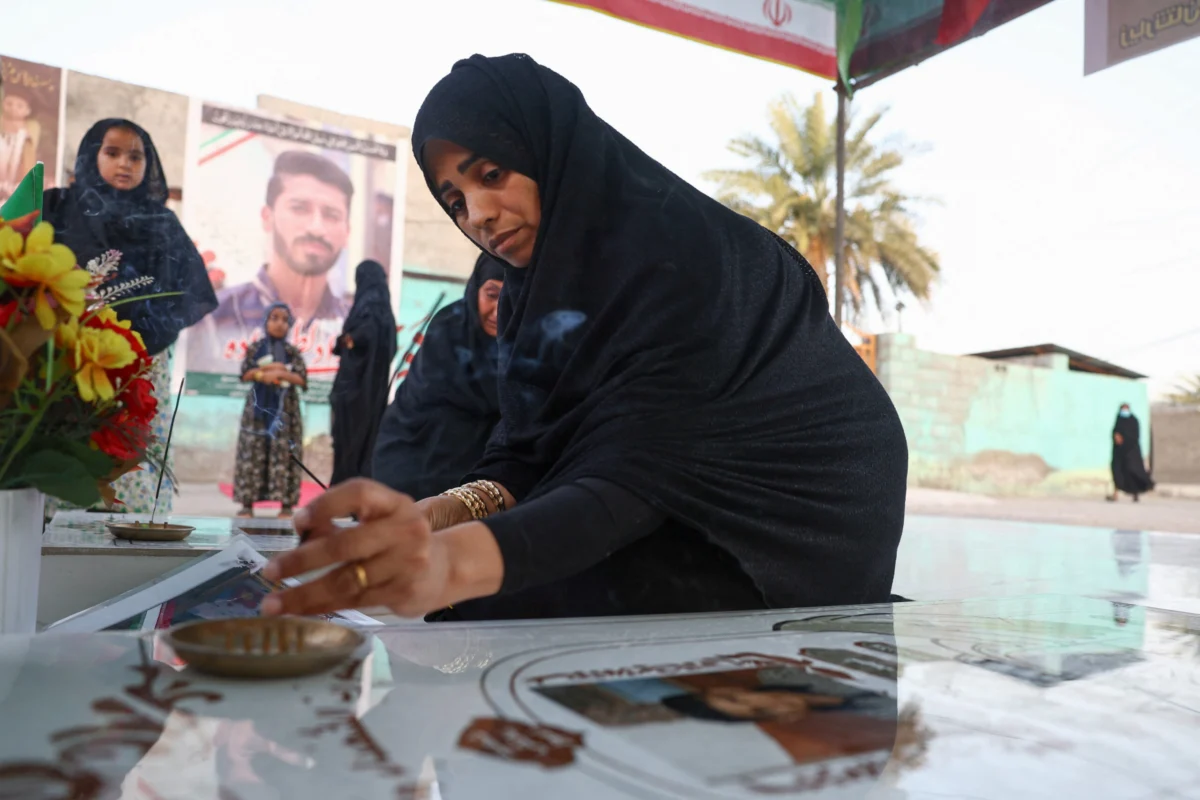
While the geopolitical chessboard sees powerful nations making strategic moves, the real impact of these policies is often felt most acutely by ordinary civilians. The image accompanying the initial report depicts Raheleh, an Iranian woman, grieving at the graves of her two children in Minab, Iran, on May 21, 2026. Her children were tragically lost in a school strike on February 28 of the same year. This poignant visual serves as a stark reminder of the human toll exacted by escalating regional tensions and the broader "war on Iran."
The Minab Incident: A Glimpse into Suffering
The Minab school strike, occurring in the southern Iranian province of Hormozgan, is a devastating example of how regional instability can lead to tragic civilian casualties. While the specific details surrounding the strike – including its perpetrators, motives, and precise circumstances – are often shrouded in the fog of conflict and competing narratives, the loss of innocent lives, particularly children, resonates deeply. Such incidents, whether resulting from direct military action, indiscriminate shelling, collateral damage from proxy conflicts, or even domestic unrest exacerbated by external pressures, underscore the profound humanitarian consequences of the ongoing confrontation. The grief of Raheleh at her children’s grave is a powerful symbol of the countless untold stories of suffering that define conflict zones. Human rights organizations and international observers have consistently warned that the combination of economic hardship, political instability, and military tensions creates a volatile environment where civilians, especially vulnerable populations like children, bear the brunt of the conflict. The Minab incident, regardless of its immediate cause, becomes a symbol of the broader human cost of the "war on Iran," a war that, by its very nature, generates immense suffering.
Official Reactions and International Scrutiny
The significant public opposition revealed by the poll is likely to elicit varied responses from relevant parties.
- US Administration: President Trump’s administration would likely downplay the poll’s significance, reiterating its commitment to the "maximum pressure" campaign as a necessary tool to curb Iran’s destabilizing activities. Officials might argue that their policy is aimed at preventing a larger conflict by containing Iran and forcing it to negotiate a better deal. They may also highlight alleged Iranian provocations as justification for their approach, asserting that their firm stance is essential for national security.
- Iranian Officials: Iranian leaders would undoubtedly seize upon the poll results as evidence of American public disapproval of US policy. They would likely amplify calls for the lifting of sanctions and emphasize the humanitarian suffering inflicted upon their people. President Rouhani or Foreign Minister Zarif might issue statements condemning US aggression and calling for international intervention to de-escalate tensions and facilitate dialogue based on mutual respect, not coercion. They would likely highlight the Minab tragedy as a direct consequence of a hostile foreign policy.
- International Bodies: The United Nations, European Union, and other international organizations would likely express renewed concern over the escalating tensions. The UN Secretary-General might issue calls for restraint and dialogue, emphasizing the need to protect civilians and ensure humanitarian access. The EU, which has consistently advocated for preserving the JCPOA, would likely see the poll as further justification for its diplomatic efforts and its desire to de-escalate the situation through multilateral engagement rather than unilateral pressure. Human rights organizations would continue to document civilian casualties and the impact of sanctions, urging all parties to adhere to international humanitarian law.
- Regional Actors: Allies of the US in the Middle East, such as Saudi Arabia and Israel, might express concern over a potential softening of US policy, arguing that a strong stance is necessary to counter Iranian influence. Conversely, regional states seeking stability might welcome any indication of a potential shift towards de-escalation.
Economic Fallout and Geopolitical Ripples
The "war on Iran" has far-reaching economic and geopolitical consequences beyond the immediate US-Iran dynamic. The stringent US sanctions have undeniably crippled Iran’s economy, leading to a dramatic reduction in its oil exports, which are its primary source of revenue. This has resulted in a severe economic downturn, impacting the daily lives of millions of Iranians. The humanitarian aspect of these sanctions, particularly the challenges in importing medicines and essential goods, has drawn criticism from international aid groups and some US allies.
Globally, the sanctions have also created volatility in the oil markets, affecting prices and supply chains. Major international companies have been forced to withdraw from Iran, fearing secondary US sanctions, leading to lost investment opportunities and further isolating Iran from the global economy. Geopolitically, the maximum pressure campaign has intensified regional rivalries, particularly between Iran and its adversaries. The increased US military presence and Iran’s retaliatory actions have raised the specter of a broader regional conflict that could engulf multiple nations, disrupt global trade routes, and lead to an even greater humanitarian catastrophe. The ongoing proxy conflicts continue to destabilize countries like Iraq, Syria, and Yemen, creating immense refugee crises and fueling extremist ideologies.
Implications for US Domestic Politics and Foreign Policy
The poll’s findings carry significant implications for President Trump’s domestic political standing and the future direction of US foreign policy. With 60 percent of Americans opposing his Iran policy, it suggests a growing vulnerability on an issue that has been central to his foreign policy platform. In an election year, such widespread disapproval could sway undecided voters and energize opposition. Candidates challenging President Trump would likely highlight this public sentiment, advocating for a more diplomatic approach to Iran, potentially including a return to the JCPOA or new negotiations without preconditions. The poll could also embolden members of Congress, particularly those from the opposition party, to challenge the administration’s foreign policy decisions, push for legislative oversight on military actions, and advocate for humanitarian relief.
Beyond the immediate political cycle, this public sentiment could signal a broader shift in American attitudes towards foreign intervention and prolonged military or economic engagements. There’s a growing fatigue with costly and seemingly intractable conflicts, leading to a desire for diplomacy and a focus on domestic priorities. This could shape future administrations’ approaches to global challenges, emphasizing multilateralism and non-military solutions over unilateral pressure and potential confrontation.
The Path Forward: Challenges and Prospects for De-escalation
The overwhelming public opposition to the "war on Iran" presents both challenges and potential opportunities for de-escalation. The administration faces the dilemma of either continuing a policy that lacks broad domestic support or pivoting towards a more diplomatic approach. However, years of escalating rhetoric and mistrust have created deep chasms between Washington and Tehran, making dialogue exceptionally difficult. Iran has consistently demanded the lifting of sanctions as a precondition for any negotiations, while the US has insisted on a broader agreement addressing all aspects of Iranian conduct.
Prospects for de-escalation would likely require a significant shift in posture from both sides. This could involve third-party mediation, confidence-building measures, or a phased approach to sanctions relief in exchange for Iranian concessions. The international community, particularly European powers, could play a crucial role in facilitating such a process. However, the deeply entrenched positions, combined with the volatility of the regional environment and the tragic human cost exemplified by incidents like the Minab school strike, make any clear path forward fraught with complexity. The persistent challenge remains how to address legitimate security concerns without plunging an already volatile region into further conflict, a challenge that the American public, according to recent polls, clearly believes warrants a different strategy.
