

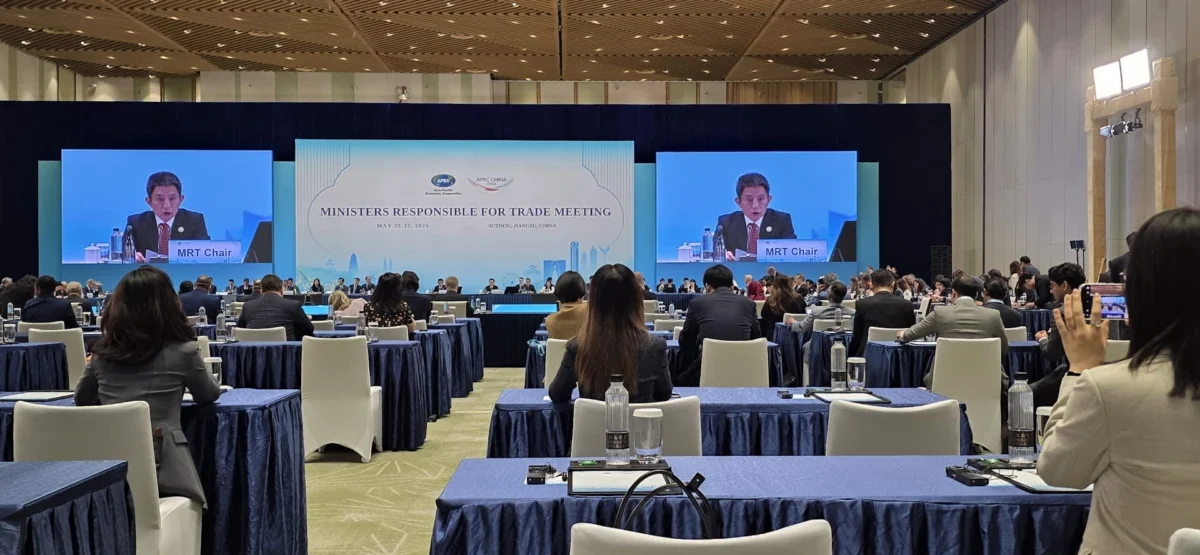
SUZHOU, China – The Asia-Pacific Economic Cooperation (APEC) trade ministers’ meeting commenced on Friday, May 22, 2026, in the historic and economically vibrant city of Suzhou, China, with a resonant call for enhanced regional cooperation amidst a complex global economic landscape. China’s International Trade Representative, Li Chenggang, presided over the opening session, urging member economies to "send a strong message to the world" in unwavering support of multilateralism and collaborative economic growth. The high-level gathering, a critical platform for fostering trade and investment across the Asia-Pacific, is slated to conclude on Saturday, May 23.
Li Chenggang, who also holds the rank of Vice Commerce Minister, stepped into the role of chairing the opening meeting due to the unavailability of China’s Commerce Minister, Wang Wentao, who was attending to "urgent official business," as conveyed through a CNBC translation of Li’s remarks in Chinese. Li’s presence underscored the continuity and strategic importance China places on APEC, a forum where the role of International Trade Representative holds a full ministerial rank, signifying the weight of the country’s commitment to regional economic integration and dialogue.
The Geopolitical and Economic Backdrop: A Week of Significant Engagements
The Suzhou meeting unfolds barely a week after a pivotal summit between U.S. President Donald Trump and Chinese President Xi Jinping in Beijing. This bilateral engagement had served as a crucial precursor, setting a tone of cautious optimism in U.S.-China trade relations, which have been marked by periods of intense friction and strategic competition. The Beijing summit yielded tangible outcomes, notably China’s agreement to place its first major order of Boeing aircraft in nearly a decade, signaling a potential thaw in a key American export sector. Furthermore, China committed to an annual purchase of $17 billion worth of U.S. agricultural products through 2028, a significant boost for American farmers and a gesture aimed at addressing long-standing trade imbalances.
These agreements, while bilateral in nature, cast a long shadow over the APEC discussions, offering a glimpse into the potential for de-escalation and pragmatic cooperation even between major economic powers. Li Chenggang, in his opening address, subtly referenced this broader context, emphasizing that while APEC itself is not a venue for direct negotiations, it "should play a guiding role in economic and trade discussions." He further stressed the imperative for APEC members to "accelerate implementation and see results early" for consensus that has already been achieved, highlighting a desire for tangible progress beyond mere rhetoric.
APEC’s Enduring Role and China’s Vision for Regional Cooperation
APEC, established in 1989 in Australia, began as an informal forum for discussions on free trade and economic cooperation among 12 founding members, including the United States. Over the decades, it has evolved into a multilateral trade organization comprising 21 economies, encompassing a vast and diverse region that accounts for approximately 60% of global GDP and nearly half of world trade. China, Hong Kong, and "Chinese Taipei" joined the forum in 1991, further solidifying its pan-Pacific reach.
China, as a major economic power and a strong advocate for multilateralism, views APEC as an indispensable platform for fostering open trade, facilitating investment, and promoting sustainable and inclusive growth across the Asia-Pacific. Li Chenggang’s remarks in Suzhou resonated with China’s consistent messaging regarding global economic governance. Beijing has often positioned itself as a champion of open markets and multilateral frameworks, particularly as some other major economies have shown inclinations towards protectionist measures or bilateral trade deals.
For China, hosting the APEC trade ministers’ meeting in Suzhou, a city renowned for its industrial prowess, innovation, and rich cultural heritage, serves as a symbolic gesture of its commitment to regional integration. Suzhou, a major economic hub in Jiangsu province, exemplifies China’s rapid economic development and its increasing interconnectedness with the global economy, making it an apt venue for discussions on future trade trajectories.
Key Themes and Agenda for the Meeting
The APEC trade ministers’ meeting typically addresses a broad spectrum of issues pertinent to regional economic prosperity. While specific details of the agenda were not fully released ahead of time, informed analysts suggest several key themes would dominate discussions:
- Strengthening the Multilateral Trading System: Against the backdrop of global trade uncertainties and the rise of protectionist sentiments, APEC members are expected to reaffirm their commitment to a rules-based, open, transparent, and non-discriminatory multilateral trading system, with a particular focus on the World Trade Organization (WTO) reform agenda.
- Digital Economy and Innovation: The rapid growth of the digital economy presents both immense opportunities and significant challenges. Discussions likely centered on facilitating cross-border data flows, harmonizing digital trade regulations, addressing digital divides, and promoting innovation for economic growth.
- Sustainable and Inclusive Growth: APEC’s commitment to the Putrajaya Vision 2040, which outlines long-term goals for an open, dynamic, resilient, and peaceful Asia-Pacific community, includes a strong emphasis on sustainability. Topics such as green trade, circular economy principles, energy transition, and ensuring that the benefits of trade are broadly shared among all segments of society, including micro, small, and medium enterprises (MSMEs), women, and youth, were high on the agenda.
- Supply Chain Resilience: The recent global disruptions, including the COVID-19 pandemic and geopolitical tensions, have exposed vulnerabilities in global supply chains. Ministers were expected to explore strategies for enhancing supply chain resilience, diversification, and efficiency to better withstand future shocks.
- Regional Economic Integration: Progress towards a Free Trade Area of the Asia-Pacific (FTAAP) remains a long-term aspiration for APEC. While not an immediate negotiation point, discussions would likely focus on building pathways towards deeper regional integration, potentially through the convergence of existing regional trade agreements like the Comprehensive and Progressive Agreement for Trans-Pacific Partnership (CPTPP) and the Regional Comprehensive Economic Partnership (RCEP).
Perspectives from Key Delegations
The United States delegation to the Suzhou meeting was led by Ambassador Rick Switzer, the Deputy United States Trade Representative. The U.S., as one of APEC’s founding members, has historically advocated for open markets, fair competition, and robust intellectual property protection. Ambassador Switzer’s likely message would have reiterated these core American trade principles, while also emphasizing the importance of transparency and adherence to international trade rules. The recent U.S.-China trade agreements would likely be highlighted as examples of pragmatic engagement, albeit within a broader context of ongoing strategic competition. The U.S. would also likely underscore its commitment to working with APEC partners to address non-market policies and practices that distort global trade.
From the Chinese perspective, Li Chenggang’s emphasis on "cooperation" and "accelerated implementation" signals Beijing’s desire for APEC to serve as a stabilizing force in global trade. China’s vision for APEC often includes promoting infrastructure connectivity through initiatives like the Belt and Road, fostering digital infrastructure development, and enhancing capacity building across developing economies within the region. Beijing also seeks to counter narratives that portray China’s economic rise as a threat, instead framing it as an opportunity for shared prosperity through multilateral frameworks.
Other APEC member economies, ranging from Japan and South Korea to Australia, New Zealand, and the ASEAN nations, would likely express a collective desire for predictability and stability in the global trading environment. Many of these economies are highly dependent on international trade and investment flows and have a vested interest in mitigating the impact of U.S.-China trade tensions. Their statements would likely underscore the importance of maintaining open supply chains, diversifying trade relationships, and leveraging APEC as a forum for constructive dialogue to resolve economic disagreements. There would also be a strong push for progress on issues directly impacting their national interests, such as market access for specific goods and services, investment protections, and cooperation on climate-related trade policies.
Economic Implications and Market Reactions
The recent U.S.-China agreements, particularly the Boeing aircraft order and the agricultural purchases, were generally met with cautious optimism by global markets. The aerospace sector, in particular, saw a positive outlook for Boeing, which had faced reduced orders from China amidst trade tensions. The commitment to agricultural purchases was welcomed by U.S. farmers, who had borne the brunt of retaliatory tariffs. These agreements, even if partial, signaled a willingness by both economic giants to find common ground, reducing immediate downside risks associated with a complete decoupling.
For the broader APEC region, the stability in U.S.-China relations is paramount. The two economies represent the largest trading partners for many APEC members, and their bilateral disputes have ripple effects across global supply chains and investment decisions. The APEC meeting in Suzhou, by fostering dialogue and consensus on regional trade principles, aims to reinforce a sense of collective responsibility for maintaining a stable and prosperous Asia-Pacific. Analysts would be closely watching the communiques and declarations emerging from Suzhou for signals regarding future trade policies, particularly concerning digital trade, environmental goods and services, and investment facilitation. The meeting’s outcomes could influence investor confidence, trade volumes, and regional economic growth projections in the coming months.
Challenges and Opportunities for Multilateralism
APEC, like other multilateral bodies, faces the ongoing challenge of maintaining its relevance and effectiveness in an era of shifting geopolitical alignments and a resurgence of economic nationalism. While it lacks the binding enforcement mechanisms of a body like the WTO, its strength lies in its ability to foster dialogue, build consensus, and promote voluntary commitments among diverse economies.
The Suzhou meeting represented an opportunity for APEC to demonstrate its capacity to guide economic and trade discussions, as Li Chenggang articulated. By focusing on areas of common interest – such as digital transformation, sustainable development, and supply chain resilience – APEC can continue to serve as a vital incubator for innovative solutions and best practices that can later inform broader international agreements. The emphasis on "accelerating implementation" suggests a drive to translate discussions into concrete actions, thereby enhancing the forum’s credibility and impact.
Looking Ahead: The Path to Greater Integration
As the APEC trade ministers’ meeting concludes on Saturday, the focus will shift to the outcomes and the path forward. The joint statement or declaration issued by the ministers will be scrutinized for commitments to specific initiatives, renewed vows for open trade, and shared understandings on navigating the complex global economic environment.
The long-term vision for APEC, enshrined in documents like the Putrajaya Vision 2040, continues to guide its work towards an open, dynamic, resilient, and peaceful Asia-Pacific community. This includes goals for trade and investment, innovation and digitalization, and strong, balanced, secure, sustainable, and inclusive growth. The Suzhou meeting represents another step in this ongoing journey, a testament to the enduring belief among its members that collective action and cooperation are essential for shared prosperity in the Asia-Pacific and beyond. The ability of the forum to bridge differences, particularly between economic giants like the U.S. and China, will be a critical determinant of its continued success and influence in shaping the future of global trade.
