

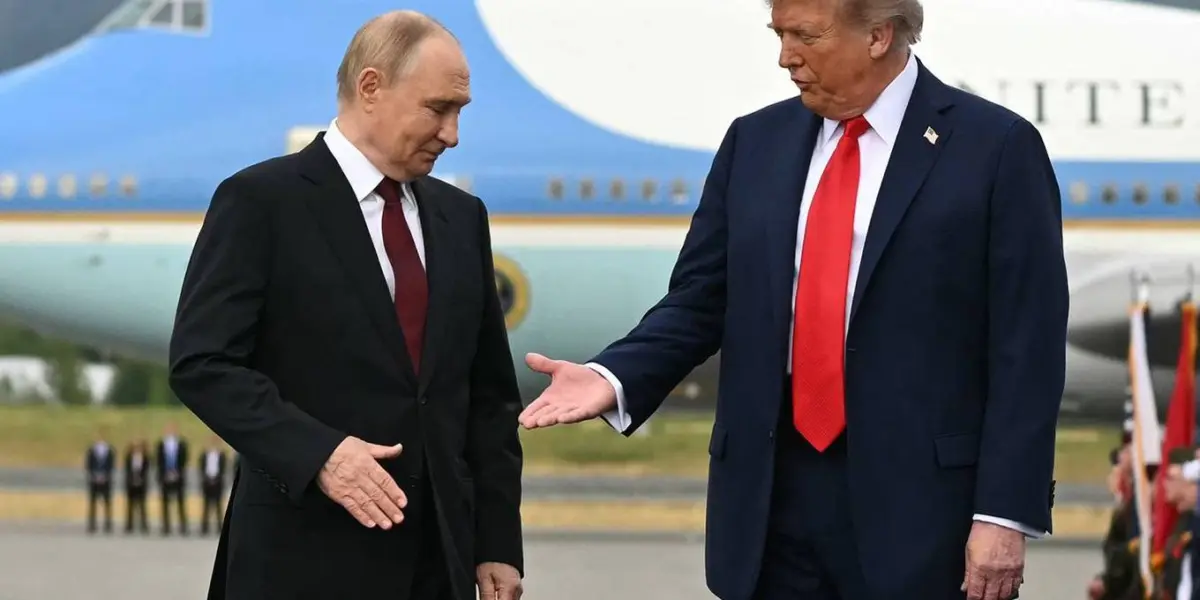
NEW YORK – The potential for a significant geopolitical shift is emerging as whispers of a grand bargain between the United States and Russia gain traction, centered on lucrative oil and gas deals that could, in effect, see Ukraine become a pawn in a larger strategic game. While such an arrangement might be perceived by some as a pragmatic economic maneuver, it is fraught with peril, carrying the inherent risk of spectacularly backfiring due to Vladimir Putin’s well-documented history of transactional betrayals and his broader geopolitical ambitions that extend far beyond Ukraine to encompass Europe.
At the heart of this unfolding scenario is a perceived eagerness from President Donald Trump and his inner circle to mend relations with Russia, a move seemingly motivated by the allure of substantial energy-sector agreements. This pursuit of economic advantage, however, runs the risk of directly fueling Russian President Vladimir Putin’s long-standing strategy to systematically isolate Ukraine. The implication is that by making Ukraine’s continued defense prohibitively costly for its European allies, the resolve and popular support for Kyiv within Europe could gradually erode, leaving Ukraine vulnerable and strategically diminished.
The Shadow of Russian Energy and Geopolitical Ambition
Russia, under Vladimir Putin, has consistently leveraged its vast energy resources as a potent geopolitical tool. For decades, Moscow has sought to maintain and expand its influence over European energy markets, often using its position as a primary supplier to exert political pressure. The proposed oil and gas deals with the United States, if they materialize and come at the expense of Ukraine’s security, would represent a significant victory for Putin, consolidating Russia’s energy dominance and potentially weakening the transatlantic alliance that has been a bulwark against Russian aggression.
The historical context of Russian foreign policy under Putin is crucial here. His tenure has been marked by a series of assertive actions, including the annexation of Crimea in 2014 and the ongoing conflict in eastern Ukraine. These actions have often been preceded or accompanied by diplomatic maneuvers and economic inducements designed to sow division and weaken opposition. Putin’s approach is characterized by a transactional pragmatism, where alliances and agreements are often viewed as temporary instruments to achieve larger, long-term objectives. The pattern suggests that once a deal is struck and immediate gains are secured, Russia’s strategic calculus shifts towards exploiting any perceived weakness or opportunity for further expansion.
Timeline of Russian Assertiveness and Western Responses
To understand the potential ramifications of such a US-Russia energy deal, a brief chronological overview of Russia’s recent assertive actions and the international community’s responses is illuminating:
- 2008: Russia-Georgia War. This conflict demonstrated Russia’s willingness to use military force to assert its influence in its near abroad.
- 2014: Annexation of Crimea and the start of the conflict in Donbas. Following Ukraine’s Maidan Revolution, Russia annexed Crimea and supported separatists in eastern Ukraine. This triggered widespread international condemnation and sanctions from the US and EU.
- 2015: Minsk Agreements. Efforts were made to de-escalate the conflict in Donbas through diplomatic agreements, but implementation has been inconsistent and largely stalled.
- 2016 onwards: Continued Russian interference in Western elections and ongoing hybrid warfare tactics aimed at destabilizing adversaries.
- 2019-2021: Gradual increases in Russian military presence near Ukraine’s borders, coupled with demands for security guarantees from NATO.
- February 2022: Full-scale Russian invasion of Ukraine. This marked a dramatic escalation of the conflict, leading to unprecedented sanctions and a renewed commitment from Western allies to support Ukraine.
Throughout this period, Western policy has largely been characterized by a combination of sanctions, diplomatic engagement, and military aid to Ukraine. However, the proposed energy deals could signal a significant recalibration of this approach, potentially prioritizing economic ties with Russia over the long-term security of Ukraine and the broader European order.
Supporting Data and Economic Considerations
The economic dimension of this potential bargain cannot be overstated. Russia is one of the world’s largest producers of oil and natural gas, and its energy exports are a critical component of its national budget and geopolitical leverage.
- Russian Energy Exports: Prior to the full-scale invasion in 2022, Europe was heavily reliant on Russian natural gas, importing approximately 40% of its total gas consumption from Russia. Oil exports were also significant.
- US Energy Production: The United States has become a major global energy producer, particularly in natural gas, and has actively sought to expand its export markets.
- Market Dynamics: The global energy market is complex and influenced by a multitude of factors, including supply and demand, geopolitical stability, and investment in infrastructure. Any significant shift in supply or demand patterns, particularly involving major players like Russia and the US, could have profound ripple effects.
- Potential for Price Volatility: A US-Russia energy agreement could theoretically stabilize global energy prices in the short term by increasing supply. However, it could also create new dependencies and vulnerabilities, potentially leading to greater price volatility in the long run, especially if Russia leverages its increased market share for political gain.
- Economic Impact on Ukraine: Ukraine, which is not a major energy producer, relies heavily on energy imports and transit fees. A shift in European energy policy that reduces reliance on Ukrainian transit routes or diminishes Western support for Ukraine’s energy security could have severe economic consequences for the country.
Inferred Reactions and Statements from Related Parties
While direct statements confirming such a deal are unlikely to be made public prematurely, the geopolitical landscape allows for reasoned inferences about potential reactions:
- Ukrainian Government: Kyiv would almost certainly view any such US-led concession to Russia as a profound betrayal and a direct threat to its sovereignty and territorial integrity. Statements would likely be impassioned, emphasizing the human cost of Russian aggression and the importance of continued international solidarity.
- European Allies: Many European nations, particularly those in Eastern Europe with direct experience of Russian influence, would express deep concern and potentially strong opposition. Their reliance on Russian energy, though decreasing in some cases, remains a sensitive issue, and they would likely fear a resurgence of Russian geopolitical power. Some might cautiously explore economic opportunities but would be wary of the broader implications.
- NATO: The North Atlantic Treaty Organization would likely be deeply divided. While some members might see potential for reduced tensions with Russia, others would view it as a capitulation that undermines the alliance’s collective security principles and its commitment to defending member states and partners.
- US Congress and Domestic Critics: Within the United States, such a move would likely face significant bipartisan opposition, particularly from those who view Russia as a persistent threat and advocate for strong sanctions and robust support for Ukraine. Concerns about national security and the reliability of Russia as a partner would be paramount.
- Russian Government: Moscow would undoubtedly celebrate such an agreement as a major diplomatic and strategic victory, portraying it as a testament to Putin’s diplomatic acumen and the United States’ willingness to prioritize economic interests over ideological concerns.
Broader Impact and Implications: A Domino Effect?
The potential consequences of a US-Russia energy bargain that sacrifices Ukraine’s security are far-reaching and could fundamentally alter the global geopolitical landscape.
- Erosion of International Norms: Such a deal would signal a departure from established international norms that condemn territorial aggression and advocate for the sovereignty of nations. It could embolden other authoritarian regimes to pursue territorial expansion or exert undue influence over their neighbors, believing that major powers are willing to overlook such actions for economic gain.
- Weakening of the Transatlantic Alliance: A US move that appears to abandon a key ally like Ukraine would significantly strain relations with European partners. It could lead to a fragmentation of Western policy towards Russia, with individual European nations pursuing their own economic interests, thereby diminishing the collective bargaining power and influence of the West.
- Empowerment of Russia: By securing lucrative energy deals and potentially weakening Ukraine, Russia would be significantly empowered. This could lead to increased Russian assertiveness in other regions, including the Arctic, the Middle East, and potentially further into Eastern Europe. Putin’s long-term strategy of restoring Russian influence would receive a substantial boost.
- The European Target: The article’s assertion that Europe will be Putin’s next target after securing gains from the US is a plausible extrapolation of his historical actions. If Ukraine is subdued or strategically neutralized, and the US signals a willingness to engage in such transactional diplomacy, Putin might see an opportune moment to exert greater pressure on European nations, particularly those still reliant on Russian energy or those perceived as less aligned with US interests. This could manifest through increased energy leverage, cyber warfare, disinformation campaigns, or even renewed military threats.
- Unpredictable Market Consequences: While the immediate goal might be to stabilize energy markets, the long-term impact of Russia’s increased leverage could be destabilizing. Putin has a track record of using energy as a weapon, and a stronger market position could give him more potent tools to do so. This could lead to energy shocks, economic instability, and increased geopolitical tension.
In conclusion, while the allure of lucrative oil and gas deals with Russia might appeal to certain economic interests, the potential geopolitical ramifications of sacrificing Ukraine’s security are profound and could lead to a more unstable and dangerous global order. Vladimir Putin’s history suggests that such a bargain would not be a stable resolution but rather a stepping stone towards further geopolitical ambitions, with Europe potentially becoming the next focus of Russian assertiveness. The long-term consequences of such a strategic miscalculation could far outweigh any short-term economic gains.
