

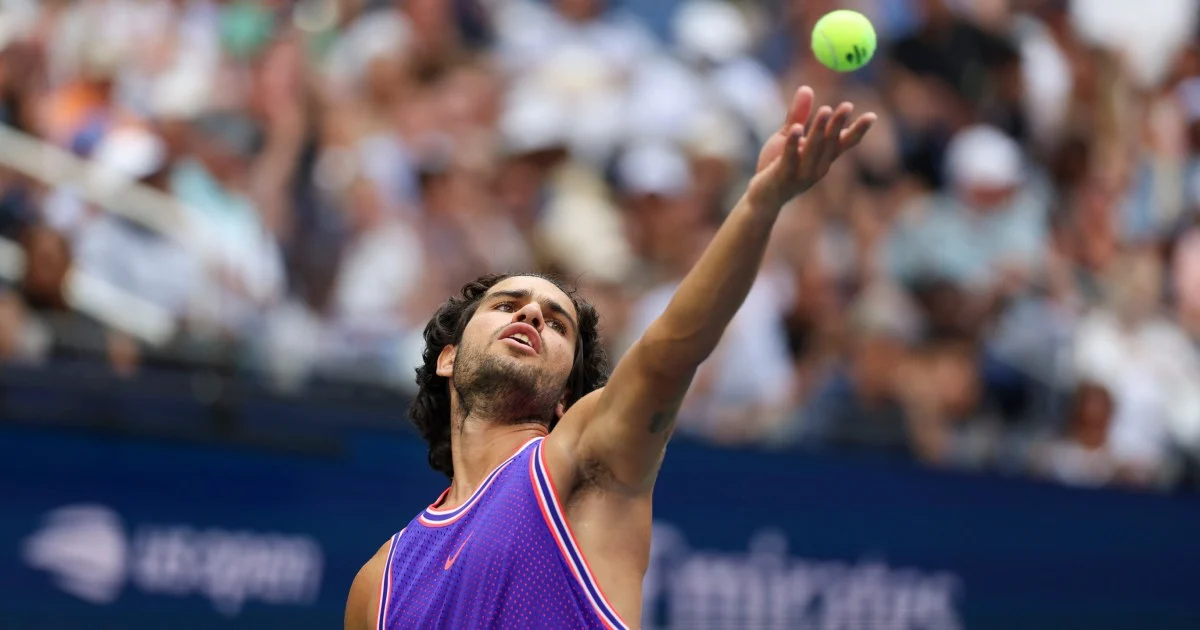
The pinnacle of the hard-court season has arrived as the 2026 US Open main draw prepares to commence this Sunday at the USTA Billie Jean King National Tennis Center. As the fourth and final Grand Slam of the calendar year, the tournament represents the ultimate proving ground for the world’s elite players, set against the electric, high-stakes backdrop of New York City. This year’s edition promises a blend of established legends seeking to fortify their legacies and a surging "new guard" of talent eager to disrupt the established order. While the atmosphere in Flushing Meadows is already reaching a fever pitch with the traditional service of Honey Deuce cocktails and the conclusion of Fan Week, the competitive landscape has been reshaped by significant injury withdrawals and a record-breaking prize pool that underscores the tournament’s status as the most lucrative event in professional tennis.
Early Silverware: Czech Pair Claims Mixed Doubles Title
Before the singles main draw even takes center stage, the first piece of major silverware has already been hoisted. In a high-quality final on Wednesday night, the Czech duo of Karolina Muchova and Jakub Mensik secured the 2026 US Open mixed doubles championship. Facing the formidable pairing of Switzerland’s Belinda Bencic and Italy’s Flavio Cobolli, Muchova and Mensik displayed superior net play and tactical synergy to claim the title.
For Muchova, the victory serves as a testament to her versatility following a career often hampered by injury, while the 20-year-old Mensik continues his rapid ascent as one of the most promising young talents in the men’s game. The victory marks a strong start for the Czech contingent in New York, setting a competitive tone for the fortnight ahead.
Tournament Schedule and Venue Logistics
The 2026 US Open is hosted at the iconic USTA Billie Jean King National Tennis Center in Flushing Meadows-Corona Park, Queens. The main draw action spans 15 days, beginning August 30 and culminating in the men’s singles final on September 13.

The business end of the tournament follows a rigorous schedule designed for maximum global viewership:
- Men’s and Women’s Quarterfinals: September 8–9
- Women’s Singles Semifinals: September 10 (Evening Session)
- Men’s Singles Semifinals: September 11 (Afternoon and Evening Sessions)
- Women’s Singles Final: September 12
- Men’s Singles Final: September 13
The venue, which features the retractable-roof Arthur Ashe Stadium—the largest tennis-specific stadium in the world—is expected to draw record attendance figures this year, surpassing the 800,000-fan mark seen in previous iterations.
Men’s Singles: Alcaraz Targets Third Title Amidst Zverev’s Surge
The men’s draw enters a fascinating phase with the absence of world number one Jannik Sinner, who was forced to withdraw due to a persistent hip ailment. This leaves the door wide open for Carlos Alcaraz to pursue his third US Open title. Alcaraz, the defending champion who famously defeated Sinner in a five-set classic in the 2025 final, arrives in New York with the weight of expectation. His ability to perform under the lights of Arthur Ashe Stadium has become the stuff of legend, and he remains the betting favorite to retain his crown.
However, the top seed for the tournament is Alexander Zverev. The German enters the US Open as the reigning Wimbledon champion, having secured his long-awaited maiden Grand Slam title in London this past June. While Zverev suffered a surprising fourth-round exit at the Cincinnati Open last week, his confidence on fast hard courts remains high. Analysts suggest that Zverev’s serve and improved mental fortitude make him the primary obstacle to Alcaraz’s dominance.
A potential "dark horse" to watch is the 22-year-old Frenchman Arthur Fils. Seeded 23rd, Fils is coming off a career-best week in Cincinnati, where he defeated American Frances Tiafoe to claim his first ATP Masters 1000 title. His explosive baseline game and newfound consistency suggest he could be a factor in the second week of the tournament.

Women’s Singles: Sabalenka’s Quest for Consistency Against Gauff and Rybakina
On the women’s side, the narrative is dominated by the rivalry between Aryna Sabalenka and home-crowd favorite Coco Gauff. Gauff, who captured her first Grand Slam title here in 2023, is looking to replicate that magic and reclaim the top spot in American tennis. Her defensive prowess and improved serve will be tested by the sheer power of Sabalenka.
Sabalenka, currently ranked world number one, has had a mercurial 2026 season. Despite her formidable ranking, she has struggled to close out major tournaments, suffering early-to-mid-round exits in Toronto, Cincinnati, Wimbledon, and Roland Garros. The Belarusian will be eyeing a third consecutive deep run in New York to silence critics who question her mental stamina in high-pressure finals.
Chasing Sabalenka for the world number one ranking is Elena Rybakina. With only 434 points separating the two at the top of the WTA rankings, the US Open could see a change in the guard. Rybakina’s flat hitting and calm demeanor are well-suited to the Flushing Meadows surface.
Other notable contenders include:
- Jessica Pegula: At 32, Pegula remains the most consistent veteran in the top 10. A perennial quarterfinalist, she will rely on her high tennis IQ and home-court advantage to finally break through to a Major final.
- Mirra Andreeva: The 19-year-old Russian sensation won her first Grand Slam at the French Open this year. Now ranked world number five, Andreeva represents the future of the sport, though she has yet to advance past the fourth round in New York.
- Alex Eala: The 21-year-old from the Philippines is making waves after winning her first WTA title in Washington this month. Although she lost her mixed doubles opener alongside Felix Auger-Aliassime, her singles form suggests she could be a giant-killer in the early rounds.
Roger Federer’s Return: A Ceremonial Presence
Speculation regarding a professional comeback for Roger Federer was officially put to rest this week. The 45-year-old Swiss maestro appeared at Arthur Ashe Stadium for an exhibition match titled "Roger Federer: An Icon Returns to New York" during Fan Week. While Federer displayed flashes of his trademark elegance, he categorically ruled out a return to the ATP Tour, drawing a distinction between himself and Serena Williams’ late-career longevity.

Federer’s visit to New York serves as a prelude to a historic milestone. On Saturday, the 20-time Grand Slam champion will travel to Newport, Rhode Island, to be formally enshrined in the International Tennis Hall of Fame. His presence at the Open has provided a nostalgic boost for fans, reminding the tennis world of his five consecutive titles in the mid-2000s.
Record-Breaking Prize Money
The 2026 US Open has set a new benchmark for financial compensation in professional sports, with a total prize pool of $108 million. This represents a significant increase from previous years, aimed at supporting players across all tiers of the draw.
Singles Compensation Breakdown:
- Winner: $5,500,000
- Finalist: $2,800,000
- Semifinalist: $1,450,000
- Quarterfinalist: $780,000
- Round of 16: $480,000
- Round of 128 (First Round): $140,000
The substantial payout for first-round losers ($140,000) is a strategic move by the USTA to help lower-ranked players offset the rising costs of travel, coaching, and physical therapy.
Notable Absences and Injury Concerns
The 2026 draw is notably thinner due to several high-profile withdrawals. In addition to Jannik Sinner, the men’s side will miss rising Brazilian star Joao Fonseca and Britain’s Jack Draper. On the women’s side, the absence of 2021 champion Emma Raducanu continues to be a talking point, as she continues to struggle with the physical demands of the tour. Other missing players include world number 15 Victoria Mboko and American Hailey Baptiste.
These absences have opened the door for several wildcards and qualifiers, potentially leading to the kind of "Cinderella story" that the US Open is famous for producing.

Broader Impact and Implications
As the 2026 US Open begins, the sport finds itself at a crossroads. The transition from the "Big Three" era is complete, and the rivalry between Alcaraz, Sinner (when healthy), and Zverev is defining the new ATP landscape. On the WTA side, the depth of talent is arguably at an all-time high, with teenagers like Andreeva and Eala challenging established champions.
Beyond the court, the tournament continues to be a massive economic engine for New York City, projected to generate over $1 billion in local economic activity. With its mix of celebrity attendance, high-fashion collaborations, and grueling night sessions, the US Open remains not just a sporting event, but a cultural phenomenon that signals the end of the global summer sports calendar. For the 128 men and 128 women in the singles draws, the next two weeks represent the chance to etch their names into the history books at the most boisterous and demanding stop on the tour.
