

The landscape of the United States automotive industry in the third quarter of 2026 has emerged as a study in stark contrasts, revealing a domestic market increasingly decoupled from global electrification trends. While international markets continue a steady, if occasionally uneven, transition toward battery-electric vehicles (BEVs), American consumers appear to be recalibrating their preferences. This shift has resulted in a "two-speed" market where traditional domestic powerhouses face double-digit declines in EV sales, while select manufacturers—most notably Toyota and Rivian—have managed to capture the remaining pockets of consumer enthusiasm.
The data for Q3 2026 suggests that the initial wave of early adopters has been fully saturated, leaving automakers to contend with a more skeptical mainstream audience concerned with charging infrastructure, price-to-utility ratios, and technological obsolescence. This cooling period has sent shockwaves through boardrooms in Detroit and beyond, forcing a re-evaluation of multi-billion-dollar electrification strategies that were set in motion at the start of the decade.
The Surprising Resurgence of Toyota
For years, Toyota was criticized by environmental advocates and industry analysts as a laggard in the electric vehicle space. The Japanese automaker’s steadfast commitment to hybrids and its perceived hesitation to embrace full electrification appeared to be a strategic misstep. However, by the third quarter of 2026, that narrative has flipped. Toyota has emerged as a dominant force in the U.S. electrified market, leveraging a diversified portfolio that meets consumers where they are.
In the first half of 2026, the Toyota bZ—an extensively re-engineered successor to the bZ4X—climbed the ranks to become the fourth best-selling electric vehicle in the United States. It currently trails only the Tesla Model Y, the Tesla Model 3, and the Hyundai Ioniq 5. With more than 25,000 units of the bZ SUV delivered so far this year, Toyota has demonstrated that a combination of brand reliability and improved vehicle specifications can overcome early skepticism.
The company’s success is not limited to a single model. The all-electric Toyota C-HR has seen over 7,500 deliveries this year, complemented by the bZ Woodland, a niche variant designed for off-road enthusiasts. Perhaps most significantly, Toyota’s broader electrified strategy—comprising hybrids, plug-in hybrids, and BEVs—accounted for a staggering 57 percent of the company’s total U.S. sales in the third quarter. This suggests that Toyota’s "multi-pathway" approach has insulated it from the volatility currently plaguing brands that bet exclusively on pure battery power.
Crisis in Detroit: The Big Three Face an EV Downturn
In contrast to Toyota’s gains, the traditional "Big Three" U.S. automakers—General Motors, Ford, and Stellantis—are navigating a disastrous period for their electric portfolios. While overall corporate sales have seen varying degrees of stability, the EV segments of these companies are in a state of freefall.
General Motors, which under CEO Mary Barra pledged $35 billion toward an all-electric future, is facing a severe reality check. Sales for the Cadillac Lyriq, once hailed as the vanguard of GM’s luxury EV push, plummeted 51 percent in the third quarter. Other models fared no better: the Vistiq saw a 34 percent decline, and the flagship Escalade IQ dropped by 29 percent. Even the entry-level Optiq struggled, with sales dipping 7 percent.
The situation is even more dire for Chevrolet’s mainstream offerings. The Equinox EV, intended to be the affordable "EV for everyone," saw Q3 sales crash by 92 percent, with only 1,905 units sold. The Blazer EV followed suit with an 84 percent drop, and the Silverado EV—a critical product for GM’s commercial and truck dominance—experienced a 58 percent decline.
Industry analysts point to a specific technological hurdle: charging speed. While competitors like BYD are deploying vehicles capable of reaching an 80 percent state of charge in roughly five minutes using advanced 800-volt architectures, most of GM’s current fleet remains limited to 150 kW charging speeds. In a market where "range anxiety" has been replaced by "charging time anxiety," this technical limitation is proving to be a significant deterrent for American buyers.
Ford Motor Company has shared in this misery. The Mustang Mach-E, which was once the primary challenger to Tesla’s dominance, saw its Q3 sales drop by 72 percent to just 5,574 units. For the year, Mach-E sales are down 59 percent, representing a massive blow to Ford’s "Model e" division.
Stellantis provides a unique data point. While the company’s overall sales increased by 3 percent through Q3, this growth was driven almost entirely by internal combustion engine (ICE) vehicles, specifically the RAM 1500 pickup. Conversely, the company’s foray into luxury electric SUVs has been met with indifference; the Jeep Wagoneer S recorded a 96 percent sales decline in Q3, moving a mere 146 units.
The Bolt 2.0 and the Struggle for Affordability
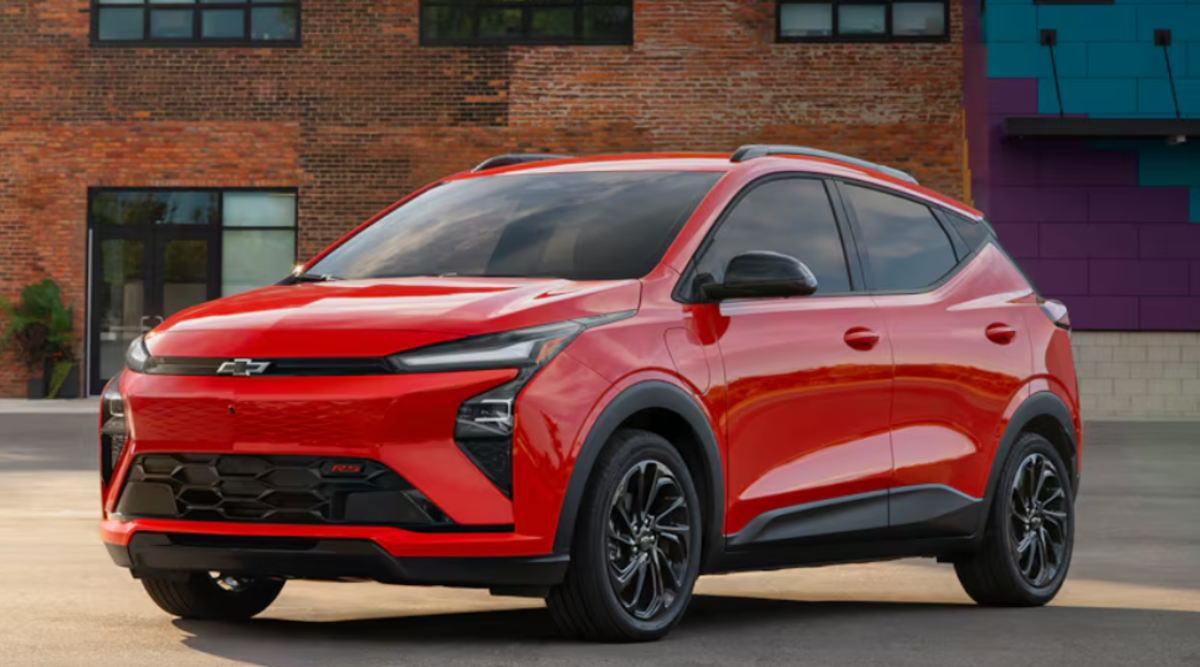
The fate of the second-generation Chevrolet Bolt EV serves as a cautionary tale for the industry. Despite being praised by critics as a superior vehicle to its predecessor in every measurable way, it has failed to find a meaningful audience. Chevrolet originally projected production of 150,000 units annually to satisfy what it believed was a hungry market for sub-$35,000 EVs.
However, with only 8,090 units sold so far in 2026, reports indicate that GM may truncate production at its Kansas City facility after only 35,000 units are built. This failure highlights a growing disconnect: while consumers express a desire for affordable EVs, the actual purchase data suggests that at the lower price points, buyers are still gravitating toward hybrid alternatives or used ICE vehicles.
South Korean Manufacturers and the Market "Chasm"
The slowdown has not spared the Hyundai Motor Group, which had previously been the most successful non-Tesla manufacturer in the U.S. EV market. Despite a strong overall year for their hybrid and conventional lineups, the company’s EV figures are deep in the red.
In Q3 2026, the Hyundai Ioniq 5 saw a 53 percent sales decrease, while the larger Ioniq 9 fell by 47 percent. Kia’s EV6 and EV9 followed similar trajectories, with the EV6 suffering a 57 percent drop in Q3. The luxury Genesis brand has been hit the hardest; the GV60 and electrified GV70 saw declines of 53 percent and 87 percent, respectively. This suggests that even brands with industry-leading charging technology and award-winning designs are not immune to the broader shift in American consumer sentiment.

Rivian: The Lone Success Story
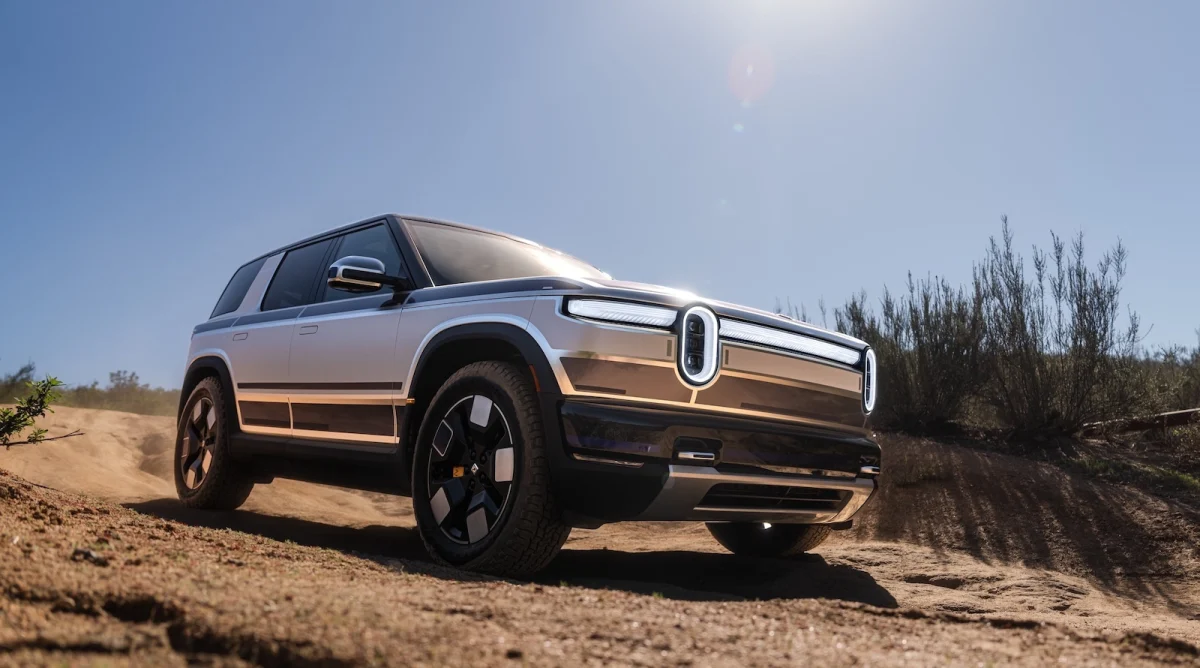
Amidst the industry-wide gloom, Rivian has emerged as a notable exception. The startup manufacturer set a new sales record in Q3 2026, largely on the strength of its R2 midsize SUV. Rivian reported the production of 19,751 vehicles and the delivery of 19,248 units in the third quarter—a 45 percent increase over the same period last year.
The R2, priced just under $60,000, appears to have hit a "sweet spot" in the market, offering a blend of lifestyle branding, modern technology, and utility that resonates with the remaining EV-curious demographic. Rivian’s ability to grow while legacy players shrink suggests that brand identity and a "born-electric" philosophy may be more attractive to current buyers than the electrified versions of existing legacy nameplates.
Tesla’s Shrinking Dominance
Tesla remains the volume leader in the U.S. market, but its invincibility is fading. By September 2026, Tesla had recorded eight consecutive months of declining year-over-year sales in the United States. While its market share within the EV segment actually increased—due to the even sharper declines of its competitors—its total volume was down 16 percent compared to the previous year. The lack of fresh high-volume models and the aging aesthetics of the Model 3 and Model Y have left the door open for specialized competitors like Rivian to peel away affluent customers.
Analysis: Economic Factors and the "Pinto" Parallel
The current volatility in the U.S. auto market is being driven by a complex mix of fuel prices and historical consumer behavior. Rising costs at the gas pump have sparked a renewed interest in fuel efficiency, but unlike the early 2020s, this has not translated into a mandate for pure EVs. Instead, consumers are moving toward midsize SUVs and hybrids.
Industry historians note a parallel to the 1970s OPEC oil embargoes. During that era, Americans briefly embraced smaller, more efficient cars like the Ford Pinto and Chevrolet Vega. However, as soon as gasoline supplies stabilized and prices moderated, the market returned to larger, less efficient vehicles. In 2026, it appears a similar trend is emerging: consumers want efficiency to hedge against high gas prices, but they are hesitant to commit to the perceived compromises of full electrification.
Future Implications for the Industry
The third quarter of 2026 may be remembered as the moment the U.S. auto industry was forced to accept a slower, more fragmented transition to electric power. For manufacturers, the stakes of misreading buyer preferences have never been higher. Billions of dollars in capital expenditures are tied to product cycles that take years to develop.
The current data suggests several likely shifts in the coming years:
- A Hybrid Renaissance: Manufacturers who maintained robust hybrid programs (like Toyota and Honda) are currently better positioned to weather the transition than those who attempted to leapfrog directly to BEVs.
- Infrastructure Priority: The failure of mainstream EVs from GM and Ford underscores that vehicle range is secondary to charging speed and reliability. Future investment will likely pivot toward 800-volt systems and NACS (North American Charging Standard) integration.
- Consolidation of EV Portfolios: Automakers are likely to prune underperforming electric models and focus on high-margin or high-volume segments rather than attempting to electrify every niche.
As 2026 draws to a close, the U.S. automotive market remains in a state of flux. While the global march toward electrification continues, the American path is proving to be uniquely non-linear, defined by a cautious consumer base and a renewed appreciation for the versatility of the internal combustion engine when paired with modern hybrid technology.
