

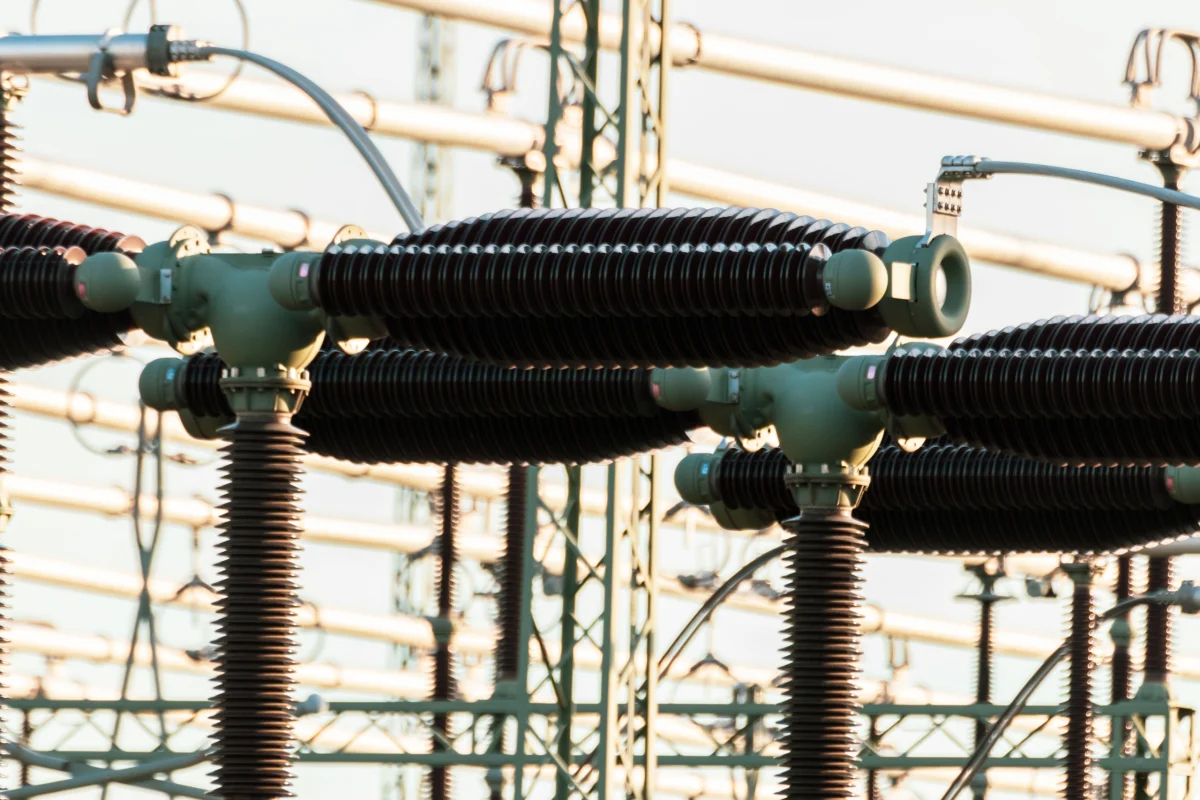
China’s massive expansion of its electrical infrastructure has become a cornerstone of the global transition toward renewable energy. As the world’s leading producer of wind turbines and solar panels, the nation has positioned itself as a primary driver of decarbonization. However, beneath this green exterior lies a significant environmental contradiction: the Chinese electric grid is currently the world’s largest source of sulfur hexafluoride (SF6), a synthetic chemical and the most potent greenhouse gas ever identified.
Sulfur hexafluoride is a colorless, odorless, and non-flammable gas that has become indispensable to modern power systems. Within the high-voltage equipment that populates the grid—such as circuit breakers and switchgear—SF6 serves as a critical electrical insulator. It prevents the dangerous arcing of electricity, ensuring that power flows safely and reliably. Despite its utility, the gas is a "climate killer" of unprecedented proportions. According to the Intergovernmental Panel on Climate Change (IPCC), SF6 is 24,300 times more effective at trapping heat in the atmosphere than carbon dioxide (CO2) on a pound-for-pound basis. Furthermore, while CO2 eventually cycles through the earth’s oceans and forests, SF6 is nearly indestructible, remaining in the atmosphere for at least 1,000 years once released.
The scale of the problem is increasingly coming into focus. A 2024 study published in the journal Nature Communications revealed that more than half of all global SF6 emissions now originate from China. While many Western nations have successfully stabilized or reduced their SF6 releases over the last two decades, China’s emissions nearly doubled between 2011 and 2021. In 2021 alone, the country released approximately 5,100 metric tons of the gas into the atmosphere. To put this into perspective, the warming impact of this pollution is equivalent to the annual greenhouse gas emissions of 29 million gasoline-powered automobiles.
The Science of a Super-Pollutant
The primary reason SF6 is used so extensively in China is the sheer scale and technical demand of its grid. To transport renewable energy from the wind-swept plains of the west to the industrial hubs of the east, China has invested heavily in Ultra-High Voltage (UHV) transmission lines. These systems operate at much higher voltages than traditional grids, requiring superior insulation to prevent catastrophic failures. SF6’s unique molecular structure makes it exceptionally stable and effective at quenching electrical arcs, a property that few other substances can match at such high voltages.
The danger arises not from the use of the gas, but from its escape. Emissions typically occur during three phases: the manufacturing of equipment, maintenance operations, and, most critically, the decommissioning of equipment at the end of its lifecycle. In many instances, when aging electrical components are replaced, the gas is simply vented into the open air rather than being captured and recycled.
By 2014, researchers within the Chinese government were already sounding the alarm, describing SF6 as a "significant potential threat to the global environment." Yet, despite these internal warnings, the pollutant has remained largely unregulated in the country’s burgeoning energy sector. Recent data from the global monitoring network indicates that 2023 saw the largest annual increase in atmospheric SF6 concentrations since record-keeping began in 1998, a trend largely attributed to the continued expansion of the Chinese power sector.
The Economic Disconnect: A Low-Cost Solution
One of the most striking aspects of the SF6 crisis in China is the relatively low cost of mitigation. An analysis conducted by Inside Climate News, based on government documents, utility reports, and academic interviews, suggests that the financial barrier to solving the problem is negligible compared to the total investment in the grid.
China’s Ministry of Ecology and Environment (MEE) has claimed that domestic utilities possess the capacity to recycle up to 90% of their waste SF6. However, independent assessments suggest a much bleaker reality. The actual recycling rate is estimated to be closer to 30%. The analysis found that China’s state-owned utilities—State Grid Corporation of China and China Southern Power Grid—could increase their recycling efforts to reach the 90% threshold for an estimated cost of just $6 million per year.
This figure represents less than 0.01% of the $70 billion that China invests annually in its electric grid. When compared to other carbon-reduction strategies, SF6 recycling offers an extraordinary return on investment. According to a 2025 U.S. Environmental Protection Agency (EPA) analysis, the cost of recycling SF6 in China is approximately 18 cents per metric ton of CO2 equivalent. In contrast, reducing CO2 emissions by installing wind turbines costs about $11 per metric ton, while solar installations can cost upwards of $31 per metric ton.
"You’re certainly getting bang for the buck if you reduce your SF6," said Sally Rand, a former EPA program manager. Despite this economic logic, the transition to a high-efficiency recycling model has been sluggish.
A History of Mitigation and Global Precedents
The path to controlling SF6 has already been paved by other industrial nations. In the late 1980s, chemical manufacturers and utilities in West Germany recognized that the venting of SF6 was an unsustainable practice. Led by the Belgian chemical firm Solvay, a collaborative effort was launched to develop recycling technologies and protocols. This initiative brought together regulators, equipment manufacturers, and environmental advocates, creating a closed-loop system for the gas.
By 1997, the German Ministry for the Environment had recognized these efforts with the European Recycling Award. Following this model, the United States and the European Union implemented their own frameworks. In the U.S., the EPA established voluntary partnership programs that encouraged utilities to track and reduce leaks. In Europe, the F-gas regulations eventually made recycling mandatory. As a result, emissions from electrical equipment in these regions dropped by two-thirds or more by 2015.
Hermann Kraehling, a retired environmental assessment leader who was instrumental in the European efforts, characterized China’s current inability to curb SF6 as a "disaster," noting that the technology for recycling is mature and readily available. While China has launched its own pilot projects—starting as early as 2007 in three provinces—the scale of implementation has failed to keep pace with the grid’s growth.
Infrastructure and Geographical Barriers
The discrepancy between China’s theoretical recycling capacity and its actual performance is partly due to the logistics of its recycling infrastructure. Unlike the United States, which often prioritizes on-site cleaning and reuse, China has leaned toward a centralized model. Currently, the country operates approximately 30 large-scale recycling centers.
While these facilities can produce high-purity gas, they are often located in provincial capitals. This creates a significant logistical hurdle for maintenance crews working in remote or rural areas. Transporting heavy, pressurized cylinders of waste gas over hundreds of miles to a centralized facility is often seen as too costly or time-consuming, leading to the "easier" but environmentally devastating choice of venting the gas.
Furthermore, a 2023 study in the Proceedings of the Chinese Society for Electrical Engineering highlighted "practical shortcomings" in the current technology used at these centers, suggesting that even when gas reaches a facility, the recovery process may not be as efficient as required.
The Shift Toward Regulation and Incentives
There are signs that the Chinese government is beginning to take the SF6 threat more seriously. In December, the Ministry of Ecology and Environment introduced a new incentive program that allows utilities to sell carbon credits if they can prove they are recycling more than 90% of their waste gas. This market-based approach is intended to reward "above-and-beyond" efforts, though experts warn that without a mandatory cap or strict oversight, incentives alone may not be sufficient.
In July 2024, the government released its National Climate Change Response Plan, which for the first time explicitly called for an SF6 management plan. The policy aims to reduce emissions of non-CO2 greenhouse gases—including SF6, nitrous oxide, and hydrofluorocarbons—by a total of 30 million metric tons of CO2 equivalent by 2030.
Ma Yue, an analyst at the Beijing-based Institute for Global Decarbonization Progress, noted that this sends a "positive policy signal." Additionally, international organizations are stepping in to assist. The German development agency GIZ has initiated a "coalition of the willing" to help emerging economies, including China, phase out or better manage SF6.
Future Outlook: Beyond Recycling
While recycling is the immediate solution, the long-term goal for the global power industry is the development of SF6-free alternatives. Some progress has been made using "clean air" technologies or mixtures of SF6 and nitrogen, which significantly reduce the warming potential of the insulating medium.
However, these alternatives are currently most viable for low-to-medium-voltage equipment. For the high-voltage and ultra-high-voltage systems that define China’s modern grid, experts estimate that fully mature, SF6-free alternatives are still 10 to 20 years away. In the interim, the focus must remain on rigorous containment and recycling.
The challenge facing China is one of coordination. As the 1990s experience in Germany proved, success requires the alignment of state-owned utilities, private manufacturers, and environmental regulators. For a nation that has shown the ability to mobilize massive resources for solar and wind power, the $6 million required to fix its SF6 problem is a minor expense that would yield a major victory for the global climate. Without immediate action, the "dirty secret" of China’s green grid will continue to undermine its contributions to the global fight against rising temperatures.
