

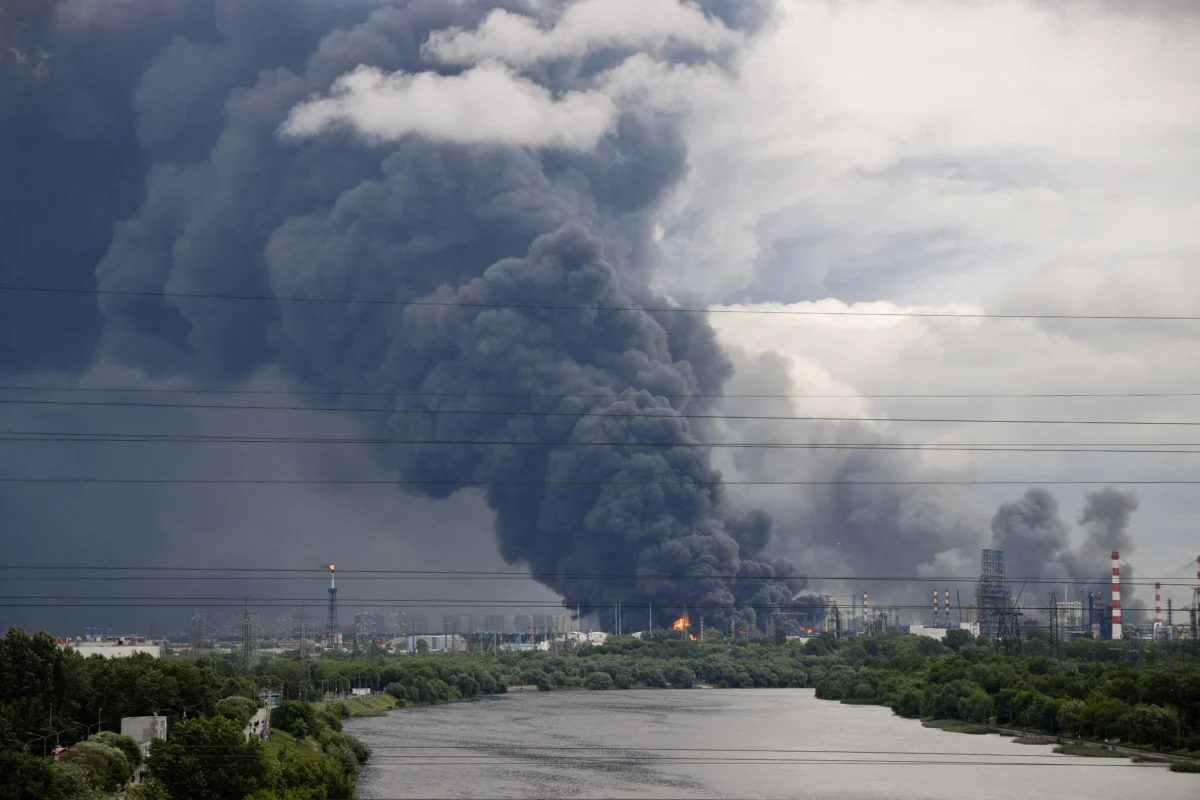
Ukraine has launched a massive and coordinated wave of drone strikes targeting critical Russian energy infrastructure, setting two oil tankers ablaze in the Sea of Azov and hitting multiple refineries and storage depots deep within Russian territory. The escalation, described by Kyiv as a campaign of "long-range sanctions," has exacerbated a burgeoning fuel crisis across the Russian Federation, where official reports now indicate that over 90 percent of regions have implemented fuel rationing or are facing severe shortages. The strikes coincide with a significant diplomatic shift following the NATO summit in Turkey, where United States President Donald Trump signaled a hardening stance against Moscow by authorizing the domestic production of Patriot missile systems within Ukraine.
The overnight operations, which took place from late Wednesday into Thursday morning, represent one of the most geographically diverse drone campaigns since the beginning of the full-scale invasion. According to Ukrainian President Volodymyr Zelenskyy and regional Russian officials, the targets spanned from the immediate border regions to industrial hubs located nearly 1,500 kilometers (930 miles) inside Russia. The most visually striking of these attacks occurred in the Sea of Azov, a strategic body of water that serves as a vital logistics corridor for the Russian military. Rostov Governor Yury Slyusar confirmed that Ukrainian kamikaze drones successfully struck two oil tankers. One vessel reportedly remained engulfed in flames hours after the strike, necessitating the emergency evacuation of all crew members.
Beyond the maritime strikes, the Ukrainian military showcased its growing long-range capabilities by striking an oil-pumping station in Ufa, the capital of the Republic of Bashkortostan. Located approximately 1,500 kilometers from the Ukrainian border, Ufa is a cornerstone of the Russian petrochemical industry, housing several major refineries operated by Bashneft. President Zelenskyy also confirmed successful hits on a reserve fuel storage facility 800 kilometers (500 miles) from the front line, as well as an oil-loading terminal in the Rostov region, roughly 200 kilometers (125 miles) from the combat zone. Additional strikes were reported at oil depots in the Tver and Stavropol regions, further stretching Russia’s domestic air defense resources.
The Geography of Attrition: A Timeline of the Strikes
The sequence of events began late Wednesday evening when Russian air defense units in the Rostov and Tver regions reported the first sightings of low-flying, long-range unmanned aerial vehicles (UAVs). By midnight, the scale of the operation became clear as explosions were reported at the Tver oil depot, a facility critical for supplying energy to the central Russian industrial heartland.
By 2:00 AM, the focus shifted to the Sea of Azov. Ukrainian maritime and aerial drones targeted the tankers, which were reportedly carrying refined fuel destined for Russian military units in the occupied southern regions of Ukraine. Governor Slyusar noted that while air defenses were active, the sheer volume of drones allowed several to penetrate the perimeter. By 4:00 AM, reports emerged from Ufa, where local residents captured footage of drones flying over the city’s massive industrial zones before a series of explosions rocked the pumping station.
In response, the Russian Ministry of Defence claimed that its air defense systems had successfully intercepted or downed 73 Ukrainian drones over various regions. However, the ministry’s statement did not account for the fires at the oil facilities or the damage to the tankers, which were verified by regional governors and social media footage. Simultaneously, Russia launched its own retaliatory strike against Ukrainian infrastructure, firing 94 long-range strike drones and two ballistic missiles. The Ukrainian Air Force reported that while 72 of these threats were neutralized through kinetic interception or electronic jamming, 19 drones and both missiles managed to strike 13 different locations, causing damage to civilian and energy infrastructure.
Economic Warfare and the Domestic Fuel Crisis
The strategic objective of Kyiv’s "long-range sanctions" is to cripple the Russian economy’s primary engine: the oil and gas sector. By targeting refineries and pumping stations rather than just crude oil wells, Ukraine is hitting the value-added segment of the industry that provides the fuel necessary for both the Russian military machine and domestic consumption. This campaign has led to a documented fuel crisis within Russia.
Official statements and local media reports from across the Russian Federation indicate that the cumulative effect of these strikes has been devastating. As of July 2026, more than 90 percent of Russian regions have reported significant shortages of petrol and diesel. In many areas, regional authorities have been forced to introduce rationing, limiting the amount of fuel a single customer can purchase. This domestic scarcity has compelled the Kremlin—traditionally one of the world’s leading oil exporters—to implement a ban on various fuel exports to ensure its own military and agricultural sectors remain operational.
Economists suggest that the disruption of the refining process creates a bottleneck that cannot be easily bypassed. While Russia can still produce crude oil, the inability to process it into usable fuel near the front lines or major population centers increases logistics costs and creates massive inflationary pressure. President Zelenskyy emphasized this point, stating that "every day of delay [in ending the war] should bring the feeling of war to where it all began—to Russia."
Diplomatic Realignment: The Trump Factor
The escalation on the ground is being mirrored by a hardening of the diplomatic landscape. A pivotal meeting took place on the sidelines of the NATO summit in Turkey between President Zelenskyy and U.S. President Donald Trump. This encounter marked a stark contrast to their previous meeting in February 2025 at the White House, which was characterized by tension and public disagreements over funding and strategy.
In a move that surprised many international observers, President Trump pledged to grant Ukraine a license to manufacture the Patriot air defense system domestically. This decision represents a qualitative shift in U.S. support, moving from the provision of finished equipment to the transfer of high-end military technology and industrial capacity. The move is seen as a way to bolster Ukraine’s long-term defense autonomy while signaling to Moscow that Western support is not waning.
When questioned about the recent Ukrainian strikes inside Russian territory, President Trump appeared to offer a pragmatic endorsement of the strategy. "It’s an escalation," Trump told reporters, "but it’s also an escalation that can help lead to an end." This rhetoric suggests that the U.S. administration may increasingly view military pressure on Russia’s internal economy as a necessary lever to force the Kremlin to the negotiating table.
The Kremlin’s Response and the "Security Zone" Threat
The Kremlin has responded to these developments with a mixture of defiance and threats of further territorial expansion. Presidential spokesperson Dmitry Peskov dismissed the notion that military pressure would lead to peace concessions, calling it a "mistaken view" held by the White House.
"We see certain misconceptions within the administration—that by escalating military pressure it can help move to a peace settlement," Peskov said during a press briefing. He warned that the ongoing strikes would only "prolong the special military operation" and suggested that Russia would respond by "creating a larger security zone."
The term "security zone" (or "sanitary zone") is a phrase frequently used by Russian officials to justify the seizure of additional Ukrainian territory. The logic presented by Moscow is that if Ukraine continues to use long-range weapons to strike Russian soil, the Russian military must push the front line further into Ukraine to put Russian cities and facilities out of reach. This rhetoric points toward a potential intensification of ground offensives in the Kharkiv and Sumy regions, as Russia attempts to create a buffer against drone launches.
Analysis of Implications
The current phase of the conflict indicates a transition toward a war of industrial and economic attrition. Ukraine’s ability to strike targets 1,500 kilometers away demonstrates a sophisticated leap in its indigenous drone technology, likely utilizing AI-guided navigation to bypass Russian electronic warfare blankets. By targeting the Sea of Azov, Ukraine is also challenging Russia’s naval dominance in a region previously considered a "Russian lake."
The domestic fuel crisis in Russia is perhaps the most significant non-kinetic outcome of the war to date. If the rationing persists or worsens, it could lead to internal social friction and hinder the Russian military’s mobility during the summer campaigning season. Furthermore, the export ban on fuel will deprive the Russian treasury of vital hard currency, complicating the funding of its war effort.
On the geopolitical stage, the burgeoning partnership between Zelenskyy and the Trump administration—centered on the Patriot manufacturing deal—suggests that the conflict is entering a "peace through strength" phase. While the Kremlin maintains that it will not be intimidated, the combined pressure of a domestic energy crisis and a modernized Ukrainian air defense infrastructure presents a significant challenge to Moscow’s long-term strategy.
As both sides prepare for the coming months, the focus remains on whether Ukraine can sustain its "long-range sanctions" and whether Russia can find a way to secure its infrastructure without diverting critical resources from the front lines. For now, the smoke rising from the Sea of Azov and the refineries of Ufa serves as a potent reminder that the geography of the war has fundamentally shifted, bringing the consequences of the invasion directly to the Russian heartland.
