

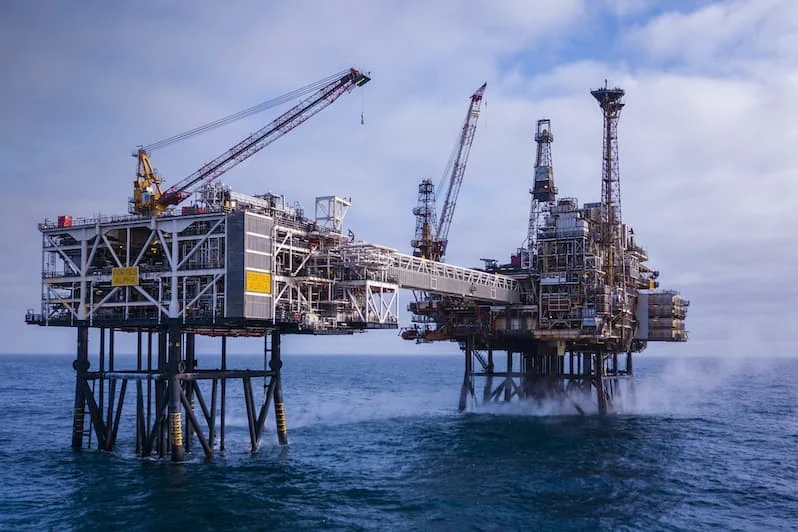
The United Kingdom stands at a pivotal juncture regarding its energy future, with the potential incoming government under Prime Minister Keir Starmer’s likely successor, Andy Burnham, poised to confront an immediate and complex decision: to sanction further exploration and drilling in the North Sea or to accelerate the nation’s commitment to renewable energy sources. This critical choice is amplified by a volatile global energy landscape, recently exacerbated by escalating geopolitical tensions and a significant disruption to oil flows.
Adding a potent, albeit controversial, dimension to this domestic debate is the intervention of U.S. President Donald Trump. Trump has publicly attributed the recent resignation of U.K. Prime Minister Keir Starmer to what he termed a "failed" energy policy. This assertion, while highly politicized, underscores the international scrutiny and pressure surrounding the U.K.’s energy strategy, particularly in light of global supply chain vulnerabilities.
The U.K.’s energy security and independence have become subjects of intense public and political discourse, a situation significantly amplified by the ongoing conflict in Ukraine. The recent outbreak of war in Ukraine sent shockwaves through global energy markets, highlighting the risks associated with over-reliance on imported fossil fuels. Now, the escalating conflict in the Middle East, specifically the disruption of oil flows through the critically important Strait of Hormuz – one of the world’s most vital oil chokepoints – has intensified these concerns. The squeeze in physical oil supply due to these geopolitical events has underscored the strategic importance of domestic energy production for the U.K.
The Economic and Political Divide on Domestic Oil Production
Business leaders across the U.K. have been vocal in their arguments that domestic oil production in the North Sea is not merely an economic consideration but a matter of national security. They contend that continued investment in these fields is essential to insulate the nation from the volatility of international energy markets and to ensure a reliable supply of energy for businesses and households.
However, this pragmatic approach faces a significant political divide within the U.K. political establishment. While it is understood that U.K. Finance Minister Rachel Reeves privately favors the authorization of new drilling licenses, her colleague, Energy Secretary Ed Miliband, has consistently advocated for a strong pivot towards clean energy solutions. Miliband, who could potentially succeed Reeves as Chancellor of the Exchequer under a new Labour government, represents a faction within the party that prioritizes environmental commitments and a rapid transition to renewables over continued fossil fuel extraction.

This internal disagreement is mirrored and amplified by the positions of major trade unions. Two of the U.K.’s most influential unions, Unite the Nation and GMB, are actively campaigning for the continuation of North Sea drilling. Their primary concern is the potential impact on jobs within the sector, arguing that an abrupt halt to exploration and production could lead to significant job losses and economic disruption in communities heavily reliant on the oil and gas industry.
Andy Burnham, widely anticipated to assume the premiership in July if he faces no significant challenges from his Labour Party colleagues, is therefore under immediate pressure to articulate a clear and decisive position on this contentious issue. The markets, sensitive to any indication of future energy policy, are closely watching his pronouncements, as any perceived indecisiveness could lead to further market volatility.
Key Fields at the Heart of the Debate: Rosebank and Jackdaw
Central to the ongoing debate are two major potential oil and gas fields located in Scottish waters: Rosebank and Jackdaw. These fields represent significant prospects for boosting the U.K.’s domestic energy supply. However, their development also presents a direct challenge to the U.K.’s climate change commitments and its ambitious net-zero targets.
The potential for these fields to increase U.K. production has intensified pressure on the Scottish government. First Minister John Swinney, in an interview with CNBC, acknowledged the delicate balance that must be struck. "There is a changing balance that’s got to be struck," Swinney stated, emphasizing the ongoing need for fossil fuels. "We are going to have to utilize oil and gas for some years to come. If there is uncertainty about the security of supply, or security of supply is undermined because of exorbitant cost of the effects of the conflict in Iran, these are material factors that have got to be borne in mind," he elaborated.
Swinney’s comments reflect a pragmatic acknowledgement of current energy realities. The U.K.’s energy transition is not without its immediate consequences. A poignant symbol of this shift is the closure of the Grangemouth oil refinery, which was once Scotland’s largest industrial employer. The refinery ceased operations in April 2025, resulting in the loss of hundreds of jobs.
The closure of Grangemouth has had tangible impacts on the U.K.’s energy infrastructure. Swinney highlighted this directly, stating, "The refinery had been a source of production of jet fuel, so we’re now importing jet fuel because of a closure of a refinery." This reliance on imports has created new vulnerabilities, as demonstrated by recent disruptions. "We’ve now got uncertainty over jet fuel because of the conflict in the Middle East, and that will affect the ability of our economy to function," Swinney added, underscoring the interconnectedness of global events and domestic supply chains.
Historical Context: A Shifting Energy Landscape
The U.K.’s relationship with North Sea oil and gas dates back to the 1960s. Exploration and production surged in the 1970s and 1980s, making the U.K. a significant energy producer and contributing substantially to its economy. The North Sea accounted for a significant portion of the U.K.’s oil and gas needs for decades, fostering a robust industrial sector and creating numerous jobs.

However, as the fields have matured, production has naturally declined. The U.K. has transitioned from being a net exporter of oil and gas to a net importer, albeit still with significant domestic production. This shift has coincided with growing global awareness of climate change and the imperative to decarbonize energy systems.
The U.K. has been a leader in setting ambitious climate targets, including the legally binding goal of achieving net-zero greenhouse gas emissions by 2050. This commitment has driven significant investment and policy focus on renewable energy sources such as wind, solar, and tidal power. The development of offshore wind farms, in particular, has seen substantial growth and success.
Supporting Data: Production, Reserves, and Renewables
The U.K. currently produces approximately 700,000 barrels of oil equivalent per day, a significant decrease from its peak production levels. Despite this decline, the North Sea still holds considerable reserves, estimated to contain billions of barrels of oil and gas. The potential of fields like Rosebank and Jackdaw could add several hundred thousand barrels per day to U.K. production in the coming years if developed.
- North Sea Oil and Gas Production: Historically, the North Sea provided a substantial portion of the U.K.’s energy needs. While production has declined from its peak in the late 1990s, it remains a significant contributor. For example, in 2022, the U.K. Continental Shelf (UKCS) produced an estimated 1.1 million barrels of oil equivalent per day, with approximately 40% coming from gas and 60% from oil. This figure, however, represents a fraction of its historical output.
- Remaining Reserves: Estimates of remaining reserves vary, but industry bodies suggest that billions of barrels of oil and gas are still economically recoverable from the North Sea. The viability of extracting these reserves is influenced by global oil prices, technological advancements, and regulatory frameworks.
- Renewable Energy Growth: The U.K. has made significant strides in renewable energy. In 2023, renewables accounted for approximately 42% of electricity generation in the U.K., with offshore wind being a dominant contributor. The U.K. has the largest installed offshore wind capacity in the world.
- Energy Security Concerns: Geopolitical events have highlighted the U.K.’s reliance on imported energy. In 2022, the U.K. imported approximately 40% of its total energy consumption, with a significant portion of gas being imported via pipelines and liquefied natural gas (LNG) shipments.
Analysis of Implications: A Tightrope Walk Between Security and Sustainability
The decision facing the U.K. government is not merely an economic or environmental one; it is a complex balancing act with profound implications for national security, economic stability, and the U.K.’s international climate commitments.
Arguments for continued North Sea exploration and drilling often center on:
- Energy Security: Domestic production provides a buffer against global supply shocks and price volatility. This is particularly pertinent given the current geopolitical climate.
- Economic Benefits: Continued investment can support jobs in the oil and gas sector, contribute to tax revenues, and sustain the U.K.’s industrial base.
- Transition Fuels: Proponents argue that North Sea oil and gas can act as "transition fuels," providing a bridge from current fossil fuel reliance to a fully renewable energy system, ensuring energy needs are met during the interim.
- Technological Advancement: Developing remaining reserves could foster innovation in carbon capture and storage (CCS) technologies, which are crucial for decarbonizing industrial processes.
Arguments for prioritizing renewables and phasing out North Sea exploration emphasize:
- Climate Imperative: Continued fossil fuel extraction directly contradicts the scientific consensus on climate change and undermines the U.K.’s net-zero commitments.
- Long-Term Sustainability: Investing heavily in renewables offers a path to genuine energy independence and a sustainable energy future, free from the volatility of global fossil fuel markets.
- Job Creation in Green Sectors: While jobs in oil and gas are at risk, significant job creation opportunities exist in the rapidly expanding renewable energy sector.
- International Leadership: A decisive move towards renewables would reinforce the U.K.’s position as a global leader in climate action.
The decision on Rosebank and Jackdaw, and the broader policy on North Sea licensing, will inevitably shape the U.K.’s energy trajectory for decades to come. It is a decision that will be scrutinized not only by domestic stakeholders but also by international partners and the global scientific community. The incoming government will need to navigate these competing pressures with a clear strategy that balances the immediate need for energy security with the long-term imperative of climate action. The coming months will be critical in defining the U.K.’s path forward in an increasingly uncertain global energy landscape.
