

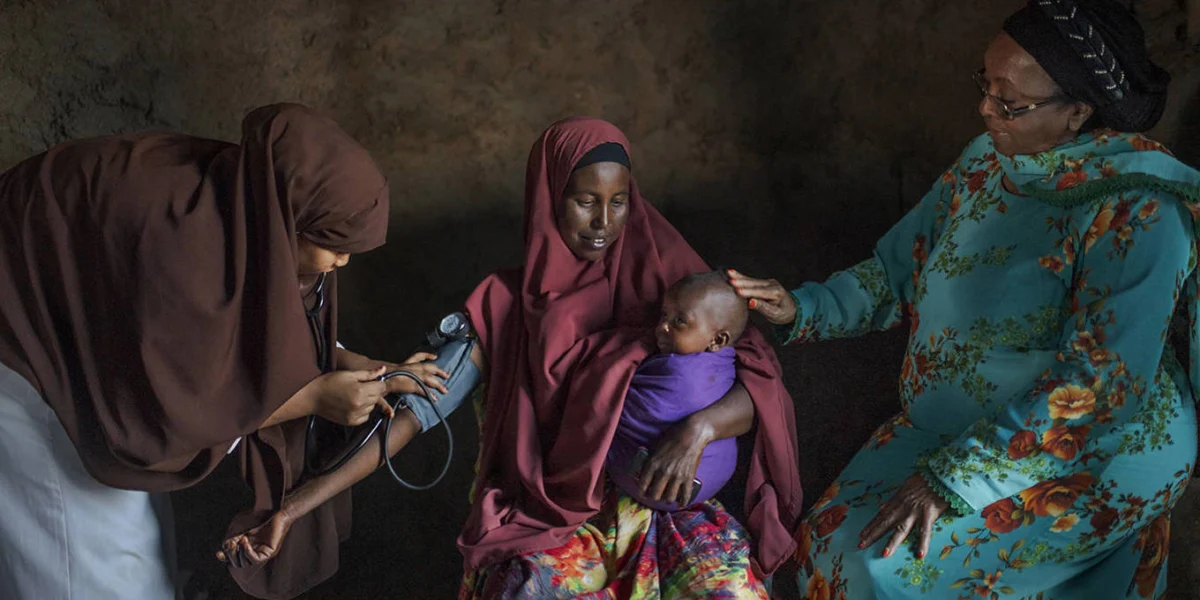
As foreign aid declines, policymakers in lower-income countries must increasingly focus on making better use of scarce resources. When it comes to maternal mortality, that means investing in simple, proven, and affordable interventions for postpartum hemorrhage, pre-eclampsia, and obstructed labor.
In early June, a significant financial commitment was made to bolster women’s health globally, with a particular emphasis on underfunded areas like maternal care in Africa. Melinda French Gates pledged $215 million through her foundation to address critical gaps in healthcare access and outcomes for women. This announcement arrives at a pivotal juncture. The stark reality is that every day, more than 700 women worldwide die during or immediately following pregnancy and childbirth. This statistic, highlighted by the World Health Organization (WHO), is particularly devastating given that many of these fatalities are entirely preventable with accessible, evidence-based medical interventions.
The disproportionate burden of maternal mortality falls heavily on specific regions. Approximately 87% of these tragic deaths occur in Southern Asia and Sub-Saharan Africa. Sub-Saharan Africa alone accounts for nearly 70% of the global maternal death toll, underscoring the urgent need for targeted strategies in these areas. In stark contrast, high-income countries exhibit significantly lower maternal mortality rates, although persistent inequities are a concern even within these nations. For instance, in the United States, Black women face a maternal mortality risk that is more than three times higher than that of white women, a disparity that points to systemic issues in healthcare access and quality.
The landscape of global health funding is shifting, with a noticeable decline in foreign aid. This trend necessitates a renewed focus on domestic resource mobilization and maximizing the efficiency of existing budgets. The call for increased local funding is growing louder, placing a premium on cost-effective solutions. Rather than exclusively investing in expensive, hospital-centric models of care, policymakers are being urged to prioritize and scale up funding for interventions that are both affordable and demonstrably effective. These interventions should directly address the leading causes of maternal mortality, which include postpartum hemorrhage, hypertensive disorders such as pre-eclampsia, complications arising from unsafe abortions, obstructed labor, and sepsis. The challenge today is no longer the absence of solutions; it is the critical task of ensuring that these proven interventions reach every woman in need, particularly those in resource-constrained environments.
Addressing Postpartum Hemorrhage: Simple Solutions, Monumental Impact
During a project in Nigeria focused on preventing postpartum hemorrhage (PPH)—the primary cause of maternal death during childbirth—the profound impact of simple, affordable interventions became vividly clear. PPH occurs when a woman experiences excessive bleeding after giving birth, and its prevention and management are paramount to saving lives.
One of the most effective strategies is the active management of the third stage of labor. This intervention can reduce severe postpartum hemorrhage by an estimated 60-70%. It involves administering medication to help the uterus contract after childbirth. Concurrently, healthcare workers actively manage the delivery of the placenta and assess the mother’s uterine tone. While oxytocin is the preferred drug for uterine contraction, its storage can be problematic in low-resource settings due to temperature control challenges. Misoprostol emerges as a highly effective and affordable alternative. It is heat-stable and can be administered orally, making it a more accessible option in diverse healthcare environments.
Accurate measurement of blood loss is another critical component in managing PPH. A simple plastic blood collection drape, placed beneath the woman immediately after delivery, can effectively collect and quantify blood loss. This seemingly basic tool provides vital information for timely intervention. For women who develop shock following PPH, the non-pneumatic anti-shock garment (NASG) offers a life-saving intervention. By applying pressure to the lower limbs and abdomen, the NASG helps redirect blood flow to vital organs, stabilizing the patient while awaiting essential blood transfusions or surgical intervention. The widespread availability and training for these simple yet effective tools can dramatically alter outcomes in PPH cases.
Combating Pre-eclampsia: Early Detection is Paramount
Pre-eclampsia, a serious hypertensive disorder of pregnancy, affects approximately 3-8% of women globally. Left untreated, it can progress to eclampsia, characterized by seizures, posing a significant threat to both maternal and fetal well-being. Fortunately, one of the most effective strategies for managing pre-eclampsia is also one of the simplest: regular blood pressure monitoring.
A notable program, the Community-Level Interventions for Pre-eclampsia (CLIP) initiative, demonstrated the power of community-based healthcare workers. Between 2014 and 2017, this program trained community health workers to conduct home visits for pregnant women. These visits included blood pressure monitoring and the use of mobile tools and pictorial guides to identify warning signs of pre-eclampsia. A randomized controlled trial of the CLIP approach, designed by the University of British Columbia, yielded significant improvements in the early detection and management of pre-eclampsia in Mozambique, Pakistan, and India. In these trials, community health workers were equipped to treat low-risk cases with antihypertensives and magnesium sulfate, while facilitating the urgent referral of high-risk patients to appropriate health facilities. This model highlights how empowering frontline health workers with simple diagnostic and treatment protocols can have a far-reaching impact.
Safe Abortion Access: A Public Health Imperative
Complications arising from unsafe abortions represent another significant contributor to maternal mortality, accounting for approximately 8% of deaths globally. Unsafe abortions are frequently the result of procedures performed by untrained individuals or under substandard medical conditions, leading to severe bleeding, infection, and potentially fatal injuries to reproductive organs and other internal structures.
The solution to reducing mortality from unsafe abortions is clear: expanding access to safe abortion services. Ethiopia’s liberalization of its abortion law in 2005 serves as a powerful case study. The country made safe abortion services and essential follow-up care available within its public health facilities. Healthcare workers were trained to manage severe bleeding and infections and to remove retained pregnancy tissue following incomplete abortions. More complex cases were referred to hospitals. Within a decade of this policy change, the proportion of maternal deaths linked to unsafe abortions in Ethiopia plummeted from 32% to less than 10%, demonstrating the transformative effect of policy reform and accessible services.
Addressing Obstructed Labor: Timely Intervention Saves Lives
Obstructed labor, a condition where the baby cannot pass through the birth canal despite strong uterine contractions, can lead to a cascade of life-threatening complications including severe bleeding, infection, uterine rupture, and stillbirth. When not managed promptly, it remains a cause of maternal mortality, accounting for about 2% of deaths worldwide. The critical intervention for obstructed labor is timely access to skilled birth attendants and emergency obstetric care, including the availability of cesarean sections when necessary.
Bangladesh has achieved a rapid reduction in maternal mortality, including deaths from obstructed labor, through a comprehensive, multi-sectoral approach. This strategy involved increasing access to specialized emergency care for women with serious childbirth complications. The country also facilitated the growth of private medical facilities to meet the demand for cesarean sections and promoted early referral pathways through community-based skilled birth attendants. Contributing factors to this decline also include lower rates of adolescent pregnancy and improved maternal nutrition, illustrating the interconnectedness of various health and social determinants.
The Path Forward: Sustained Investment in Proven Solutions
While Melinda French Gates’ recent funding commitment of $215 million is both timely and critically needed, the future of maternal health, particularly in nations that have historically relied on foreign aid, cannot rest solely on philanthropic endeavors. A sustainable path forward necessitates consistent, long-term investments in simple, proven, and scalable interventions. These investments must be strategically directed to maximize the impact of scarce resources, ensuring that every woman has the opportunity to give life without risking her own.
The global health community is at a crossroads. The convergence of declining aid, persistent health disparities, and the ongoing threat of preventable maternal deaths demands a paradigm shift. Policymakers in lower-income countries, supported by international partners, must prioritize cost-effective, evidence-based interventions that can be integrated into existing health systems. The success stories from Nigeria, Mozambique, India, Ethiopia, and Bangladesh offer clear blueprints. They demonstrate that with focused political will, strategic resource allocation, and a commitment to reaching the most vulnerable populations, significant strides can be made in eradicating preventable maternal deaths. The focus must remain on empowering local health systems, training healthcare providers, ensuring access to essential medicines and equipment, and fostering an environment where every pregnancy is a celebrated journey, not a perilous gamble. The cost of inaction is immeasurable, measured not just in financial terms, but in the invaluable loss of mothers’ lives and the profound impact on families and communities.
