

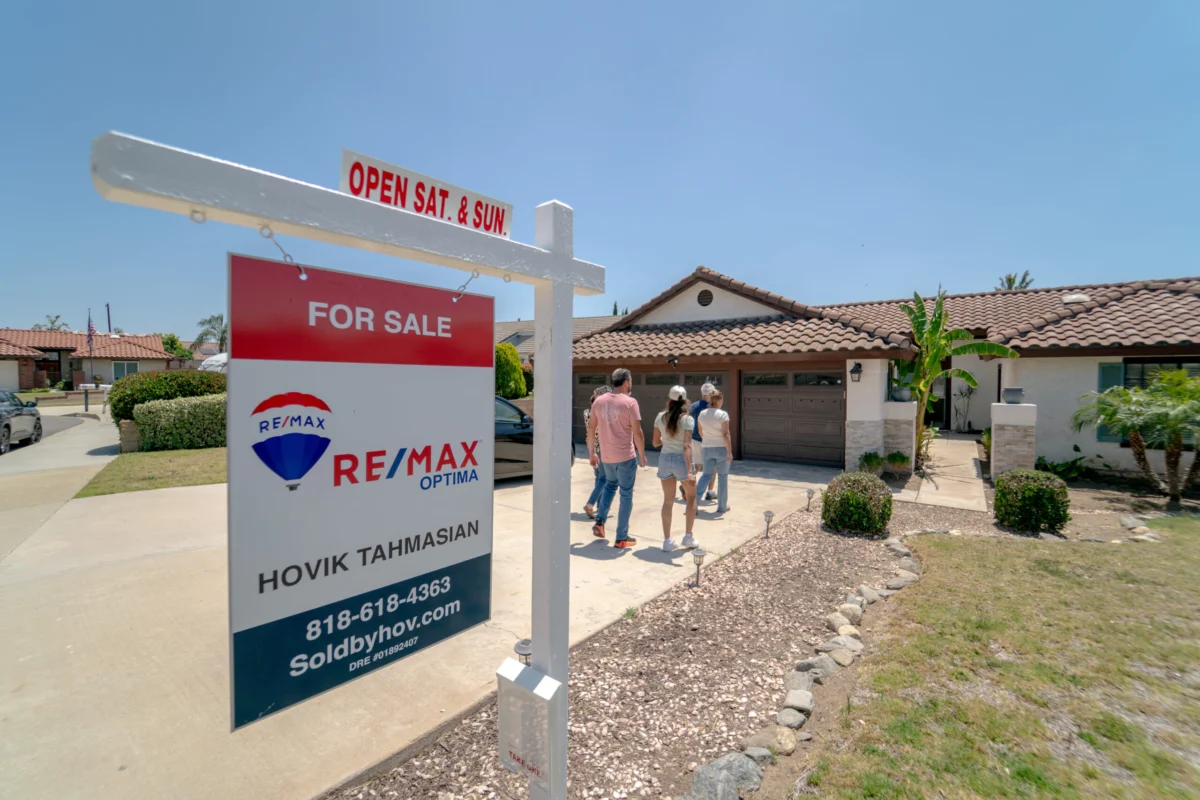
Sales of previously owned homes in the United States experienced a significant and largely unexpected resurgence in May, marking the highest activity level since December and offering a glimmer of optimism for a housing market grappling with affordability challenges and chronic inventory shortages. This rebound followed a slight pullback in mortgage rates during April, which evidently stimulated buyer demand and translated into a surge in completed transactions.
According to the latest data released by the National Association of Realtors (NAR), existing home sales climbed by 3.2% from April to a seasonally adjusted, annualized rate of 4.17 million units. This figure comfortably surpassed economists’ expectations, which had largely anticipated a gain of less than 1%. The robust performance was not just a month-over-month phenomenon; sales also registered a 3.2% increase compared to May of the previous year, underscoring a notable shift in market momentum. Given that existing home sales are recorded at closing, these transactions largely reflect contracts signed in April, when the average 30-year fixed mortgage rate experienced a modest dip after a period of volatility.
Economic Backdrop and Mortgage Rate Volatility
The housing market’s trajectory over the past year has been inextricably linked to the broader macroeconomic environment, particularly the Federal Reserve’s aggressive campaign to combat inflation. Beginning in early 2022, the Fed initiated a series of interest rate hikes, which sent the cost of borrowing soaring across the economy, including for mortgages. The average 30-year fixed mortgage rate, which hovered near historic lows during the pandemic, rapidly ascended, eventually breaching the 7% mark and, at times, nearing 8%. This dramatic increase significantly eroded buyer purchasing power and cooled what had been a red-hot housing market.
Chronology of Market Influences
The period leading up to May’s sales surge was characterized by significant fluctuations. After peaking towards the end of 2023, mortgage rates saw some relief in early 2024, briefly dipping below 7% and igniting hopes for a sustained recovery. However, these hopes were tempered in March and early April, when rates again ticked upward, influenced by stronger-than-expected economic data, persistent inflation concerns, and heightened geopolitical tensions, which often lead to shifts in bond yields that directly impact mortgage rates. The original report noted a sharp jump at the start of March "due to the war with Iran," which likely refers to broader market anxiety stemming from escalating geopolitical risks in the Middle East impacting global financial markets and, consequently, U.S. Treasury yields, to which mortgage rates are benchmarked.
By mid-April, however, a slight easing in these pressures or a re-evaluation by bond markets allowed mortgage rates to pull back somewhat. This minor reprieve, even if temporary, proved sufficient to entice a segment of potential homebuyers back into the market, as evidenced by the May closing data. Lawrence Yun, chief economist for the National Association of Realtors, emphasized this dynamic, stating in a release, "Improving affordability is helping drive this momentum. Even with mortgage rates ticking up compared to earlier in the year, they remain lower than a year ago and are essentially at the long-term historical average. Income gains are also outpacing home price growth by a small margin in most parts of the country." This perspective highlights a crucial point: while rates remain elevated compared to the pandemic era, they have stabilized to a degree and, when viewed against historical averages and considering ongoing wage growth, present a more manageable financial landscape for some buyers.
Inventory Challenges and Price Resilience
Despite the uptick in sales, the housing market continues to contend with a fundamental imbalance between supply and demand. Inventory in May saw a modest increase of 3.3% month-to-month, reaching 1.55 million units for sale. However, this figure was still up only slightly less than 1% from a year ago, indicating that the supply pipeline remains exceptionally tight. At the current sales pace, this translates to a 4.5 months’ supply, significantly below the 6-month benchmark generally considered indicative of a balanced market favoring neither buyers nor sellers. This persistent shortage is a primary driver behind the continued appreciation of home prices.
The median price of an existing home sold in May reached a record high for the month at $429,300, marking an increase of 1.3% from the previous year. This resilience in prices, even in an environment of higher interest rates, underscores the scarcity of available homes. The "lock-in effect" plays a substantial role here: many homeowners who secured historically low mortgage rates during the pandemic are reluctant to sell, as doing so would mean taking on a new mortgage at a significantly higher rate, effectively trapping them in their current homes and exacerbating the inventory crunch. This dynamic limits the natural churn of the housing market, particularly for move-up buyers.

Market Segmentation and Buyer Demographics
A deeper dive into the sales data reveals a nuanced picture across different price segments. The market continues to be strongest on the higher end, where buyers are generally less sensitive to fluctuations in mortgage rates. Sales of homes priced above $1 million surged by 11% compared to the year before. This segment often includes buyers with significant equity from previous sales, higher incomes, or the ability to make substantial cash purchases, insulating them somewhat from the immediate impact of borrowing costs. Conversely, sales of homes priced between $100,000 and $250,000, typically representing entry-level or more affordable options, saw a 5% decline. This disparity highlights the ongoing challenges faced by first-time and lower-income buyers, who are most acutely affected by higher rates and rising prices.
Encouragingly, first-time buyers showed a notable return to the market in May, accounting for 35% of all sales. This represents an increase from 33% in April and a more substantial jump from 30% in May of the previous year. The return of first-time buyers is a critical indicator of market health, as they are essential for generating turnover and supporting the broader housing ecosystem. Their increased participation suggests that despite affordability hurdles, some are finding ways to enter homeownership, perhaps driven by factors like stable employment, modest wage growth, or a slight improvement in their ability to save for down payments.
Properties spent an average of 29 days on the market in May, a slight decrease from 32 days in April but still up from 27 days in May 2023. This metric reflects a market that, while still competitive, is not experiencing the frenzied pace seen during the peak of the pandemic boom. Cash sales continued to represent a significant portion of transactions, making up about a quarter of all sales, though this was a slight decrease from a year ago. This indicates that investors and wealthy buyers remain active, but the market might be seeing a gradual rebalancing towards financed purchases.
Financial Footing and Expert Commentary
A key takeaway from the latest report is the robust financial health of existing homeowners. Lawrence Yun highlighted that "Only 1% of all home sales involved a foreclosure or an underwater situation in which the sale price could not cover the outstanding mortgage balance. This shows that homeowners are on solid financial footing." This statistic is crucial, as it differentiates the current housing market from the subprime mortgage crisis of 2008. The vast majority of homeowners possess substantial equity, providing a strong buffer against economic downturns and preventing a wave of distressed sales that could destabilize prices.
Beyond NAR, other market analysts echo a cautious optimism. Economists from major financial institutions note that while the May surge is positive, sustained recovery hinges on continued stability or further moderation of mortgage rates, coupled with an increase in housing supply. Many anticipate that if inflation continues to cool, the Federal Reserve might eventually cut its benchmark interest rate, which would likely translate to lower mortgage rates. However, the timing and extent of such cuts remain uncertain, contingent on incoming economic data.
Broader Impact and Future Implications
The resilience of the housing market has broader economic implications. A healthy real estate sector contributes significantly to GDP through construction activity, home improvement spending, and related industries like lending, insurance, and furniture sales. The renewed confidence among homebuyers, particularly first-timers, can have a positive ripple effect on consumer sentiment.
Looking ahead, the housing market faces several potential scenarios. If mortgage rates remain stable or continue their gradual descent, and if the labor market remains strong, further gains in home sales are plausible. However, the persistent inventory deficit remains the primary bottleneck. Until more homes, both existing and newly constructed, come onto the market, significant price relief is unlikely. New construction, while picking up, has not yet been sufficient to close the long-standing supply gap. Builders face their own challenges, including labor shortages, material costs, and regulatory hurdles.
The ability of income growth to keep pace with, or ideally outpace, home price appreciation will be crucial for sustained affordability improvements. Policymakers and industry stakeholders are increasingly focused on initiatives to boost housing supply, including zoning reforms, incentives for developers, and programs to support first-time homebuyers. The May sales data offers a much-needed boost, suggesting that demand remains robust when affordability conditions show even marginal improvement. However, the journey toward a truly balanced and accessible housing market remains a complex and ongoing endeavor.
