

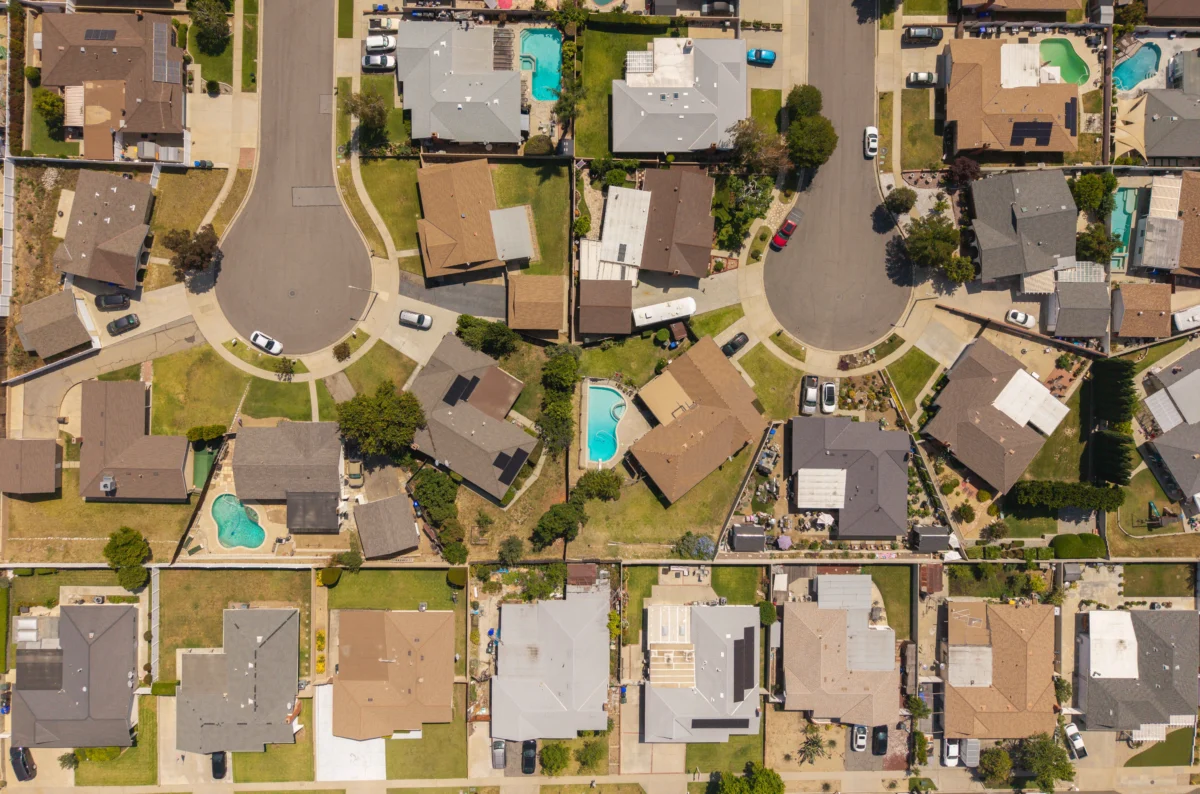
A significant surge in home sellers withdrawing their properties from the market has been observed nationwide, marking a notable shift in the housing landscape right in the midst of the traditionally robust spring selling season. New data reveals that frustrated homeowners, facing evolving economic conditions and diminished buyer enthusiasm, are increasingly opting to delist their properties rather than accept offers below their expectations. This trend signals a broader rebalancing within the real estate sector, moving away from the frenetic pace of recent years towards a more cautious and challenging environment for sellers.
According to a comprehensive analysis by Redfin, a prominent real estate brokerage, a substantial 5.8% of all home listings across the United States were pulled off the market in April. This figure represents a critical benchmark, tying with December for the highest share of delisted homes since March 2020, a period when the initial onset of the global pandemic brought the housing market to an abrupt, albeit temporary, standstill. The increase in delistings from March to April alone was considerable, rising by 3.8%, underscoring the rapid deceleration of seller confidence and buyer activity within a crucial month for real estate transactions.
The Economic Headwinds Driving Seller Retreat
The primary catalysts behind this growing phenomenon are multifaceted economic pressures that have collectively eroded housing demand and reshaped buyer behavior. Paramount among these factors are the persistently higher mortgage rates that have characterized much of the past year. After a brief reprieve at the start of 2023, where the benchmark 30-year fixed-rate mortgage briefly touched the 5% range by the end of February, rates surged sharply once again. This renewed ascent was largely fueled by escalating geopolitical tensions, particularly the conflict in Eastern Europe, which exacerbated inflationary pressures globally and led to significant increases in energy costs. The Federal Reserve’s aggressive monetary tightening campaign, initiated in early 2022 to combat runaway inflation, has been the primary driver of these higher borrowing costs, pushing the federal funds rate to levels not seen in decades.
Beyond mortgage rates, elevated gas prices continue to strain household budgets, leaving less disposable income for potential homebuyers. This, coupled with broader inflationary pressures on everyday goods and services, has contributed to a palpable weakening of consumer confidence. Potential buyers are now not only contending with higher financing costs but also an overall increase in their cost of living, making large-scale investments like home purchases more daunting. The cumulative effect is a significant reduction in purchasing power and a greater reluctance among buyers to engage in bidding wars or accept inflated prices.
This dynamic has fundamentally altered the balance of power in the housing market. Sellers, who for several years enjoyed an unprecedented advantage, dictating terms and often receiving offers well above asking price, are now finding themselves in a less dominant position. Buyers, armed with increased negotiating power, are more frequently offering below the asking price, demanding thorough inspections, and less inclined to waive contingencies—practices that were commonplace during the pandemic-induced housing boom. Many sellers, accustomed to rapid sales and premium prices, are reportedly unwilling to adjust their expectations to the new market realities, leading them to withdraw their listings rather than accept what they perceive as subpar offers.
Geographic Hotbeds of Delisting Activity
The trend of delisting is not uniformly distributed across the nation, with certain metropolitan areas experiencing a disproportionately higher share of withdrawals. Atlanta, Georgia, emerged as the leader in April, with a striking 1 in 10 home listings being pulled off the market. This high rate suggests a particularly acute disconnect between seller expectations and buyer affordability in the Southern hub, which experienced significant population growth and price appreciation in recent years.
Following Atlanta, several high-cost West Coast markets also recorded substantial delisting activity. San Jose, California, a core city in Silicon Valley, saw roughly 9% of its listings pulled. Los Angeles, another major Californian market, registered 7.8% delistings, tying with Dallas, Texas, which also saw 7.8% of homes withdrawn. Seattle, Washington, a prominent tech hub, rounded out the top five with 7.7% of its listings removed. These markets, characterized by already elevated home prices and a high reliance on traditional mortgage financing, are particularly sensitive to fluctuations in interest rates and economic uncertainty, making them more susceptible to a cooling off period as affordability constraints tighten.
Expert Commentary on Market Rebalancing
Real estate professionals and economists are keenly observing these shifts, offering insights into the evolving market dynamics. Patricia Ammann, a Redfin agent, articulated the prevailing sentiment from the front lines: "Buyers know they have negotiating power, often offering under the asking price and completing inspections, but some sellers just won’t budge." Her statement underscores the growing chasm between seller expectations, often anchored to the peak market conditions of 2021 and early 2022, and the new cautious approach of buyers. This standoff is a primary contributor to properties languishing on the market or being delisted entirely.
Selma Hepp, chief economist at Cotality, provided a broader economic perspective, noting that while home prices have been easing from their historic highs, they generally remain above year-ago levels. She highlighted that "Markets that depend more heavily on traditional mortgage financing and rate-sensitive buyers are seeing prices stay relatively flat." Hepp’s analysis also pointed to a nuanced stabilization, observing that "Overall, fewer markets posted year-over-year price declines in April than in prior months, pointing to continued stabilization across the housing market." This suggests that while the pace of appreciation has slowed dramatically, and in some areas prices are seeing modest declines, a widespread price crash is not necessarily underway, but rather a recalibration.

The Shifting Landscape of Inventory and Sales
Despite the challenges, there are subtle indicators of market adaptation. Signed contracts on existing homes, often referred to as pending sales, experienced a slight uptick in April, rising by 1.4% from March, according to the National Association of Realtors (NAR). This modest increase is largely attributable to a much-needed rise in housing inventory, which was up nearly 6% from March. For months, historically low inventory levels fueled intense competition and price escalation. The recent increase, while still below pre-pandemic norms, offers a glimmer of hope for buyers by providing more options and potentially alleviating some of the competitive pressures.
However, this increase in inventory also means that listings in some parts of the country are starting to accumulate. New homes are coming onto the market, but properties are also sitting for longer periods without finding a buyer. The "days on market" metric, which measures the average time a home spends listed before going under contract, has been steadily increasing from the record lows seen during the pandemic boom. This extended market exposure, combined with the all-important spring selling season drawing to a close, is prompting some sellers to withdraw their listings, either to re-evaluate their pricing strategy, make improvements, or simply wait for more favorable market conditions.
Interestingly, the report also revealed a notable trend of "relistings." Approximately 2.5% of the homes on the market in April were properties that had been pulled off the market at some point over the past year and were now being relisted. This figure ties with the prior two months for the highest share since mid-2020, a period characterized by a sudden and intense surge in housing demand as the initial pandemic shock wore off. This suggests that a segment of sellers, despite facing higher mortgage rates and a more challenging environment, were still hoping to capitalize on the perceived strength of the spring market, indicating a persistent optimism or a pressing need to sell.
Broader Context: The Post-Pandemic Housing Cycle
To fully appreciate the current market dynamics, it is crucial to place them within the broader context of the post-pandemic housing cycle. The period from mid-2020 through early 2022 was characterized by an unprecedented housing boom. Fueled by historically low interest rates (which dipped below 3% for 30-year fixed mortgages), a surge in remote work prompting desires for larger homes, and a limited supply of existing inventory, demand far outstripped supply. Bidding wars became the norm, homes sold within days, and prices appreciated at double-digit rates year-over-year, creating significant wealth for existing homeowners.
However, this unsustainable pace began to shift dramatically in early 2022. The Federal Reserve, facing soaring inflation, initiated a series of aggressive interest rate hikes. This quickly translated into a sharp rise in mortgage rates, effectively pricing out a significant portion of potential homebuyers and severely impacting affordability. The psychological impact on buyers was immediate: the cost of financing a home more than doubled in some cases within a year, leading to a dramatic reduction in purchasing power. For a home buyer, a 3% mortgage rate on a $400,000 loan results in a monthly principal and interest payment of approximately $1,686. At a 7% rate, that same payment jumps to $2,661, representing a substantial increase of nearly $1,000 per month, or over $12,000 per year, for the same property. This stark reality has been the primary brake on the housing market’s momentum.
Implications for Stakeholders
The current market conditions carry significant implications for all stakeholders in the housing ecosystem:
- For Sellers: The era of easy, fast sales at top dollar has concluded. Sellers must now adopt a more realistic approach to pricing, factoring in current mortgage rates and buyer affordability. Those who are not under immediate pressure to sell may choose to wait for potentially more favorable conditions, while others may need to accept lower offers or invest in home improvements to attract buyers. Holding costs, including mortgage payments, taxes, and maintenance, can add up quickly if a property sits on the market for an extended period.
- For Buyers: While higher mortgage rates present an affordability challenge, the market shift also brings opportunities. Increased inventory provides more choices, and the diminishing competition allows for greater negotiating power. Buyers can now take their time, conduct thorough inspections, and potentially secure a property below the asking price, a stark contrast to the rush of previous years. However, the higher cost of borrowing means their long-term financial commitment will be significantly greater.
- For the Real Estate Industry: Agents, brokers, and related service providers (lenders, appraisers, inspectors) are adapting to a slower, more complex market. Transactions require more skill in negotiation, pricing strategy, and client management. The slowdown in sales volume could impact revenues across the industry, potentially leading to consolidation or a re-evaluation of business models.
- For the Broader Economy: The housing market is a significant contributor to economic activity. A slowdown in sales impacts construction, home improvement, and related manufacturing sectors. The "wealth effect," where homeowners feel richer as their property values rise and thus spend more, can also diminish when price appreciation slows or reverses. A healthy and stable housing market is crucial for overall economic stability, and the current rebalancing could contribute to slower economic growth, although it may also help to cool inflation.
Looking Ahead: A Period of Continued Adjustment
The current surge in delistings is a clear signal that the housing market is undergoing a profound and necessary period of adjustment. While the extreme conditions of the pandemic boom are firmly in the rearview mirror, a return to pre-pandemic normalcy is still a complex path. The trajectory of mortgage rates will remain a critical factor, heavily influenced by the Federal Reserve’s decisions on interest rates and the broader inflation outlook. Should inflation continue to recede, the Fed may ease its hawkish stance, potentially leading to a gradual decline in mortgage rates, which could reinvigorate buyer demand. Conversely, persistent inflation could keep rates elevated, prolonging the current market sluggishness.
The labor market also plays a crucial role. A robust job market provides stability and confidence for potential homebuyers, even in the face of higher rates. However, if economic tightening leads to significant job losses, housing demand could weaken further.
In conclusion, the increasing number of homes being pulled off the market underscores a pivotal moment for the U.S. housing sector. It represents a significant recalibration of seller expectations, a renewed focus on affordability for buyers, and a broader return to more traditional market dynamics. While the immediate future may be characterized by continued volatility and uncertainty, this period of adjustment is ultimately a necessary step towards fostering a more sustainable and balanced housing market for the long term.
