

White Sulphur Springs, a small municipality of approximately 1,000 residents nestled in the rural heart of central Montana, finds itself at a pivotal crossroads between its storied past and an uncertain future. For decades, this community in Meagher County has navigated the volatile cycles of the "boom-and-bust" economy that defines much of rural America. Now, as the global demand for critical minerals skyrockets to fuel the renewable energy transition, White Sulphur Springs is becoming a testing ground for a new kind of industrial relationship. At the center of this transformation is the proposed Black Butte Copper Mine Project, an undertaking by Sandfire Resources America that seeks to extract massive copper deposits from the Johnny Lee deposit. Unlike the predatory mining practices of the 19th century, however, this project is being shaped by a proactive Community Benefits Agreement (CBA) designed to ensure that the local population—and the environment they depend upon—is not left behind once the ore is gone.

The Economic Necessity of the Critical Mineral Rush
The push for the Black Butte Copper Mine is driven by a global appetite for copper that shows no signs of abating. As the world shifts toward electrification, copper has emerged as an indispensable "green" metal. According to data from the International Energy Agency (IEA), the transition to net-zero emissions will require a sixfold increase in mineral inputs by 2040. Electric vehicles (EVs) require up to four times more copper than traditional internal combustion engine vehicles, and the expansion of solar and wind power grids relies heavily on copper’s superior conductivity.
For Meagher County, this global demand represents a potential economic lifeline. Despite the natural beauty of the surrounding mountains and the proximity to the famed Smith River, the county has struggled with systemic poverty. In 2021 and 2022, Meagher County was ranked as one of the poorest counties in the United States, with a local economy that has long been vulnerable to the decline of the logging and traditional mining industries. The Black Butte project promises to inject stability into this fragile ecosystem, offering 300 high-paying jobs for at least 12 years and contributing significantly to the local tax base.

A Chronology of Discovery and Development
The path to the current mining proposal has been decades in the making. The history of the Johnny Lee deposit is marked by periods of intense interest followed by industrial retreats, reflecting the broader instability of the mining sector.
- 1985: The Johnny Lee copper deposit is first discovered, sparking initial interest in the mineral potential of Meagher County.
- 1985–2010: Various companies conduct exploratory drilling and feasibility studies, but fluctuating copper prices and environmental concerns keep the project in a state of limbo.
- 2011: Sandfire Resources America (the U.S. subsidiary of the Australian-based Sandfire Resources) begins a rigorous baseline environmental data collection process, a decade earlier than mandated by standard industry practice.
- 2020–2024: The project undergoes a series of permitting hurdles and legal challenges from environmental groups concerned about the impact on the Smith River watershed.
- 2026: Meagher County residents and Sandfire Resources America enter into a formal Community Benefits Agreement (CBA), marking a shift from reactive litigation to proactive negotiation.
- Present Day: The project moves toward the construction phase, with the CBA serving as the primary framework for local accountability.
The Community Benefits Agreement: A New Framework for Accountability
The most significant evolution in the White Sulphur Springs story is the move away from traditional corporate-led development toward a community-negotiated framework. Historically, mining towns have had little say in how projects were executed, often left to deal with the environmental and social fallout after the companies moved on. To prevent this, Meagher County organized early, forming the Meagher County Stewardship Council, an independent body of 16 community members representing diverse interests, from agriculture and business to education and conservation.

The CBA is intended to be a legally binding contract that secures a "seat at the table" for locals. Key provisions of the agreement include:
- Economic Investment: The establishment of a community investment fund fueled by the mine’s cash flow. Annual contributions are projected to reach $1.8 million, dedicated to youth education, affordable housing, and local infrastructure.
- Environmental Oversight: Provisions for independent water monitoring that go beyond state-mandated requirements, ensuring that the community has access to transparent, third-party data.
- Job Guarantees: A commitment to prioritize local hiring and provide training programs to ensure residents can fill the 300 projected positions.
- Durable Protections: The agreement is designed to "run with the land," meaning that if Sandfire sells the mine to another entity, the new owners are legally bound to uphold the promises made to Meagher County.
The Ghost of the Berkeley Pit: Why Skepticism Remains
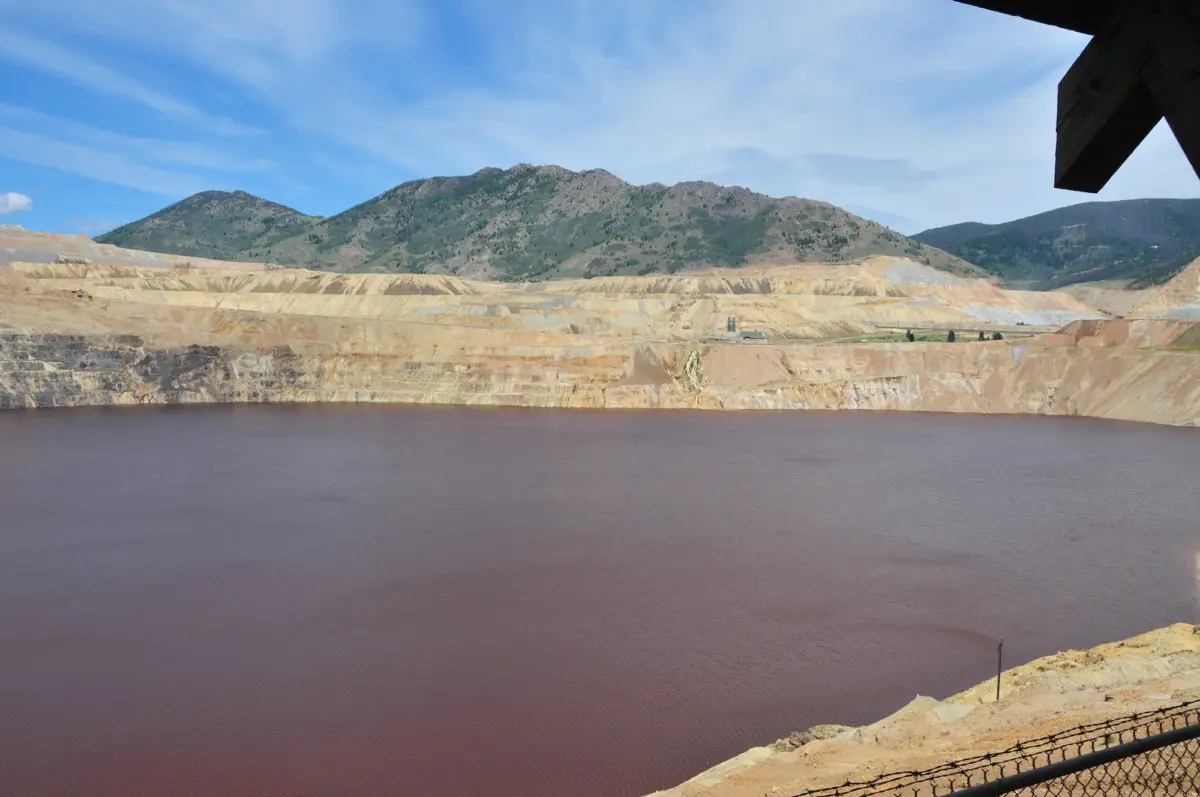
Despite the promise of the CBA, the shadow of Montana’s mining history looms large over White Sulphur Springs. Only two hours away lies Butte, once the "Richest Hill on Earth," now home to the Berkeley Pit. This former open-pit copper mine is one of the largest Superfund sites in the United States, filled with billions of gallons of highly acidic, heavy-metal-laden water.

For many Montanans, the Berkeley Pit is a permanent reminder of what happens when industrial oversight fails. "I am pro-mining—just not in my backyard and not on the Smith River," says Katie Bodecker, owner of the Showdown Montana ski resort. Bodecker’s sentiment reflects a common fear: that even the most well-intentioned modern mine carries inherent risks that could destroy the region’s sustainable industries, such as tourism and agriculture.
The Smith River, a blue-ribbon trout fishery and a vital source of irrigation for 36,000 acres of farmland, is the primary point of contention. Opponents like Joe Sowerby, a local fishing outfitter, argue that the river is already under stress from climate-induced droughts. "This mine could be the straw that breaks the camel’s back," Sowerby warns, noting that any industrial demand for water could jeopardize the delicate balance between recreation and ranching.

Technical Innovations and Environmental Safeguards
In response to these concerns, Sandfire Resources has proposed an underground mining model rather than an open-pit design. Underground mines are generally considered less invasive, as they leave a significantly smaller surface footprint and reduce the exposure of waste rock to the elements.
Nancy Schlepp, Vice President of Communications for Sandfire and a lifelong Meagher County resident, emphasizes that the project is built on 15 years of baseline environmental data. The company has pledged a "closed-loop" water system where all water entering the mine is captured, monitored, and treated to exceed state standards before being returned underground. Sandfire has also stated it has no plans to discharge any waste into surface waters, a move specifically intended to protect the Smith River headwaters.

Broader Implications and the Global Model
The conflict in White Sulphur Springs is a microcosm of a global paradox: to achieve a low-carbon future and mitigate climate change, the world must engage in more mining, not less. This creates a tension between global environmental goals and local ecological preservation.
The White Sulphur Springs model—if successful—could provide a blueprint for how other rural communities across the globe navigate this tension. By utilizing a CBA, the town is attempting to move beyond the traditional binary of "jobs versus the environment." Instead, they are testing whether a community can leverage the urgent needs of the energy transition to secure long-term, sustainable development.

However, the success of this model hinges on legal durability. While negotiations have been ongoing for years, the CBA is still in the process of being converted into a finalized, legally binding contract. Until that document is signed and sealed, the community remains vulnerable to ownership changes or shifts in corporate strategy.
Conclusion: A Community Defining Its Own Success
As White Sulphur Springs moves forward, the divide between supporters and opponents remains sharp, yet there is a shared understanding that the town’s character is at stake. The economic infusion from the Black Butte Copper Mine could revitalize a struggling school system and provide housing for young families, but a single catastrophic failure in water management could permanently alter the watershed that defines the region’s identity.

The story of Meagher County is no longer just about copper; it is about agency. By demanding a formal role in the industrial process, the residents are attempting to break the cycle of exploitation that has characterized Western mining for over a century. Whether the CBA proves to be a robust shield or a fragile promise remains to be seen, but for now, White Sulphur Springs is ensuring that the people who live above the ore have as much power as the companies that seek to dig beneath it. In the words of local entrepreneur Katie Bodecker, "This area is unique, and there’s no shortage of people that care about it." That care, formalized through negotiation and oversight, may be the only thing capable of ensuring a sustainable future for this corner of the American West.
