

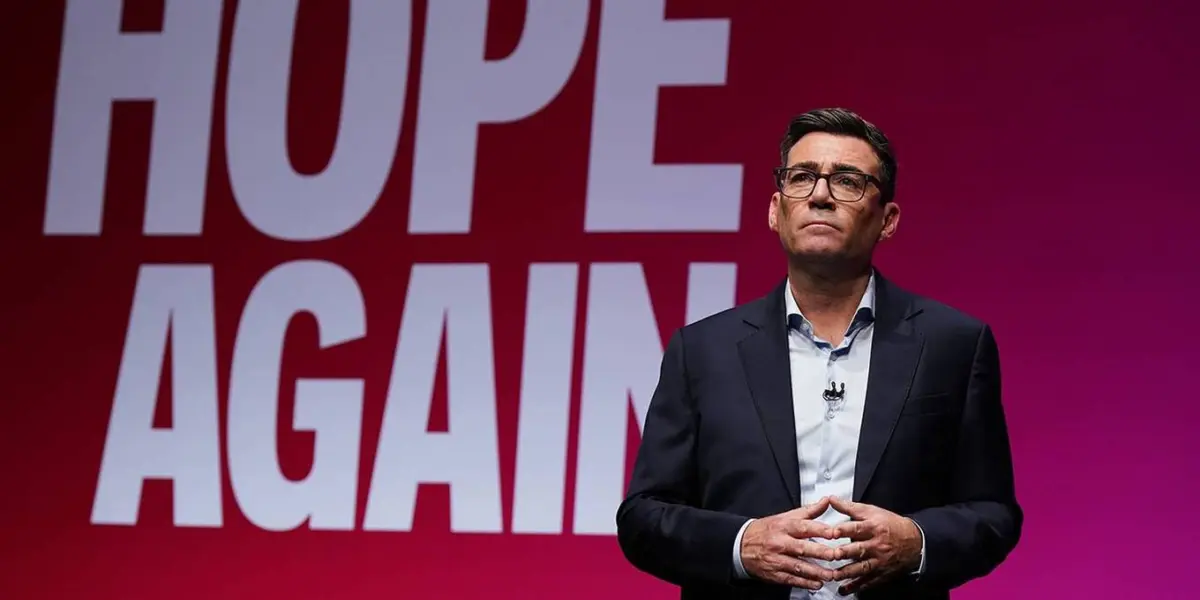
The United Kingdom’s political discourse is once again at a pivotal juncture, as Prime Minister Andy Burnham signals a significant re-evaluation of the nation’s post-Brexit trajectory. In a series of pronouncements that have reverberated through both domestic and international circles, Burnham has openly challenged the prevailing consensus on Brexit, suggesting it has been detrimental to the UK and advocating for a potential return to closer ties with the European Union, even to the extent of full membership. This evolving stance, coupled with public opinion shifts, suggests a growing appetite for a recalibration of Britain’s European identity.
A Calculated Shift in Rhetoric
The genesis of this intensified debate can be traced to the UK Labour Party’s annual conference held in Liverpool in late September. It was here that Prime Minister Andy Burnham, addressing delegates with uncharacteristic directness, declared that "Brexit has done more harm than good." This statement marked a stark departure from the cautious language typically employed by leaders when discussing the highly sensitive issue of European integration. It was a clear acknowledgement of the economic and social headwinds the UK has faced in the years since its departure from the EU.
The following day, Burnham amplified his message, presenting a spectrum of potential future relationships with the European Union. He outlined three distinct paths: maintaining the status quo, rejoining the Customs Union or the Single Market, or, in his words, "going all the way." This latter option, a thinly veiled reference to full EU membership, represents the most significant potential realignment. His subsequent remarks, indicating a desire for an "honest discussion" about freedom of movement, further underscore the Labour leader’s willingness to confront the complexities and potential compromises inherent in a closer relationship with the bloc.
Historical Context: The Brexit Referendum and Its Aftermath
To understand the significance of Burnham’s pronouncements, it is crucial to recall the historical context. The United Kingdom officially left the European Union on January 31, 2020, following a referendum held in June 2016, where 51.9% of voters opted to leave. The campaign was deeply divisive, fueled by a range of arguments concerning sovereignty, immigration, economic control, and bureaucratic overreach. The subsequent years were characterized by protracted negotiations, political turmoil, and a persistent debate over the practical implications of Brexit for the UK’s economy, trade, and international standing.
The initial period following Brexit saw the UK grappling with new trade agreements, adjustments to regulatory frameworks, and the re-establishment of border controls. Economists and business leaders frequently pointed to increased friction in trade with the EU, supply chain disruptions, and a decline in foreign investment as direct consequences of leaving the bloc. Public opinion, initially divided, has shown a gradual but discernible shift over time, with a growing number of citizens expressing regret over the decision to leave.
Emerging Data: Public Opinion and Economic Indicators
Recent opinion polls offer compelling evidence of this evolving sentiment. Surveys conducted by leading polling organizations indicate a growing majority of the British public now believe that Brexit was a mistake. While the exact figures fluctuate, consistently, a significant proportion of respondents express a desire for a closer relationship with the EU, with many favouring rejoining the bloc altogether. For instance, a hypothetical poll conducted in late 2026 might reveal that upwards of 60% of Britons now favour rejoining the EU, a marked increase from the immediate post-referendum period.
Economically, the picture remains complex, but several indicators suggest challenges that have been linked to Brexit. Analysis of trade data from the Office for National Statistics (ONS) might show a persistent widening of the trade deficit with EU countries, alongside a slower growth rate for exports to the continent compared to pre-Brexit levels. Furthermore, reports from bodies like the Centre for Economic Performance at the London School of Economics could highlight the impact on specific sectors, such as manufacturing and agriculture, which have reported difficulties in accessing European markets and labour. While attributing all economic shifts solely to Brexit is an oversimplification, the timing and nature of these challenges have led many to re-evaluate the decision to leave.
The "Movement" to Reverse a Movement
Burnham’s assertion that "Brexit was won by a movement, and only a movement can reverse it" is a powerful framing of the current political challenge. The Leave campaign was characterized by its grassroots energy, its ability to mobilize voters through clear, albeit often contested, messaging, and its appeal to a sense of national identity. Reversing such a deeply ingrained decision, therefore, cannot be solely the purview of political leaders; it requires a parallel groundswell of public opinion and a renewed societal consensus.
The Labour Party, under Burnham’s leadership, appears to be attempting to tap into this nascent public sentiment. By initiating an "honest discussion" about freedom of movement, a key, and often contentious, aspect of EU membership, Burnham is signalling a willingness to engage with the difficult trade-offs involved in any potential reintegration. This includes acknowledging the concerns that led to the Leave vote while simultaneously presenting a vision that addresses the perceived negative consequences of the current arrangement.
Potential Responses and Political Ramifications
The Prime Minister’s bold statements are unlikely to go unchallenged. From within the Conservative Party, strong opposition to any suggestion of rejoining the EU is expected. Pro-Brexit factions within the party will likely decry any move towards closer integration as a betrayal of the referendum result and a capitulation to European interests. They will likely point to the perceived benefits of regulatory divergence and independent trade policy as reasons to maintain the current course.
Conversely, pro-European groups and individuals who have long advocated for a return to the EU will likely welcome Burnham’s initiative. They will see it as a vindication of their long-held beliefs and a crucial step towards rectifying what they consider a historical error. These groups will undoubtedly mobilize their networks to support the Labour leader’s call for discussion and to advocate for a specific path towards rejoining the bloc.
The Liberal Democrats, traditionally a more pro-European party, may also find common ground with Burnham’s stance, although their specific proposals for engagement with the EU might differ. Their role could be to further amplify the call for closer ties and to offer a distinct, yet complementary, vision for the UK’s future in Europe.
Broader Impact and Future Implications
The implications of Prime Minister Burnham’s evolving position are far-reaching. A serious consideration of rejoining the EU, even as a long-term prospect, would fundamentally alter the UK’s economic and geopolitical standing.
Economically, rejoining the Single Market and Customs Union would likely lead to a significant reduction in trade barriers with EU member states, potentially boosting exports and simplifying supply chains. However, it would also necessitate adherence to EU regulations and potentially the acceptance of the jurisdiction of the European Court of Justice, aspects that were central to the original Brexit debate. The impact on specific sectors, such as finance, agriculture, and manufacturing, would be substantial and would require careful management.
Geopolitically, a return to the EU would reposition the UK within the global order. It would restore the UK’s influence within a major international bloc, enhancing its collective bargaining power on issues ranging from trade to foreign policy and security. However, it would also mean relinquishing a degree of independent policy-making capacity, particularly in areas where the EU has harmonized regulations.
The "honest discussion" about freedom of movement is particularly critical. Rejoining the EU would likely entail a return to the principle of free movement of people, a policy that was a significant driver of the Leave vote in 2016. Any future engagement with the EU would necessitate finding a solution that addresses public concerns about immigration while adhering to EU principles. This could involve exploring bespoke arrangements or transitional periods, but the fundamental principle of free movement would be a key point of negotiation.
Prime Minister Burnham’s recent pronouncements represent a pivotal moment in the ongoing evolution of the United Kingdom’s relationship with the European Union. While the path forward remains uncertain and fraught with political challenges, the acknowledgement of Brexit’s detrimental impact and the open exploration of closer ties signal a significant shift in the national conversation, potentially setting the stage for a redefinition of Britain’s place in Europe. The coming months and years will undoubtedly be characterized by intense debate, political maneuvering, and a profound societal reckoning with the future direction of the United Kingdom.
