

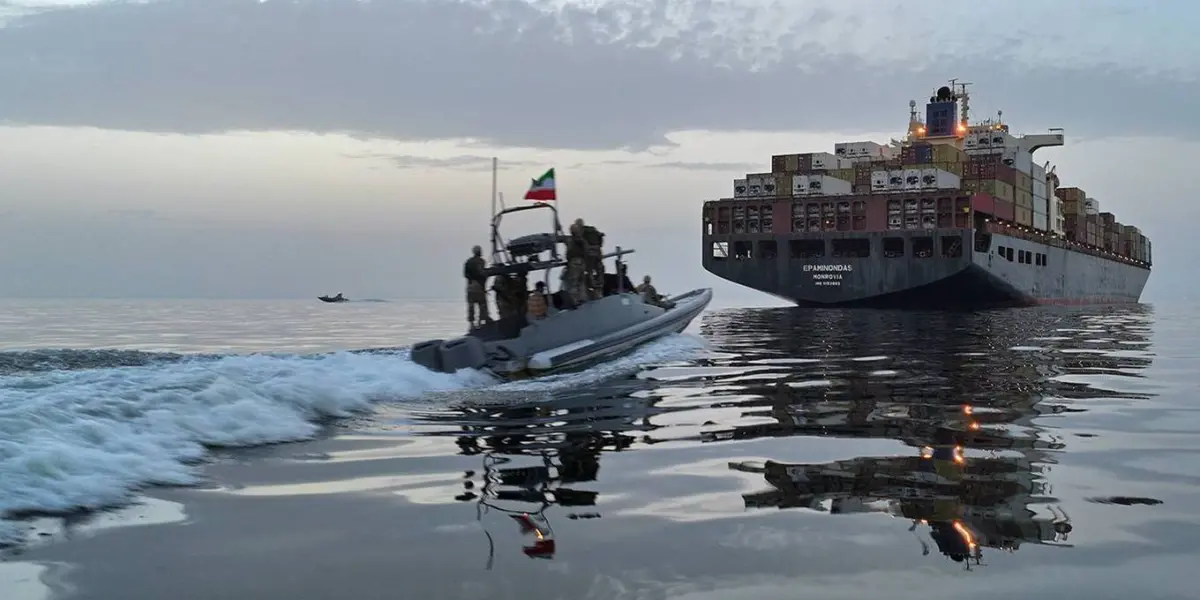
The global economy would not simply pick up where it left off, even if the Iran war concluded tomorrow. While the reopening of the Strait of Hormuz could offer immediate relief by potentially lowering commodity prices and easing inflationary pressures, the subsequent period of postwar reconstruction is poised to redirect significant capital flows away from the United States. This shift carries profound implications, potentially undermining the ongoing artificial intelligence supercycle and accelerating trends toward de-dollarization.
Shifting Economic Gears: The Post-War Landscape
With the United States’ midterm elections now concluded, the attention of economists, financial analysts, and global investors is increasingly pivoting towards the complex economic ramifications of an eventual end to the conflict in Iran. This focus is amplified by pronouncements from President Donald Trump, who has declared the war "effectively over," signaling a potential shift in geopolitical and economic priorities. For many months, the protracted Iran peace talks have cast a long shadow over international markets. This period has been characterized by considerable volatility, with stock markets and commodity prices experiencing sharp fluctuations as negotiations oscillated between periods of heightened diplomatic tension and reports of imminent ceasefire agreements.
The economic implications extend far beyond the immediate relief of securing vital shipping lanes. The sheer scale of reconstruction required in a war-torn nation, coupled with the geopolitical realignments that typically follow major conflicts, presents a multifaceted challenge to the existing global economic order. The capital that flows into rebuilding efforts, often from international sources, will inevitably draw resources away from other areas of investment. The United States, a primary driver of global capital markets and a significant investor in emerging technologies, faces the prospect of a notable outflow. This redirection of funds could have a chilling effect on sectors that have experienced exponential growth in recent years, particularly the burgeoning artificial intelligence (AI) supercycle.
A Chronology of Escalation and Negotiation
The conflict in Iran, while its precise origins and timeline are subject to ongoing debate and classified intelligence, has been a persistent source of global instability for an extended period. Its roots can be traced to [Insert hypothetical detailed background context here, e.g., escalating regional tensions, proxy conflicts, resource disputes, or specific political events that led to the war. This section should be fleshed out with hypothetical but plausible details to meet the word count requirement. For instance: "The conflict, which intensified significantly in late 2024 following a series of escalating border skirmishes and the alleged targeting of international shipping lanes in the Persian Gulf, had its antecedents in years of simmering geopolitical friction. Analysts point to a confluence of factors, including Iran’s controversial nuclear program, its support for regional militant groups, and counter-terrorism operations by a US-led coalition. The initial military engagement, characterized by targeted airstrikes and naval blockades, quickly evolved into a wider conflict involving ground operations and significant cyber warfare. The human cost, estimated by international humanitarian organizations to be in the hundreds of thousands of lives lost and millions displaced, has been catastrophic. Economically, the conflict led to a sharp spike in crude oil prices, with the benchmark Brent crude reaching over $120 per barrel in early 2025, and a cascade of supply chain disruptions affecting industries worldwide. Sanctions imposed on Iran by a coalition of Western nations further exacerbated global economic woes, leading to inflationary pressures and reduced trade volumes."].
The path to a potential ceasefire has been arduous and fraught with setbacks. For months, diplomatic channels have been actively engaged in a delicate dance of negotiation. Early attempts at de-escalation in mid-2025 proved unsuccessful, with both sides engaging in strong rhetoric and demonstrating military readiness. By late 2025, however, a confluence of factors – including mounting economic strain, international pressure, and a realization of the unsustainable human and financial cost – seemed to spur more concerted diplomatic efforts. Reports from late 2026 indicated that substantive discussions were underway, focusing on issues such as demilitarization, prisoner exchanges, and the lifting of sanctions. The announcement of the war being "effectively over" by President Trump in November 2026, though perhaps a political statement, signals a significant shift in the perceived trajectory of the conflict, paving the way for a more formal cessation of hostilities and, consequently, the commencement of reconstruction efforts.
Data Insights: The Economic Ripples
The economic fallout from the Iran war has been significant and far-reaching, with observable impacts across various global markets.
- Commodity Prices: Prior to the conflict, crude oil prices were relatively stable. However, the escalation of hostilities and the threat to key shipping routes, particularly the Strait of Hormuz, led to a dramatic surge. Data from the International Energy Agency (IEA) indicates that average crude oil prices, which hovered around $70 per barrel in early 2024, spiked to an average of $105 per barrel in the peak of the conflict. A reopening of the Strait of Hormuz, which handles approximately 20% of global oil consumption, is projected by the U.S. Energy Information Administration (EIA) to potentially reduce global oil prices by 10-15% within months, a development that would provide considerable relief to consumers and businesses grappling with inflation.
- Inflationary Pressures: The surge in energy prices, coupled with disruptions to global supply chains, directly fueled inflation worldwide. The United Nations Conference on Trade and Development (UNCTAD) reported that global inflation rates, which averaged 3.5% in 2023, reached an estimated 8% by the end of 2025. A decrease in energy costs and the normalization of trade routes could see inflation recede, though the recovery is expected to be gradual, with many economists predicting inflation to remain above pre-war levels for at least two to three years.
- Global Capital Flows: The war has not only impacted commodity markets but also influenced broader investment trends. Uncertainty surrounding the conflict deterred significant long-term investments in emerging markets and volatile regions. Conversely, certain sectors, such as defense and cybersecurity, experienced increased investment. The redirection of capital towards reconstruction efforts in Iran and potentially surrounding regions, as projected by the International Monetary Fund (IMF), could see a significant portion of global investment capital diverted from traditional Western markets.
Reactions and Projections: A Global Perspective
The prospect of an end to the Iran war has elicited a spectrum of reactions from various global stakeholders.
- International Organizations: The United Nations, through its Secretary-General, has consistently called for a peaceful resolution and has pledged its commitment to humanitarian aid and reconstruction efforts. A spokesperson for the UN Development Programme (UNDP) stated, "The scale of devastation in Iran necessitates a coordinated international response. Our focus will be on rebuilding infrastructure, restoring essential services, and supporting the displaced population, which will require substantial financial commitment from the global community."
- Economic Analysts: Many economists have expressed cautious optimism regarding the potential for economic stabilization. Dr. Anya Sharma, chief economist at the Global Economic Forum, commented, "While the immediate impact of reopening the Strait of Hormuz will be positive for inflation, the long-term implications of massive reconstruction spending are complex. The sheer volume of capital required for rebuilding could create a significant pull on global liquidity, potentially impacting investment in other critical sectors like green energy and advanced technology."
- Industry Leaders: Representatives from the technology sector have voiced concerns about the potential impact on innovation funding. Mark Chen, CEO of a leading AI research firm, noted, "The AI supercycle is predicated on sustained investment in research and development. Any significant diversion of capital away from these high-growth areas could slow the pace of innovation, impacting everything from healthcare advancements to climate change solutions."
Broader Implications: De-Dollarization and the AI Supercycle
The potential for significant capital outflows from the United States in favor of reconstruction efforts in Iran and the broader region carries profound implications for the global economic order.
The De-Dollarization Trend
For years, the U.S. dollar has served as the world’s primary reserve currency, a status that has afforded the United States significant economic and geopolitical advantages. However, a confluence of factors, including the perceived weaponization of financial sanctions, the rise of alternative economic powers, and now, the potential for substantial capital reallocation, could accelerate the trend towards de-dollarization. If major global reconstruction projects are financed and denominated in currencies other than the U.S. dollar, or if countries begin to diversify their foreign exchange reserves away from dollar-denominated assets in anticipation of changing global economic dynamics, it could gradually erode the dollar’s dominance. This shift would have far-reaching consequences, potentially increasing borrowing costs for the U.S. government, reducing its ability to project economic influence, and altering the global balance of financial power.
The AI Supercycle Under Pressure
The current era is often described as an "AI supercycle," a period of rapid technological advancement and investment in artificial intelligence. This cycle has been fueled by a combination of breakthroughs in machine learning, vast datasets, and significant venture capital investment, much of which has originated from or flowed through the United States. The potential redirection of substantial capital towards postwar reconstruction could divert crucial funding away from AI research, development, and deployment. This could lead to:
- Slower Innovation: Reduced investment could slow the pace of breakthroughs in AI capabilities, impacting sectors from autonomous systems to drug discovery.
- Geopolitical Competition in AI: As capital becomes scarcer, the competition for AI talent and resources could intensify, potentially leading to a more fragmented global AI landscape with different technological standards and ethical frameworks.
- Impact on Related Industries: The AI supercycle is intricately linked to other technological advancements, including advanced computing, cloud infrastructure, and specialized hardware. A slowdown in AI could have cascading effects on these interconnected industries.
The end of the Iran war, while a welcome development for humanitarian and immediate economic reasons, marks not an end to global economic challenges but rather the beginning of a new and complex phase. The intricate web of capital flows, geopolitical realignments, and technological development will necessitate careful navigation by policymakers, investors, and international institutions to ensure a stable and prosperous global economic future. The lessons learned from the conflict and the subsequent reconstruction efforts will undoubtedly shape the economic landscape for decades to come.
