

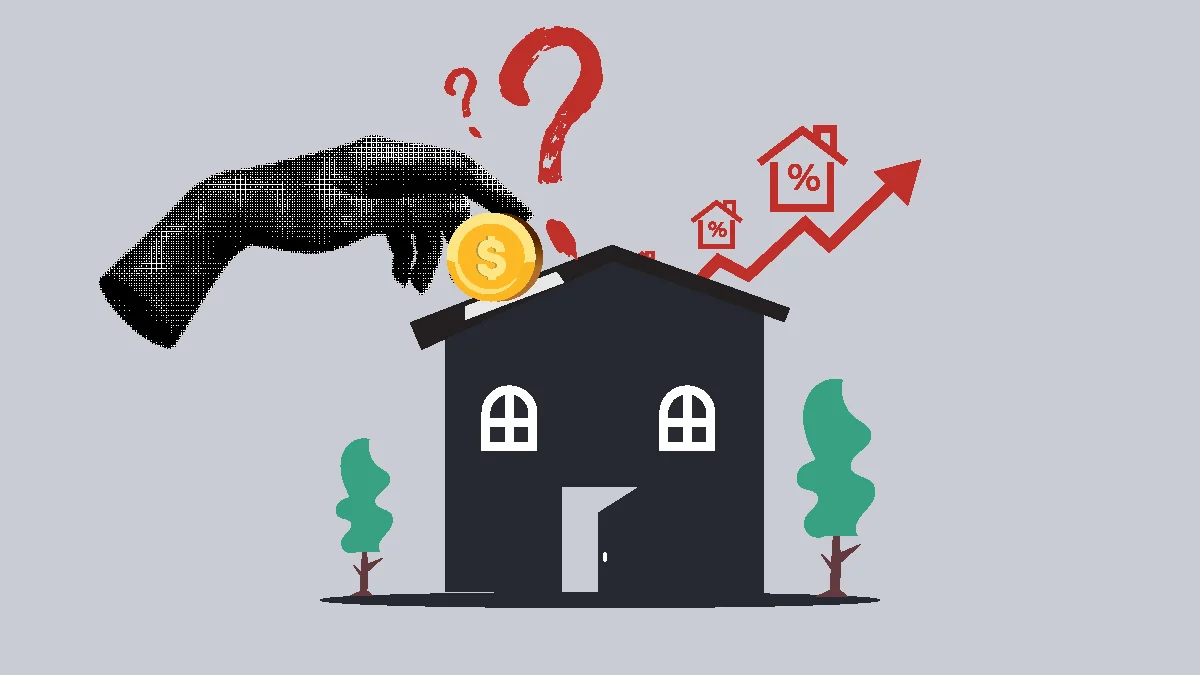
As the global economy transitions into the second half of 2026, the United States housing market stands at a critical juncture, characterized by unexpected resilience in the face of geopolitical volatility and shifting monetary policies. The first six months of the year were defined by high-stakes drama, drawing comparisons to a fast-paced thriller as international tensions, specifically the conflict involving Iran, created significant ripples across energy and financial markets. However, with signs of a diplomatic resolution on the horizon, economists and housing analysts are cautiously optimistic that a period of relative stabilization may define the remainder of the year.
The housing sector has notably outperformed initial bearish projections for 2026. Despite the persistence of elevated mortgage rates, the anticipated cooling of the market did not materialize with the severity seen in previous cycles. This resilience is largely attributed to two factors: a significant narrowing of mortgage spreads and a gradual improvement in affordability as national wage growth has begun to outpace home price appreciation. As market participants look toward the third and fourth quarters, several key indicators—ranging from weekly pending sales to federal monetary strategy—will determine whether the market can sustain this momentum.
A Chronology of Market Shifts: From Late 2025 to Mid-2026
To understand the current state of the 2026 housing market, one must look back at the pivot point that occurred in late 2025. During the final quarter of 2025, mortgage rates began a notable descent, which catalyzed a surge in buyer activity. This culminated in December 2025, which saw existing home sales reach a nine-month high. This late-year rally set a high "comp" or comparison bar for 2026, making year-over-year growth statistics more difficult to achieve in the current cycle.
By the spring of 2026, the market faced new headwinds. The escalation of the conflict with Iran sent oil prices upward, fueling inflationary fears and putting upward pressure on the 10-year Treasury yield. However, the housing market did not buckle. Unlike the 2023-2024 period, where any move toward 7% mortgage rates resulted in a total freeze in activity, the 2026 market has benefited from better structural support. As of June 2026, the resolution of the Iran conflict has allowed the market to refocus on domestic economic data, specifically the Personal Consumption Expenditures (PCE) price index and labor market strength.
Weekly Pending Sales and the 7% Psychological Barrier
Weekly pending sales serve as the most immediate pulse of the housing market, typically reflecting future closed sales with a 30-to-60-day lag. For the second half of 2026, analysts are closely monitoring whether pending sales can maintain positive year-over-year growth. Historically, the 6.64% threshold for mortgage rates has been a "danger zone"; once rates cross this level and move toward 7%, buyer demand typically craters.
In 2026, the market has remained remarkably stable because rates have largely stayed below the 7% mark. The current forecast for the year suggests a total of 237,000 more existing home sales than in 2025, provided that mortgage rates can remain under the 6.25% ceiling. However, as the calendar moves into July, the "hard comps" from the previous year’s surge will begin to appear in the data. If mortgage rates remain at their current elevated levels, maintaining the growth trajectory will require a continued increase in consumer confidence and a steady supply of new listings.
Mortgage Purchase Application Trends as a Forward Indicator
Purchase application data provides a window into the market 30 to 90 days in advance of actual transactions. Recent data indicates a complex picture: while weekly applications saw a 3% decline in the most recent reporting period, the year-over-year figure remains positive at 5%. This suggests that while high rates are deterring some marginal buyers, a core segment of the population remains active.
The persistence of positive growth in purchase applications, even with rates near their yearly highs, underscores a shift in buyer psychology. In 2025, lower rates during the fall and winter months drove a recovery in sales. In 2026, the challenge will be to see if demand can hold up if rates remain stagnant in the mid-to-high 6% range. Analysts will be watching for any signs of "buyer fatigue," particularly if the 10-year yield experiences further volatility.
The Inventory Paradox: Supply Constraints and Seasonal Trends
Housing inventory growth in 2026 has deviated significantly from the patterns observed in 2025. In the previous year, inventory surged by as much as 33% year-over-year at its peak. By contrast, 2026 has seen a much tighter supply environment. In recent weeks, inventory growth has fluctuated between a 2% decline and a flat 0.25% increase.
The lack of new listings remains the primary bottleneck. Traditionally, the market expects 80,000 to 100,000 new listings per week during the peak seasonal months. In 2026, however, the market has only surpassed the 80,000-listing mark four times, and never in consecutive weeks. This scarcity of supply has prevented a significant correction in home prices, despite the high-rate environment.
Furthermore, current data continues to debunk comparisons to the mid-2000s housing bubble. During the 2008 crisis, new listings regularly ranged from 250,000 to 400,000 per week. The current environment, with listings struggling to hit 80,000, indicates a market characterized by a "lock-in effect," where homeowners with low existing mortgage rates are reluctant to sell, rather than a market oversupplied with distressed assets.
Pricing Dynamics and the Price-Cut Percentage
A critical metric for gauging buyer leverage is the percentage of homes seeing price reductions. Typically, one-third of all listings undergo a price cut before selling. In 2026, this percentage has been lower than in the previous year, suggesting that demand is still sufficient to clear inventory at or near asking prices.
The national home-price forecast for 2026 initially called for a slight decrease of 0.62%. However, the unexpected drop in rates earlier in the year and the lack of inventory have made this "negative" forecast difficult to realize. If mortgage rates stay above 6.50% for the remainder of the year, it will test the limits of buyer demand. However, as long as inventory remains at historic lows, significant downward pressure on prices is unlikely. The market is currently in a state of "price discovery," where buyers and sellers are navigating a narrow band of affordability.
The Role of the Federal Reserve and the 10-Year Yield
The trajectory of the 10-year Treasury yield remains the most significant driver of mortgage rates. Following the appointment of Kevin Warsh as the new Federal Reserve Chair, market participants have been analyzing the potential for a new era of cooperation between the Fed and the Trump administration. The central question is whether the administration’s policies, combined with Warsh’s monetary approach, can successfully drive down the 10-year yield in an environment where inflation remains "sticky."
Current economic data suggests that the 10-year yield should fundamentally trade between 4.46% and 4.48%. The recent "Fed week" and the conclusion of major hostilities in the Middle East have cleared the path for a more data-driven market. With oil prices retreating from their peaks, the Fed may have more room to maneuver, though the labor market’s continued strength prevents a more aggressive "dovish" pivot.
Mortgage Spreads: The Unsung Hero of 2026
One of the most positive developments for the 2026 housing market has been the stabilization of mortgage spreads—the difference between the 10-year Treasury yield and the 30-year fixed mortgage rate. Historically, these spreads range from 1.60% to 1.80%. While they currently sit at approximately 2.0%, this is a marked improvement from the extreme volatility seen in previous years.
These improved spreads are the primary reason mortgage rates have stayed under 7% despite the 10-year yield’s fluctuations. If the Fed remains neutral rather than hawkish in the wake of the Iran conflict’s end, spreads are expected to remain stable, providing a much-needed "safety net" for the housing market.
Broader Implications and the Road Ahead
As the "second-half hunt" for lower mortgage rates begins, the focus shifts to the upcoming PCE inflation data and speeches from Fed governors. The market is looking for a "clean week" of trading to establish a new baseline for the 10-year yield.
The broader implications for the U.S. economy are significant. A stable housing market provides a foundation for consumer spending and wealth preservation. However, the persistent lack of inventory and the affordability gap for first-time buyers remain long-term structural challenges that monetary policy alone cannot solve.
In conclusion, the second half of 2026 is likely to be characterized by a transition from geopolitical-driven volatility to a focus on domestic economic fundamentals. While the "easy growth" fueled by falling rates in late 2025 is over, the market’s underlying demand and the stabilization of mortgage spreads suggest that the housing sector will remain a resilient pillar of the American economy. Investors and prospective homeowners alike will be watching the 4.46% yield level and the weekly listing data as the ultimate bellwethers for the months to come.
