

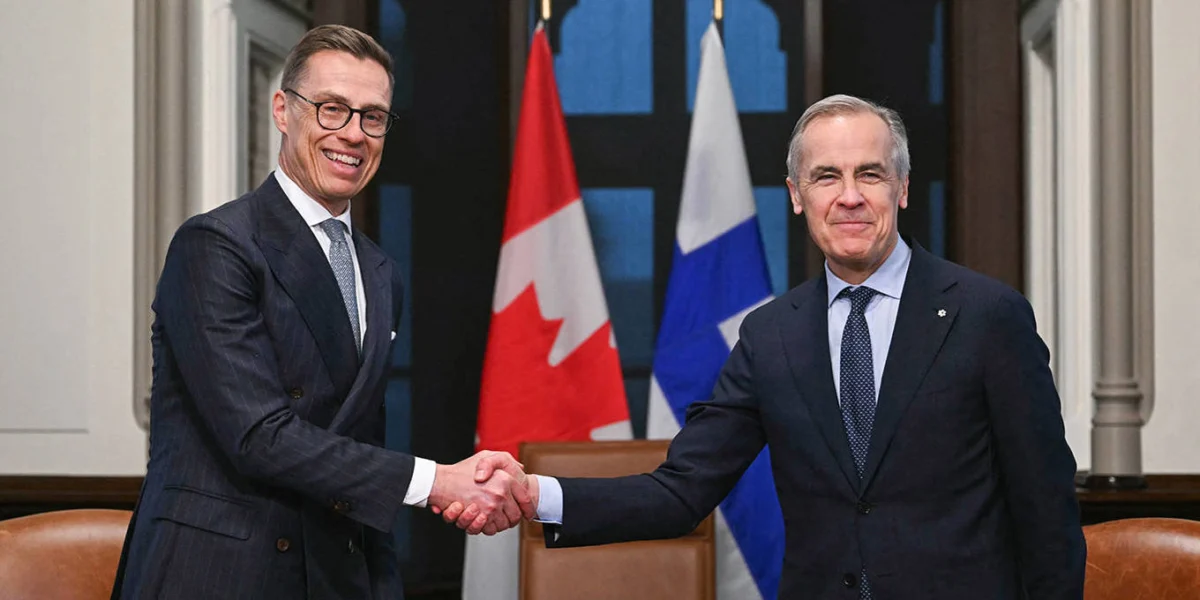
Canadian Prime Minister Mark Carney and Finnish President Alexander Stubb recently articulated a compelling strategic vision for middle-power countries, emphasizing the creation of ad hoc coalitions as a vital tool for navigating an increasingly complex and fragmented global order. Their proposal, detailed in a recent publication, underscores a pragmatic approach: "actively taking on the world as it is, not passively waiting for a world we wish to be." This framework, presented to an international audience, calls for nations sharing common interests to coalesce around specific challenges and opportunities, thereby amplifying their collective influence and capacity for action. However, the efficacy of these emergent alliances, they argue, hinges on their ability to integrate with and leverage existing multilateral institutions, ensuring continuity and broader legitimacy.
The Genesis of a Middle-Power Strategy
The joint proposal by Prime Minister Carney and President Stubb did not emerge in a vacuum. It is a direct response to a discernible shift in global power dynamics. The post-World War II international order, largely built around established great powers and robust multilateral institutions, is undergoing significant strain. Rising geopolitical tensions, the resurgence of nationalism in various forms, and the increasing complexity of global challenges—ranging from climate change and pandemics to cybersecurity threats and economic instability—have exposed the limitations of traditional diplomatic and security architectures.
In this evolving landscape, middle powers, often defined by their economic strength, diplomatic capacity, and commitment to multilateralism but lacking the sheer military or economic might of superpowers, find themselves in a unique position. They possess the agency to act, but often lack the unilateral power to shape outcomes decisively. Their influence is amplified through cooperation, and their historical commitment to international norms makes them natural proponents of multilateral solutions.
The timing of this proposal, as outlined in their collaborative piece, suggests a recognition of a critical juncture. The authors implicitly acknowledge that the current international system, while possessing enduring strengths, is facing challenges that necessitate innovative approaches. The desire to move beyond passive observation and towards active engagement reflects a growing consensus among many like-minded nations that a more proactive and adaptable foreign policy is essential for safeguarding national interests and contributing to global stability.
The Architecture of Ad Hoc Coalitions
The core of Carney and Stubb’s proposition lies in the concept of "ad hoc coalitions." These are not intended to be permanent, rigid alliances but rather flexible, issue-specific groupings that can be rapidly assembled and dissolved as circumstances dictate. The rationale behind this approach is multifaceted:
- Agility and Responsiveness: In a fast-paced global environment, the ability to form coalitions quickly in response to emerging crises or opportunities is paramount. Traditional multilateral bodies, while valuable for long-term norm-setting and broad cooperation, can sometimes be slow to react to immediate threats. Ad hoc coalitions offer a mechanism for more nimble and targeted action.
- Efficiency of Resources: By bringing together nations with shared interests and complementary capabilities for a specific objective, resources can be pooled and utilized more effectively. This avoids duplication of effort and allows for a more focused application of diplomatic, economic, or even security resources.
- Reduced Burden of Commitment: Membership in permanent alliances often entails broad, long-term commitments. Ad hoc coalitions, by contrast, allow countries to engage on specific issues without necessarily undertaking wider, more enduring obligations, making participation more palatable for a broader range of nations.
- Innovation and Experimentation: These flexible groupings can serve as testbeds for new approaches to global problem-solving, fostering innovation and enabling countries to experiment with different strategies without the political complexities of reforming established institutions.
However, the authors are careful to qualify this approach. The success of these ad hoc coalitions, they contend, is intrinsically linked to their ability to operate within, and in support of, existing multilateral frameworks. This integration serves several crucial purposes:
- Legitimacy and Broad Acceptance: Actions taken under the umbrella of, or in coordination with, established international organizations like the United Nations, the World Trade Organization, or regional bodies, lend greater legitimacy and wider acceptance to the coalition’s efforts.
- Normative Reinforcement: By aligning with existing international law and norms, these coalitions reinforce the multilateral order rather than undermining it. This prevents a descent into a purely transactional, power-politics-driven international system.
- Scalability and Sustainability: Existing institutions often possess the infrastructure, secretariat, and established processes necessary to scale up successful initiatives or ensure their long-term sustainability. Ad hoc coalitions can leverage these assets, translating short-term successes into lasting impact.
- Inclusivity and Representation: Multilateral institutions, despite their imperfections, often offer a more inclusive platform for dialogue and decision-making. Integrating ad hoc efforts with these bodies can help ensure that a wider range of voices is heard and considered.
Supporting Data and Historical Precedents
The concept of issue-specific coalitions is not entirely novel. Throughout history, and particularly in the post-WWII era, various forms of issue-based cooperation have emerged.
- Coalitions of the Willing: In response to specific security challenges, such as the fight against terrorism following the September 11th attacks, various ad hoc coalitions of states emerged to share intelligence, coordinate military operations, and provide logistical support. While sometimes controversial, these groupings demonstrated the potential for rapid mobilization around a defined threat.
- Climate Change Negotiations: The formation of negotiating blocs, such as the G77 and China, or alliances of small island developing states, illustrates how countries with shared interests can coalesce to exert influence within broader multilateral frameworks like the UNFCCC. While these are often ongoing, they represent a form of issue-specific alignment.
- Global Health Initiatives: The response to pandemics, such as Ebola or COVID-19, has seen the formation of temporary partnerships and task forces involving governments, international organizations (like the WHO), and non-governmental actors to coordinate research, vaccine distribution, and public health measures.
- Economic Sanctions Regimes: The imposition of coordinated economic sanctions against states or entities often requires the formation of temporary coalitions of countries willing to implement and enforce such measures, frequently within the framework of UN Security Council resolutions or by coordinating independently.
The success of such initiatives often depends on factors like shared threat perception, clearly defined objectives, effective leadership, and the ability to garner sufficient political and material support. The Carney-Stubb proposal seeks to formalize and systematize this approach, providing a strategic framework for middle powers to engage proactively.
Broader Implications for Global Governance
The proposed roadmap has significant implications for the future of global governance:
- Empowerment of Middle Powers: The strategy directly addresses the desire of middle powers to play a more substantive role in international affairs. By offering a practical mechanism for collective action, it can enhance their influence and enable them to shape outcomes on issues that directly affect their interests. This could lead to a more multipolar distribution of influence, moving away from a strictly unipolar or bipolar world.
- Resilience of Multilateralism: Paradoxically, by advocating for ad hoc coalitions that work within existing institutions, Carney and Stubb are proposing a means to strengthen, rather than weaken, the multilateral order. These coalitions can act as catalysts for action where larger institutions may be stymied by consensus-building challenges or political inertia. They can also help to inject new ideas and energy into established bodies.
- Addressing Complex Global Challenges: The interconnected nature of modern challenges—climate change, pandemics, economic volatility, and technological disruption—demands cooperative solutions. Ad hoc coalitions, focused on specific aspects of these complex issues, can offer a more targeted and effective approach than broad-brush, one-size-fits-all multilateral initiatives. For example, a coalition of nations heavily reliant on certain agricultural exports could form to negotiate specific trade safeguards within the WTO framework during a period of global food insecurity.
- Potential for Fragmentation and Overlap: A potential challenge lies in ensuring coherence and avoiding fragmentation. If numerous ad hoc coalitions emerge without sufficient coordination or a clear link to overarching multilateral goals, it could lead to competing agendas or a dilution of international efforts. The emphasis on working within existing institutions is crucial to mitigate this risk.
- Defining "Middle Power" and "Shared Interests": The success of this strategy will also depend on how effectively nations define their "middle power" status and identify genuine "shared interests." This requires careful analysis of national capabilities, strategic priorities, and potential areas of common ground with other like-minded states.
Reactions and Perspectives (Inferred)
While specific reactions from other global actors were not immediately detailed in the initial report, one can infer potential responses based on the strategic implications:
- Support from Like-Minded Nations: Countries that identify as middle powers, such as Australia, South Korea, the Netherlands, and Singapore, are likely to view this proposal favorably. These nations have consistently championed multilateralism and often seek avenues to amplify their influence. They may see this as a pathway to more effective engagement on issues of shared concern.
- Cautious Observation from Great Powers: Major global powers, particularly those who have traditionally held significant sway in international affairs, might view this development with cautious optimism or even a degree of apprehension. While they may recognize the utility of issue-specific cooperation, they will likely be keen to ensure that these coalitions do not challenge their existing influence or create competing power blocs. Their engagement will likely depend on the perceived alignment of these coalitions with their own strategic objectives.
- Interest from International Organizations: Institutions like the United Nations, the World Bank, and the International Monetary Fund are likely to monitor this development with interest. If these ad hoc coalitions are designed to complement and reinforce their work, they could become valuable partners in addressing global challenges. The key will be ensuring that these new formations enhance, rather than bypass, the established multilateral architecture.
- Potential for Engagement by Non-State Actors: International non-governmental organizations, think tanks, and private sector entities that are active in global policy arenas may also engage with this framework. They could find opportunities to collaborate with or influence these emerging coalitions, particularly on issues related to sustainable development, human rights, or technological innovation.
Conclusion: A Call for Proactive Engagement
The roadmap for middle-power action presented by Canadian Prime Minister Mark Carney and Finnish President Alexander Stubb offers a timely and pragmatic response to the evolving global landscape. By advocating for the strategic formation of ad hoc coalitions that operate in concert with existing multilateral institutions, they provide a framework for enhanced agency and influence for a significant group of nations. This approach acknowledges the realities of contemporary geopolitics—the fragmentation of power, the complexity of global challenges, and the limitations of purely unilateral action.
The success of this initiative will hinge on careful implementation, a commitment to inclusivity, and a sustained effort to ensure that these flexible alliances contribute to, rather than detract from, the stability and effectiveness of the broader international order. In a world that demands more agile and collaborative solutions, the principles outlined by Carney and Stubb represent a crucial step towards enabling middle powers to actively shape a more secure and prosperous future. The coming years will reveal the extent to which this vision translates into tangible action and contributes to a more robust and responsive global governance system.
