

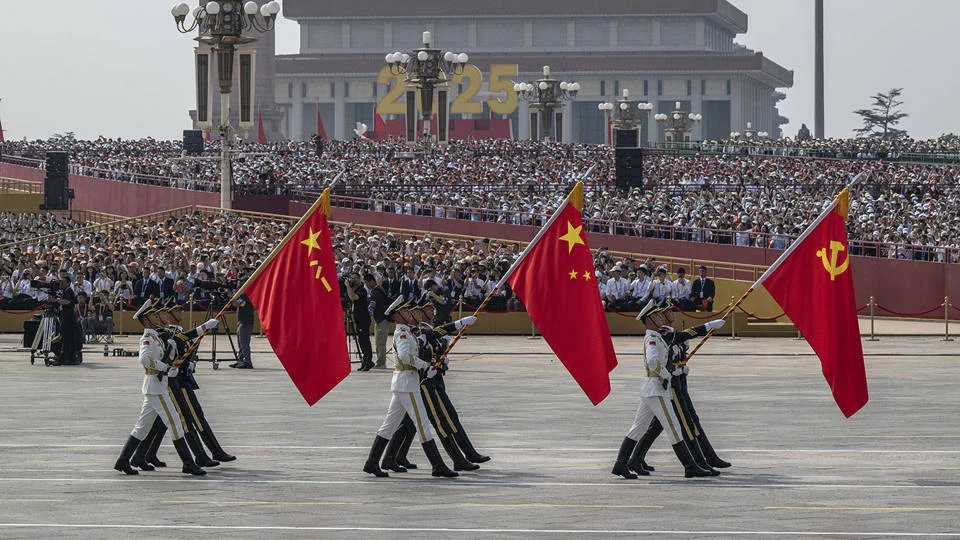
For decades, a prevailing assumption in the West held that China’s burgeoning economic growth would inevitably lead to its liberalization, mirroring the trajectories of South Korea and Taiwan. This hypothesis posited that increased trade, investment, and engagement with the global market would foster a more open, democratic society within China. However, the reality has proven far more complex, with the nation’s deeply entrenched totalitarian institutions demonstrating remarkable resilience, not only surviving decades of reform but reasserting their dominance under the leadership of President Xi Jinping. This enduring authoritarianism, juxtaposed with China’s ascendant global influence, presents a significant challenge to established geopolitical frameworks and Western policy assumptions.
The Thucydides Trap and the Framing of US-China Relations
The concept of the Thucydides Trap has gained considerable traction as a framework for understanding the complex dynamics of US-China relations. The core tenet of this theory, popularized by political scientist Graham Allison, suggests that when a rising power poses a significant challenge to an established global hegemon, a dangerous escalation of fear and mistrust becomes increasingly probable, making armed conflict a difficult outcome to avert. Over the past decade, Chinese President Xi Jinping has strategically invoked this distinctly American concept, often framing China’s growing rivalry with the United States through its lens. This rhetorical strategy serves to legitimize China’s assertive posture on the global stage and to cultivate a narrative of historical inevitability in the face of perceived Western containment.
This invocation of the Thucydides Trap is not merely an academic exercise; it carries significant policy implications. By framing the relationship as an inherent struggle between a rising and an established power, China can justify its military buildup, its assertive foreign policy, and its efforts to reshape international norms and institutions to better reflect its own interests and values. For the United States and its allies, understanding this framing is crucial for developing effective strategies that can de-escalate tensions while safeguarding their own interests and the existing international order.
A Shifting Geopolitical Landscape: From Engagement to Competition
The Western assumption of China’s inevitable liberalization was rooted in observations of post-World War II economic development in East Asia. Both South Korea and Taiwan, after periods of authoritarian rule, underwent significant political transformations that coincided with their integration into the global economy. Their economic success was seen as a catalyst for democratic reforms, leading to the belief that similar outcomes would manifest in China. This belief fueled a policy of engagement, characterized by increased trade, investment, and diplomatic outreach, with the hope that economic interdependence would foster political openness.
However, the Chinese Communist Party (CCP) has proven adept at navigating and even leveraging globalization to strengthen its own grip on power. Instead of fostering a more liberal society, economic reforms under Deng Xiaoping and his successors primarily focused on market-driven growth while maintaining strict political control. This dual-track approach allowed China to achieve unprecedented economic expansion without significant concessions on political freedoms or human rights.
The turning point in this narrative can be traced to the early 2010s, with the ascendance of Xi Jinping to the leadership of the CCP in 2012. Under Xi, there has been a clear and deliberate reassertion of party control over all aspects of society, including the economy, media, and civil society. This has been characterized by:
- Increased Ideological Control: A renewed emphasis on Marxist-Leninist ideology and Xi Jinping Thought, permeating educational institutions and public discourse.
- Crackdowns on Dissent: Intensified surveillance, censorship, and suppression of any perceived opposition, including human rights lawyers, journalists, and academics.
- Consolidation of Power: The abolition of presidential term limits in 2018, solidifying Xi’s authority and paving the way for potentially indefinite rule.
- State-Directed Capitalism: A more assertive role for state-owned enterprises and increased government intervention in the private sector, often prioritizing national strategic goals over market efficiency.
These developments have fundamentally challenged the Western liberal democratic model’s applicability to China and have led to a reassessment of engagement policies. The prevailing sentiment has shifted from one of hopeful expectation to one of strategic competition, with concerns about China’s growing authoritarianism and its implications for global governance.
Supporting Data: Economic Growth and Authoritarian Resilience
China’s economic trajectory since the late 1970s has been nothing short of remarkable. According to the World Bank, China’s GDP grew from approximately $212 billion in 1980 to over $17.7 trillion in 2022, transforming it into the world’s second-largest economy. This period of sustained growth has lifted hundreds of millions out of poverty, a testament to the effectiveness of its economic reforms.
However, this economic success has not translated into commensurate political liberalization. Data from organizations like Freedom House consistently rank China as "Not Free," citing severe restrictions on political rights and civil liberties. For example, in its 2023 report, Freedom House noted that China’s score for political rights remained among the lowest globally, indicating widespread suppression of freedoms such as freedom of speech, assembly, and association.
Furthermore, the digital age has provided the CCP with unprecedented tools for surveillance and control. China operates one of the most sophisticated censorship systems in the world, known as the "Great Firewall," which restricts access to foreign websites and social media platforms. Investments in facial recognition technology, artificial intelligence for social credit scoring, and widespread surveillance cameras create a pervasive atmosphere of monitoring that deters dissent and enforces conformity.
Timeline of Key Developments
- 1978: Deng Xiaoping initiates "Reform and Opening Up," ushering in market-oriented economic policies while maintaining the CCP’s political monopoly.
- 1989: The Tiananmen Square protests and subsequent crackdown highlight the limits of political reform and the regime’s willingness to use force to maintain control.
- Late 1990s – Early 2000s: China’s accession to the World Trade Organization (WTO) in 2001 is seen by many in the West as a crucial step towards further integration and potential liberalization.
- 2012: Xi Jinping becomes General Secretary of the CCP, marking a shift towards more centralized and assertive leadership.
- 2013: Xi launches the Belt and Road Initiative (BRI), a massive global infrastructure development strategy that expands China’s economic and geopolitical influence.
- 2018: The National People’s Congress amends the constitution to remove presidential term limits, allowing Xi Jinping to potentially remain in power indefinitely.
- 2020: The imposition of a sweeping national security law on Hong Kong significantly erodes the city’s autonomy and freedoms, further signaling a departure from previous promises of "one country, two systems."
- Ongoing (2020s): Increased focus on technological self-sufficiency, national security, and ideological purity, alongside growing assertiveness in the South China Sea and towards Taiwan.
Official Responses and International Reactions
The Western narrative of China’s anticipated liberalization has been a cornerstone of foreign policy for decades, influencing trade agreements, diplomatic engagement, and academic discourse. However, the reality of China’s persistent authoritarianism has led to a recalibration of these approaches.
United States: The US has moved from a policy of engagement to one of "strategic competition," emphasizing human rights, fair trade practices, and military deterrence. This shift is reflected in increased tariffs on Chinese goods, heightened scrutiny of Chinese investments, and stronger alliances with countries in the Indo-Pacific region. Public statements from US officials, including those in the Biden administration, frequently highlight concerns about China’s human rights record, its intellectual property theft, and its growing military power.
European Union: The EU has adopted a more nuanced approach, often characterized as a "partner, competitor, and systemic rival." While the EU continues to engage economically with China, it has also expressed growing concerns about human rights abuses, the erosion of democracy in Hong Kong, and China’s assertiveness on the global stage. The EU has also sought to strengthen its own economic resilience and reduce dependencies on China in critical sectors.
Academic and Think Tank Community: The academic and think tank communities have been at the forefront of analyzing China’s political trajectory. There is a growing consensus that the initial assumptions about China’s liberalization were overly optimistic and failed to account for the CCP’s capacity for adaptation and self-preservation. Scholars are increasingly focused on understanding the mechanisms of authoritarian resilience and the implications of China’s model for other developing nations.
Broader Impact and Implications
The enduring resilience of China’s totalitarian institutions, despite decades of economic integration, has profound implications for the global order.
- Challenge to Liberal Democracy: China’s success in achieving economic prosperity while maintaining authoritarian rule offers an alternative model of development that challenges the universal appeal of liberal democracy. This can embolden autocratic regimes elsewhere and weaken the normative power of democratic values.
- Geopolitical Realignment: The shift from engagement to competition has led to increased geopolitical tensions, particularly in the Indo-Pacific region. The growing rivalry between the US and China is reshaping alliances, trade patterns, and international norms.
- Technological Competition: China’s drive for technological self-sufficiency and its leadership in areas like artificial intelligence and 5G raise concerns about global standards, data security, and the potential for technological authoritarianism to spread.
- Erosion of International Norms: China’s assertive foreign policy and its efforts to reshape international institutions, such as the UN, can lead to a fragmentation of global governance and a weakening of existing international law and norms.
- Economic Interdependence and Vulnerability: While economic ties between China and the West remain significant, the recognition of China’s authoritarian nature has prompted a reassessment of supply chain vulnerabilities and the need for greater economic resilience.
In conclusion, the Western expectation of China’s inevitable liberalization proved to be a miscalculation. The nation’s authoritarian institutions have not only endured but have been strengthened, particularly under President Xi Jinping. This reality necessitates a more pragmatic and strategic approach from Western nations, one that acknowledges China’s economic power and global influence while firmly addressing its authoritarian practices and their implications for the international order. The era of hopeful engagement has largely given way to a period of complex competition, demanding a deeper understanding of China’s internal dynamics and its evolving role on the world stage.
