

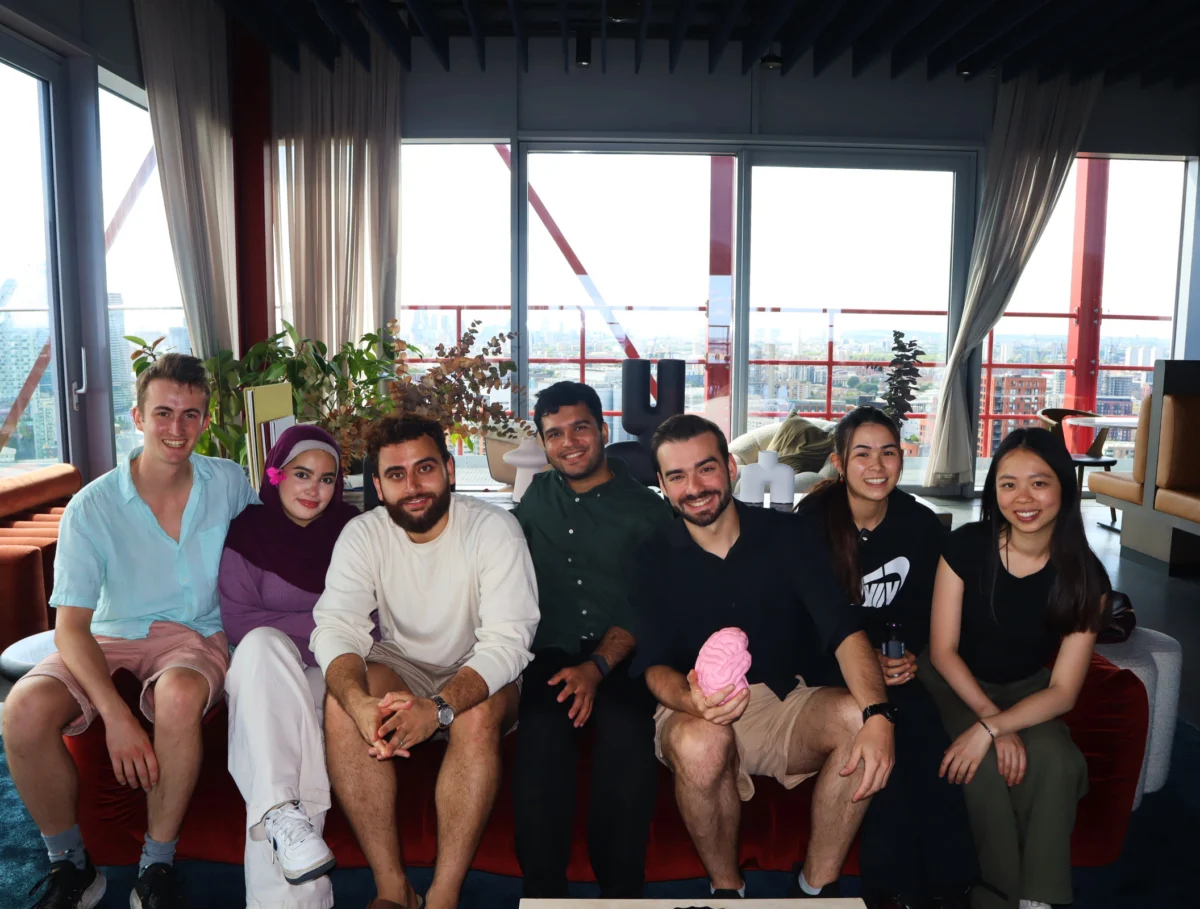
In the rapidly evolving landscape of global technology hubs, a new movement is taking root in East London that seeks to dismantle the traditional, high-pressure "hustle culture" long associated with Silicon Valley. At the center of this shift is the London Island Founder House, colloquially known as the "Lift House," a six-story residential and professional incubator situated along the waterfront of a modern East London development. Established in early 2026, the house serves as a sanctuary for a group of twentysomething entrepreneurs who are championing a philosophy known as "Londonmaxxing"—a strategic attempt to optimize the professional opportunities of the United Kingdom’s capital while maintaining a rigorous commitment to personal well-being and holistic health.
The Lift House was officially launched in March 2026, positioning itself as a direct counter-narrative to the "hacker houses" of San Francisco. Unlike the warehouse-style living and 72-hour work sprints characteristic of the Bay Area’s "996" culture (working 9 a.m. to 9 p.m., six days a week), the Lift House emphasizes long-term sustainability. Rowan Aldean, a 26-year-old entrepreneur who sold his previous venture for several million dollars and now operates an applied AI startup, co-founded the space with his wife, Zahraa, a 22-year-old pharmaceutical research PhD candidate. For the residents of Lift House, the objective is not just a successful "Demo Day" after a 12-week sprint, but a comprehensive improvement in life quality that fuels better business decisions.
A New Philosophy of Living: Beyond the Hustle
The residents of Lift House represent a diverse cross-section of the modern British tech economy. The household currently includes six primary residents, each managing distinct ventures ranging from AI-driven marketing to neuro-coaching. The house takes its name from two sources: its physical elevator (the "lift") and its symbolic mission to "uplift" founders through a supportive, rather than competitive, environment.

The daily routine within the house is a far cry from the stereotypical image of the sleep-deprived programmer. David Amor, 28, who runs a brain coaching and training firm, has integrated cognitive optimization practices into the communal schedule. Every Sunday, the group participates in a collective journaling session designed to track metrics that are often ignored in the venture capital world: time spent in nature, nutritional quality, and physical movement.
This emphasis on health is not merely a lifestyle choice but a business strategy. Luke, a 27-year-old founder of an AI marketing firm, noted that the structured environment has forced him to adopt healthier habits, such as regular meal times and consistent sleep schedules, which were previously sacrificed for work. The house even fields its own volleyball team in a local league, and evenings are frequently spent playing strategy games like Settlers of Catan or attending art exhibitions. This "balanced ambition" is the cornerstone of the Lift House identity, suggesting that the next generation of "frontier innovation" can be built without the performative exhaustion that has come to define Silicon Valley.
The Economic Context: AI and the Londonmaxxing Trend
The emergence of the Lift House coincides with a period of unprecedented growth for the London technology sector, particularly in the field of artificial intelligence. According to data from Dealroom, London-based AI startups have raised a staggering $12 billion so far in 2026, accounting for the vast majority of the $14.7 billion raised by the city’s tech ecosystem as a whole.
This surge in capital is driven by a cluster of high-performing companies, many of which trace their lineage back to DeepMind, the London-based AI laboratory acquired by Google. Six major firms—Wayve, Superintelligence, ElevenLabs, Recursive, Ineffable Intelligence, and Isomorphic Labs—have each raised more than $500 million in recent funding rounds. The success of these "DeepMind alumni" startups has provided a blueprint for the Lift House residents: it is possible to win Nobel Prizes and build world-leading innovation without the "song and dance" of American tech showmanship.

"Londonmaxxing" is the term these founders use to describe their lifestyle. It involves leveraging the unique advantages of the London ecosystem:
- Access to Elite Talent: Proximity to the "Golden Triangle" of Oxford, Cambridge, and London universities provides a steady stream of highly skilled researchers.
- Strategic Time Zones: London’s position allows founders to communicate with Asian markets in the morning and North American markets in the evening.
- Regulatory Support: Government incentives such as the Seed Enterprise Investment Scheme (SEIS) and the Enterprise Investment Scheme (EIS) provide significant tax reliefs for angel investors, making early-stage capital more accessible without the immediate need for aggressive venture capital intervention.
Navigating the "Tall Poppy Syndrome"
Despite the economic optimism, British founders face cultural hurdles that their American counterparts do not. Rowan Aldean and other residents point to the "tall poppy syndrome"—a social phenomenon in the United Kingdom where individuals who achieve high success are often criticized or "cut down" by the media and the public. This cultural inclination toward humility can make founders wary of celebrating their wins too loudly, leading to a more reserved and less "bro-y" atmosphere than that of San Francisco.
Furthermore, the British market operates at a different tempo. Varun, a co-founder of the AI marketing firm alongside Luke, observed that while the U.S. market offers "quick wins" and rapid customer acquisition, the U.K. market is defined by "fleeting" initial interest but greater long-term loyalty. British startups often sell into large, established corporations rather than other startups, requiring a more professional, less "disruptive" approach to business development.
The Lift House also serves as a reaction to previous iterations of London hacker houses. In 2024, the "London Founder House" made headlines for its explicit rejection of work-life balance, requiring residents to have raised at least $500,000 to even be considered for tenancy. That house eventually wound down, leaving a void that the Lift House has filled with a more inclusive and wellness-oriented model. To join the Lift House, prospective residents are vetted not just on their funding rounds, but on their hobbies and their commitment to physical fitness.

The Tension of Global Expansion
While the Lift House residents are bullish on London, they remain tethered to the reality of global finance. For many U.K. startups, the path to massive scale still leads to the United States. The U.S. remains the world’s largest economy with a venture capital pool that dwarfs that of Europe.
The pressure to relocate is often applied by investors. Luke and Varun shared that they have faced demands from American investors to move their operations to hubs like Miami or San Francisco as a condition for funding. This "factory line" of talent—where companies are incubated in the U.K. and scaled in the U.S.—remains a point of tension for the European ecosystem. Presence Plumb, a tech strategist living in the house, noted that while there is a strong desire to support the European ecosystem, the allure of American capital is a constant gravitational pull.
"Everyone is bullish on the country until they get the opportunity to leave," Aldean remarked, highlighting the central paradox of the British tech scene. The goal of the Lift House is to provide a reason to stay—to prove that a founder can build a lasting, multi-billion-dollar company while still enjoying a jazz night in Soho or a morning row on the Thames.
Analysis: The Future of the Distributed Hacker House
The success of the Lift House may signal a shift in how tech talent is organized globally. As remote work and distributed teams become the norm, the physical "hacker house" is evolving from a mere dormitory into a curated community of practice. The expansion of global networks like "The Residency" and the upcoming launch of "BaseJump" in London suggest that the co-living model is being professionalized.

However, the Lift House distinguishes itself by its grassroots, founder-led nature. It is not a corporate-sponsored dormitory but a self-organized collective. By prioritizing "holistic improvement" over "burnout," these founders are conducting a live experiment in social and economic engineering. If the residents of Lift House can achieve the same market dominance as their Silicon Valley peers while maintaining their mental and physical health, they may well provide a new blueprint for the global tech industry.
For now, the lease on the East London building has one year remaining. The residents express a collective desire to continue the experiment, driven by the belief that the "Londonmaxxing" lifestyle is not just a temporary phase, but a sustainable way to build the future. As Aldean summarized, the culture is about building something that lasts, rather than chasing a "flash" that leads to inevitable burnout. In the high-stakes world of artificial intelligence, where the pressure to innovate is constant, the quiet, disciplined, and balanced approach of the Lift House may be its greatest competitive advantage.
