

The fundamental paradox of digital security remains as pervasive in 2026 as it was a decade ago: passwords that are secure enough to withstand modern brute-force attacks are nearly impossible for the human brain to retain, while those easily memorized offer virtually no protection. Despite years of warnings from cybersecurity experts, the most frequently utilized passwords globally continue to be "123456," "password," and "admin." As the digital landscape becomes increasingly fragmented across various platforms and devices, the necessity for robust, automated credential management has moved from a recommendation for the tech-savvy to an essential utility for the general public.
Current data from cybersecurity firms indicates that credential stuffing—a type of cyberattack where stolen account credentials are used to gain unauthorized access to user accounts—remains a primary vector for data breaches. To mitigate these risks, industry standards now emphasize the use of high-entropy, unique 16-character strings for every individual account. Because managing such a volume of complex data manually is a logistical impossibility, dedicated password managers have emerged as the primary defense mechanism for consumer-level security.

The Evolution of Credential Management: From Browsers to Dedicated Vaults
While modern web browsers like Google Chrome, Mozilla Firefox, and Apple’s Safari offer integrated password saving features, they are increasingly viewed as insufficient for comprehensive security. Browser-based managers often lack cross-platform flexibility and, more critically, can be more vulnerable if the host device is compromised. Dedicated password managers operate on a "zero-knowledge" or "zero-access" architecture. Under this model, user data is encrypted at the device level before being synced to any cloud server. The service provider possesses no decryption keys, ensuring that even in the event of a server-side breach, the stored passwords remain unreadable to unauthorized parties.
Bitwarden: The Industry Standard for Transparency and Value
As of the August 2026 assessment, Bitwarden remains the premier recommendation for the average consumer. Its primary differentiator is its open-source nature; the source code is publicly available for inspection by independent security researchers. This transparency fosters a "many eyes" approach to security, where vulnerabilities are often identified and patched by the community before they can be exploited.
Bitwarden offers a robust free tier that includes unlimited password storage across an unlimited number of devices, a feature that many competitors have moved behind paywalls. For power users, the Premium tier—priced at approximately $10 annually—provides 1 GB of encrypted file storage and support for advanced multi-factor authentication (MFA) hardware, such as YubiKeys. Furthermore, Bitwarden’s ability to be self-hosted on a private server appeals to users who wish to maintain absolute control over their data infrastructure.
-SOURCE-Bitwarden.jpg)
Proton Pass and the Privacy Ecosystem
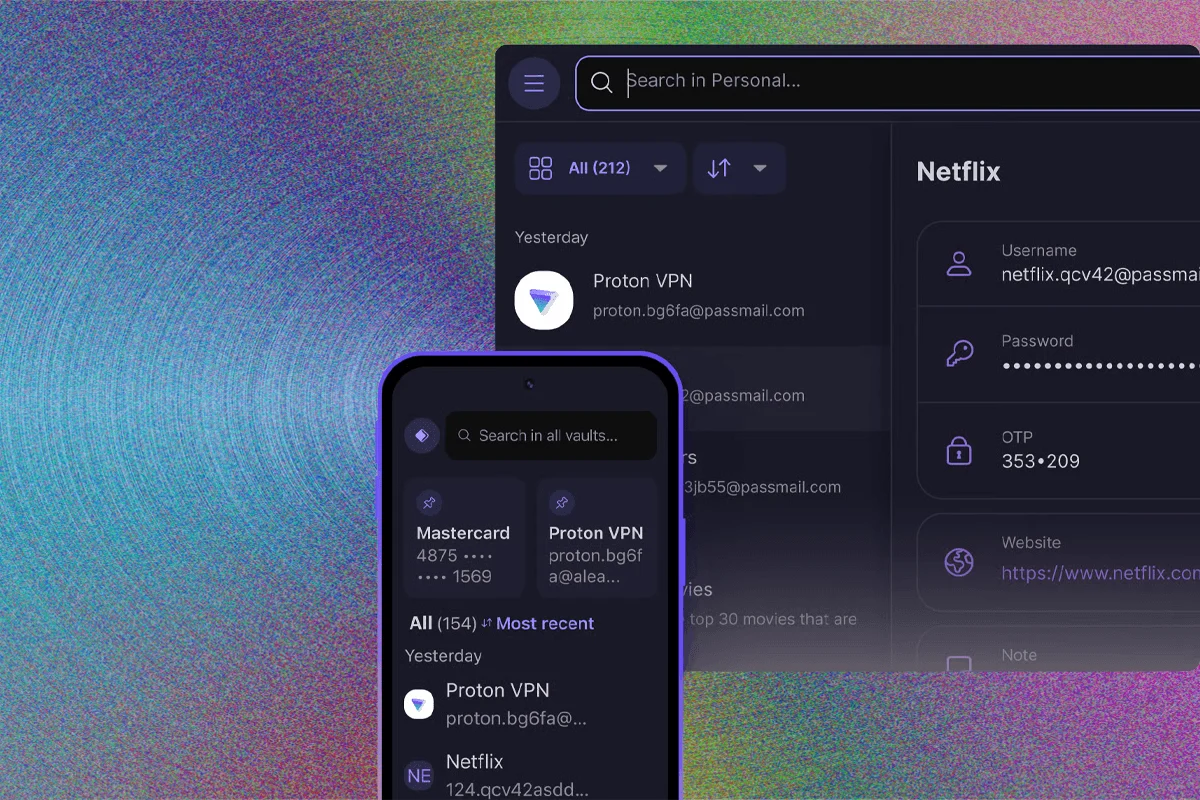
A significant shift in the 2025-2026 period has been the rapid ascent of Proton Pass. Developed by the Swiss-based Proton AG—the team behind Proton Mail and Proton VPN—this manager integrates seamlessly into a broader privacy-focused ecosystem. Proton Pass distinguishes itself through the inclusion of "email aliases" in its free version, allowing users to create "hide-my-email" addresses that prevent trackers and marketers from obtaining a user’s primary contact information.
Proton’s reputation is anchored in its adherence to strict Swiss privacy laws and its history of resisting overreaching data requests. While its server-side code is not entirely open-source like Bitwarden’s, its client-side applications are, and the company undergoes frequent third-party security audits. For users already utilizing Proton’s suite of encrypted services, the Pass Plus or Unlimited bundles offer a cohesive security posture that is difficult for standalone apps to match.
1Password and Advanced User Protections
For users requiring a higher level of feature density and a more polished interface, 1Password continues to lead the market. A key feature of 1Password’s architecture is the "Secret Key," a 34-character string generated locally that acts as a secondary layer of encryption alongside the master password. This ensures that even if a master password is weak, the account remains virtually unhackable without physical access to the user’s "Emergency Kit" document.

1Password’s "Travel Mode" remains a unique and highly valued tool for international travelers. When activated, sensitive vaults are temporarily deleted from the local device and stored only in the cloud. This prevents law enforcement or border agents from compelling a user to unlock sensitive data during transit. Once the user reaches their destination, a single toggle restores the data. While 1Password does not offer a free tier, its family and individual plans are frequently cited by corporate IT departments for their balance of security and user experience.
The Rise of Passkeys and the FIDO Standard
A critical development in 2026 is the widespread adoption of passkeys, a technology spearheaded by the FIDO (Fast IDentity Online) Alliance. Passkeys aim to replace traditional passwords entirely by using public-key cryptography. Instead of a string of text, a passkey consists of a private key stored on a user’s device and a public key held by the website. Authentication occurs via biometrics (Touch ID, Face ID) or a hardware security key.
Leading managers including Bitwarden, 1Password, and Dashlane now offer full passkey support. This allows users to store and sync these cryptographic keys across different operating systems—bridging the gap between Apple’s Keychain and Windows Hello. Industry analysts suggest that while passwords will not disappear overnight, the transition to "passwordless" authentication is the most significant security improvement of the decade.
-SOURCE-Nordpass-(cropped).jpg)
Specialized Solutions: Keeper and Dashlane
For specific use cases, such as small business management or high-risk phishing environments, other providers offer distinct advantages:
- Keeper: Recognized for its granular sharing permissions. Unlike vault-based systems, Keeper utilizes a folder-and-file structure similar to cloud storage, making it the preferred choice for teams that need to share specific credentials without granting access to an entire database.
- Dashlane: While it has transitioned away from a standalone desktop app to a browser-first model, Dashlane excels in "live" security monitoring. Its phishing protection system analyzes URLs in real-time and prevents users from entering credentials on spoofed sites. It also includes a bundled VPN via Hotspot Shield, though performance varies by region.
The DIY and Self-Hosted Tier: Enpass and KeePassXC
For the privacy-conscious "do-it-yourself" demographic, services like Enpass and KeePassXC offer a middle ground. These tools do not provide cloud storage themselves. Instead, they create an encrypted local vault that the user must sync manually using services like Dropbox, iCloud, or a private Nextcloud instance. This "decoupled" approach ensures that the password manager company never even has encrypted versions of the user’s data on their servers, effectively removing them as a target for hackers.
Chronology of Major Security Events and Their Impact
The current landscape of 2026 has been heavily shaped by the fallout of the 2022-2023 LastPass data breaches. These incidents, which resulted in the theft of encrypted user vaults and unencrypted metadata, were later linked by federal investigators to over $180 million in cryptocurrency thefts.

The industry response to these events has been a mandatory shift toward transparency:
- 2023: Major providers began moving toward mandatory multi-factor authentication for all users.
- 2024: The "Zero-Knowledge" architecture became the legal standard for security marketing claims.
- 2025: The FIDO Alliance announced that over 70% of major web services had implemented passkey support.
- 2026: Independent third-party audits became a yearly requirement for top-tier security certifications.
Broader Implications for Global Cybersecurity
As we move further into 2026, the role of the password manager is evolving from a storage vault into a comprehensive identity management hub. The integration of breach monitoring—where the manager cross-references user accounts with leaked databases from the "Dark Web"—has become a standard proactive defense.
The primary implication for the future is the centralization of risk. While password managers make users safer by enabling unique credentials, they also create a "single point of failure." This is why experts emphasize that a password manager is only as secure as the master password and the multi-factor authentication protecting it. The consensus among the cybersecurity community is clear: while no system is perfectly impenetrable, the risk of not using a dedicated manager far outweighs the theoretical risks of using one. In an era of AI-driven phishing and automated hacking, a robust password manager is no longer a luxury—it is the frontline of personal digital sovereignty.
