

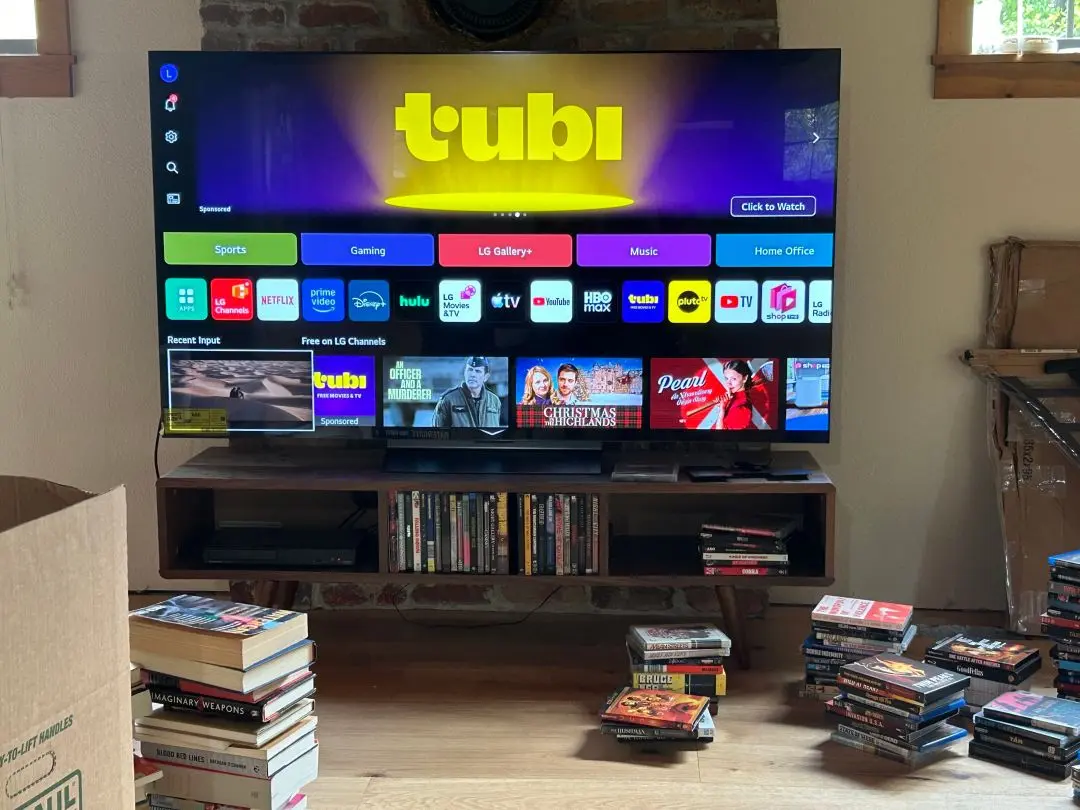
The home entertainment landscape has undergone a seismic shift over the last decade, transitioning from the ubiquity of Liquid Crystal Displays (LCD) and Light Emitting Diode (LED) screens to the high-performance era of Organic Light-Emitting Diodes (OLED). For many years, the standard for the average consumer was defined by reliable, budget-friendly options such as the 55-inch TCL smart TV. However, as 4K physical media and high-bitrate streaming services have become more accessible, a growing segment of cinephiles is migrating toward OLED technology. This transition, while offering unprecedented visual fidelity, has introduced a unique set of physiological and logistical challenges that consumers are only beginning to navigate.
The Technical Superiority of OLED Technology
To understand the current market demand, one must analyze the fundamental differences between traditional LED-backlit televisions and OLED panels. A standard LED TV functions by using a backlight—usually a series of LEDs positioned behind or at the edges of the screen—to shine light through a layer of liquid crystals and color filters. This method often results in "light bleed" or "blooming," where light intended for a bright object spills into the darker areas of the image, compromising black levels and contrast.
In contrast, OLED technology utilizes millions of self-lighting pixels. Each individual pixel is an organic substance that glows when an electric current is applied. Because each pixel can be turned off entirely, OLEDs achieve "perfect blacks" and an infinite contrast ratio. The LG evo C4, a mid-range unit released in 2024, represents the latest iteration of this technology, featuring an Alpha 9 AI Processor Gen7 and enhanced brightness algorithms designed to narrow the gap between OLEDs and the traditionally brighter Mini-LED displays. These advancements provide a more nuanced image with vibrant colors and intense shadows, making them the preferred choice for viewing 4K Blu-ray discs and high-fidelity cinematic content.
The Physiological Phenomenon: OLED-Induced Nausea
Despite the visual benefits, a significant number of new OLED adopters have reported adverse physical reactions. Reports of nausea, dizziness, and tension headaches have surfaced across consumer forums and social media platforms like Reddit. This phenomenon often occurs shortly after a user upgrades from a smaller, lower-contrast LED screen to a larger, high-performance OLED panel, such as a 65-inch or 77-inch model.
One documented case involved a user experiencing a wave of nausea midway through viewing a film on a newly installed LG C4. The sensation, described as similar to motion sickness, persisted for several hours and was followed by a lingering tension headache. This experience is far from isolated. On the r/OLED subreddit, numerous users have shared similar accounts. One owner of an LG C2 reported feeling lightheaded and nauseous for an entire day after their first viewing session, expressing a hesitation to even turn the device back on.
The medical community and display experts suggest that several factors contribute to this "cyber-sickness." One primary theory is the "sensory conflict theory," which occurs when the eyes perceive motion on a large, immersive screen that the inner ear (the vestibular system) does not feel. When a screen occupies a significant portion of a viewer’s field of vision, the brain can be tricked into thinking the body is moving, leading to the symptoms of motion sickness.
Analyzing the Causes: Motion Smoothing, Brightness, and PWM
While the sheer size of the screen is a factor—with some users reporting that 85-inch displays feel "too big" for their living spaces—the technical settings of the television also play a crucial role. Many modern televisions come equipped with motion-smoothing features, often referred to as the "soap opera effect." These settings use frame interpolation to insert artificial frames into a broadcast or film to make motion appear more fluid. For many viewers, this artificial smoothness is jarring and can trigger headaches or nausea.
However, even when these settings are disabled, OLEDs can still cause eye strain due to their near-instantaneous pixel response time. Traditional LEDs have a slight "blur" during motion because the pixels take time to transition between colors. OLED pixels transition almost instantly. When viewing 24-frame-per-second (fps) cinematic content, this lack of blur can result in "stutter" or "judder," which some viewers find physically taxing to process.
Furthermore, the brightness and the method of dimming used by the panel can impact sensitive users. Some displays use Pulse Width Modulation (PWM) to control brightness, which involves flickering the backlight at high frequencies. While this flickering is generally invisible to the naked eye, it can cause neurological fatigue and headaches in susceptible individuals. Reducing the brightness to 50 percent is a common troubleshooting step, though it may not entirely alleviate the issue if the root cause is the field-of-view immersion.
Chronology of Adaptation and User Experience
For the majority of consumers, the physiological discomfort associated with a new OLED TV is temporary. A typical timeline for adaptation involves an initial period of 48 to 72 hours where the symptoms are most acute. During this time, the brain and eyes are adjusting to the increased contrast, the wider field of vision, and the specific motion handling of the OLED panel.
In many reported cases, including those involving the 2024 LG C4, the nausea dissipates after a few days of consistent, short-duration viewing sessions. Once the user’s eyes adjust, the experience transitions from one of discomfort to one of immense visual satisfaction. The ability to see fine detail in dark scenes—such as those found in moody atmospheric films—becomes a transformative experience that often renders previous LED displays obsolete in the eyes of the viewer.
Logistical and Installation Considerations
Beyond the physiological hurdles, the transition to a 65-inch OLED involves significant logistical planning. The physical footprint of a 65-inch screen is substantial, requiring a living space that can accommodate a viewing distance of approximately eight to ten feet to maintain optimal ergonomics. In smaller apartments, a screen of this size can "devour" the room, affecting both the aesthetics and the acoustics of the space.
The installation process for premium units like the LG C4 has also drawn criticism for a lack of detailed documentation. These panels are remarkably thin—often only a few millimeters at the edges—making them extremely fragile and difficult to maneuver. The C4 typically ships with the screen detached from its base, and the absence of comprehensive printed instructions can lead to assembly errors. Consumers are often forced to rely on third-party YouTube tutorials to ensure they do not damage the organic panel during setup. This "figure-it-out-yourself" approach is a point of frustration for users who have invested thousands of dollars in a high-end electronic device.
Advanced Features and Market Implications
Once the hurdle of installation and physiological adjustment is cleared, the OLED ecosystem offers powerful tools for customization. Features like "Filmmaker Mode," developed by the UHD Alliance in collaboration with renowned directors like Martin Scorsese and Christopher Nolan, allow the TV to automatically adjust color, aspect ratio, and frame rate to match the director’s original vision. This mode disables all post-processing and motion smoothing, which can also help in reducing the aforementioned nausea for some viewers.
The market for OLED TVs continues to expand. According to industry data, OLED TV shipments are projected to grow as manufacturing costs decrease and production capacity increases at facilities owned by LG Display and Samsung Display. The competition between traditional WOLED (White OLED) and the newer QD-OLED (Quantum Dot OLED) technology is driving further innovation in brightness and color volume, ensuring that OLED remains at the forefront of the premium TV segment.
Conclusion: A Learning Curve for the Future of Home Cinema
The shift toward large-format OLED displays represents a significant leap forward in home entertainment technology, yet it serves as a reminder that technological progress often comes with unforeseen human costs. The "OLED sickness" reported by many is a testament to how immersive modern displays have become, pushing the boundaries of human sensory processing.
For potential buyers, the takeaway is one of cautious optimism. While the LG evo C4 and its peers offer a spectacular viewing experience that surpasses previous generations of display technology, the transition may require a period of physical and environmental adjustment. Proper research into viewing distances, a willingness to calibrate motion settings, and a bit of patience during the first week of ownership are essential for anyone looking to bring the cinema experience into their home. As screens continue to get larger and more realistic, the industry may need to place a greater emphasis on "visual comfort" to ensure that the future of television is as easy on the eyes as it is beautiful to behold.
