

The Evolution of Portable Energy: A Brief Chronology
The history of the power bank is a reflection of the mobile device’s journey. In the early 2010s, portable chargers were bulky, low-capacity bricks that struggled to provide even a single full charge to a smartphone. These early models typically utilized USB-A ports limited to 5-watt or 10-watt outputs. By 2015, the introduction of USB-C began to shift the landscape, allowing for bidirectional power flow and significantly higher wattages.
The timeline of innovation accelerated around 2020 with the widespread adoption of Gallium Nitride (GaN) technology. GaN allowed manufacturers to create smaller, more efficient chargers that generated less heat. Today, the industry has reached a pinnacle where a device no larger than a deck of cards can output 65 watts, enough to power a professional-grade laptop. The most recent milestone, occurring in 2024 and 2025, is the integration of Qi2—a magnetic wireless charging standard based on Apple’s MagSafe technology—into universal power banks, effectively bridging the gap between Android and iOS ecosystems.
Technical Specifications and Performance Data
When evaluating portable chargers, understanding the discrepancy between advertised capacity and real-world performance is critical. While a power bank may be labeled as 10,000 mAh, the actual usable energy is typically 60% to 80% of that figure. This loss is attributed to voltage conversion and heat dissipation. For example, a 10,000 mAh battery operating at a nominal 3.7 volts must be stepped up to 5 volts or higher for USB charging, a process that inherently consumes energy.
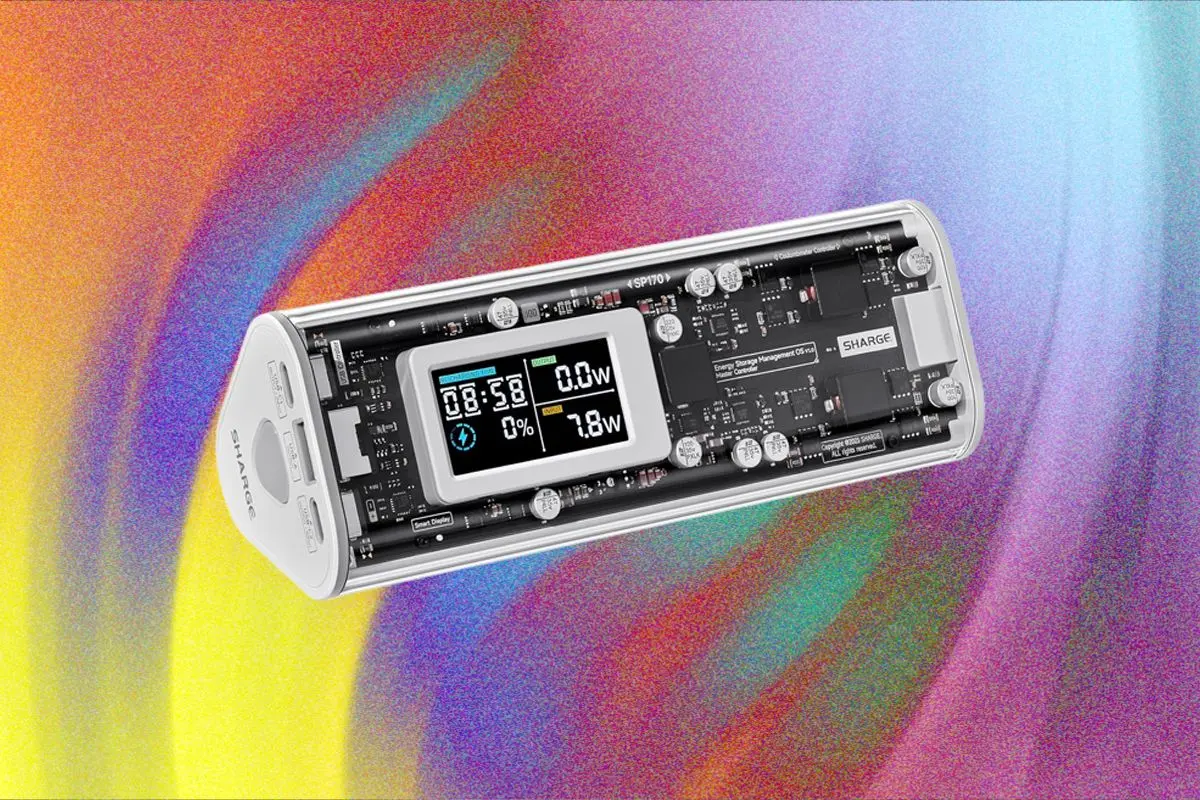
Furthermore, the charging rate, measured in watts (W), determines how quickly a device can replenish its battery. The current industry standard for fast-charging smartphones ranges from 18W to 45W, while laptops generally require 60W to 140W. High-end power banks now feature "Smart Displays" that provide real-time data on input and output wattage, allowing users to monitor efficiency and estimated time to full charge.

Top Recommendations for Small Portable Chargers (5,000 mAh)
For users prioritizing portability, the 5,000 mAh category offers a "modest top-up" sufficient for one full smartphone charge.
- Peak Design Kickstand Travel Battery: This magnetic Qi2 power bank is recognized for its premium textured finish and sturdy aluminum kickstand. It supports 15-watt wireless charging and increases to 25-watt wireless charging when plugged into a USB-C source. It features pass-through charging, allowing it to act as a stationary charging pad while its internal battery refills.
- Clutch Pro: At the size of a stack of credit cards, the Clutch Pro is designed for emergency situations where space is at a premium. It features a built-in USB-C connector, eliminating the need for extra cables.
- Anker Nano Power Bank: This dinky charger utilizes a foldable, built-in USB-C or Lightning connector that slots directly into the bottom of a phone. It outputs 22.5 watts, providing a balance of speed and convenience.
- BMX SolidSafe Air: This model represents the cutting edge of safety, utilizing semi-solid-state battery technology to reduce fire risks. It provides 15-watt wireless charging in a wafer-thin titanium frame.
- Baseus PicoGo Air (AM71): Measuring only 0.27 inches thick, this is one of the thinnest MagSafe-compatible chargers on the market. While its wireless speed is limited to 7.5 watts, it can hit 22.5 watts when used with its braided USB-C cable.
Medium-Capacity Solutions for Daily Use (10,000–20,000 mAh)
The medium-capacity segment is the most popular for commuters and travelers, offering multiple charges for smartphones or a significant boost for tablets.
- Cuktech 15 Air: A standout in this category, the 15,000 mAh Cuktech delivers 65 watts of power across three devices. Its high recharge rate—100 watts—allows the power bank itself to be refilled in approximately 90 minutes. It is also CCC certified, a requirement for certain international markets like China.
- Anker Nano with Instacord: This 10,000 mAh model addresses the common pain point of lost cables by integrating a 2.3-foot retractable USB-C cord capable of 45-watt output.
- Gomi Power Bank: Produced by a small indie business in Brighton, England, the Gomi is made from recycled plastic. The company claims the device has 50% fewer CO2 emissions than traditional power banks, appealing to the environmentally conscious consumer.
- Pisen PowerView 2-in-1: While not the fastest in its class, this unit features both built-in USB-C and Lightning cables, making it a versatile tool for households with mixed device ecosystems.
High-Capacity Power Stations (20,000 mAh and Above)
For long-haul flights or remote work sessions, high-capacity power banks provide the necessary wattage to sustain laptops and multiple mobile devices simultaneously.
- Ecoflow Rapid Pro: This beast is capable of a 300-watt total output. It sits just below the 100-watt-hour limit imposed by the FAA for air travel. It features three USB-C ports and a retractable cable, capable of charging two laptops at high speed simultaneously.
- Aohi Starship: With a design inspired by sci-fi aesthetics, the Starship delivers 240 watts across two USB-C ports (140W and 100W). It is specifically engineered for professional users who need to maintain two high-power laptops at once.
- Anker Prime Power Bank: Featuring a 26,250 mAh capacity and 300-watt output, the Prime includes a smart display and app control for monitoring battery health and cycles.
- Pisen 67W Built-in Cable: An affordable high-capacity option, this 20,000 mAh unit includes a cable that doubles as a carry loop. While speeds drop when charging multiple devices, it offers significant value for its price point.
Specialized and Ruggedized Charging Equipment
For outdoor enthusiasts and international travelers, standard power banks may fall short of durability or connectivity requirements.
- Iniu Outdoor Rugged Power Bank: Boasting an IP67 rating, this 10,000 mAh unit is shockproof, waterproof, and dustproof. It includes a built-in flashlight and a 1/4-inch thread for tripod mounting.
- Elecom Nestout: This series is designed with built-in shock absorbers and screw-on caps for port protection, making it ideal for camping and hiking.
- Wolfbox 4000A Jump Starter: This dual-purpose device is primarily a portable car jump starter capable of reviving dead engines, but it also functions as a 24,000 mAh power bank with 65-watt USB-C output.
- Infinacore P3 Pro and Statik SmartCharge: These units are designed for global travelers, featuring slide-on international plug adapters (Type C, I, and G) and magnetic wireless charging pads.
Aviation Regulations and Safety Analysis
The Federal Aviation Administration (FAA) and the Transportation Security Administration (TSA) maintain strict guidelines regarding lithium-ion batteries. Portable chargers must be carried in "carry-on" luggage only; they are strictly prohibited in checked baggage due to the risk of "thermal runaway"—a phenomenon where a battery cell enters an uncontrollable self-heating cycle.

Most airlines limit individual power banks to a maximum of 100 watt-hours (Wh). To calculate watt-hours, multiply the mAh by the voltage (usually 3.7V) and divide by 1,000. A 27,000 mAh battery typically equals 99.9 Wh, which is why most high-capacity chargers cap their capacity at this specific number. Industry experts recommend that travelers verify specific airline policies, as some carriers have introduced more stringent rules in 2025 regarding the number of devices allowed per passenger.
Market Implications and Consumer Warnings
As the market for portable power expands, so does the prevalence of substandard products. Consumers are cautioned against "white-label" chargers sold at deep discounts on major e-commerce platforms. These devices often skimp on essential safety features, such as Over-Current Protection (OCP) and Over-Temperature Protection (OTP).
The "Avoid" list for the current cycle includes the UGreen MagFlow Pro, which despite its impressive screen, carries a prohibitive $90 price tag for only 10,000 mAh and has reported heating issues. Similarly, the OnePlus Slim Magnetic Power Bank is noted for high inefficiency, with its 5,000 mAh capacity yielding significantly less usable energy than competitors in the same price bracket.
The future of the industry points toward the integration of solid-state technology and higher efficiency standards. As charging protocols become more standardized via USB-C and Qi2, the focus will shift from simple capacity to the intelligence of the power delivery system, ensuring that the next generation of portable chargers is not only faster but safer and more sustainable.
