

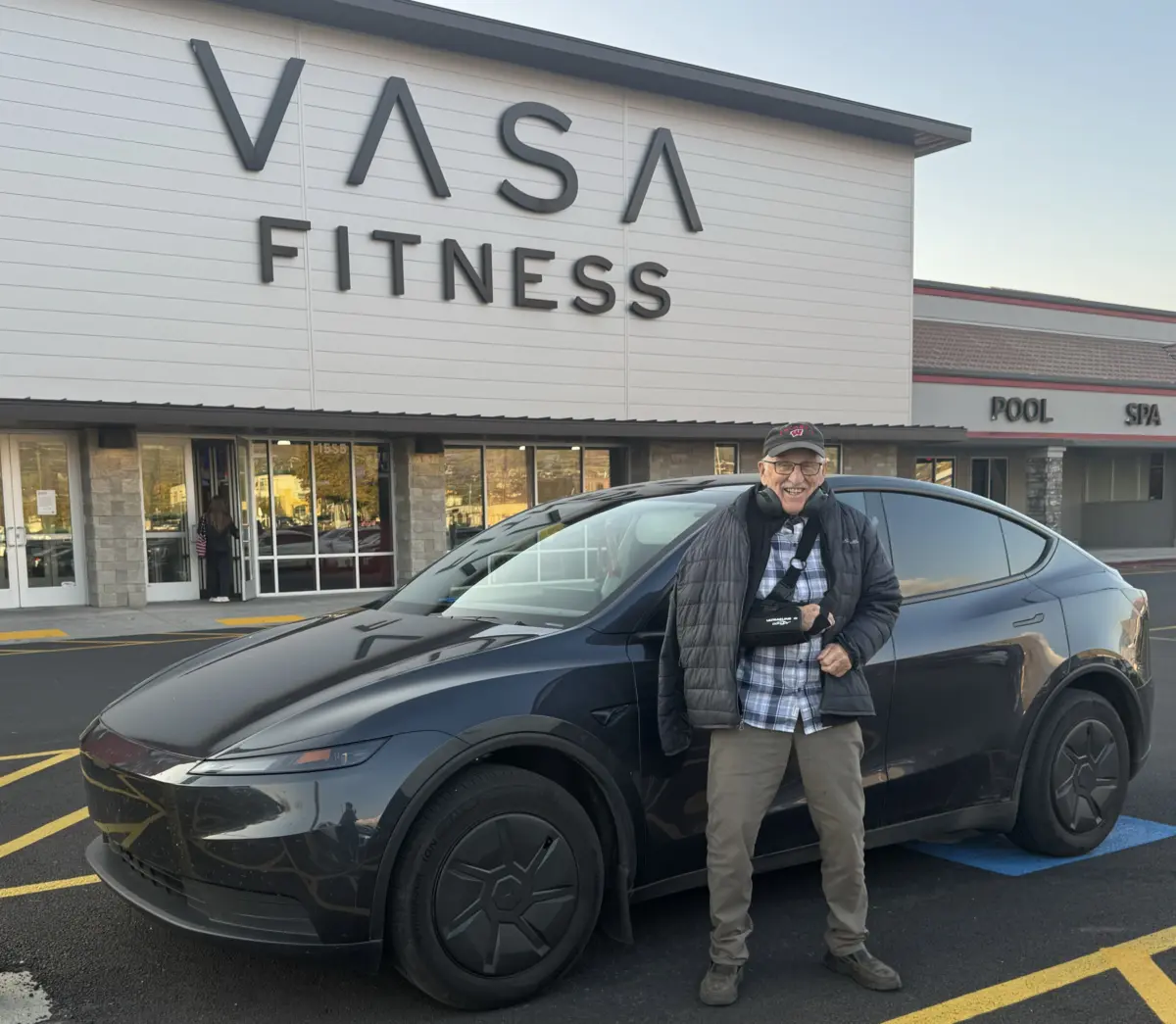
The integration of automated driving technology has transitioned from a luxury convenience to a potential lifeline for individuals with temporary or permanent physical impairments. This shift was recently highlighted by the experiences of Tesla owners utilizing the Full Self-Driving (FSD) Supervised suite to navigate daily routines following major medical procedures. In one documented instance in Orem, Utah, a driver utilized a 2026 Tesla Model Y equipped with FSD version 14 to commute to a fitness center just two days after undergoing shoulder replacement surgery. With one arm immobilized in a sling, the driver relied on voice commands through Tesla’s integrated AI, Grok, to navigate the vehicle from a home garage to a destination parking lot without manual intervention.
While such use cases demonstrate the profound potential for autonomous systems to restore independence to those with limited mobility, they also ignite a complex debate regarding safety, legal liability, and the ethical responsibilities of "supervised" automation.
The Technical Evolution of Tesla FSD and Hardware 4
The capability of Tesla’s FSD system has seen a paradigm shift with the introduction of Hardware 4 (HW4) and the transition to end-to-end neural network architectures. Unlike earlier versions that relied heavily on human-coded heuristics—if-then statements written by engineers—the latest iterations of FSD (v12 and beyond) utilize deep learning. The system is trained on millions of video clips from the global Tesla fleet, allowing the car to "mimic" human driving behavior rather than following rigid rules.

Hardware 4, which Tesla began rolling out in mid-2023, provides the computational power necessary to process high-resolution camera data with lower latency. By moving to a "vision-only" approach, Tesla has diverged from the industry standard of sensor fusion, which typically combines cameras with radar and LiDAR (Light Detection and Ranging). Tesla’s philosophy, championed by CEO Elon Musk, is that since the human transportation infrastructure is designed for biological optical sensors (eyes), artificial intelligence should be able to navigate it using digital optical sensors (cameras) alone.
The system’s ability to handle complex maneuvers—such as navigating residential driveways, interpreting unmarked intersections, and performing precision parking—has made it an attractive tool for drivers who find the physical mechanics of steering and braking difficult. However, Tesla maintains a strict legal requirement: the driver must remain "unimpaired" and ready to take control at a moment’s notice.
The Accessibility Debate: Empowerment vs. Risk
The use of FSD as a compensatory tool for physical handicaps presents a significant point of contention among safety experts and automotive journalists. On one side, proponents argue that FSD Supervised reduces the cognitive and physical load of driving. For a person with a shoulder injury, a prosthetic limb, or age-related joint stiffness, the car’s ability to manage constant steering adjustments and pedal modulation can prevent fatigue and reduce the risk of accidents caused by physical strain.
Conversely, critics and safety advocates, including organizations like the Insurance Institute for Highway Safety (IIHS), emphasize that "supervised" systems are not autonomous. The National Highway Traffic Safety Administration (NHTSA) classifies Tesla FSD as a Level 2 system under the SAE International standards. This means the human behind the wheel is the primary driver.

The central risk involves "intervention capability." If a vehicle’s software encounters an edge case—a scenario it does not recognize—the human must intervene within milliseconds. If a driver is physically unable to jerk the steering wheel or slam the brakes due to a post-surgical sling or other impairment, the safety margin of the system is effectively neutralized. This creates a legal and ethical grey area: is a driver considered "impaired" if they are legally sober and alert but physically restricted?
Comparative Analysis: Tesla vs. Rivian
As Tesla navigates the complexities of vision-only autonomy, competitors like Rivian are pursuing a different technological path. Rivian’s Driver+ system, available on the R1T pickup and R1S SUV, utilizes a more traditional and redundant sensor suite. This includes 11 cameras, five radar sensors, and 12 ultrasonic sensors.
The inclusion of radar provides Rivian vehicles with a distinct advantage in low-visibility conditions, such as heavy fog, rain, or snow, where optical cameras may struggle. While Tesla’s software is currently considered more advanced in "point-to-point" city driving, Rivian’s hardware-rich approach is designed for long-term reliability and eventual higher-level autonomy.
However, current market data suggests that Tesla remains the leader in deployment. Tesla’s extensive Supercharger network, which has recently opened to other manufacturers including Rivian, provides a seamless ecosystem for long-distance travel. For a driver with physical limitations, the ease of charging and the ubiquity of the network are as critical as the driving software itself.

Corporate Leadership and Market Sentiment
The trajectory of Tesla’s technology is inextricably linked to its leadership, which has become a polarizing force in the automotive industry. Recent shifts in Elon Musk’s public persona and political involvement have had measurable impacts on the brand’s perception. Analysts have noted a "brand tax" emerging among traditional EV early adopters who are increasingly looking toward alternatives like Rivian, Lucid, or legacy automakers like Hyundai and Ford.
In 2024, Tesla’s aggressive price cuts and Musk’s focus on non-automotive ventures, such as X (formerly Twitter) and political campaigning, have led to volatility in Tesla’s stock (TSLA). Some investors argue that the CEO’s distractions have slowed the pace of innovation, while others believe his focus on "Robotaxis" and the "Optimus" humanoid robot is the only path to a multi-trillion-dollar valuation.
For the consumer, this creates a dilemma. Tesla currently offers what many consider the most capable consumer-grade driving automation in the United States. For an individual needing assistive technology today, the political or social controversies surrounding the company may be secondary to the immediate utility of a car that can drive them to a doctor’s appointment when they are physically unable to handle a traditional steering wheel.
Safety Statistics and the Path to Level 4
Elon Musk has frequently claimed that widespread adoption of FSD could prevent up to 90% of traffic fatalities. While Tesla’s quarterly safety reports consistently show that vehicles operating with Autopilot or FSD have significantly fewer accidents per million miles than the U.S. national average, these figures are often criticized by data scientists. Critics point out that Autopilot is primarily used on highways—statistically the safest roads—making a direct comparison to the national average (which includes high-risk urban intersections) misleading.

The ultimate goal for the industry is Level 4 autonomy—vehicles that require no human intervention within a specific geographic area. Companies like Waymo (owned by Alphabet) have already achieved this in cities like Phoenix and San Francisco. However, Waymo’s technology is not available for private purchase; it is a ride-hailing service. Tesla’s strategy is unique in its attempt to bring this level of capability to mass-market consumer vehicles.
Broader Impact and Implications for Future Mobility
The intersection of ADAS and physical accessibility is poised to become a major legislative topic in the coming decade. As the "Silver Tsunami"—the aging of the baby boomer generation—continues, millions of drivers will face declining physical reflexes and mobility.
If regulatory bodies like the NHTSA determine that supervised FSD is a valid "assistive device," it could extend the driving years of millions of seniors, fundamentally altering urban planning and the demand for assisted living transportation. However, this will require a standardized framework for testing the "intervention readiness" of impaired drivers.
The current landscape remains one of transition. For individuals like the Tesla owner in Utah, the technology provides a glimpse into a future where physical limitations no longer dictate one’s ability to move freely. Yet, the transition from "supervised" to "unsupervised" remains the most significant hurdle in automotive history. Until that gap is bridged, the responsibility remains firmly with the human in the seat, regardless of the sling on their arm or the sophistication of the code in the computer.

In conclusion, while the political and corporate drama surrounding Tesla continues to dominate headlines, the real-world application of its technology as a tool for accessibility highlights a transformative shift in human mobility. Whether through Tesla’s vision-only path or the sensor-fusion approach of competitors like Rivian, the automotive industry is racing toward a future where the car is no longer just a machine to be operated, but a partner in navigation.
