

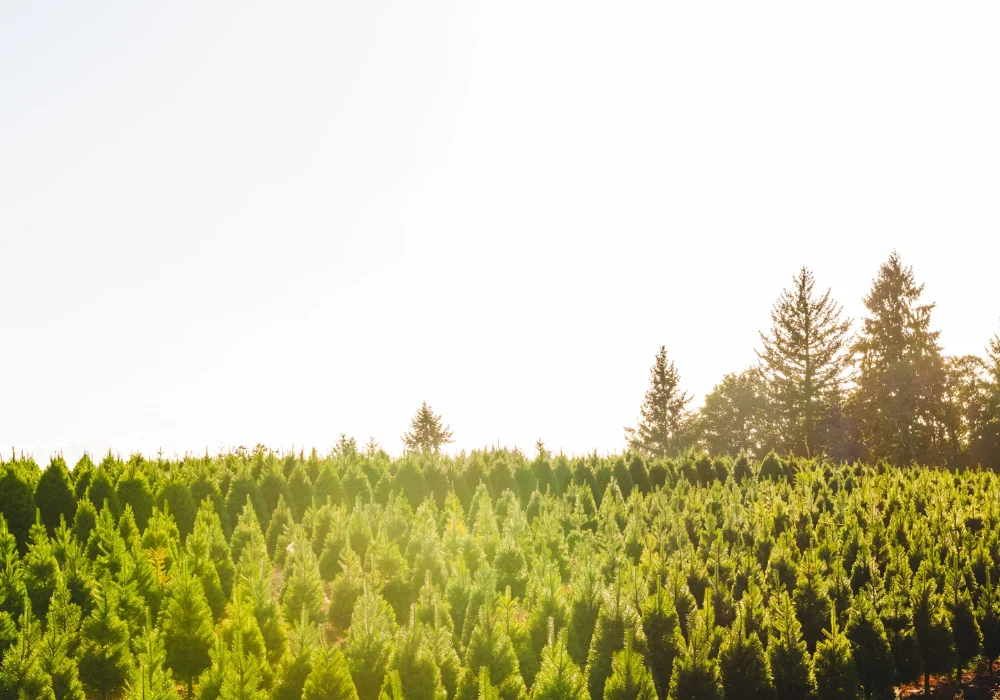
In the remote landscape north of Sudbury, Ontario, a 40-acre farm known as Northern Wildflowers has become a central node in an emerging national industry. As climate change accelerates the frequency of extreme weather events, native seeds have transformed from a niche interest for hobbyist gardeners into a high-stakes commodity essential for national security and environmental resilience. Northern Wildflowers is currently on a rapid growth trajectory, having at least doubled its native seed production volume year over year for the past three consecutive years. In the last year alone, the farm supplied native forbs, trees, and shrubs to more than 60 large-scale restoration projects across Eastern and Central Canada, signaling a massive shift in how land is managed in the face of ecological instability.
Jenny Fortier, the CEO and founder of Northern Wildflowers, attributes this surge to a convergence of demands. From municipal naturalization efforts to the reclamation of mining sites and massive infrastructure projects, the call for native species is louder than ever. Fortier, who also serves as the chair of the board for the Native Seed Producers of Canada, notes that the sector is evolving at a breakneck pace. However, this evolution is shadowed by a significant challenge: a critical shortage of supply. As the awareness of the importance of native plants grows, the infrastructure required to produce them at scale is struggling to keep up with the pace of environmental degradation.
The Critical Gap in Native Seed Supply
The disparity between demand and supply was starkly highlighted in a 2023 assessment by Natural Resources Canada. The report found that 78% of restoration and reclamation practitioners identified a lack of native seeds as the primary limiting factor in their landscape renewal projects. This shortage is particularly acute regarding trees, shrubs, and forbs (herbaceous flowering plants). While the practice of land restoration is not inherently new, the philosophy behind it has shifted. There is an increasing public and professional consensus that seeds must be sourced from local Canadian growers rather than imported from distant climates, ensuring that the resulting plants are biologically equipped to survive in their specific regions.
Historically, restoration projects often relied on non-native or "naturalized" species that were easy to source and quick to grow. However, these species often failed to provide the necessary ecological services or became invasive themselves. Today, the focus has shifted toward "ecoregional" sourcing—finding seeds that have evolved within the same climatic and soil conditions as the restoration site. This shift has created a bottleneck, as the number of commercial growers capable of producing high volumes of site-specific native seeds remains small.
Ecological Resilience and the Climate Change Accelerant
The drive toward native seed utilization is rooted in the fundamental principles of ecology. Native plants have developed symbiotic relationships over millennia with local soil microbes, fungi, and wildlife. These relationships are the backbone of a healthy ecosystem. As climate change brings about unpredictable shocks—including prolonged droughts, intense rainfall, and devastating wildfires—the inherent resilience of native species becomes a vital asset.
Unlike many non-native ornamental or agricultural species, many native plants possess deep, complex root systems. These roots can reach deep into the soil to access water during dry spells and provide structural stability that prevents erosion during heavy floods. In the context of "nature-based solutions," these plants act as buffers. They sequester carbon, improve soil health, and provide essential forage for pollinators and wildlife that are also under threat from a changing climate.
In Eastern Canada, the founding of Akène Native Seeds in 2020 served as a litmus test for this untapped demand. Founder Philippe Denis observed that the mere presence of a dedicated native seed producer in the region was enough to surface years of unserved demand. Since 2023, the company’s seed sales have grown by approximately 450%. Much of this demand comes from the need to plant vegetated buffers along waterways and agricultural roadsides to mitigate the effects of flooding and soil runoff—issues that have become increasingly prevalent as weather patterns in Quebec and Ontario become more volatile.
A Chronology of Action and Strategic Planning
The timeline of Canada’s native seed movement reveals a transition from grassroots efforts to organized national strategy.
- 2017: Catastrophic wildfires in British Columbia, including the scorching of nearly 193 hectares of traditional Secwépemc’ulecw territory, highlight the vulnerability of monoculture forests and the need for more diverse, fire-resistant landscapes.
- 2020: Specialized producers like Akène Native Seeds begin to emerge, attempting to bridge the gap between ecological necessity and commercial availability.
- 2021: The World Wildlife Fund (WWF) Canada releases a strategic plan identifying habitat restoration as a top priority. The goal: restore one million hectares of complex ecosystems to provide wildlife habitat and sequester carbon.
- 2023: Natural Resources Canada releases its assessment, formalizing the data on the 78% seed shortage and providing a mandate for increased production.
- 2025: WWF-Canada awards grants to 13 First Nations, organizations, and businesses across five provinces to establish and expand "seed orchards"—managed areas dedicated specifically to the production of high-quality native seeds.
Kate Landry, senior manager of community action at WWF-Canada, emphasizes the scale of the challenge. While precise national market data is still being compiled, Landry suggests that Canada is currently short by billions of seeds if it hopes to meet its restoration commitments for the current decade. The "seed orchard" model is seen as a crucial solution, moving away from wild collection—which can deplete natural populations—toward controlled, high-yield cultivation.
Indigenous Knowledge and Post-Wildfire Restoration
One of the most significant developments in the native seed sector is the integration of Indigenous Traditional Knowledge (ITK) with Western silviculture. This is perhaps most visible in British Columbia, where WWF-Canada has partnered with the Secwépemc’ulecw Restoration and Stewardship Society (SRSS).
The 2017 wildfires revealed a hard truth: many of the forests that burned most fiercely were monocultures—plantations consisting of a single tree species, often planted for timber value rather than ecological health. In the aftermath, the SRSS has led efforts to replant using traditional knowledge that favors a mixed canopy. This approach suggests that a diverse array of trees and understory plants is more effective at retaining moisture in the soil and the air, which can significantly lower the intensity and spread of future wildfires.
By incorporating these insights into the national strategy, growers can better understand which species are most critical for long-term survival. This collaboration also ensures that restoration work respects the sovereignty and ancestral wisdom of First Nations, who have managed these lands for thousands of years.
The Economic Risks of Speculative Planting
Despite the clear ecological need, the business of native seed production is fraught with financial risk. Kate Landry points out that many producers are currently planting on speculation. Unlike traditional agriculture, where a farmer might have a contract for a specific crop of wheat or corn, native seed growers often plant years in advance without knowing if a buyer will exist when the seeds are finally harvested.
Native plants often take several years to reach maturity and produce viable seeds. This long lead time means that a grower must invest significant capital in land, labor, and equipment today for a payout that may be three to five years away. If a government restoration project loses funding or a municipal naturalization plan is delayed, the grower is left with a highly specialized product and no market.
To mitigate this, the Native Seed Producers of Canada has called for a comprehensive national study of the native seed market. Such a study would analyze how much seed is currently imported into Canada, which species are being brought in, and which regions are most underserved. This intelligence would allow growers to transition from speculative planting to "intelligent scaling."
Toward a National Native Seed Strategy
In response to these challenges, the Canadian Wildlife Federation, in collaboration with Environment and Climate Change Canada, is preparing to release a National Native Seed Strategy. This document is expected to be a cornerstone for the industry, providing a roadmap for sustainable growth and better coordination between the people who grow seeds and the practitioners who need them.
The strategy will likely focus on several key pillars:
- Supply Chain Coordination: Creating better links between government agencies, NGOs, and private growers to ensure that seed production aligns with upcoming restoration projects.
- Indigenous Leadership: Formalizing the role of Indigenous knowledge in seed selection and land management.
- Technical Support: Providing growers with the tools and research needed to successfully cultivate difficult-to-grow native species.
- Market Intelligence: Reducing financial risk through better data on demand and import trends.
Jenny Fortier remains optimistic but grounded. She notes that the goal is not just to produce more seeds, but to produce the right seeds for the right places. As the industry matures, the focus will shift toward understanding the specific needs of different ecoregions and ensuring that Canada’s restoration efforts are built on a foundation of biological diversity and local adaptation.
The expansion of farms like Northern Wildflowers and Akène Native Seeds represents more than just a business trend; it is a vital component of Canada’s climate adaptation strategy. By investing in the smallest units of life—the seeds—the country is attempting to secure the future of its forests, wetlands, and grasslands. In the era of climate change, these seeds are the insurance policy for a landscape in transition, providing the tools necessary to rebuild ecosystems that are not only beautiful but functional, resilient, and capable of withstanding the challenges of an uncertain future.
